
Domestic Cookery. The Housewife's Manual.
By Mrs H M Young
Printed: Circa 1890
Publisher: Fletcher Russell & Co. London
| Dimensions | 13 × 19 × 3 cm |
|---|---|
| Language |
Language: English
Size (cminches): 13 x 19 x 3
Condition: Good (See explanation of ratings)
£39.00
Buy Now

Item information
Description
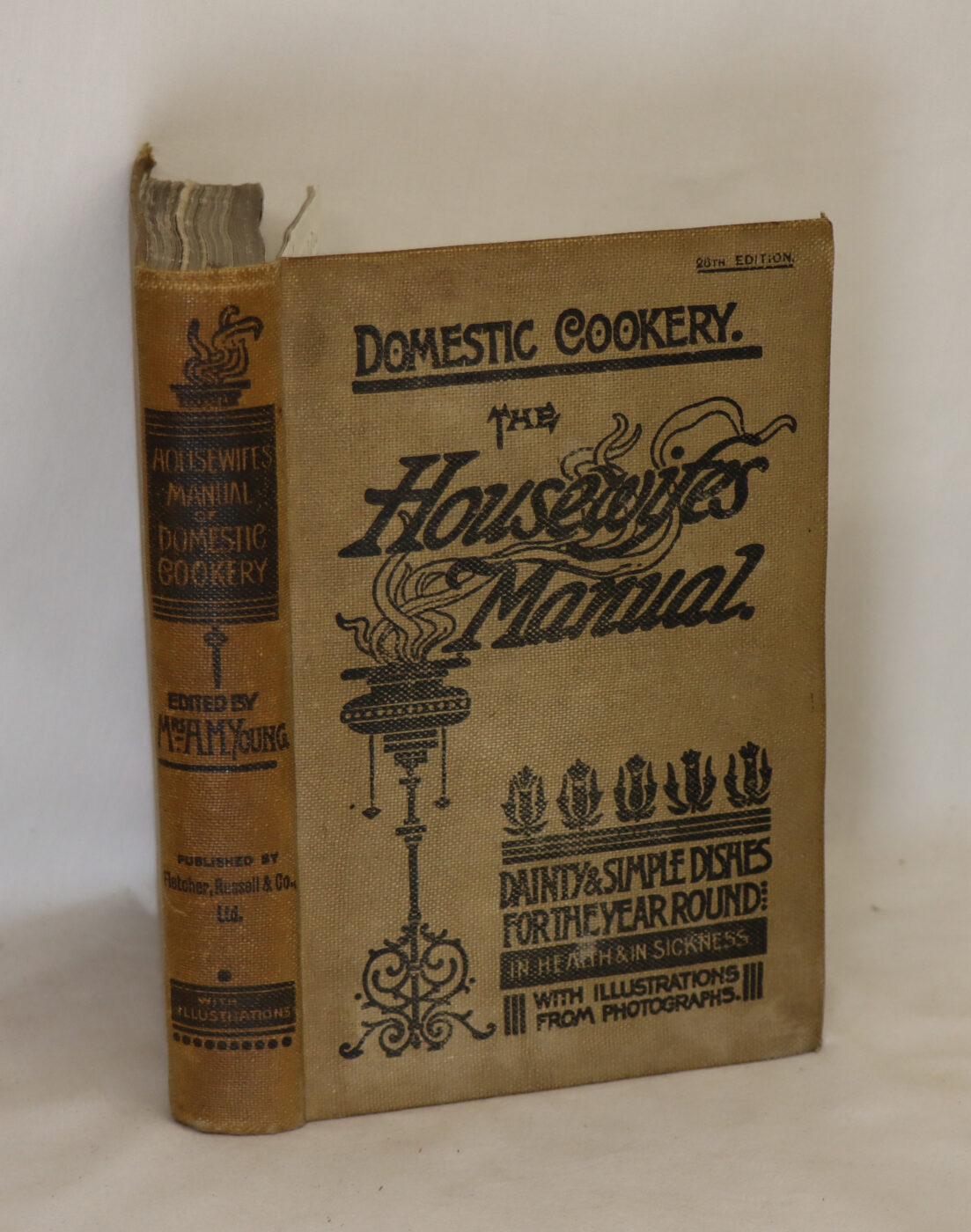
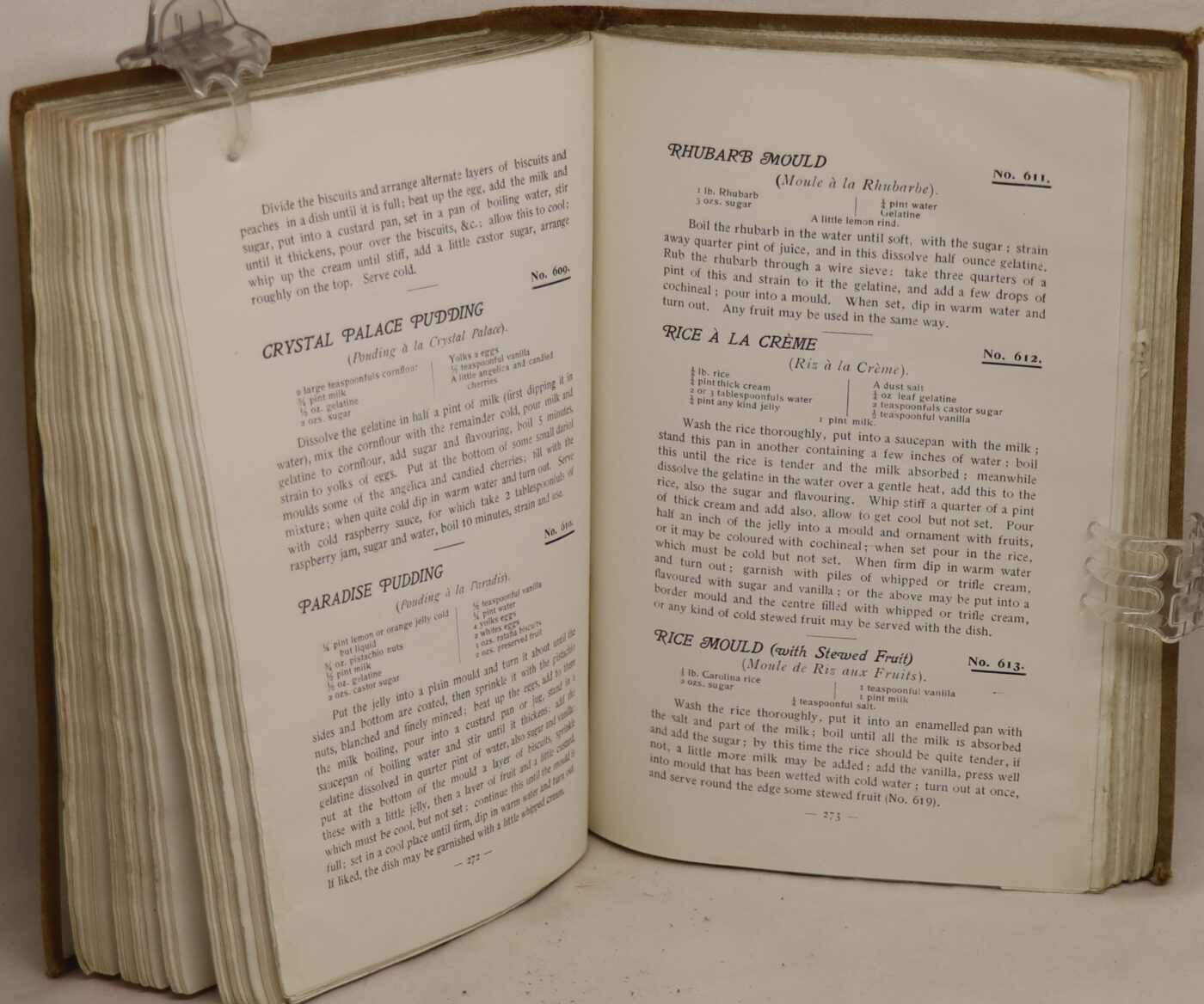
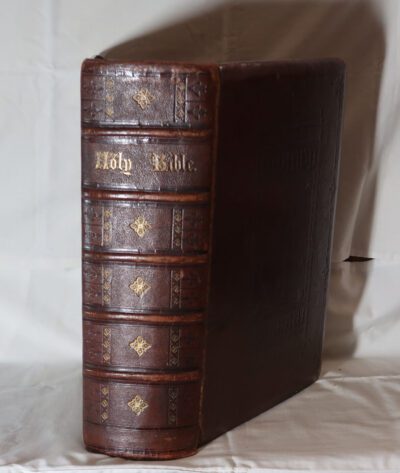
Rebacked. Brown cloth binding with black title on the spine and front board.
We provide an in-depth photographic presentation of this item to stimulate your feeling and touch. More traditional book descriptions are immediately available.
- Note: This book carries a £5.00 discount to those that subscribe to the F.B.A. mailing list
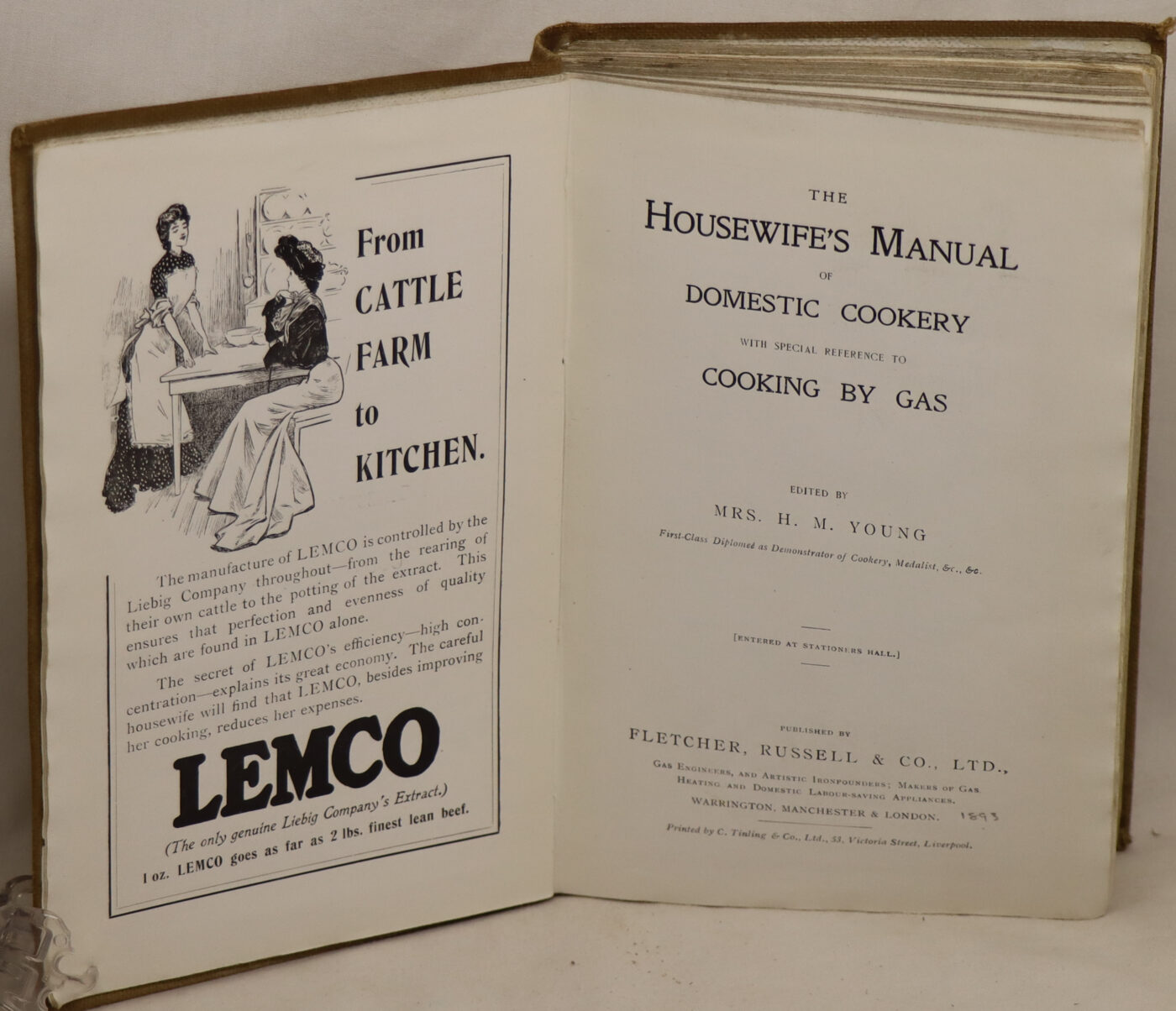
This copy of The Housewife’s Manual of Domestic Cookery (with Special Reference to Cooking by Gas) by Mrs. H. M. Young is a late-Victorian British cookery book published by Fletcher, Russell & Co. (a prominent Victorian gas stove and appliance manufacturer).
Historical & Bibliographical Context
- Full Title & Focus. The complete title is typically The Housewife’s Manual of Domestic Cookery with Special Reference to Cooking by Gas, written by Hannah M. Young to promote and explain modern gas-range cooking alongside traditional Victorian recipes.
- Publication & Format. Fletcher, Russell & Co. issued numerous undated printings throughout the 1890s and early 1900s in decorative cloth hardcovers (usually around 374 to 380 pages, matching your 5.2″ × 7.6″ × 1.2″ dimensions).
- Period Features. Complete copies typically contain black-and-white engravings of kitchenware, gas cookers, and contemporary Victorian advertisements (such as Cadbury’s Cocoa, Cerebos Salt, and Atora Beef Suet) on the endpapers and rear pages.
Current Market Listings
In the UK antiquarian book market, late-1890s Fletcher, Russell & Co. editions generally list between £21 and £34 from specialist booksellers, though aspirational decorative-market listings can go higher:
- AbeBooks.co.uk (1st Edition, Very Good): Listed at £28.00 (plus £3.50 UK delivery) for an undated late-Victorian 380-page hardcover in dark red cloth.
- AbeBooks.co.uk (2nd Edition, Very Good): Listed at £34.00 (plus £3.50 UK delivery) for a 380-page hardcover with decorative boards and advertisement endpapers.
- Etsy UK (1890s Edition): Listed at £188.00 (free delivery) for a mustard cloth edition marketed as a vintage kitchen display gift.
Note: Asking prices on online marketplaces reflect retail listings rather than realised auction prices; a standard working/good copy typically sells in the £20–£35 range.
Chapter Headings and price
In The Housewife’s Manual of Domestic Cookery by Mrs. H. M. Young, the book is organised into practical culinary sections covering gas-range operation and standard Victorian courses, and an 1890s Fletcher, Russell & Co. copy in Good condition typically carries a realistic retail price of £20 to £35.
Chapter Headings & Structure
While minor phrasing varies slightly across the 1890s Fletcher, Russell & Co. printings, the manual follows a traditional Victorian sequence rather than numbered narrative chapters, opening with gas-cooking instructions before moving course-by-course through a full household repertoire:
- Cooking by Gas & General Directions. Covers the operation, regulation, cleaning, and economy of Fletcher, Russell & Co. gas cooking ranges, roasting ovens, and grillers.
- Stocks & Soups. Covers clear and thick stocks, broths, and household vegetable or meat soups.
- Fish. Covers boiling, baking, frying, and grilling saltwater and freshwater fish, alongside fish sauces.
- Sauces & Gravies. Covers foundational white and brown sauces, savoury gravies, and sharp accompaniments.
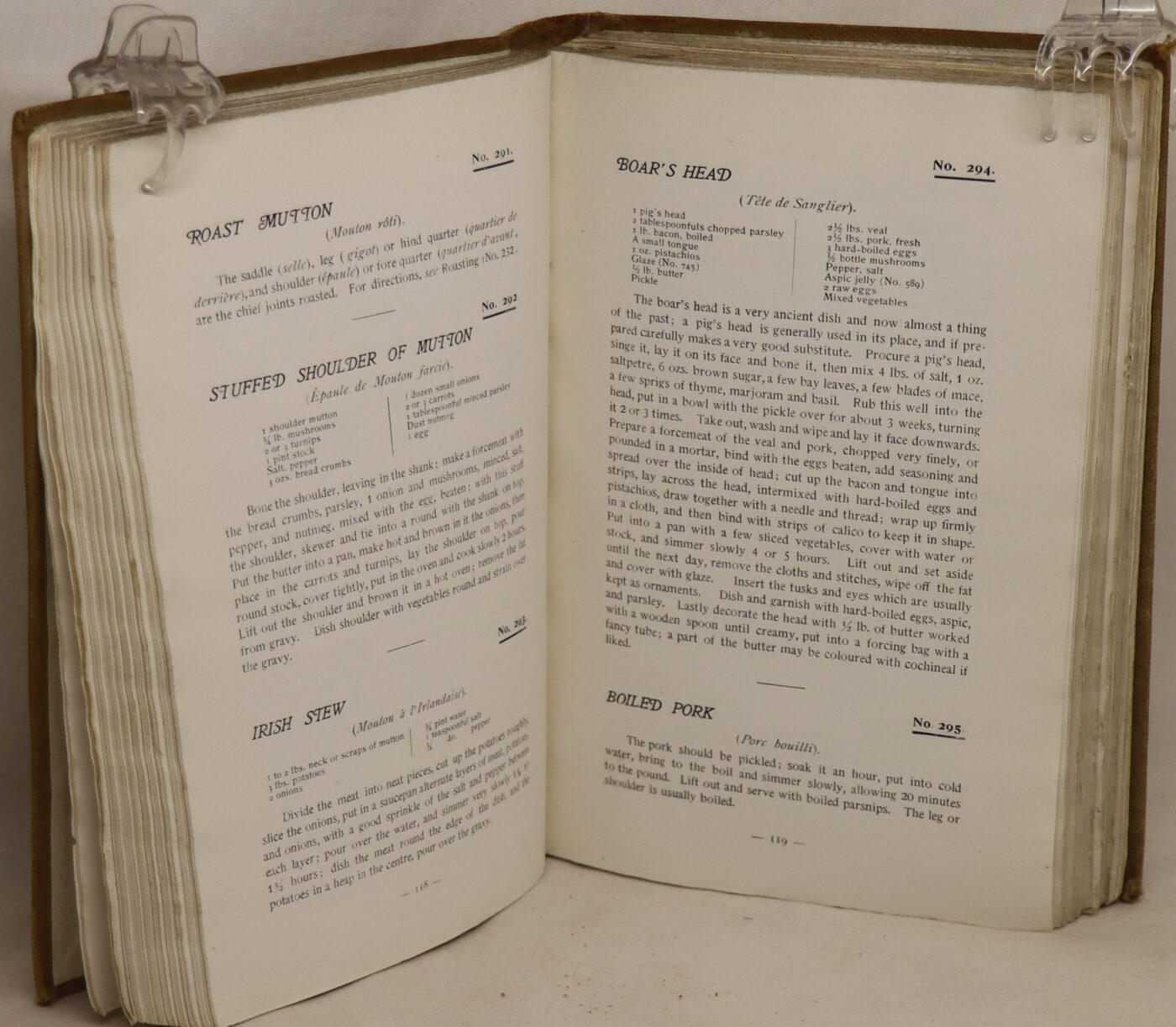
- Butcher’s Meat. Covers roasting, boiling, stewing, and grilling beef, mutton, lamb, pork, and veal.
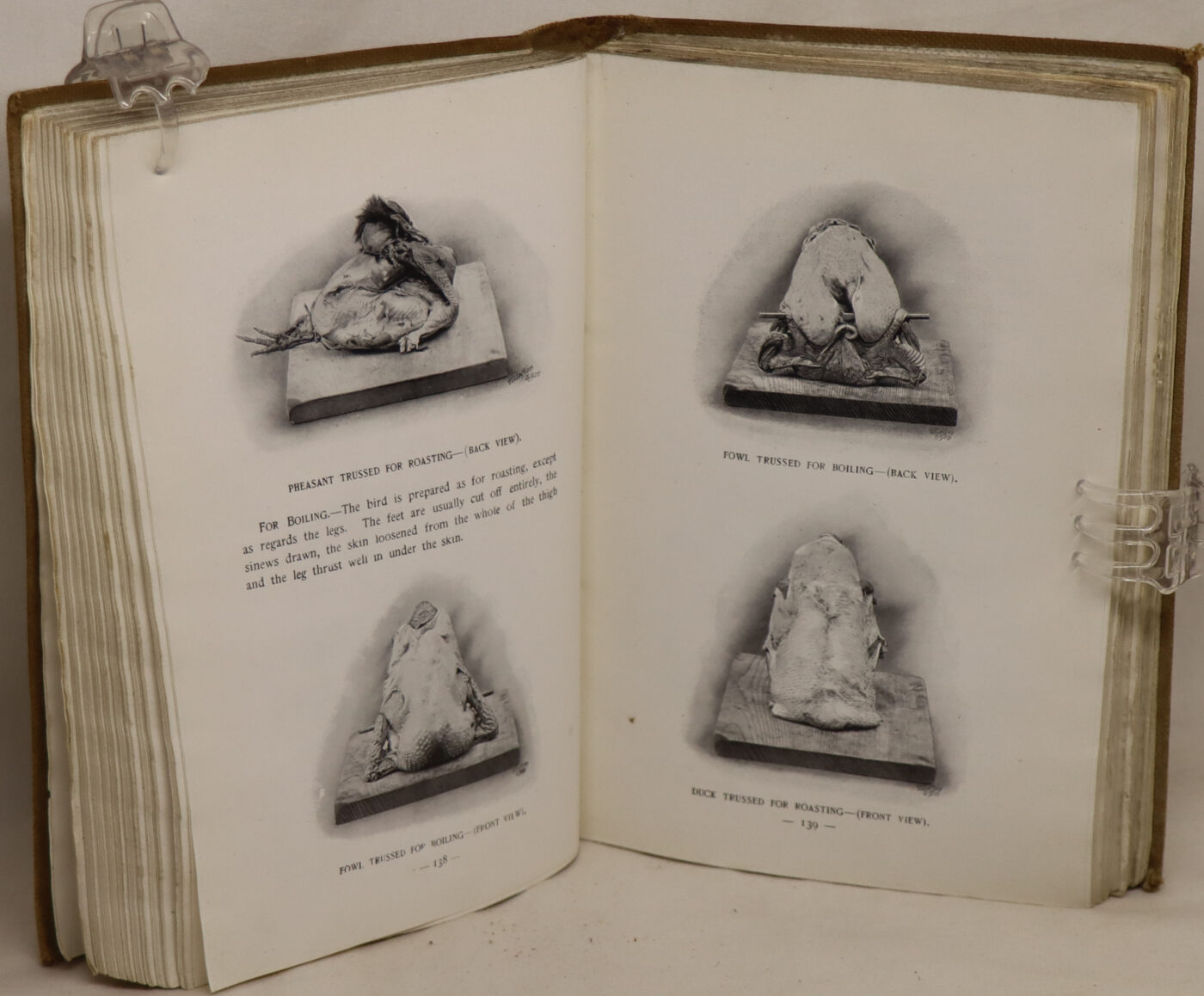
- Poultry & Game. Covers trussing, roasting, and preparing chicken, duck, goose, turkey, rabbit, and game birds.
- Entrées & Made Dishes. Covers smaller savoury courses, curries, rissoles, hashes, and cold-meat cookery.
- Vegetables & Salads. Covers boiling, steaming, and dressing everyday Victorian vegetables and seasonal salads.
- Puddings, Pastry & Sweets. Covers boiled and baked puddings, shortcrust and puff pastry, tarts, jellies, and creams.
- Bread, Cakes & Biscuits. Covers yeast breads, tea cakes, scones, gingerbread, and small biscuits baked in a gas oven.
- Invalid Cookery. Covers light broths, beef tea, gruels, and easily digested dishes for the sickroom.
- Pickles, Preserves & Miscellaneous Recipes. Covers jams, marmalades, chutneys, home-made wines, and household hints, followed by an alphabetical Index and period advertisements.
(Note: Because these editions contain a detailed Contents list or Index rather than uniform numbered chapter titles, check the opening pages of your specific printing if you are compiling an exact cataloguing transcription.)
Current Market Pricing
In the UK secondhand and antiquarian trade, Fletcher, Russell & Co. copies from the 1890s are relatively common working cookbooks, keeping values modest unless the decorative cloth binding is exceptionally bright:
- Working / Fair-to-Good Copy: eBay UK lists a circa-1899 Fletcher, Russell 11th edition working copy with stained cloth and loose pages at £21.25 (or Best Offer).
- Good to Very Good Copy: AbeBooks.co.uk lists an undated late-Victorian Fletcher, Russell 380-page hardcover in dark red cloth (Very Good+ condition) at £28.00.
- Collector / Overseas Retail Listing: eBay UK lists a circa-1899 Good condition copy from an international dealer at approximately £76.17 (converted from AU $145.00), which sits well above standard UK market rates.
For a standard Good copy with intact boards and pages in the UK, £28–£39 is the typical retail price range, while private-sale or auction realisation is usually £18–£29.
Hannah M. Young (Mrs. H. M. Young) was a prominent late-Victorian British cookery writer, culinary lecturer, and commercial recipe compiler active during the 1890s and early 1900s. Although few personal details of her private life survive in public records, she is well documented in culinary history for bridging traditional Victorian household management with modern gas appliances and commercial food products.
Career & Culinary Work
- Pioneer of Gas-Range Cookery. Young became closely associated with Fletcher, Russell & Co. (the major Warrington and London gas-appliance manufacturer). Her best-known work, The Housewife’s Manual of Domestic Cookery with Special Reference to Cooking by Gas, was commissioned to reassure Victorian housewives that gas stoves were clean, economical, and reliable for baking and roasting.
- Commercial Recipe Compiler. Alongside appliance manuals, she worked for leading Victorian food brands. In 1894, she compiled the English-language edition of the Liebig Company’s Practical Cookery Book for the Liebig Extract of Meat Company (the makers of Oxo), adapting international recipes for British kitchens.
- Public Demonstrator & Educator. Like many leading culinary figures of the late 19th century, Young promoted her books through public cookery demonstrations and gas-exhibition lectures across Britain, teaching middle-class and working-class households how to regulate gas ovens.
Notable Publications
- The Housewife’s Manual of Domestic Cookery (1890s). Frequently reprinted by Fletcher, Russell & Co. in multiple editions through the 1890s and 1900s, making it one of the most widely circulated gas-cookery manuals of the era.
- Liebig Company’s Practical Cookery Book (1894). A collection of everyday and invalid recipes designed to showcase concentrated beef extract in Victorian home cooking.
NOTE: This is an original book from the library gathered by the famous Cambridge Don, computer scientist, food and wine connoisseur, Jack Arnold LANG. Note: Jack founded the Michelin Guide ‘Midsummer House’- Cambridge’s paramount restaurant. This dining experience is hidden amongst the grassy pastures and grazing cattle of Midsummer Common and perched on the banks of the River Cam. The Midsummer House experience is imaginatively curated to delight and amaze, so the surprise set menu changes regularly and is ‘Midsummer’s’ playground to showcase.
In 2008, Jack was one of the co-founders of the Raspberry Pi Foundation, alongside other members of the Department, and acted as the Foundation’s Chair. The project’s original goals were modest: to build and distribute low-cost computers for prospective applicants to our Computer Science degree. Initially the project was a “success disaster”, as Jack would say, as demand far outstripped the low-scale manufacturing plans. Ultimately the Raspberry Pi became the UK’s most successful computer with more than 60 million sold to date. Jack was drawn to the educational possibilities of the Raspberry Pi, its potential uses in emerging economies and the way it could support self-directed learning.
Want to know more about this item?
We are happy to answer any questions you may have about this item. In addition, it is also possible to request more photographs if there is something specific you want illustrated.
Ask a question
Related products
Share this Page with a friend
