
Domestic Cookery by a Lady. Mrs Rundell
By Mrs Rundell
Printed: Circa 1880
Publisher: Milner & Co. London
| Dimensions | 12 × 17 × 3 cm |
|---|---|
| Language |
Language: English
Size (cminches): 12 x 17 x 3
Condition: Good (See explanation of ratings)
£144.00
Buy Now

Item information
Description
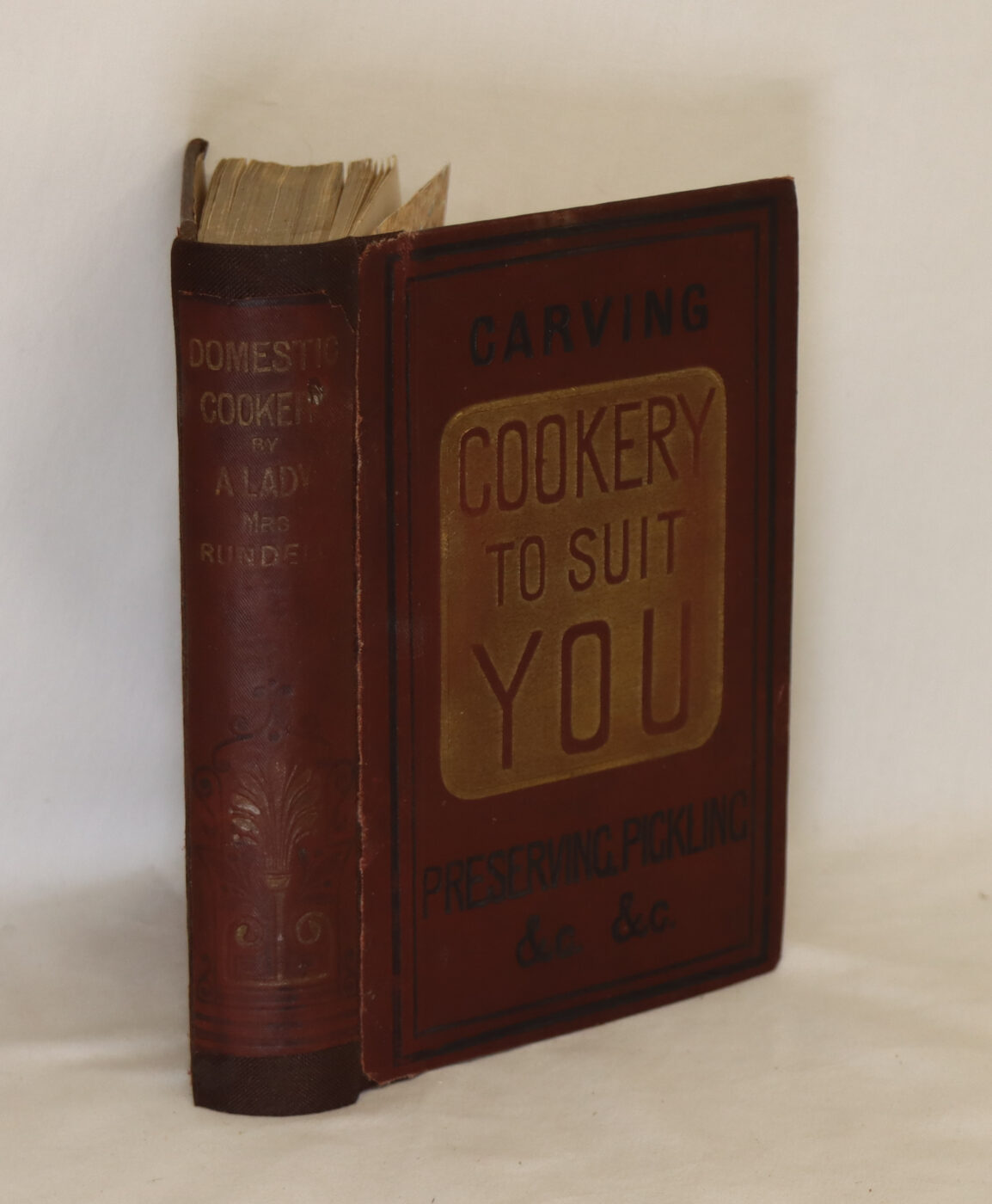
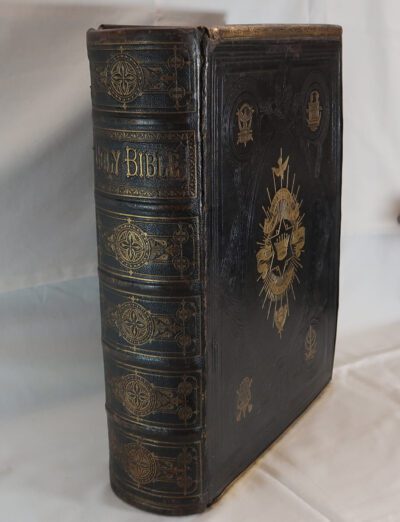
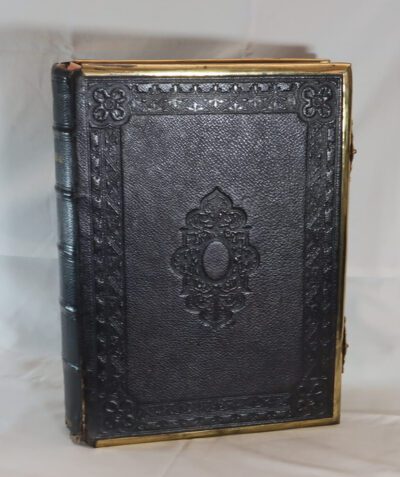
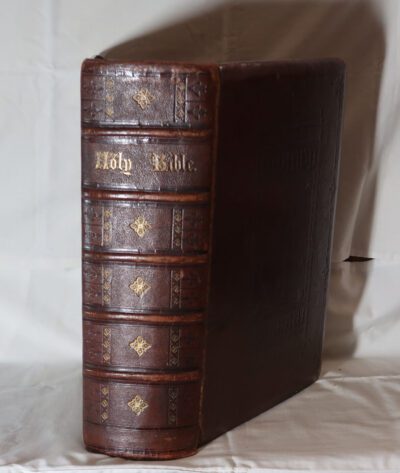
Brown cloth binding with black title on the spine and front board.
We provide an in-depth photographic presentation of this item to stimulate your feeling and touch. More traditional book descriptions are immediately available.
- Note: This book carries a £5.00 discount to those that subscribe to the F.B.A. mailing list
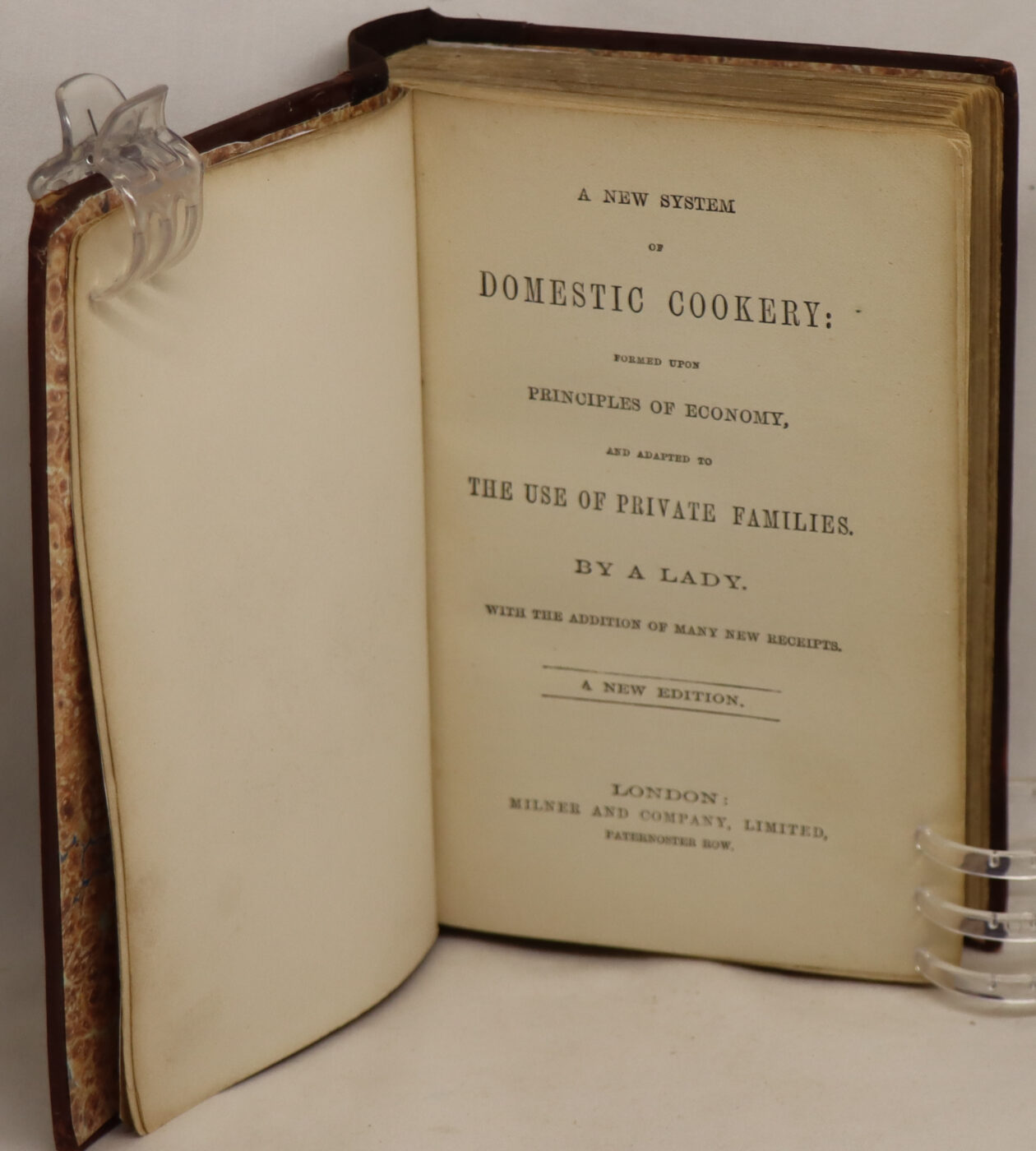
A New System of Domestic Cookery (1806), written by Maria Eliza Rundell under the pseudonym “A Lady,” was the most popular English cookery book of the early nineteenth century. Its full title is A New System of Domestic Cookery: Formed Upon Principles of Economy; and Adapted to the Use of Private Families.
Origins and Publishing History
- Written for her daughters. Maria Rundell began compiling the manuscript in her early sixties to teach her married daughters how to run an economical household.
- A massive bestseller. Published by John Murray in 1806, the book sold over 245,000 copies in Britain and more than 500,000 worldwide, staying in print until the 1880s.
- Publishing dispute. Success led to a famous legal battle between Rundell and Murray after she took a revised edition to rival publisher Longman.
What Makes the Book Notable
- Strict organization. Unlike messy eighteenth-century cookbooks, Rundell neatly subdivided her text and placed 64 pages of household management advice before the first recipe.
- Practical household economy. She advised keeping written accounts of annual income, explained how to carve meat, and instructed cooks on using steam-kettles and a bain-marie.
- Beyond the kitchen. Later editions contained over 1,000 recipes alongside instructions for making ink, shoe blacking, and cosmetics, as well as rearing poultry and repairing china.
- Early tomato sauce. Food historian Alan Davidson noted that the book included one of the very first English recipes for tomato sauce.
Where to Read or Buy
- Free digital text. You can read the 1807 edition online for free via Project Gutenberg.
- Modern reprints. Persephone Books publishes an accessible modern edition based on the 1816 text, while The Great British Bookshop offers classic reprints.
- Antiquarian copies. Nineteenth-century editions regularly appear on AbeBooks, ranging from around £35 for reading copies to over £140 for illustrated bindings.
Chapter headings and price for first illustrated edition
A New System of Domestic Cookery originally retailed for seven shillings and sixpence (7s 6d) when the first illustrated editions were published by John Murray in 1807, while complete early illustrated copies on the antiquarian market typically sell for £150 to £250 (with later or worn copies starting around £55). While the 1806 first printing contained only a single engraved frontispiece, Murray expanded the 1807 editions to include nine additional engraved plates depicting carving techniques, joints of meat, and kitchen equipment.
Chapter Headings (1807 Illustrated Edition)
Rundell organized the book into an introductory section on household management followed by 13 numbered parts:
- Introduction. Miscellaneous Observations for the use of a Mistress of a Family (including instructions on carving, marketing, and kitchen economy).
- Part I. Fish.
- Part II. Meats.
- Part III. Poultry, Game, &c.
- Part IV. Soups and Gravies.
- Part V. Sauces, Forcemeats, Vinegars, Ketchups.
- Part VI. Pies, Puddings, and Pastry.
- Part VII. Vegetables.
- Part VIII. Sweet Dishes, Preserves, Sweetmeats, &c.
- Part IX. Cakes, Bread, &c.
- Part X. Home-Brewery, Wines, &c.
- Part XI. Dairy and Poultry.
- Part XII. Cookery for the Sick and for the Poor.
- Part XIII. Various Receipts and Directions to Servants (covering household cleaning, dyeing, cosmetics, and ink).
(Note: Later Murray editions from the 1830s onward inserted a dedicated chapter on French Cookery as Part VII, shifting the subsequent sections down.)
Pricing & Edition Notes
- Original 1807 cover price. Printed directly on the 1807 title page as “Price Seven Shillings and Sixpence” (roughly equivalent to £35–£45 in modern purchasing power).
- True 1807 first illustrated editions. Complete 1807 copies with the frontispiece and all 9 plates rarely appear on the open market and typically command £250 or more depending on binding and condition.
Biography of Maria Eliza Rundell
Maria Eliza Rundell (née Ketelby; 1745 – 16 December 1828) was an English writer who achieved extraordinary literary fame in her sixties as the anonymous author of A New System of Domestic Cookery. Despite being one of the bestselling authors of the Regency era, she remained largely out of the public eye throughout her life and was only formally identified as the author after her death.
Early Life and Family
- Background. Born in 1745 in Ludlow, Shropshire, she was the only child of Margaret Farquharson and Abel Johnson Ketelby, a Middle Temple barrister.
- Marriage and children. On 30 December 1766, she married Thomas Rundell (identified in historical records either as a Bath surgeon or a partner in the renowned London silversmiths Rundell and Bridge). The couple lived in Bath and had two sons and three daughters.
- Widowhood. Following Thomas Rundell’s death in Bath in September 1795 after a long illness, Maria moved to Swansea in South Wales to live near one of her married daughters.
Publishing Success and Legal Battle
- A gift to a friend. Over decades of managing her household, Rundell compiled practical recipes, medical remedies, and domestic advice for her daughters. In 1805, at age 60 or 61, she sent the manuscript to family friend and publisher John Murray, asking for no payment.
- Runaway bestseller. Published under the pseudonym “A Lady,” the book became an immediate sensation and sold around half a million copies during her lifetime. In 1808, Murray sent her an unsolicited gift of £150 in gratitude for its unexpected profits.
- The Murray court case. By 1819, after the initial 14-year statutory copyright term expired, Rundell grew dissatisfied with how Murray was handling later editions and offered a revised version to rival publisher Longman. Both parties took out court injunctions against each other in a landmark dispute over recipe ownership and editorial additions.
- Record settlement. After Lord Chancellor Eldon dissolved the injunctions in 1821 and urged a private settlement, Murray agreed in February 1823 to pay Rundell £2,100 (2,000 guineas) for full rights to the work—one of the largest sums paid for a literary property in that era.
Other Works and Later Years
- Additional publications. Rundell also wrote Domestic Happiness (1806), The New Family Receipt-Book (1810), and Letters Addressed to Two Absent Daughters (1814), a conduct manual offering moral and practical advice to young women.
- Final years in Switzerland. In 1827, Rundell relocated to Lausanne, Switzerland, for her health, where she died on 16 December 1828 at the age of 83.
- Lasting legacy. Her recipes were widely copied on both sides of the Atlantic—most notably by Isabella Beeton in Britain and Mary Randolph in the United States—and she became one of only two women (alongside Hannah Glasse) included in the original Dictionary of National Biography solely for writing cookery books.
Notable recipes she introduced (such as the first printed recipe for Scotch eggs)?
Maria Eliza Rundell is best known to food historians for publishing the first printed recipe for Scotch eggs (in the 1809 fourth edition of A New System of Domestic Cookery) and one of the earliest English recipes for fresh tomato sauce. While much of her work compiled practical Georgian household fare rather than inventing wholly new dishes, several of her recipes achieved landmark status in British culinary history.
Landmark Firsts in Print
- Scotch Eggs (1809). Added to the fourth edition, Rundell’s version wraps hard-boiled eggs in forcemeat (seasoned minced meat and breadcrumbs) before frying them and serving them warm with rich gravy—predating Fortnum & Mason’s cold picnic version.
- Fresh Tomato Sauce (1806/1807). Food historians Alan Davidson and Elizabeth David both highlighted Rundell’s tomato sauce as one of the earliest published English recipes using tomatoes, instructing cooks to stew ripe tomatoes with vinegar, peppercorns, and salt until pulpy.
- Early Curry and Anglo-Indian Dishes. Her early editions featured practical domestic recipes for curried meats and mulligatawny-style soups, which were later vastly expanded by travel writer Emma Roberts in the 1840 edition.
Signature British Classics & Bakes
Twentieth-century food writer Elizabeth David championed Rundell’s baking and savoury dishes, reviving several in her own books:
Traditional Yeasted Breads & Griddle Cakes. Rundell recorded clear, reliable domestic methods for English muffins, Lancashire pikelets (crumpets), Sally Lunns, potato rolls, and Scottish black bun.
Burnt Cream (Crème Brûlée). Her recipe for rich custard topped with caramelised sugar was directly credited and reprinted by Elizabeth David.
Queen Cakes. She popularized baking these small, currant-studded heart-shaped or teacup sponge cakes for afternoon tea.
Duke of Cumberland’s Pudding & Veal and Parsley Pie. Her hearty suet puddings and layered savoury pies became staples of nineteenth-century middle-class dining and were later adapted by Mrs Beeton.
Frugal & Inventive Kitchen Hacks
- Snow as an Egg Substitute. In her directions for making puddings and pancakes when eggs were scarce or expensive in winter, Rundell famously advised that clean, freshly fallen snow could be beaten into batter as a leavening substitute.
- Economical Broths and Gravies. Unlike aristocratic eighteenth-century cookbooks that demanded vast quantities of prime meat just to make stock, Rundell pioneered methods using trimmings, bones, and root vegetables to keep household costs low.
How did her work influence later Victorian writers like Mrs Beeton?
Maria Eliza Rundell created the template for the modern British domestic manual, and Isabella Beeton directly borrowed dozens of Rundell’s recipes, household principles, and organizational methods when compiling Mrs Beeton’s Book of Household Management (1861). Because Victorian copyright laws offered weak protection for recipes and compilations, Rundell’s work served as an uncredited sourcebook for an entire generation of nineteenth-century culinary writers.
Direct Borrowing by Mrs Beeton
- Copied recipes. Food historians have identified at least 65 recipes in Mrs Beeton’s Book of Household Management that were lifted nearly word-for-word or lightly adapted from Rundell’s A New System of Domestic Cookery. Examples include Rundell’s methods for Scotch eggs, potato pudding, mock turtle soup, and various fruit preserves.
- The “mistress of the household” blueprint. Rundell opened her book with a 64-page section advising the lady of the house on budgeting, servant management, and daily routines. Beeton famously adopted this exact structure, opening her 1861 manual with “The Mistress” and treating household running as a disciplined moral and financial duty.
- Practical medical and domestic remedies. Both writers bridged the gap between kitchen and medicine cabinet, pairing dinner recipes with home cures for ailments, invalid cookery, and formulas for household cleaners.
Broader Impact on Victorian Culinary Writing
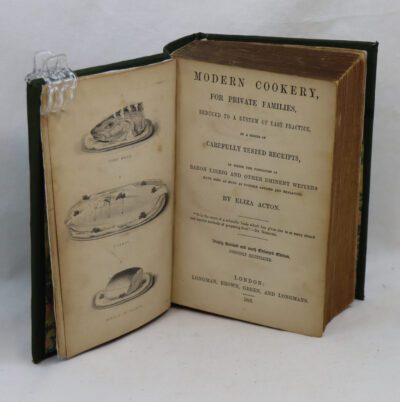
- Shift from aristocratic to middle-class audiences. Eighteenth-century cookbooks (such as those by Elizabeth Raffald or Hannah Glasse) were largely written for grand country houses with large kitchen staffs. Rundell aimed squarely at ordinary private families running economical homes, paving the way for Victorian writers like Eliza Acton (Modern Cookery for Private Families, 1845) and Alexis Soyer.
- Systematic organization. Before Rundell, cookbooks often arranged dishes haphazardly. Rundell grouped recipes strictly by course and ingredient, establishing the logical chapter layout that Eliza Acton and Mrs Beeton standardized for modern cookbooks.
- Transatlantic influence. Rundell’s commercial triumph inspired American domestic pioneers—most notably Mary Randolph (The Virginia House-Wife, 1824) and Lydia Maria Child (The American Frugal Housewife, 1829)—both of whom echoed Rundell’s emphasis on thrift and borrowed from her text.
Key Evolution from Rundell to Beeton
| Feature | Maria Rundell (1806) | Isabella Beeton (1861) |
| Target Reader | Regency private families practising strict economy | Victorian middle-class wives managing growing households |
| Recipe Formatting | Paragraph prose with narrative instructions | Standardized layout listing exact ingredients, times, and costs first |
| Tone | Conversational, maternal, and practical | Authoritative, encyclopaedic, and scientific |
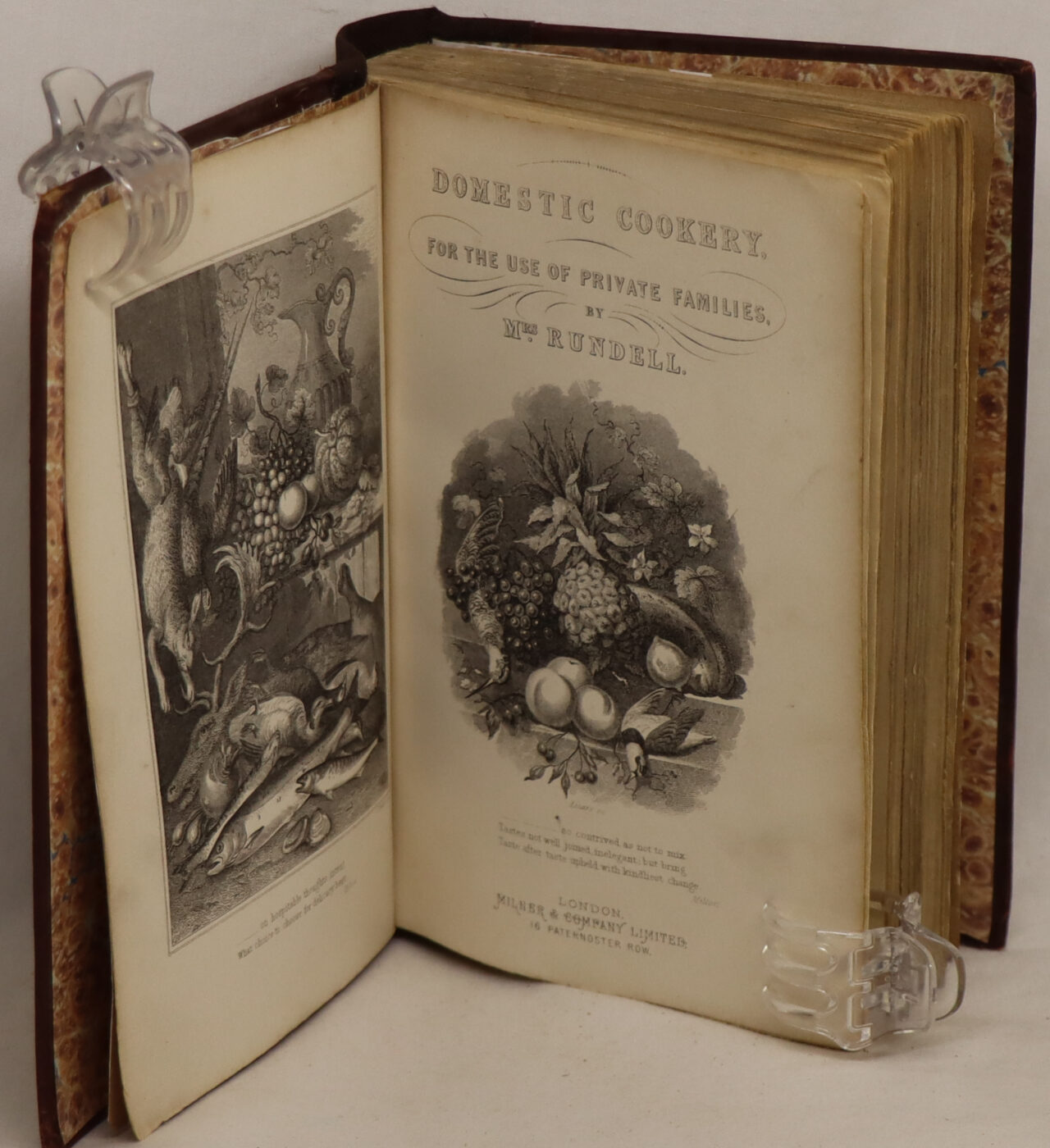
| Illustration Style | Copperplate engravings of carving and kitchenware | Woodcuts and vibrant chromolithograph colour plates |
NOTE: This is an original book from the library gathered by the famous Cambridge Don, computer scientist, food and wine connoisseur, Jack Arnold LANG. Note: Jack founded the Michelin Guide ‘Midsummer House’- Cambridge’s paramount restaurant. This dining experience is hidden amongst the grassy pastures and grazing cattle of Midsummer Common and perched on the banks of the River Cam.
In 2008, Jack was one of the co-founders of the Raspberry Pi Foundation, alongside other members of the Department, and acted as the Foundation’s Chair. The project’s original goals were modest: to build and distribute low-cost computers for prospective applicants to our Computer Science degree. Initially the project was a “success disaster”, as Jack would say, as demand far outstripped the low-scale manufacturing plans. Ultimately the Raspberry Pi became the UK’s most successful computer with more than 60 million sold to date. Jack was drawn to the educational possibilities of the Raspberry Pi, its potential uses in emerging economies and the way it could support self-directed learning.
Condition notes
Rebacked
Want to know more about this item?
We are happy to answer any questions you may have about this item. In addition, it is also possible to request more photographs if there is something specific you want illustrated.
Ask a question
Related products
Share this Page with a friend
