
Epic of Gilgamesh.
ISBN: 9781475024074
Printed: 2024
Publisher: Anonymous.
| Dimensions | 15 × 23 × 0.5 cm |
|---|---|
| Language |
Language: English
Size (cminches): 15 x 23 x 0.5
Condition: As new (See explanation of ratings)
£9.00
Buy Now

Item information
Description
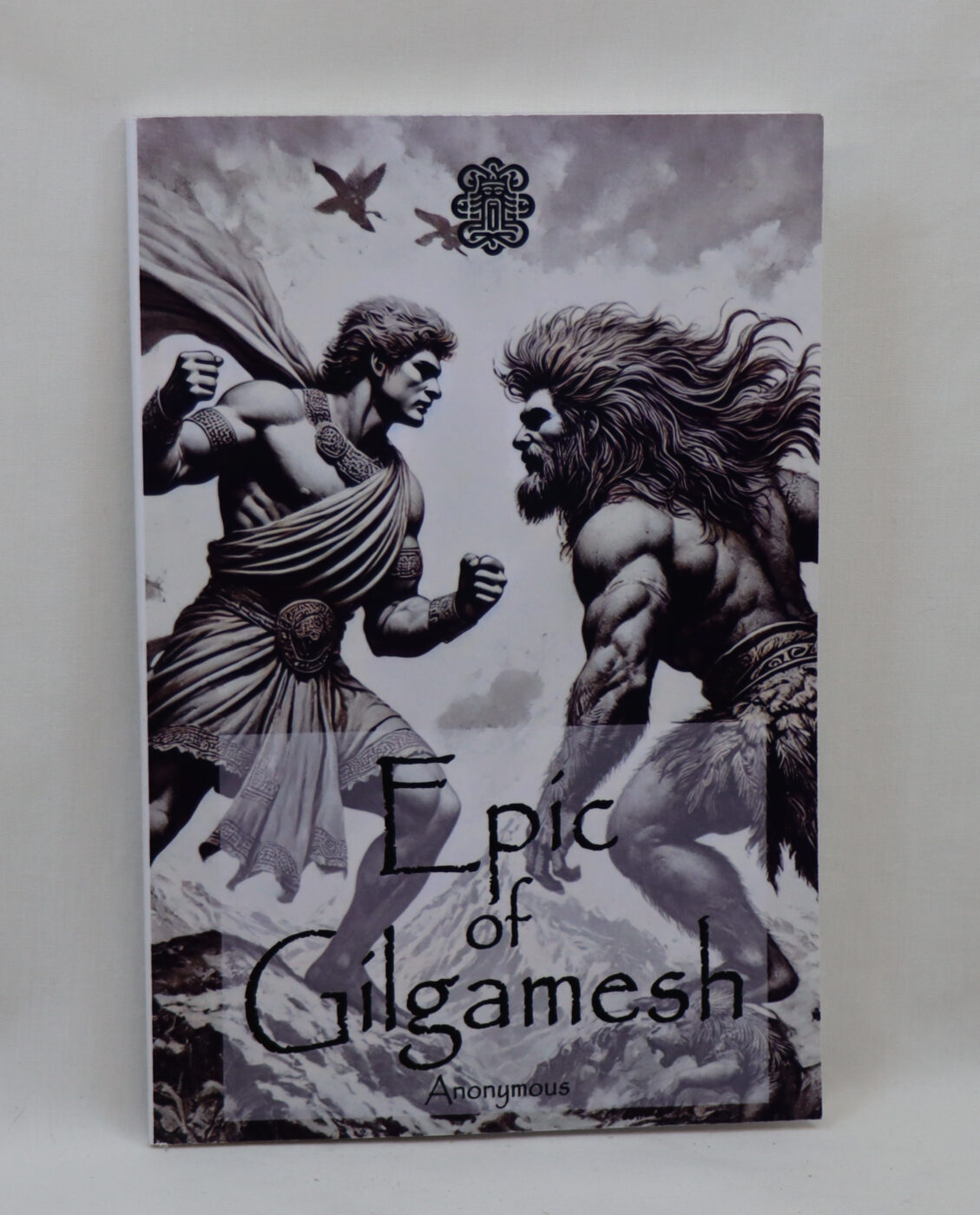
Paperback. White cover with black title.
We provide an in-depth photographic presentation of this item to stimulate your feeling and touch. More traditional book descriptions are immediately available.
- A £2 reduction when collected from FBA shop
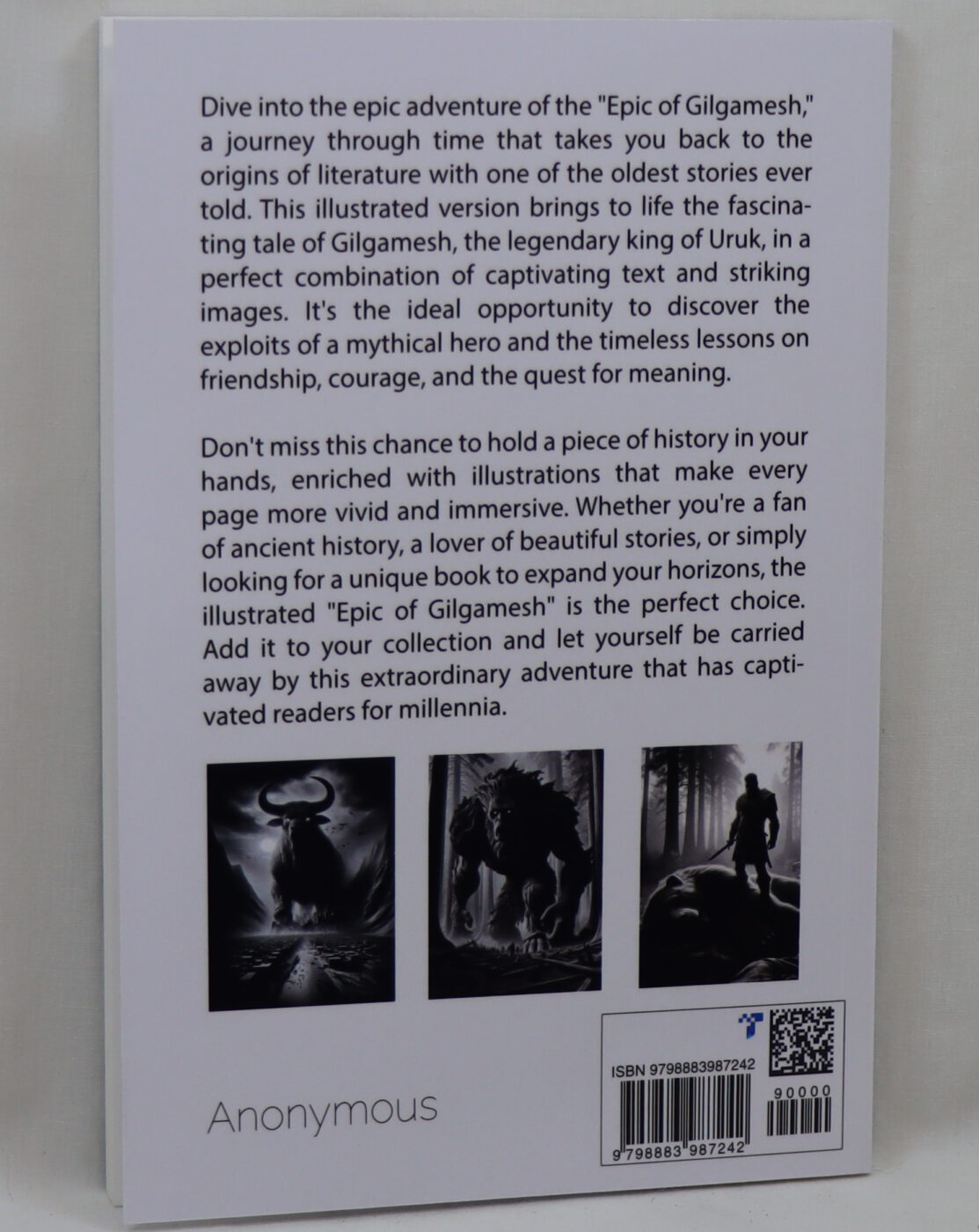
Dive into the epic adventure of the “Epic of Gilgamesh,” a journey through time that takes you back to the origins of literature with one of the oldest stories ever told. This illustrated version brings to life the fascinating tale of Gilgamesh, the legendary king of Uruk, in a perfect combination of captivating text and striking images. It’s the ideal opportunity to discover the exploits of a mythical hero and the timeless lessons on friendship, courage, and the quest for meaning.
Don’t miss this chance to hold a piece of history in your hands, enriched with illustrations that make every page more vivid and immersive. Whether you’re a fan of ancient history, a lover of beautiful stories, or simply looking for a unique book to expand your horizons, the illustrated “Epic of Gilgamesh” is the perfect choice. Add it to your collection and let yourself be carried away by this extraordinary adventure that has captivated readers for millennia.
Review: Terrific little book really enjoyed it and was on my must read list for a long time. I read it in a day and couldn’t put it down! This book also serves to capture certain cultural aspects from the old times and from that culture. Although it is a fictional story, it should still capture some values and culture of the time it was written. The chapter about the great flooding is mind-blowing. It is pretty much the same story told in the Bible about Noah’s Ark. I also noticed some words present in the Lord of the Rings Universe like Uruk, Ea, and Istari. Also, the journey to the immortal land using a boat resembles Lord of the Rings. I guess Tolkien must have gotten some influence from this book.
Influences:
Relationship to the Bible
Various themes, plot elements, and characters in the Hebrew Bible have been suggested to correlate with the Epic of Gilgamesh – notably, the accounts of the Garden of Eden, the advice from Ecclesiastes, and the Genesis flood narrative.
Garden of Eden
The parallels between the stories of Enkidu/Shamhat and Adam/Eve have been long recognized by scholars. In both, a human is created from the soil by a god and lives in nature. He is introduced to a female congener who tempts him. In both stories the man accepts food from the woman, covers his nakedness, and must leave his former home, unable to return. The presence of a snake who steals a plant of immortality from the hero later in the epic is another point of similarity. However, a major difference between the two stories is that while Enkidu experiences regret regarding his seduction away from nature, this is only temporary: After being confronted by the god Shamash for being ungrateful, Enkidu recants and decides to give the woman who seduced him his final blessing before he dies. This is in contrast to Adam, whose fall from grace is largely portrayed as a punishment for disobeying God and the inevitable consequence of the loss of innocence regarding good and evil.
Advice from Ecclesiastes
Several scholars suggest direct borrowing of Siduri’s advice by the author of Ecclesiastes.
A rare proverb about the strength of a triple-stranded rope, “a triple-stranded rope is not easily broken”, is common to both books.
Noah’s flood
Andrew George submits that the Genesis flood narrative matches that in Gilgamesh so closely that “few doubt” that it derives from a Mesopotamian account. What is particularly noticeable is the way the Genesis flood story follows the Gilgamesh flood tale “point by point and in the same order”, even when the story permits other alternatives. In a 2001 Torah commentary released on behalf of the Conservative Movement of Judaism, rabbinic scholar Robert Wexler stated: “The most likely assumption we can make is that both Genesis and Gilgamesh drew their material from a common tradition about the flood that existed in Mesopotamia. These stories then diverged in the retelling.”Ziusudra, Utnapishtim and Noah are the respective heroes of the Sumerian, Akkadian and biblical flood legends of the ancient Near East.
Additional biblical parallels
Many characters in the Epic have biblical parallels, most notably Ninti, the Sumerian goddess of life, was created from Enki’s rib to heal him after he had eaten forbidden flowers. It is suggested that this story served as the basis for the story of Eve created from Adam’s rib in the Book of Genesis. Esther J. Hamori, in Echoes of Gilgamesh in the Jacob Story, also claims that the story of Jacob and Esau is paralleled with the wrestling match between Gilgamesh and Enkidu.
Book of Giants
Gilgamesh is mentioned in one version of The Book of Giants which is related to the Book of Enoch. The Book of Giants version found at Qumran mentions the Sumerian hero Gilgamesh and the monster Humbaba with the Watchers and giants.
Influence on Homer
Numerous scholars have drawn attention to various themes, episodes, and verses, indicating that the Epic of Gilgamesh had a substantial influence on both of the epic poems ascribed to Homer. According to Tzvi Abusch of Brandeis University, the poem “combines the power and tragedy of the Iliad with the wanderings and marvels of the Odyssey. It is a work of adventure, but is no less a meditation on some fundamental issues of human existence.”Martin Litchfield West, in his book The East Face of Helicon: West Asiatic Elements in Greek Poetry, speculates that the memory of Gilgamesh would have reached the Greeks through a lost poem about Heracles.
Alexander legends
In the Alexander Romance and many subsequent legends of Alexander the Great, Alexander is on a quest to find the Fountain of Life and become immortal. This was inspired by myths of Gilgamesh’s quest for eternal youth in the face of his mortality; despite the influence, there are two main differences. The first is that Gilgamesh seeks the plant of youth whereas Alexander seeks the water of life. The second is that the motif of the snake shedding its skin in the Gilgamesh legend is replaced in the Alexander legend by a fish returning to life upon being washed in the fountain. The reasons for these differences was due to the Christianizing force involved in the adaptation of the Gilgamesh legends.
In popular culture
The Epic of Gilgamesh has inspired many works of literature, art, and music. It was only after World War I that the Gilgamesh epic reached a modern audience, and only after World War II that it was featured in a variety of genres. Hayao Miyazaki’s 1997 anime film Princess Mononoke is partially based on the Cedar Forest episode of The Epic of Gilgamesh.
Want to know more about this item?
We are happy to answer any questions you may have about this item. In addition, it is also possible to request more photographs if there is something specific you want illustrated.
Ask a question
Related products

Share this Page with a friend
