
The Divine Comedy.
By Dante Aligheri
ISBN: 9780192835024
Printed: 2025
Publisher: Wilco International. Mumbai
| Dimensions | 16 × 23 × 3 cm |
|---|---|
| Language |
Language: English
Size (cminches): 16 x 23 x 3
Condition: As new (See explanation of ratings)
SORRY, THIS ITEM HAS SOLD


Item information
Description
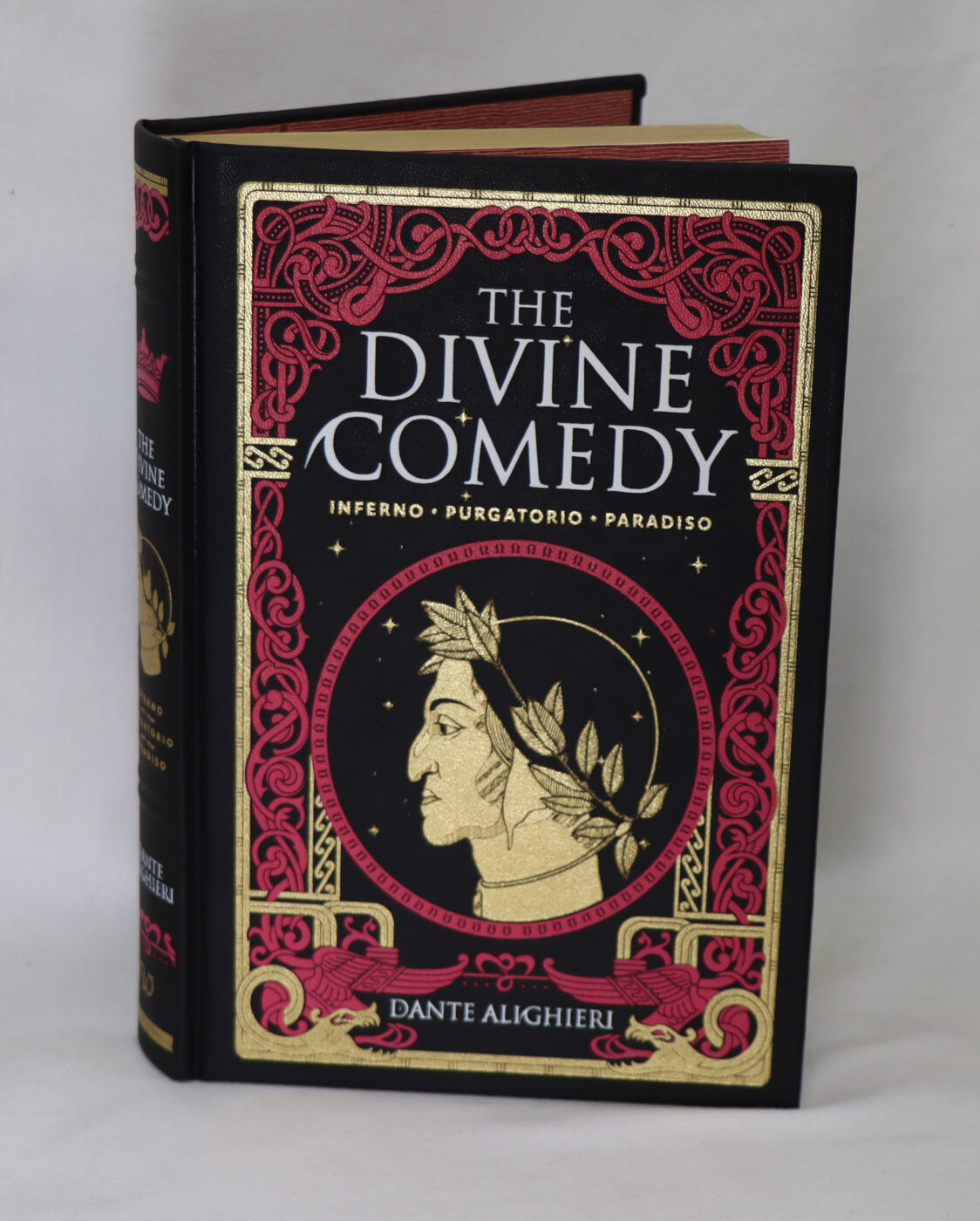
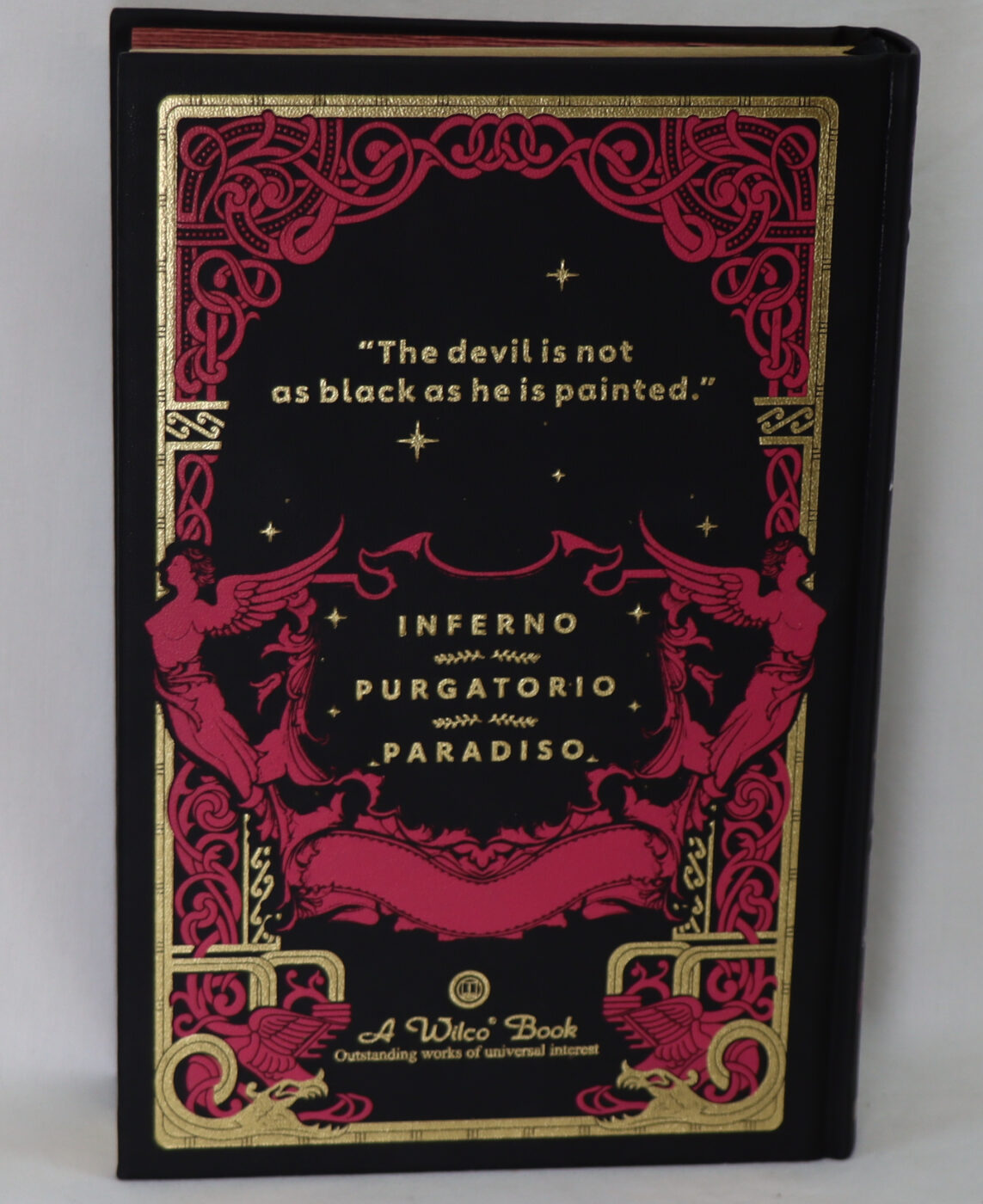
Black leathette binding with white and gilt title and design on the spine and front board.
We provide an in-depth photographic presentation of this item to stimulate your feeling and touch. More traditional book descriptions are immediately available.
- A £2 reduction when collected from FBA shop
The Divine Comedy is an Italian narrative poem by Dante Alighieri, begun c. 1308 and completed c. 1321, shortly before the author’s death. It is widely considered the pre-eminent work in Italian literature and one of the greatest works of Western literature. The poem’s imaginative vision of the afterlife is representative of the medieval worldview as it existed in the Western Church by the 14th century. It helped establish the Tuscan language, in which it is written, as the standardized Italian language. It is divided into three parts: Inferno, Purgatorio, and Paradiso.
The poem explores the condition of the soul following death and portrays a vision of divine justice, in which individuals receive appropriate punishment or reward based on their actions. It describes Dante’s travels through Hell, Purgatory, and Heaven. Allegorically, the poem represents the soul’s journey towards God, beginning with the recognition and rejection of sin (Inferno), followed by the penitent Christian life (Purgatorio), which is then followed by the soul’s ascent to God (Paradiso). Dante draws on medieval Catholic theology and philosophy, especially Thomistic philosophy derived from the Summa Theologica of Thomas Aquinas.
In the poem, the pilgrim Dante is accompanied by three guides: Virgil, who represents human reason, and who guides him for all of Inferno and most of Purgatorio; Beatrice, who represents divine revelation in addition to theology, grace, and faith; and guides him from the end of Purgatorio onwards; and Saint Bernard of Clairvaux, who represents contemplative mysticism and devotion to Mary the Mother, guiding him in the final cantos of Paradiso.
The work was originally simply titled Comedìa – so also in the first printed edition, published in 1472 – later adjusted to the modern Italian Commedia. The earliest known use of the adjective Divina appears in Giovanni Boccaccio’s biographical work Trattatello in laude di Dante (“Treatise in Praise of Dante”), which was written between 1351 and 1355 – the adjective likely referring to the poem’s profound subject matter and elevated style. The first edition to name the poem Divina Comedia in the title was that of the Venetian humanist Lodovico Dolce, published in 1555 by Gabriele Giolito de’ Ferrari.
Dante Alighieri (most likely baptized Durante di Alighiero degli Alighieri; c. May 1265 – September 14, 1321), widely known mononymously as Dante, was an Italian poet, writer, and philosopher. His Divine Comedy, originally called Comedìa (modern Italian: Commedia) and later christened Divina by Giovanni Boccaccio, is widely considered one of the most important poems of the Middle Ages and the greatest literary work in the Italian language.
At a time when Latin was still the dominant language for scholarly and literary writing—and when many Italian poets drew inspiration from French or Provençal traditions—Dante broke with both by writing in the vernacular, specifically his native Tuscan dialect. His De vulgari eloquentia (On Eloquence in the Vernacular) was one of the first scholarly defenses of the vernacular. His use of the Florentine dialect for works such as The New Life (1295) and Divine Comedy helped establish the modern-day standardized Italian language. His work set a precedent that important Italian writers such as Petrarch and Boccaccio would later follow.
Dante was instrumental in establishing the literature of Italy, and is considered to be among the country’s national poets and the Western world’s greatest literary icons. His depictions of Hell, Purgatory, and Heaven provided inspiration for the larger body of Western art and literature. He influenced English writers such as Geoffrey Chaucer, John Milton, and Alfred Tennyson, among many others. In addition, the first use of the interlocking three-line rhyme scheme, or the terza rima, is attributed to him. He is described as the “father” of the Italian language, and in Italy he is often referred to as il Sommo Poeta (“the Supreme Poet”).Dante, Petrarch, and Boccaccio are also called the tre corone (“three crowns”) of Italian literature
Want to know more about this item?
We are happy to answer any questions you may have about this item. In addition, it is also possible to request more photographs if there is something specific you want illustrated.
Ask a question
Related products
Share this Page with a friend
