
Tom Sawyer.
By Mark Twain
Printed: 1965
Publisher: Caxton Publishing Co. London
| Dimensions | 15 × 21 × 3.5 cm |
|---|---|
| Language |
Language: English
Size (cminches): 15 x 21 x 3.5
Condition: Fine (See explanation of ratings)
£30.00
Buy Now
Your items


Item information
Description
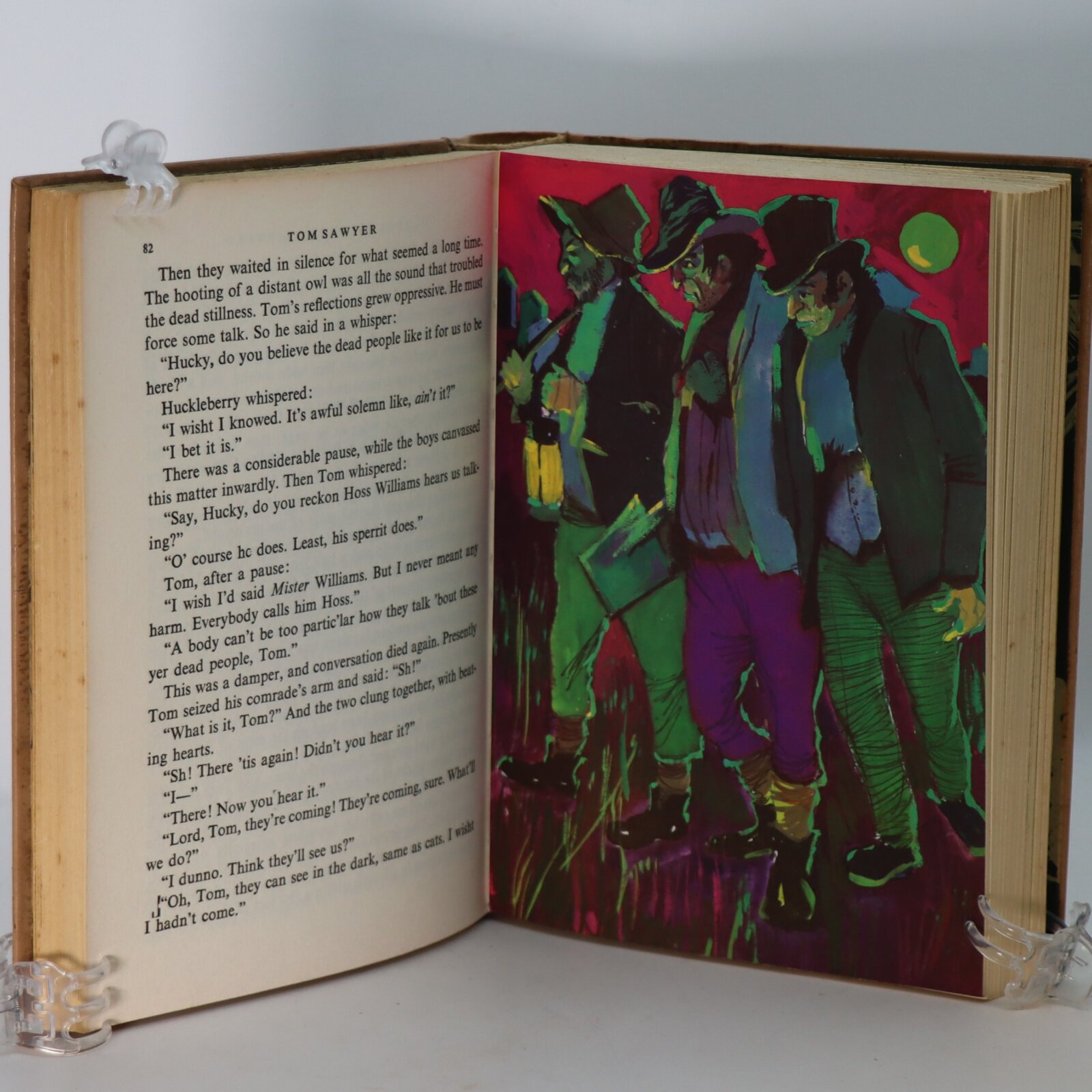
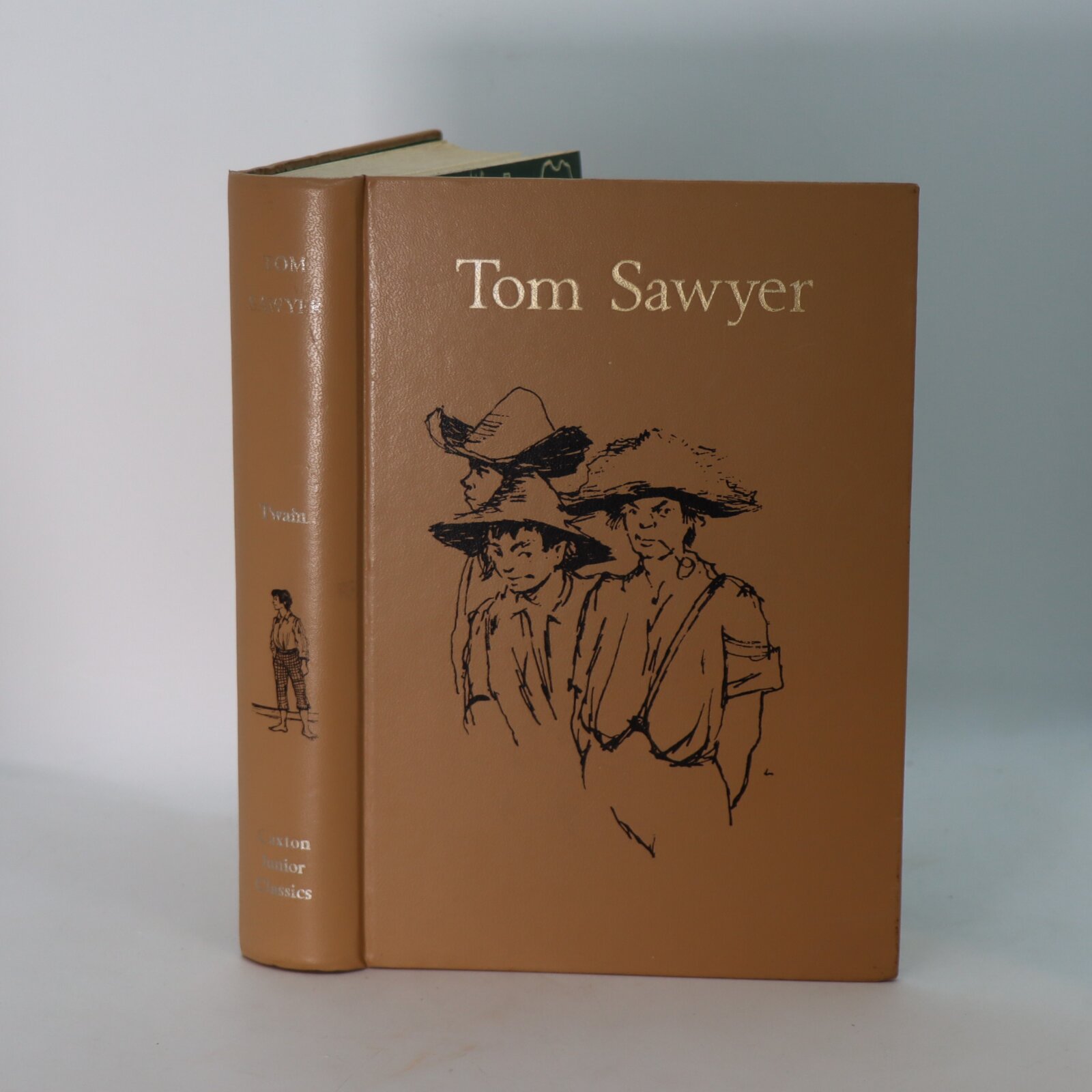
Tan leatherette binding with gilt title and black figure on the spine. Three drawn boy figures on the front board.
F.B.A. provides an in-depth photographic presentation of this item to stimulate your feeling and touch. More traditional book descriptions are immediately available.
A lovely children’s edition specially prepared with great empathy by Martin Frost’s father (a very distinguished soldier and master printer). The Adventures of Tom Sawyer is an 1876 novel by Mark Twain about a boy growing up along the Mississippi River. It is set in the 1840s in the town of St. Petersburg, which is based on Hannibal, Missouri, where Twain lived as a boy.
In the novel, Tom Sawyer has several adventures, often with his friend Huckleberry Finn. Originally a commercial failure, the book ended up being the bestselling of Twain’s works during his lifetime. Though overshadowed by its sequel, Adventures of Huckleberry Finn, the book is considered by many to be a masterpiece of American literature. It was one of
the first novels to be written on a typewriter.
Samuel Langhorne Clemens (November 30, 1835 – April 21, 1910), known by his pen name Mark Twain, was an American writer, humourist, entrepreneur, publisher, and lecturer. He was praised as the "greatest humourist the United States has produced and William Faulkner called him ‘the father of American literature’. His novels include The Adventures of Tom Sawyer (1876) and its sequel, Adventures of Huckleberry Finn (1884), the latter of which has often
been called the ‘Great American Novel ‘. Twain also wrote A Connecticut Yankee in King Arthur’s Court and Pudd’n head Wilson. Twain was raised in Hannibal, Missouri, which later provided the setting for Tom Sawyer and Huckleberry Finn. He served an apprenticeship with a printer and then worked as a typesetter, contributing articles to the newspaper of his older brother Orion Clemens. He later became a riverboat pilot on the Mississippi River before heading west to join Orion in Nevada. He referred humorously to his lack of success at mining, turning to journalism for the Virginia City Territorial Enterprise. His humorous story ‘The Celebrated Jumping Frog of Calaveras County’ was published in 1865, based on a story
that he heard at Angels Hotel in Angels Camp, California, where he had spent some time as a miner. The short story brought international attention and was even translated into French. His wit and satire, in prose and in speech, earned praise from critics and peers, and he was a friend to presidents, artists, industrialists, and European royalty. Initially an ardent American
imperialist who spoke out strongly in favour of American interests in the Hawaiian Islands, he became vice-president of the American Anti-Imperialist League from 1901 until his death in 1910. Twain earned a great deal of money from his writings and lectures but invested in ventures that lost most of it—such as the Paige Compositor, a mechanical typesetter that failed because of its complexity and imprecision. He filed for bankruptcy in the wake of these financial setbacks, but in time overcame his financial troubles with the help of Standard Oil executive Henry Huttleston Rogers. He eventually paid all his creditors in full, even though his bankruptcy relieved him of having to do so. Twain was born shortly after an appearance
of Halley’s Comet, and he predicted that he would ‘go out with it’ as well, dying the day after the comet made its closest approach to Earth.
Want to know more about this item?
We are happy to answer any questions you may have about this item. In addition, it is also possible to request more photographs if there is something specific you want illustrated.
Ask a question
Related products

Share this Page with a friend
