
The Theory of Moral Sentiments.
By Adam Smith
Printed: Circa 2025
Publisher: Unkown
| Dimensions | 16 × 23 × 2 cm |
|---|---|
| Language |
Language: English
Size (cminches): 16 x 23 x 2
Condition: As new (See explanation of ratings)
£11.00
Buy Now
Your items

Item information
Description
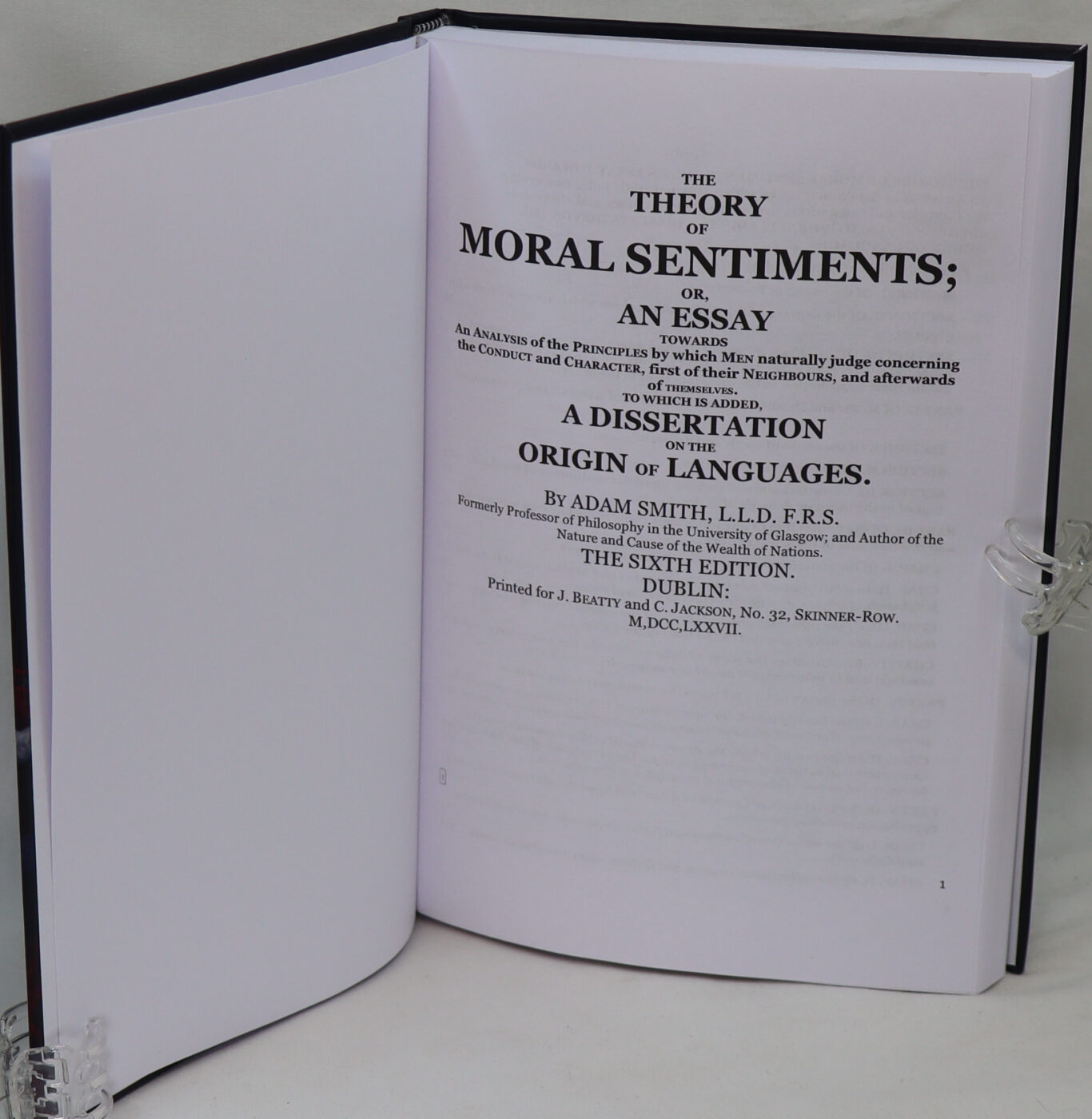
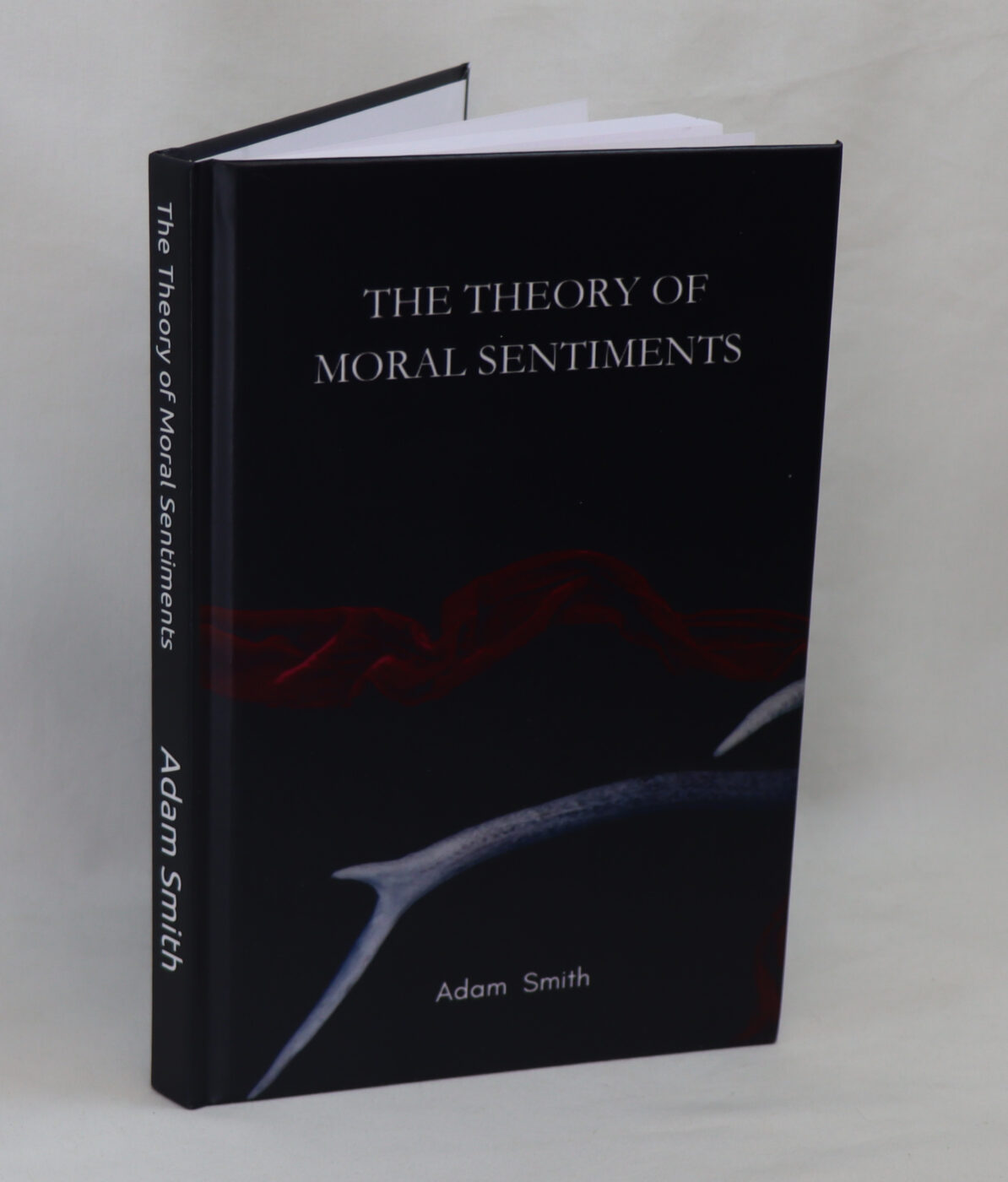
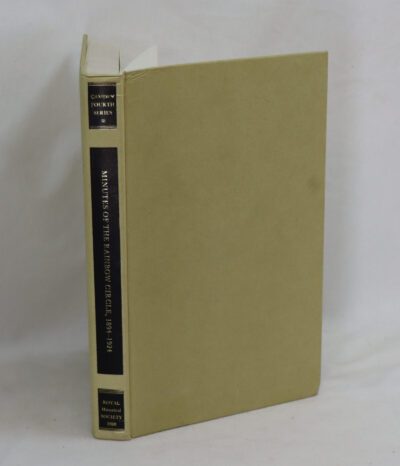
Black hardboard binding with title.
We provide an in-depth photographic presentation of this item to stimulate your feeling and touch. More traditional book descriptions are immediately available.
- A £2 reduction when collected from FBA shop
Adam Smith’s The Theory of Moral Sentiments is a foundational philosophical text originally published in 1759.
Core Themes & Concepts
Long before publishing The Wealth of Nations, Smith established the moral underpinnings of his social and economic theories in this work. It focuses heavily on moral psychology rather than strict rules:
- Sympathy: Smith uses the term etymologically to mean “fellow feeling” or the natural human capacity to share and understand the emotions of others.
- The Impartial Spectator: A central mechanism in his philosophy. Smith argues that we judge our own behavior by imagining how a disinterested, objective outsider would view it.
- Foundation of Society: The book argues that society survives and thrives not purely through top-down laws or self-interest, but through our innate desire to act in ways that earn the approval of our peers.
Why Context Matters
Because the publisher is unknown, the text itself could vary in quality. The definitive scholarly resource for this work is the Glasgow Edition of the Works and Correspondence of Adam Smith.
From the Tufts & Co. Cogito Series: What drives human morality? How do we balance self-interest with compassion for others? In The Theory of Moral Sentiments, Adam Smith—best known for The Wealth of Nations—delivers a groundbreaking exploration of ethics, virtue, and human nature. Far from being a cold advocate of markets alone, Smith presents a rich and deeply humanistic vision of society, where empathy and moral judgment shape our interactions just as much as economic forces. Originally published in 1759, this masterpiece of moral philosophy argues that our sense of right and wrong is not dictated by rigid rules but emerges from our ability to put ourselves in others’ shoes. Through the concept of the “impartial spectator,” Smith explains how we develop moral values, social harmony, and a just society—not through laws alone, but through shared human emotions.
What’s Inside:
- The Nature of Sympathy – How our ability to empathize shapes morality.
- The “Impartial Spectator” – An inner guide to ethical decision-making.
- Virtue, Justice, and Society – How moral sentiments contribute to a functioning social order.
Why You’ll Love This Book:
- A Masterpiece of Moral Philosophy – Essential for anyone interested in ethics, psychology, or political thought.
- A Human Side to Economics – Smith’s vision goes beyond markets, exploring what makes societies thrive.
- Timeless and Relevant – An insightful read for understanding modern debates on morality, justice, and human nature.
If you are interested in philosophy, economics, psychology, or simply the question of what makes us moral beings, The Theory of Moral Sentiments is an essential and thought-provoking read.
Review:
- This is an excellent scholarly edition of Professor Smith’s “The theory of moral sentiments”. Reading Adam Smith’s “The theory of moral sentiments”, I was engaged by his polite and careful writing and by his devotion to individual conscience (“The love of praise-worthiness is by no means derived altogether from the love of praise. Those two principles, though they resemble one another, though they are connected, and often blended with one another, are yet, in many respects, distinct and independent of one another” Part III Chapter II paragraph 2). Smith vigorously defends human integrity, rejecting Dr Mandeville’s allegations that human beings are all hypocrites who make a mere show of public-spiritedness (Part VII Section II Chapter IV paragraph 7), while Smith acknowledges that occasionally this sort of behaviour occurs (for example, being visited hypocritically on your sick bed by a secret enemy Part III Chapter III paragraph 24). Smith stands a proud and enlightened man proclaiming how natural it is for human beings to adhere to moral and ethical laws. Yet in Part V Chapter I paragraph 4 he says (with principal regard to the arts, in fact, but relevant to morals as these too can be said to have beauty) “Few men have so much experience and acquaintance with the different modes which have obtained in remote ages and nations, as to be thoroughly reconciled to them or to judge with impartiality between them, and what takes place in their own age and country”, and in Part VII Section III Chapter III paragraph 11 he acknowledges the influence the sentiments of others around you can have on your own moral perspective. I wish I could believe that mankind could possibly enjoy a secure moral anchor in the tempest of human affairs and not be gripped by social insanities such as the antisemitism of 1930s Germany, where people’s influence on one another’s moral perspectives allowed a pernicious doctrine to flourish. What sort of world must Adam Smith have lived in to allow him to form these opinions? Certainly Smith was a royalist with a firm belief in the hierarchical structure of society (“Nature has wisely judged that the distinction of ranks, the peace and order of society, would rest more securely upon the plain and palpable difference of birth and fortune, than upon the invisible and often uncertain difference of wisdom and virtue.” Part VI Section II Chapter I paragraph 20). Is it really only from within the precincts of some enlightened dictatorship we can enjoy any real moral security? That even this might not be such a Utopia is suggested to a modern reader reading Part V Chapter II paragraph 4, where Smith, in explaining the different attitudes and behaviours expected from the different ranks within society, suggests that different moral codes apply too. Smith, of course, was a respectable part of the eighteenth century British establishment and there is no doubt that behind “The theory of moral sentiments” lies a certain degree of Christian utopianism. Revealing, I think, is what Smith says in Part II Section II Chapter III paragraph 2. “Society may subsist among different men, as among different merchants, from a sense of its utility, without any mutual love or affection; and though no man in it should owe any obligation, or be bound in gratitude to any other, it may still be upheld by a mercenary exchange of good offices according to an agreed valuation.” It is apposite to mention briefly in memory of the recently deceased liberal and gentle Professor Robert Solow that, as is evident from Smith’s irritated remarks about tooth-picks, ear-picks and nail cutters in Part IV Chapter I paragraph 8, Smith was at the time he wrote “The theory of moral sentiments” no technophile – an attitude which was going to have to change as the industrial revolution got going. A modern reader must be a little careful too over Smith’s use of language as, for example, he uses the word “sympathy” not in the modern sense of feeling sorry for someone, but in a sense closer to the etymology of the word, namely, a parallel and simultaneous similar feeling to that being experienced by the other person. The word “diffidence” is another example. He does not mean shyness, but means something closer to the roots of the word, meaning scepticism or lack of trust. I personally find Smith very accessible and readable, however.
Adam Smith (16 June 1723 NS (5 June 1723 OS) – 17 July 1790) was a Scottish moral philosopher, pioneer of political economy, and a key figure in the Scottish Enlightenment.
Smith is best known for two classic works: The Theory of Moral Sentiments (1759), and An Inquiry into the Nature and Causes of the Wealth of Nations (1776). The latter, usually abbreviated as The Wealth of Nations, is considered his magnum opus and the first modern work of economics. Smith is cited as the father of modern economics and is still among the most influential thinkers in the field of economics today.
Smith studied social philosophy at the University of Glasgow and at Balliol College, Oxford, where he was one of the first students to benefit from scholarships set up by fellow Scot, John Snell. After graduating, he delivered a successful series of public lectures at Edinburgh, leading him to collaborate with David Hume during the Scottish Enlightenment. Smith obtained a professorship at Glasgow teaching moral philosophy, and during this time he wrote and published The Theory of Moral Sentiments. In his later life, he took a tutoring position that allowed him to travel throughout Europe, where he met other intellectual leaders of his day.
Smith laid the foundations of classical free market economic theory. The Wealth of Nations was a precursor to the modern academic discipline of economics. In this and other works, he expounded upon how rational self-interest and competition can lead to economic prosperity. Smith was controversial in his own day and his general approach and writing style were often satirised by Tory writers in the moralising tradition of William Hogarth and Jonathan Swift. In 2005, The Wealth of Nations was named among the 100 Best Scottish Books of all time. The minor planet 12838 Adamsmith was named in his memory.
Want to know more about this item?
We are happy to answer any questions you may have about this item. In addition, it is also possible to request more photographs if there is something specific you want illustrated.
Ask a question





Share this Page with a friend
