
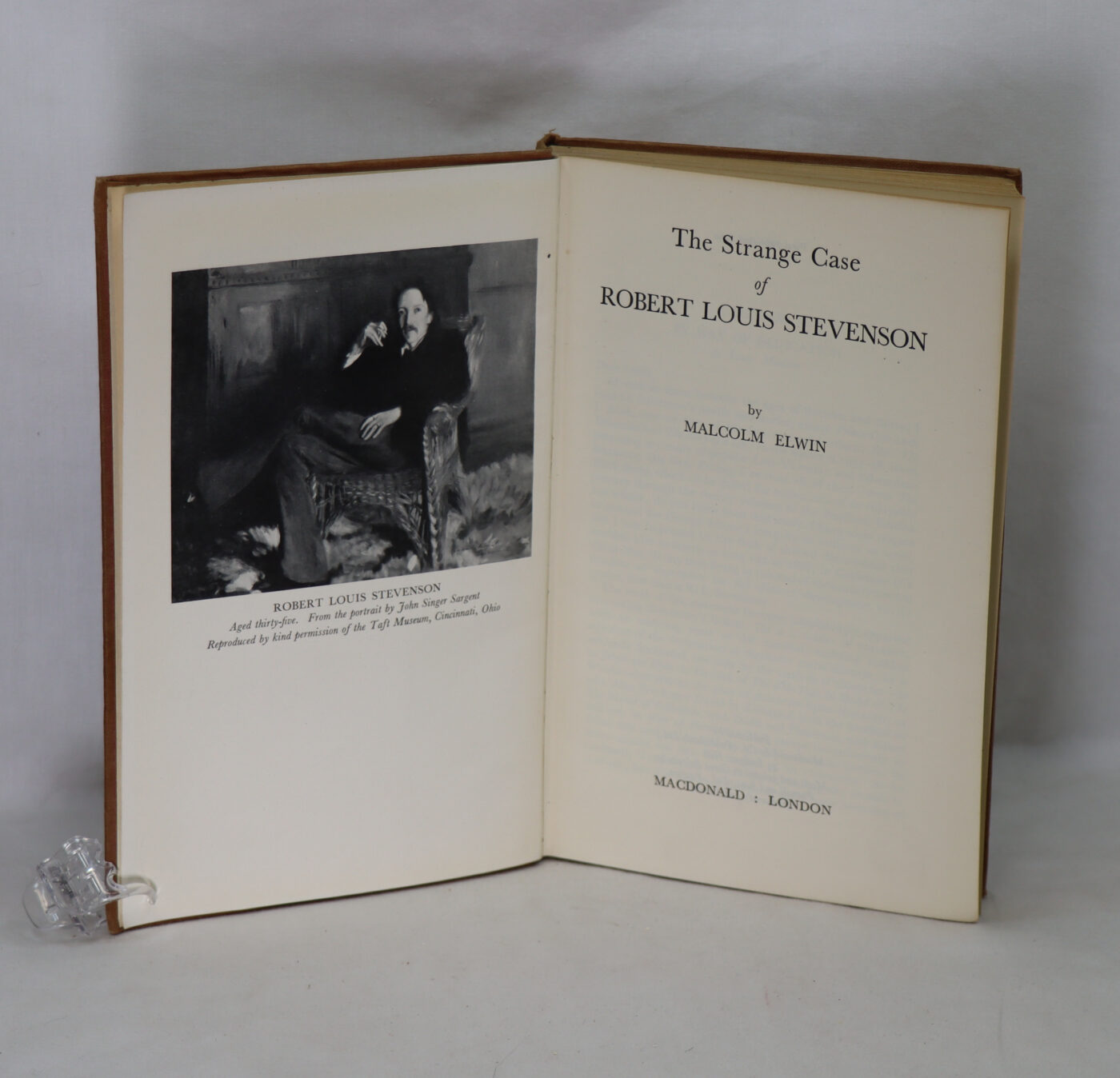
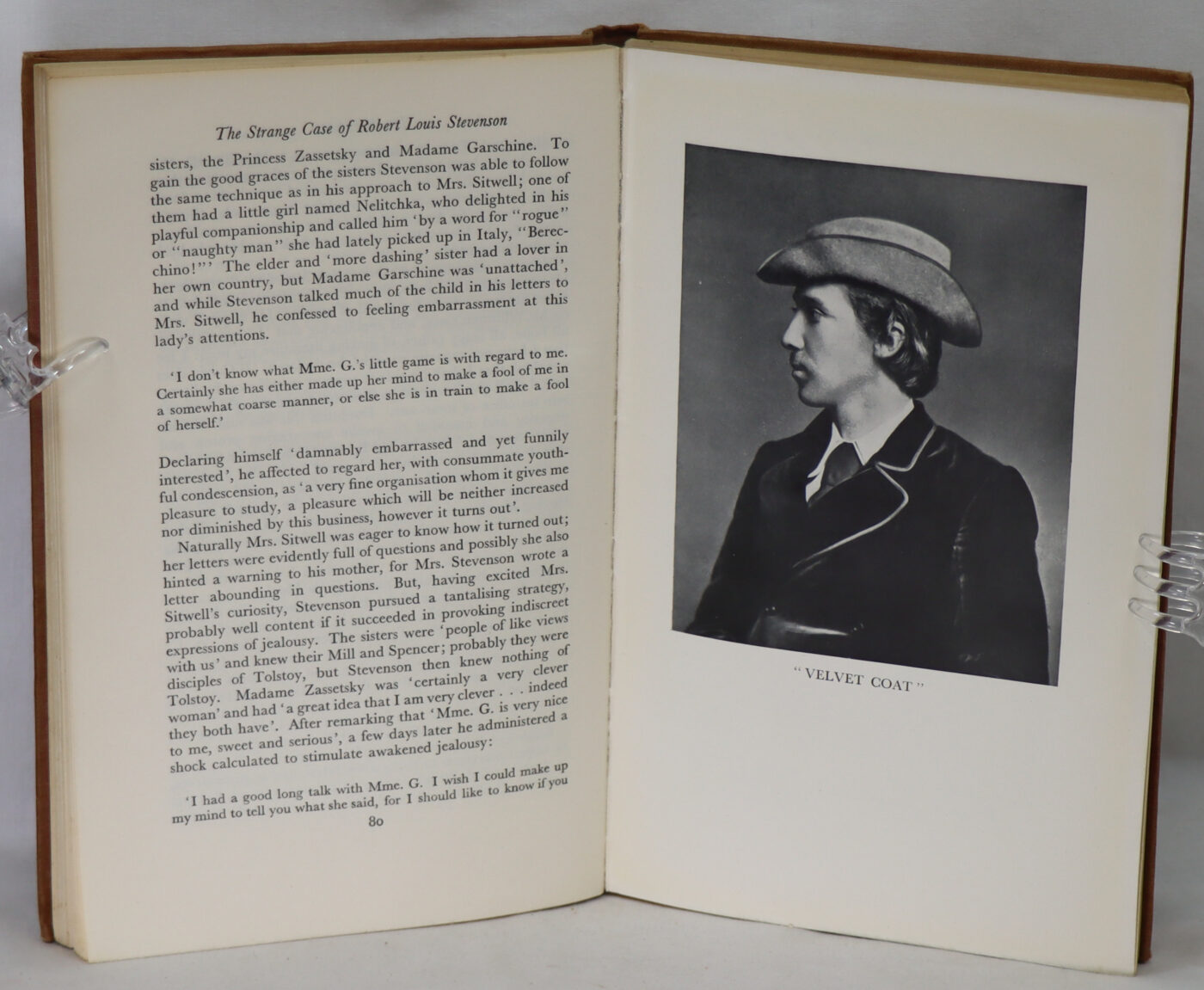
The Strange Case of Robert Louis Stevenson.
By Malcolm Elwin
Printed: 1950
Publisher: Macdonald & Co. London
Edition: First edition
| Dimensions | 15 × 22 × 2 cm |
|---|---|
| Language |
Language: English
Size (cminches): 15 x 22 x 2
Condition: Good (See explanation of ratings)
£26.00
Buy Now
Your items

Item information
Description
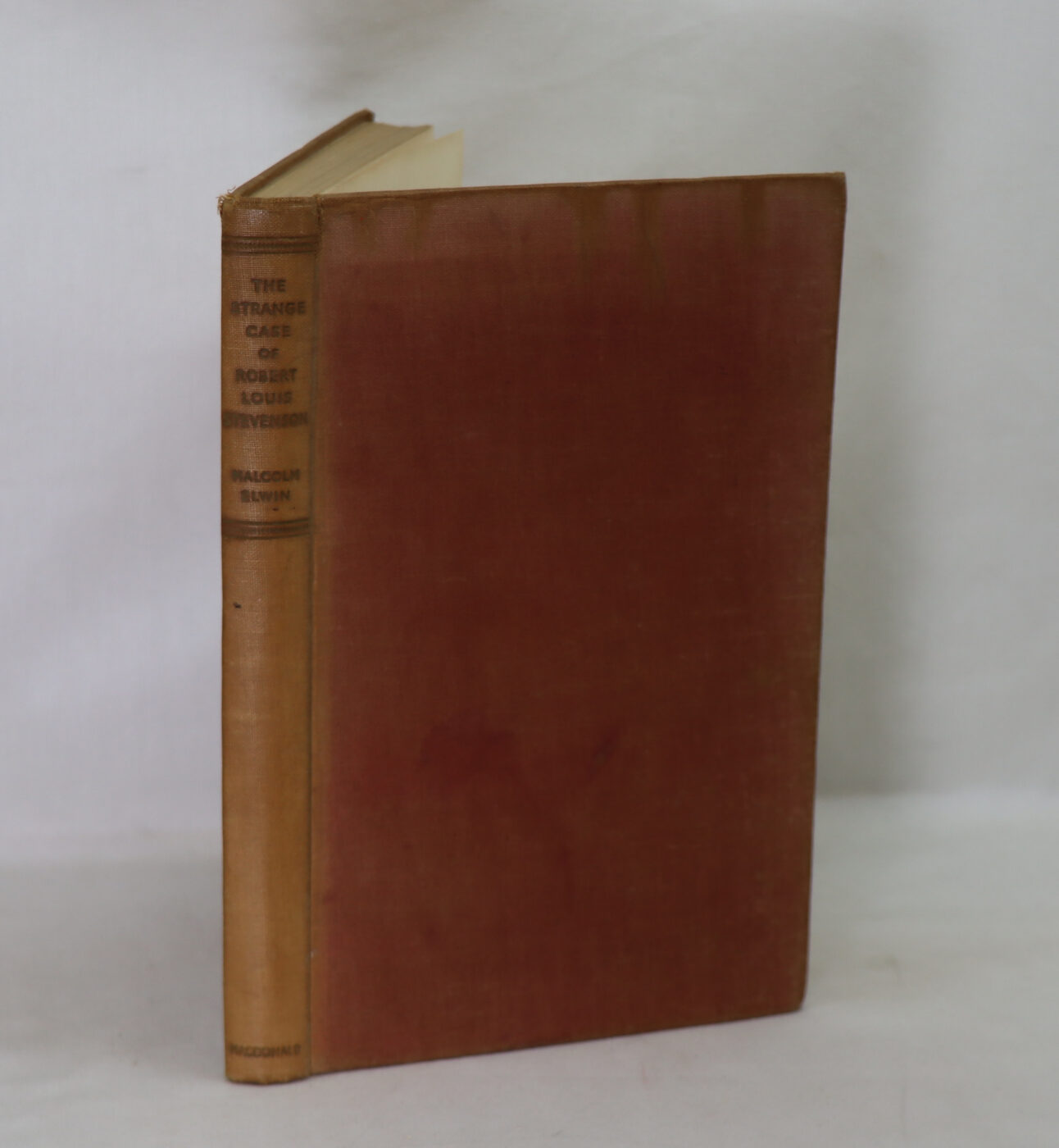
Tan cloth binding with gilt title on the spine.
We provide an in-depth photographic presentation of this item to stimulate your feeling and touch. More traditional book descriptions are immediately available
Note: This book carries a £5.00 discount to those that subscribe to the F.B.A. mailing list
A rare but misleadingly an unloved book. Such is a mistake as its quirkyness can grow upon you. For this book’s conditions, please view our photographs. Perhaps the strangest thing about ‘The Strange Case of Robert Louis Stevenson’ is the presence of Harriett Jay in the tale – admittedly more as a passive audience for the recounting of it than an active participant. There is a vague connection between the two authors, Harriett Jay’s (equally forgotten) brother-in-law, Robert Buchanan, did adapt a short story of Stevenson’s as a curtain-raiser for his play, ‘Sophia’. Actually, Buchanan did believe that Jack the Ripper was two men, and, in a way, that is what Peter Regan gives us here. It is essentially an’ origin story’, recounting how Stevenson got the idea for Jekyll and Hyde, but nothing so mundane as a bad dream. Here that other fabled Victorian monster, Spring-heeled Jack gets in on the act. And there’s even room for a couple of cameos from Joseph Merrick and Oscar Wilde. The action moves at a very fast pace and I suspect the novel may have started life as a screenplay. It would definitely make a good film, although, no doubt, Harriett Jay would be replaced by Beatrix Potter.
Malcolm Elwin was born in 1903, the son of a Nottingham businessman. He was privately educated (possibly on health grounds) and became a student at University College, Oxford, but seems to have left without a degree in order to embark on a literary career. As that career progressed during the 1930s he corresponded with many of the figures of the literary establishment.
Want to know more about this item?
We are happy to answer any questions you may have about this item. In addition, it is also possible to request more photographs if there is something specific you want illustrated.
Ask a question
Related products
Share this Page with a friend
