
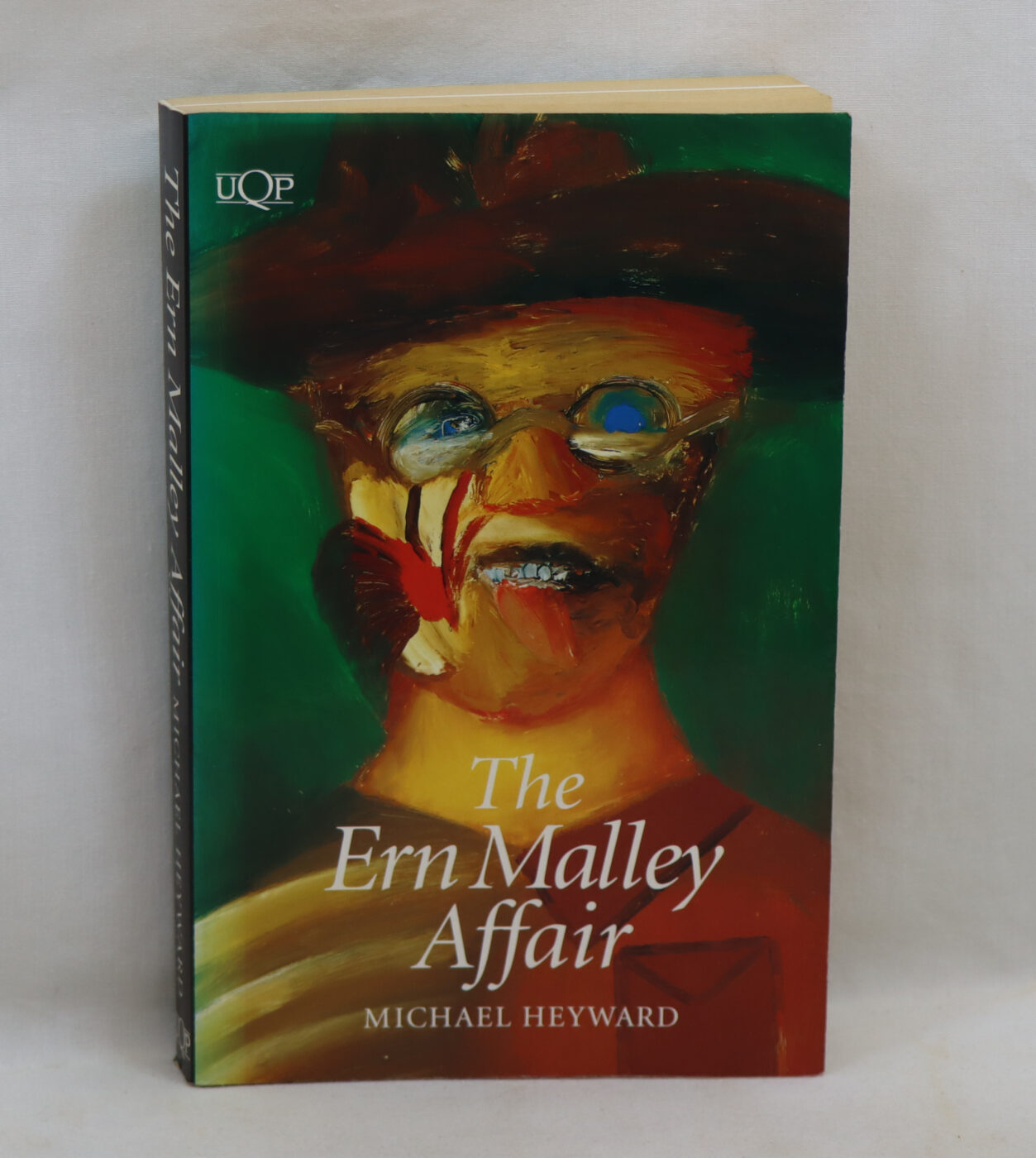
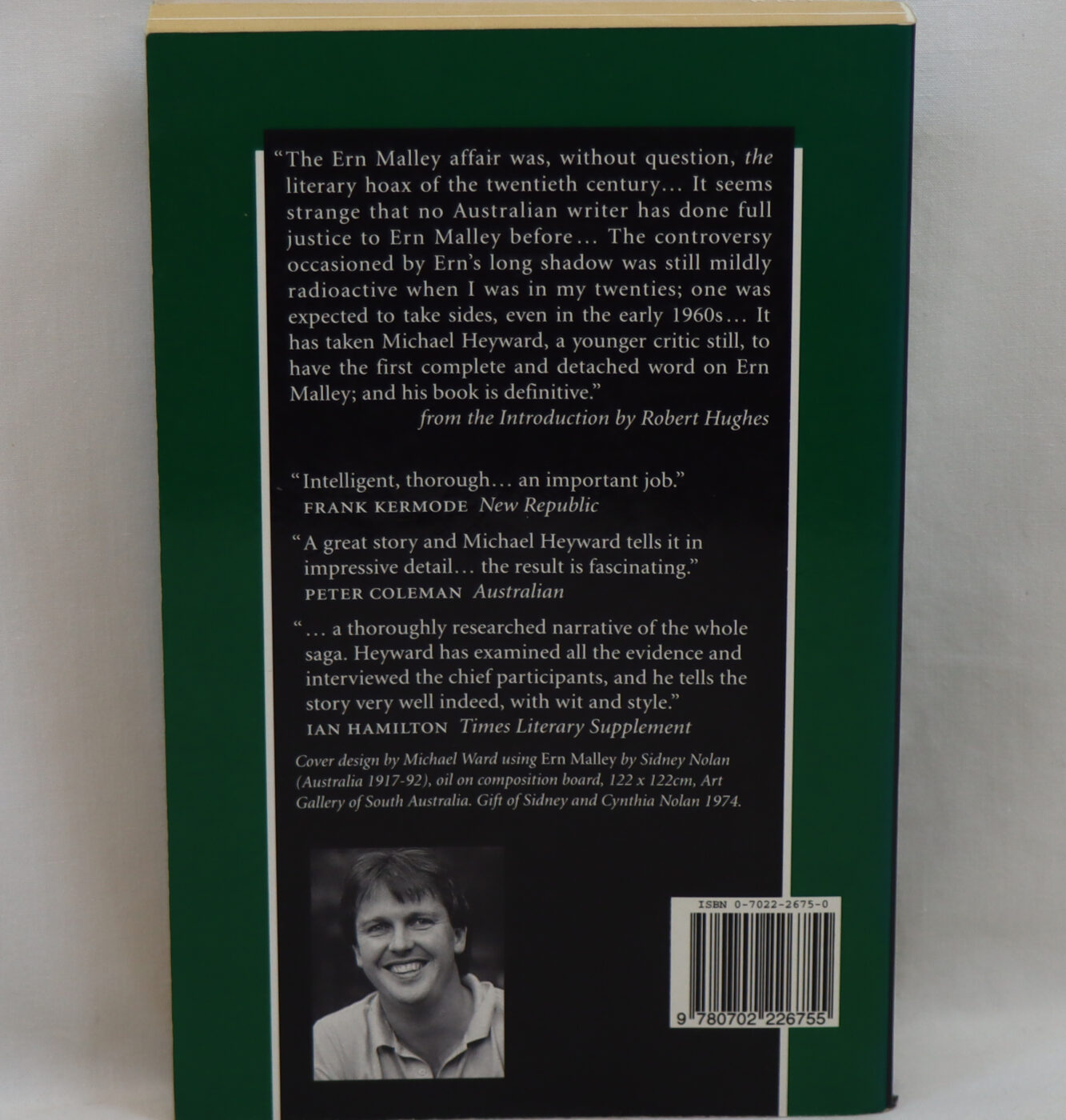
The Ern Malley Affair.
By Michael Heyward
Printed: 1994
Publisher: University of Queensland Press.
| Dimensions | 11 × 18 × 2 cm |
|---|---|
| Language |
Language: English
Size (cminches): 11 x 18 x 2
Condition: Good (See explanation of ratings)
£10.00
Buy Now
Your items
Item information
Description
Paperback. Black and green cover with white title.
Please view the photographs for book details. A £2 reduction when collected from the FBA shop.
An original book from the library gathered by the famous Cambridge Don, computer scientist, food and wine connoisseur, Jack Arnold LANG. In 2008, Jack was one of the co-founders of the Raspberry Pi Foundation, alongside other members of the Department, and acted as the Foundation’s Chair. The project’s original goals were modest: to build and distribute low-cost computers for prospective applicants to our Computer Science degree. Initially the project was a “success disaster”, as Jack would say, as demand far outstripped the low-scale manufacturing plans. Ultimately the Raspberry Pi became the UK’s most successful computer with more than 60 million sold to date. Jack was drawn to the educational possibilities of the Raspberry Pi, its potential uses in emerging economies and the way it could support self-directed learning.
The 1944 Ern Malley hoax was a famous Australian literary deception created by poets James McAuley and Harold Stewart to discredit modernism. They fabricated the persona of deceased poet Ern Malley and submitted nonsensical poems to the avant-garde magazine Angry Penguins, which editor Max Harris enthusiastically published, hailing them as masterpieces before the hoax was exposed.
Key details of the hoax:
The Creators: Australian Army officers and poets Harold Stewart and James McAuley concocted the hoax to prove that modern poetry was “gibberish nonsense”.
The Method: In 1943, they created seventeen poems in one afternoon using a dictionary, a report on mosquito breeding, and random books, creating a “serious” work of deliberate nonsense.
The Setup: They invented “Ethel Malley,” who wrote to editor Max Harris claiming her late brother, Ern, had left behind these poems.
The Reaction: Max Harris, a leading proponent of Australian modernism, published the poems in Angry Penguins, championing them as a new, profound voice.
The Exposure: The hoax was exposed in June 1944, resulting in the humiliation of Harris and, ironically, the conviction of Harris for publishing “obscene” material, as some poems were deemed indecent.
Despite being created as a joke, the Ern Malley poems have been acknowledged by some critics for their unexpected literary value, with the fictional poet becoming more famous than his creators.
Want to know more about this item?
We are happy to answer any questions you may have about this item. In addition, it is also possible to request more photographs if there is something specific you want illustrated.
Ask a question
Related products
Share this Page with a friend
