
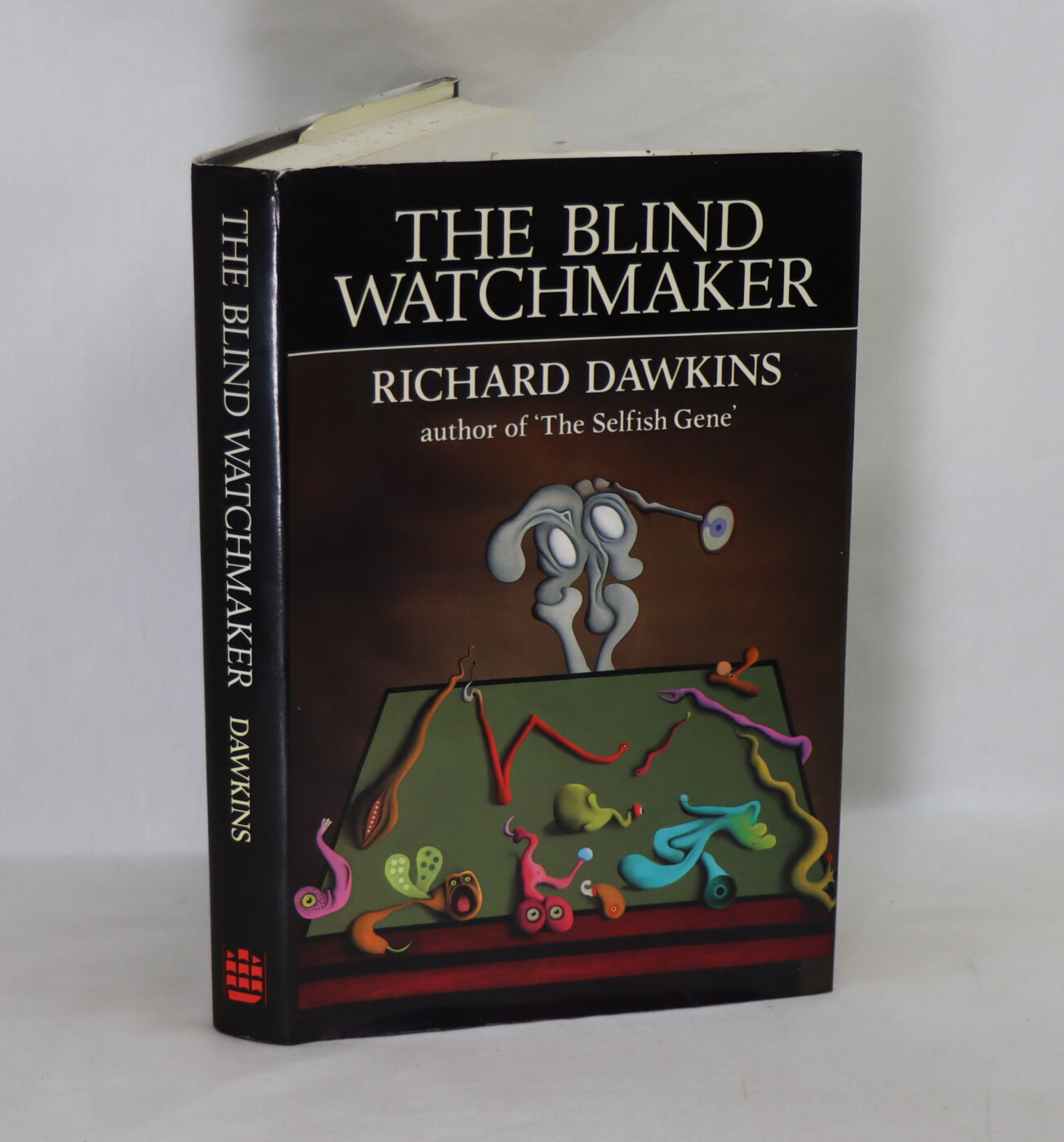
The Blind Watchmaker.
By Richard Dawkins
ISBN: 9780393315707
Printed: 1986
Publisher: Longman Scientific & Technical.. Harlow
| Dimensions | 16 × 24 × 3 cm |
|---|---|
| Language |
Language: English
Size (cminches): 16 x 24 x 3
Condition: Very good (See explanation of ratings)
£44.00
Buy Now
Your items

Item information
Description
In the original dust jacket. Black cloth binding with gilt title on the spine.
We provide an in-depth photographic presentation of this item to stimulate your feeling and touch. More traditional book descriptions are immediately available
- Note: This book carries a £5.00 discount to those that subscribe to the F.B.A. mailing list
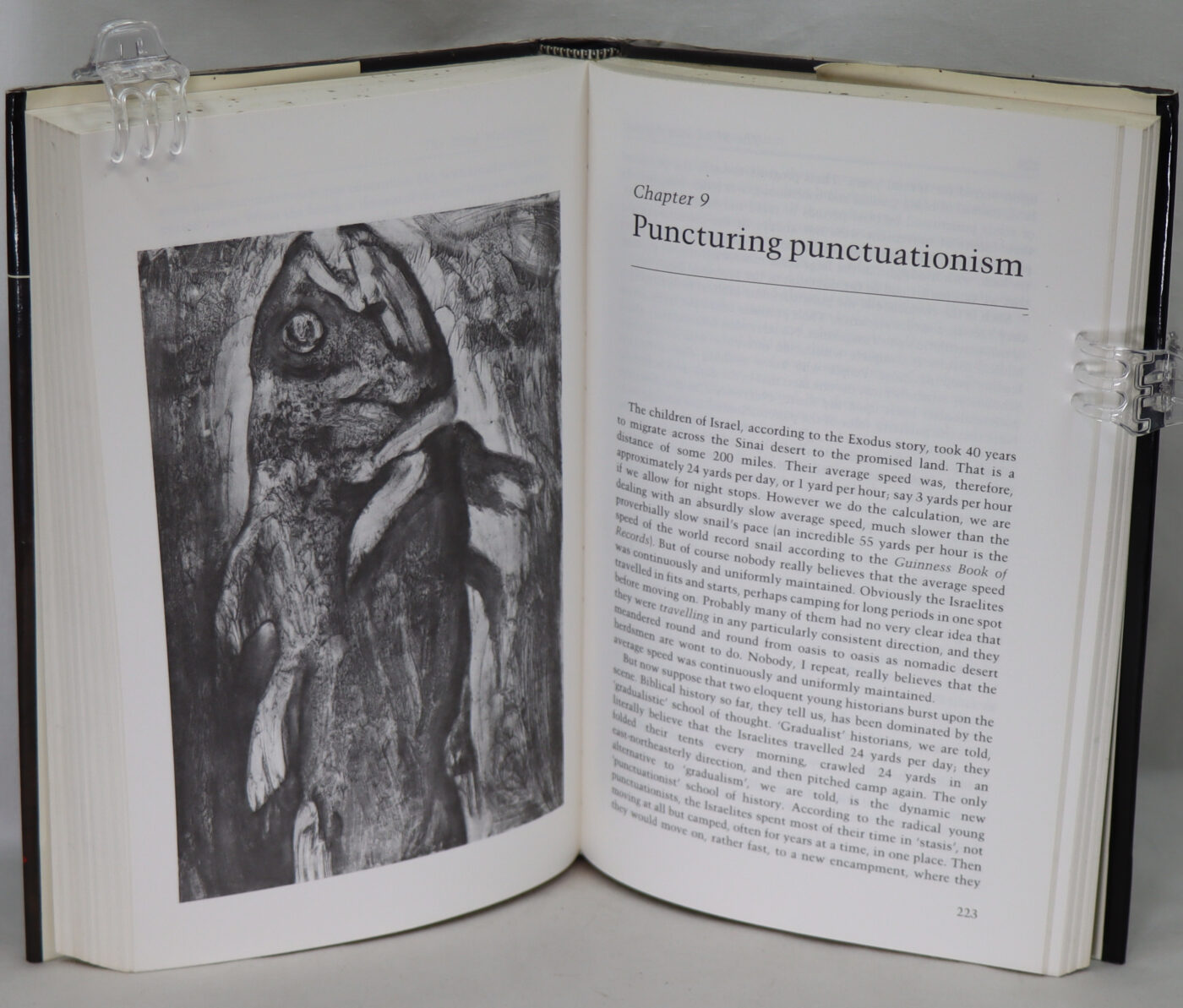
First Edition. For conditions, please view the photographs. You can sum up the idea at the heart of this book in one sentence: ‘that all life on Earth arose because molecules developed a way of self- replicating, and that life evolved into more sophisticated forms because these replications were subject to random variation and natural selection’.
This giant and powerful theory is explained in detail from a number of different angles – mostly attempts to quash rival theories. For the better part, the book is great but I did find some chapters a little tedious. For instance, I now understand that ‘taxonomy’ is an incredibly important part of the theory but the chapter dedicated to it didn’t, for me, lend any weight to the overall argument.
However, there are some brilliant chapters too. The description of how bats ‘see’ the world using only sound (‘echo-location’) is fascinating – it underlines the idea that our use of light waves (‘vision’) is just one of a number of alternative sensory methods that have evolved on Earth. I also liked the parallel Prof. Dawkins draws between DNA and information technology (even going as far as suggesting that since DNA is just a way of passing on information, once machines find a way of self-replicating, computers might out-evolve it). Also fascinating is the discussion of ‘positive’ and ‘negative’ feedback loops. Previously, I only understood these in engineering terms. Understanding how they apply to any system (including evolution) is an immensely powerful idea.
There is one idea that this book planted in my mind that is highly depressing. If Darwin was right (and it seems very likely), does it not mean that life as we know it is utterly bereft of meaning? Obviously, we are not here by accident (natural selection is not an accidental process) but, however wonderful and awe-inspiring the idea of evolution is, it essentially means we are here – in this form – because of the random variations of molecular chains. It’s not a great feeling.
Richard Dawkins (born 26 March 1941) is a British evolutionary biologist, zoologist, science communicator and author. He is an emeritus fellow of New College, Oxford, and was Simonyi Professor for the Public Understanding of Science at the University of Oxford from 1995 to 2008, and is on the advisory board of the University of Austin. His book The Selfish Gene (1976) popularised the gene-centred view of evolution and coined the word meme. Dawkins has won several academic and writing awards.
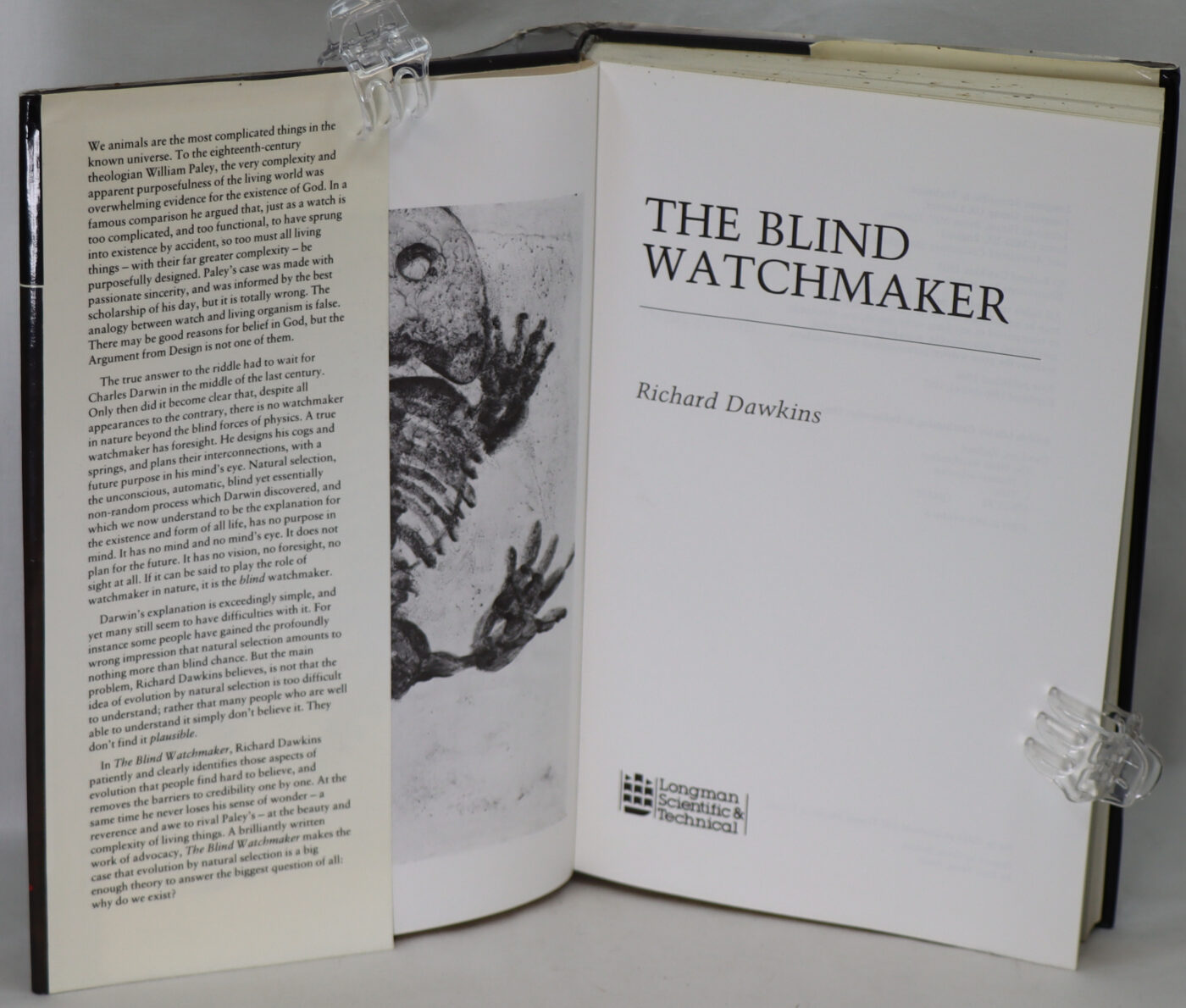
A vocal atheist, Dawkins is known for his criticism of creationism and intelligent design. He wrote The Blind Watchmaker (1986), in which he argues against the watchmaker analogy, an argument for the existence of a creator deity based upon the complexity of living organisms. Instead, he describes evolutionary processes as analogous to a blind watchmaker, in that reproduction, mutation, and natural selection are unguided by any sentient designer. In his book The God Delusion (2006) he argues that a supernatural creator almost certainly does not exist and calls religious faith a delusion. The Sunday Times described the book as one of the 12 most influential books since World War II. He founded the Richard Dawkins Foundation for Reason and Science in 2006. Dawkins has published two volumes of memoirs, An Appetite for Wonder (2013) and Brief Candle in the Dark (2015)
Want to know more about this item?
We are happy to answer any questions you may have about this item. In addition, it is also possible to request more photographs if there is something specific you want illustrated.
Ask a question
Related products








Share this Page with a friend
