
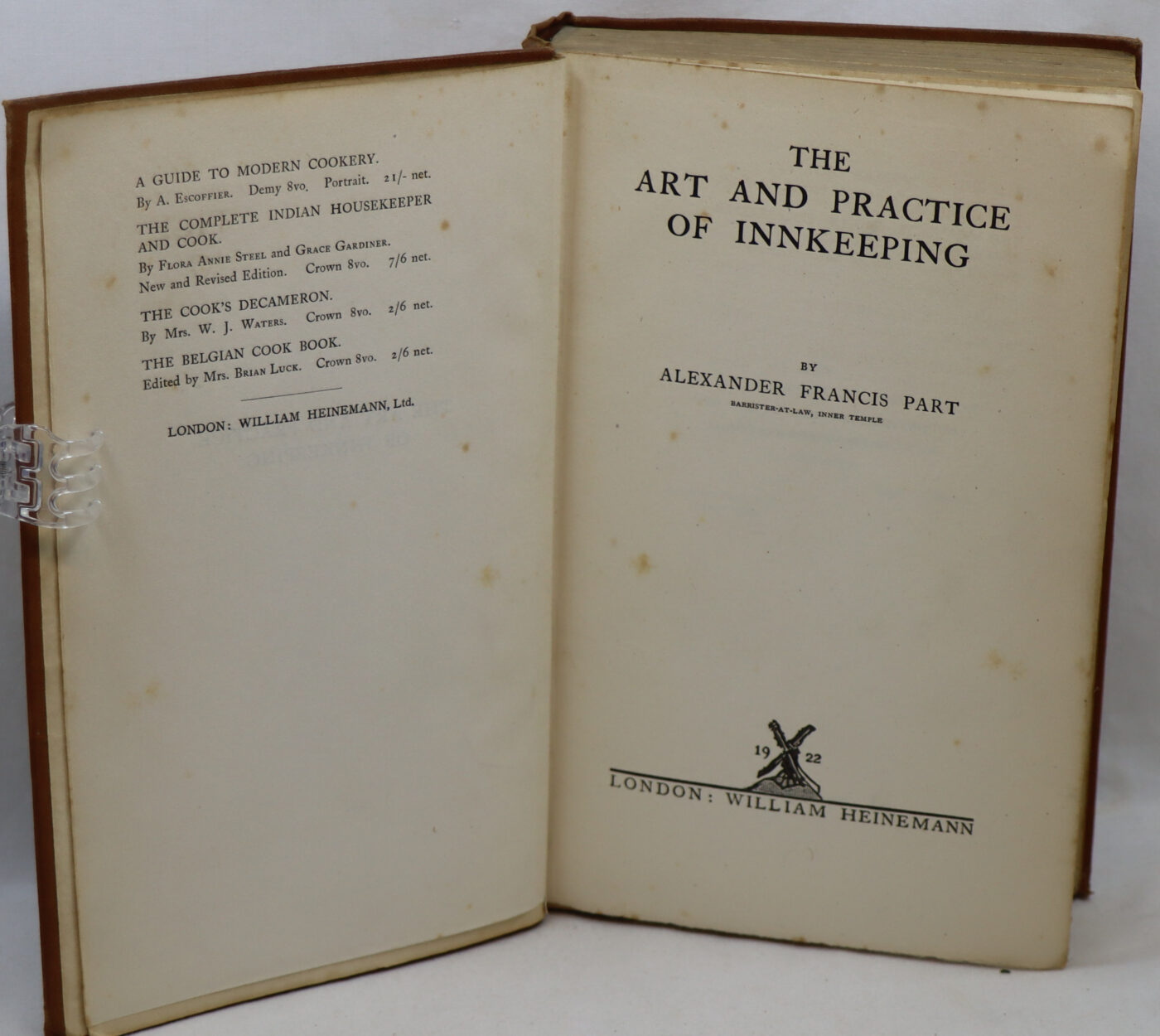
The Art and Practice of Innkeeping.
By Alexander Francis Part
Printed: 1922
Publisher: William Heinemann. London
| Dimensions | 15 × 23 × 4 cm |
|---|---|
| Language |
Language: English
Size (cminches): 15 x 23 x 4
Condition: Fair (See explanation of ratings)
£44.00
Buy Now

Item information
Description
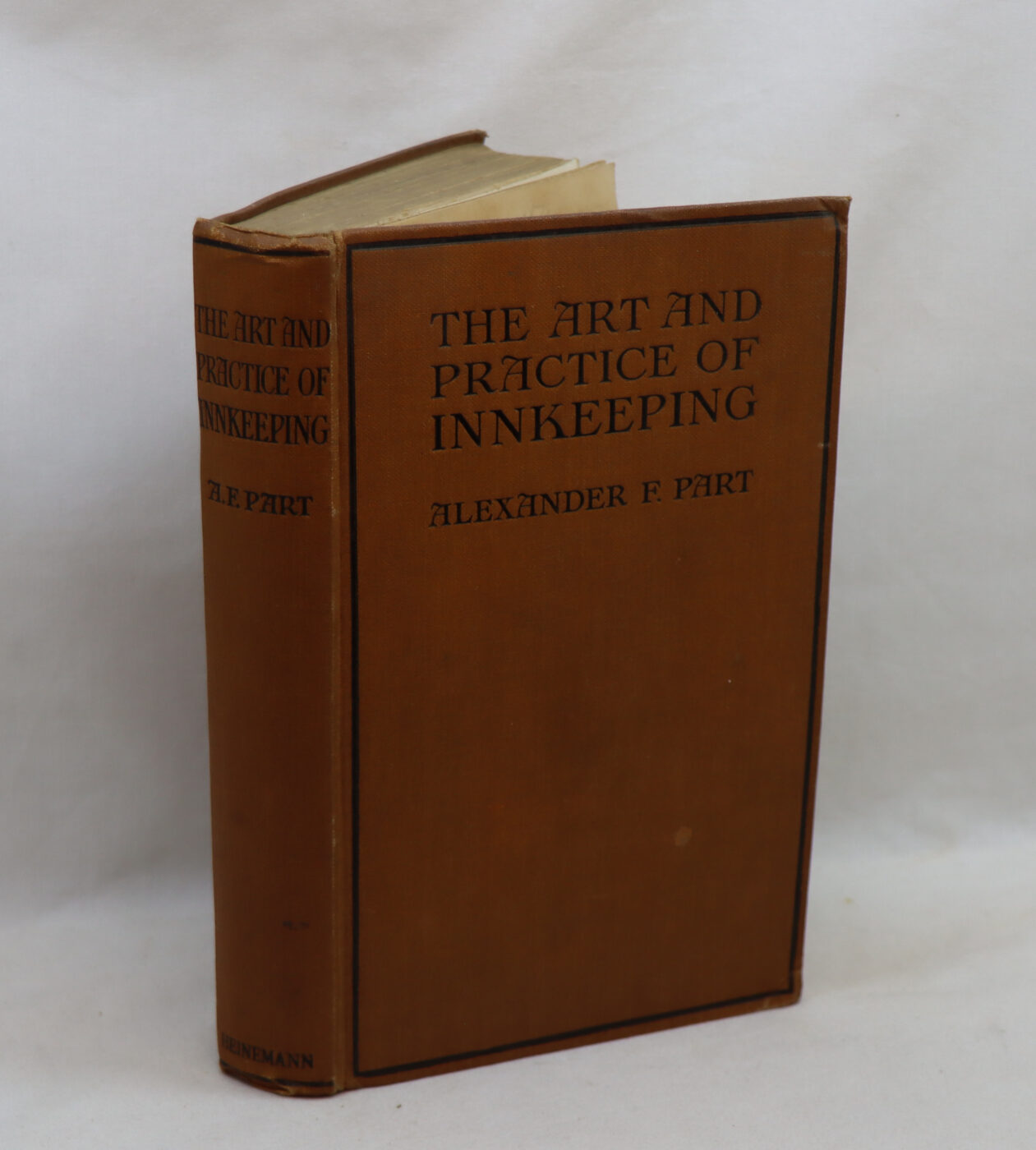
Brown cloth binding with a black title on the spine and front board.
We provide an in-depth photographic presentation of this item to stimulate your feeling and touch. More traditional book descriptions are immediately available.
- Note: This book carries a £5.00 discount to those that subscribe to the F.B.A. mailing list
An original copy of this famous book
This classic guide to innkeeping, originally published in 1922, offers a comprehensive look into the principles and practices of managing hotels, inns, and licensed houses. Authored by Alexander Francis Part, a barrister-at-law, the book provides a deep dive into the intricacies of the hospitality industry, blending practical advice with philosophical insights.
Throughout the book, Part emphasizes the importance of knowledge and learning in the trade, debunking the myth that experience alone is sufficient for success in innkeeping. He discusses various aspects of the business, from legal considerations and catering to staff management and customer service.
The book is divided into fourteen chapters, each focusing on different elements essential to innkeeping:
- Preliminary: An introduction to the significance of inns and the need for education in the trade.
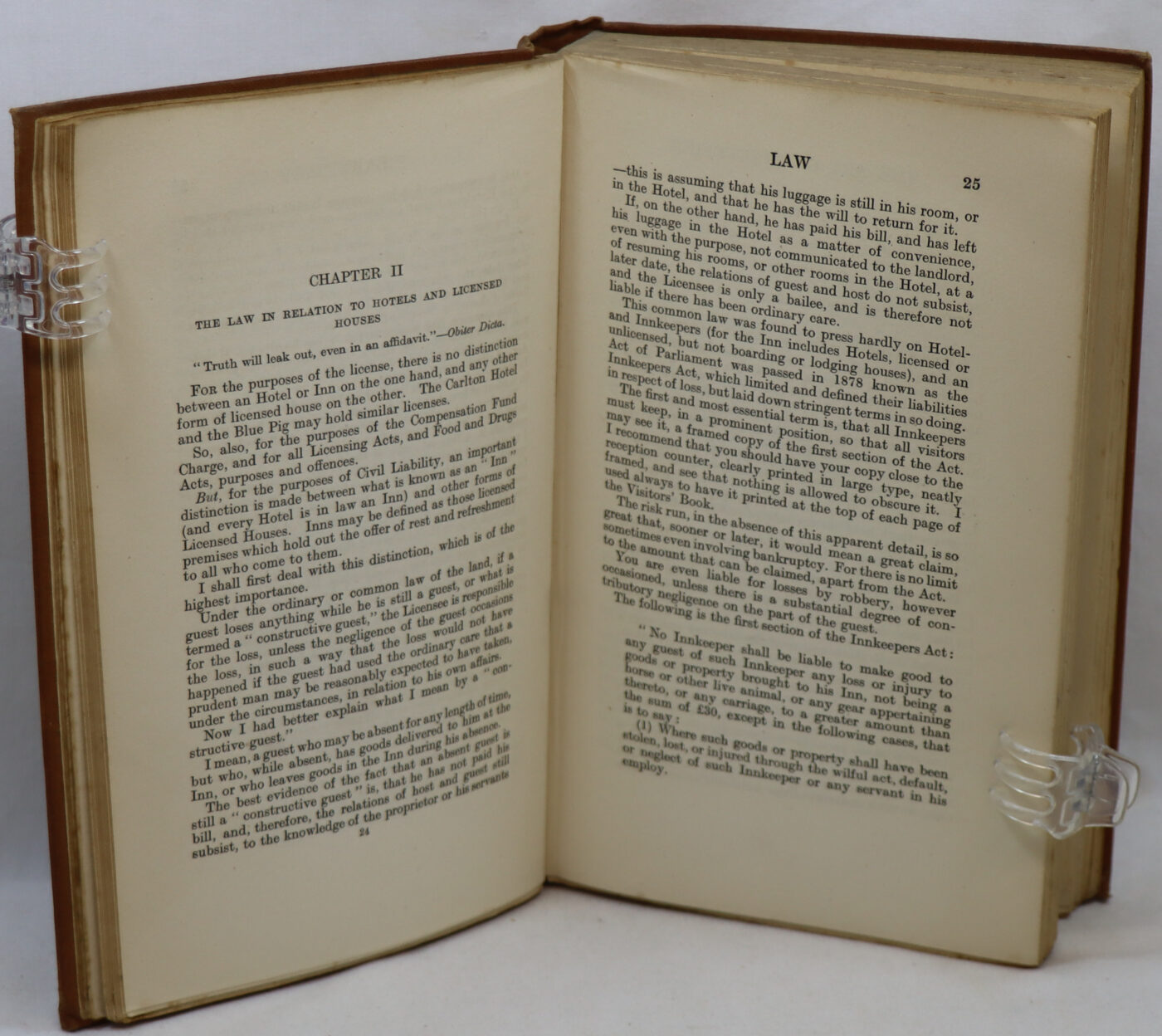
- The Law in Relation to Hotels and Licensed Houses: An overview of the legal aspects of running an inn.
- Catering: Detailed advice on food service and managing large parties.
- The Lay-out of Kitchen, and Services of an Hotel: Tips on optimizing kitchen layout and service areas.
- The Catering Staff, their Duties, and Some Others: Roles and responsibilities of the staff.
- Purchasing: Guidelines on procurement and inventory management.
- The House, its Upkeep, Planning, Equipment, and Staff: Maintaining and planning the physical aspects of the inn.
- The Cellar: Management of the inn’s wine and spirits inventory.
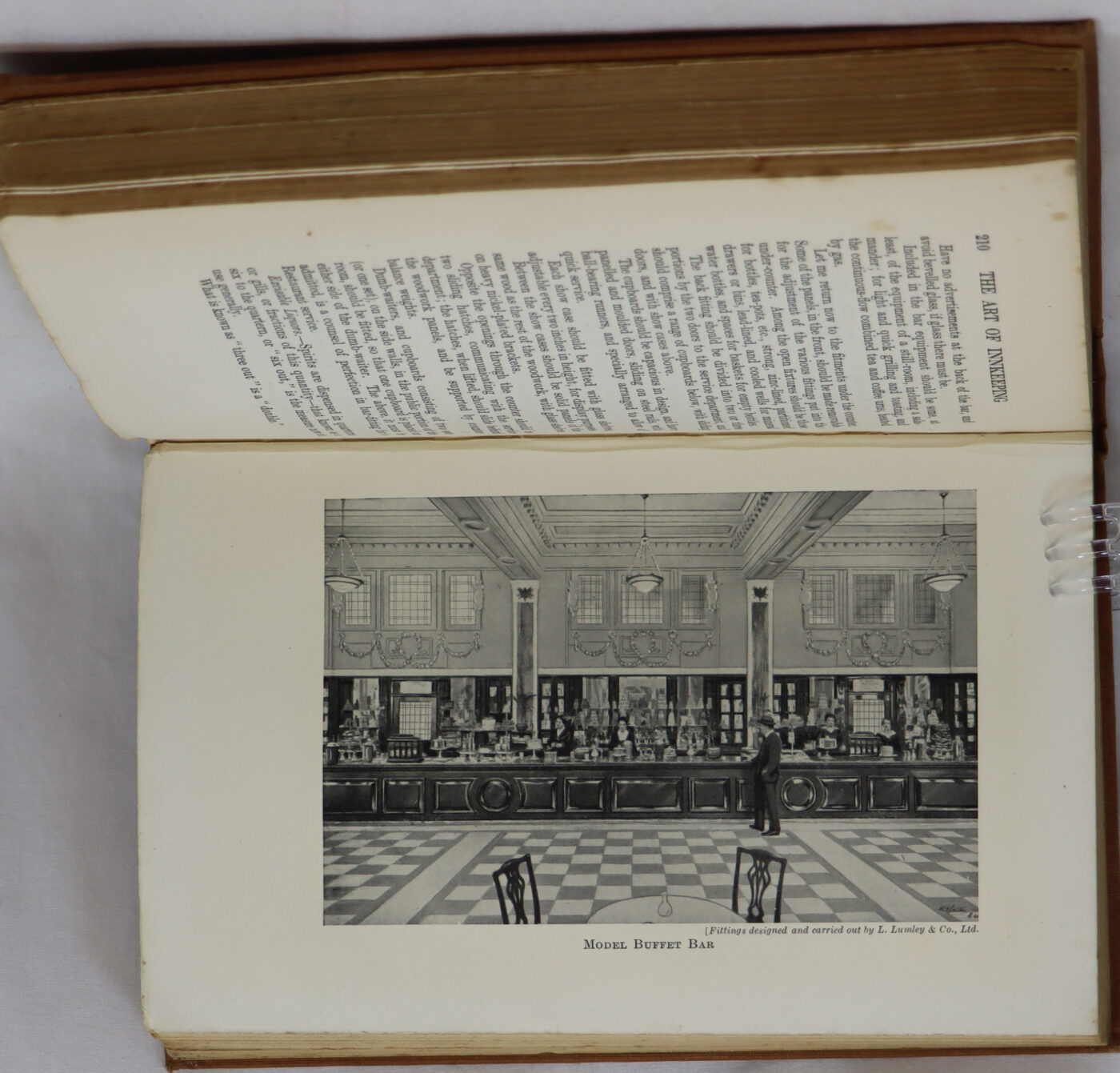
- Bars and Buffets: Effective bar and buffet operations.
- Stocktaking: Methods for inventory control and accounting.
- Bookkeeping, Reception, and Publicity: Administrative and promotional strategies.
- Side-lines: Additional revenue streams and services.
- Tenancy versus Management: Comparative analysis of different operational models.
- Appendix: Information on the Nation’s Food Exhibition.
Part’s engaging writing style, coupled with his practical insights, makes this book an invaluable resource for anyone interested in the art of innkeeping. Whether you’re a seasoned professional or a newcomer to the industry, “The Art and Practice of Innkeeping” offers timeless wisdom that remains relevant today.
NOTE: This is an original book from the library gathered by the famous Cambridge Don, computer scientist, food and wine connoisseur, Jack Arnold LANG. Note: Jack founded the Michelin Guide ‘Midsummer House’- Cambridge’s paramount restaurant. This dining experience is hidden amongst the grassy pastures and grazing cattle of Midsummer Common and perched on the banks of the River Cam.
In 2008, Jack was one of the co-founders of the Raspberry Pi Foundation, alongside other members of the Department, and acted as the Foundation’s Chair. The project’s original goals were modest: to build and distribute low-cost computers for prospective applicants to our Computer Science degree. Initially the project was a “success disaster”, as Jack would say, as demand far outstripped the low-scale manufacturing plans. Ultimately the Raspberry Pi became the UK’s most successful computer with more than 60 million sold to date. Jack was drawn to the educational possibilities of the Raspberry Pi, its potential uses in emerging economies and the way it could support self-directed learning.
Want to know more about this item?
We are happy to answer any questions you may have about this item. In addition, it is also possible to request more photographs if there is something specific you want illustrated.
Ask a question
Related products



Share this Page with a friend
