
Some Notes on Bookbinding.
By Douglas Cockerell
Printed: 1948
Publisher: Oxford University Press.
| Dimensions | 13 × 19 × 1.5 cm |
|---|---|
| Language |
Language: English
Size (cminches): 13 x 19 x 1.5
Condition: Very good (See explanation of ratings)
£30.00
Buy Now

Item information
Description
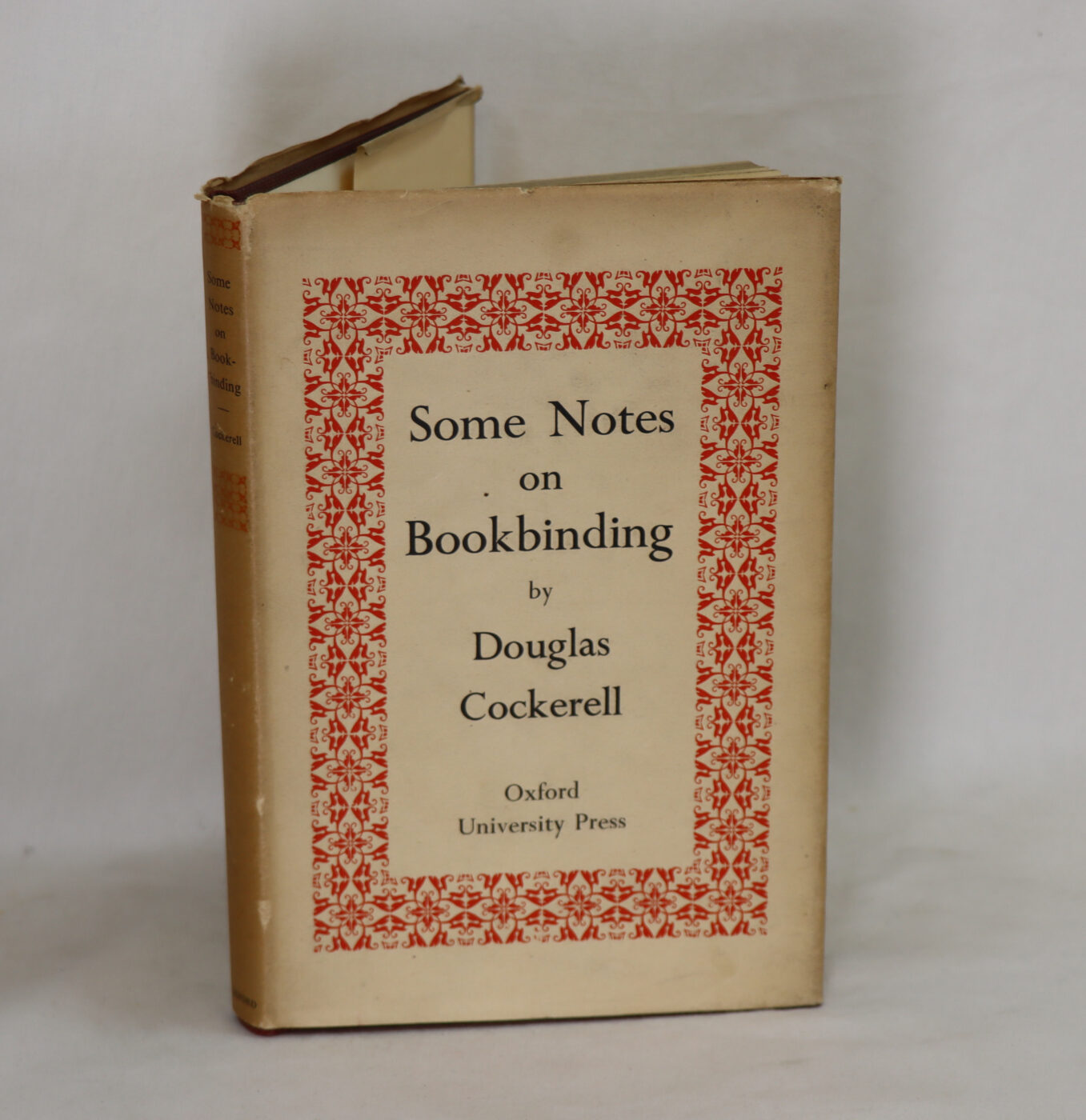
in the original dust jacket. Black cloth binding with gilt title on the spine.
We provide an in-depth photographic presentation of this item to stimulate your feeling and touch. More traditional book descriptions are immediately available.
- Note: This book carries a £5.00 discount to those that subscribe to the F.B.A. mailing list
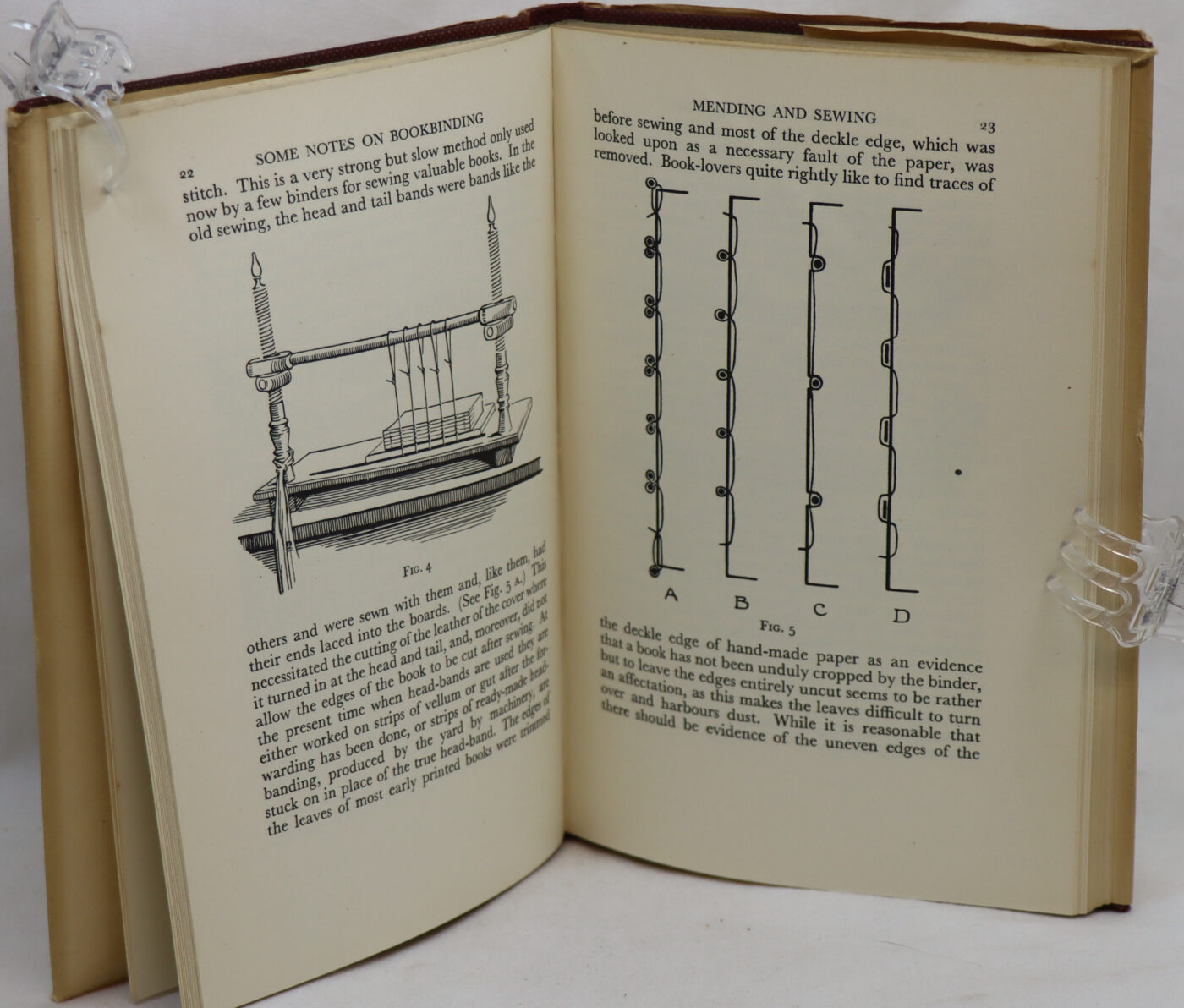
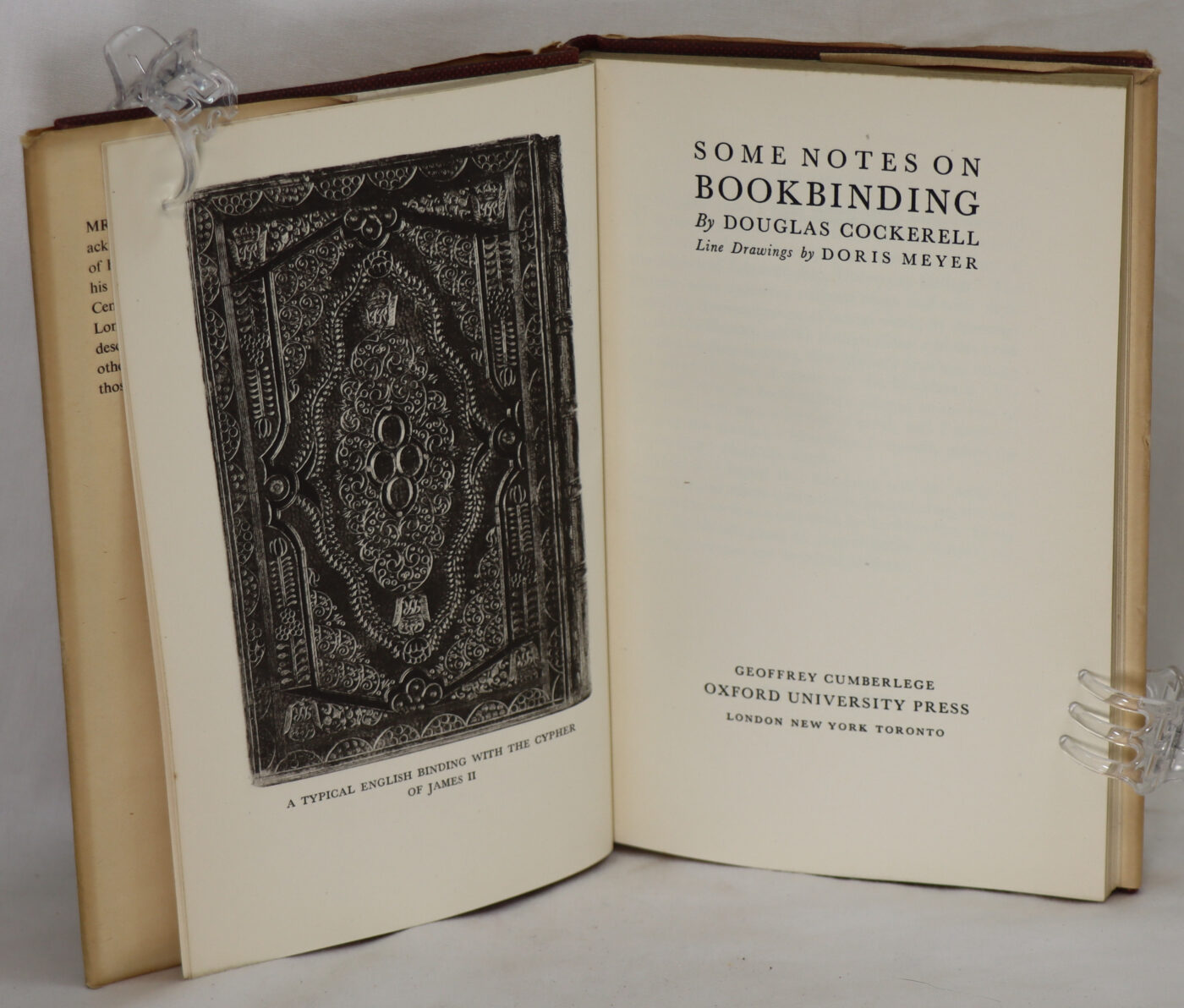
Please view our photographs.Second Impression, with sepia-toned frontispiece and numerous illustrations and diagrams in the text, some light offsetting from fold-ins to free endpapers; original red buckram, backstrip lettered in silver, a very good, bright, clean copy in a quality dustwrapper. Much-needed reissue of the original edition of 1929. Now scarce in its own right, especially in the dustwrapper. ‘Some Notes on Bookbinding’ is an authoritative and practical exploration of the traditional craft of book construction and preservation. Written by the distinguished binder Douglas Cockerell, this work offers a clear and concise overview of the technical processes required to produce high-quality bindings. The text delves into the fundamental principles of the trade, discussing the selection of materials-including leather, paper, and adhesives-as well as the structural mechanics that ensure a book’s longevity.Throughout the guide, Cockerell emphasizes the importance of sound workmanship and functional design. Readers will find detailed observations on various stages of the binding process, from the initial folding and sewing of leaves to the final finishing and decoration of the covers. As a foundational text in the field of book arts, ‘Some Notes on Bookbinding’ remains an invaluable resource for binders, collectors, and bibliophiles interested in the physical integrity and artistic beauty of the printed word. Its focus on traditional methods and the ethical treatment of books as historical objects makes it a cornerstone of bibliographical study and handicraft.
Want to know more about this item?
We are happy to answer any questions you may have about this item. In addition, it is also possible to request more photographs if there is something specific you want illustrated.
Ask a question
Related products



Share this Page with a friend
