
The Adventures of Tom Sawyer.
By Mark Twain
Printed: 1946
Publisher: Grosset & Dunlop. New York
| Dimensions | 16 × 24 × 3 cm |
|---|---|
| Language |
Language: English
Size (cminches): 16 x 24 x 3
Condition: Very good (See explanation of ratings)
£24.00
Buy Now

Item information
Description
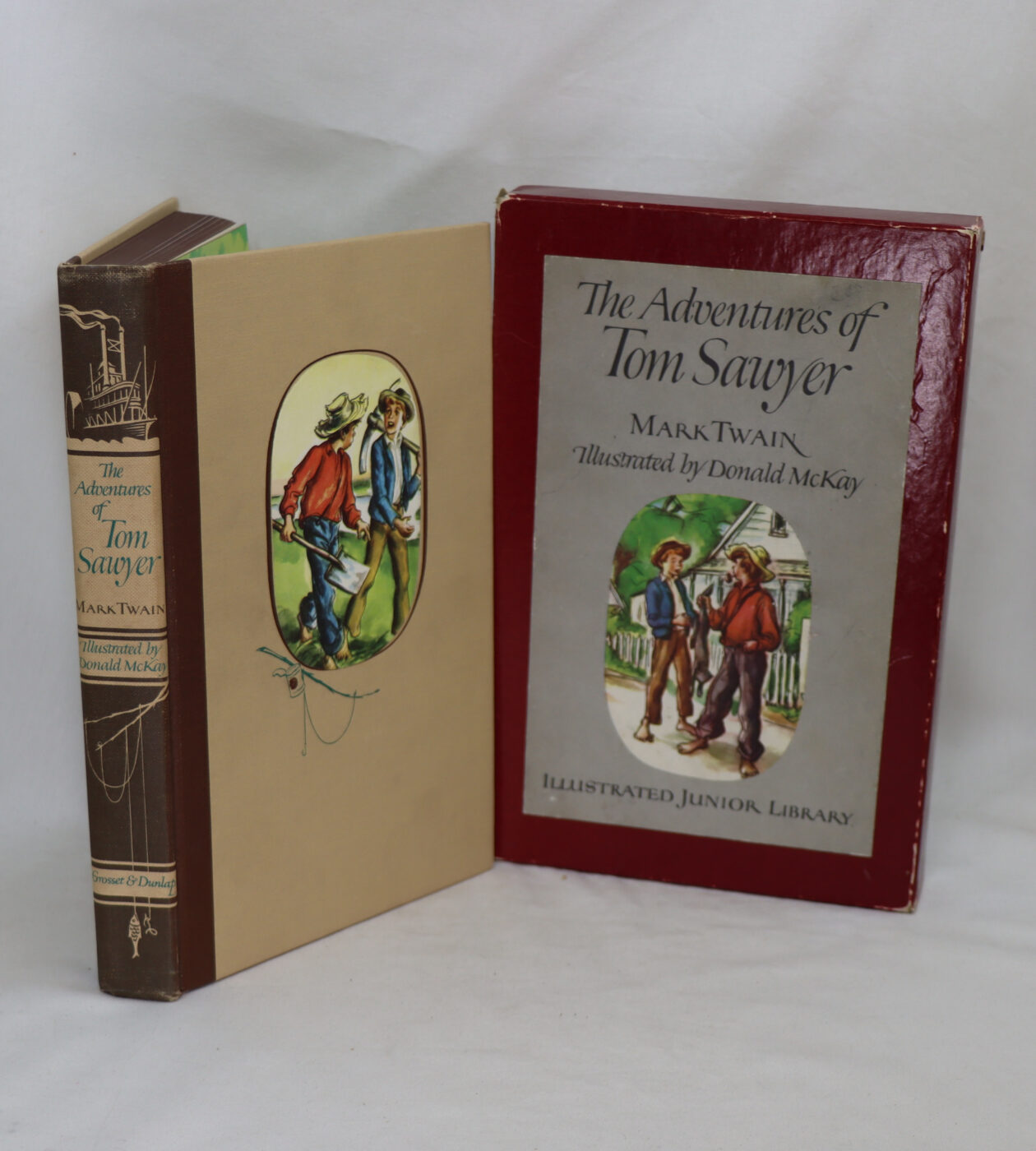
In a matching slip case. Brown spine with title. Cream boards with boys image on the front board.
-
We provide an in-depth photographic presentation of this item to stimulate your feeling and touch. More traditional book descriptions are immediately available.
-
Note: This book carries a £5.00 discount to those that subscribe to the F.B.A. mailing list
Please view our photographs. The Adventures of Tom Sawyer. By Mark Twain Printed: 1946 Publisher: Grosset & Dunlop. New York Language: English Size (inches): 6.4 x 9.6 x 1.2 Condition: Very good. This 1946 edition of The Adventures of Tom Sawyer by Mark Twain, published by Grosset & Dunlap, is a desirable mid-20th-century collectible. In “Very Good” condition, its current market valuation generally sits at £25 GBP
Key Value Factors
-
Dust Jacket Presence: If your copy includes its original dust jacket in similar “Very Good” condition, the value tilts toward the higher end of the range (£20–£25+). Without the dust jacket, it usually trades closer to £12–£15.
-
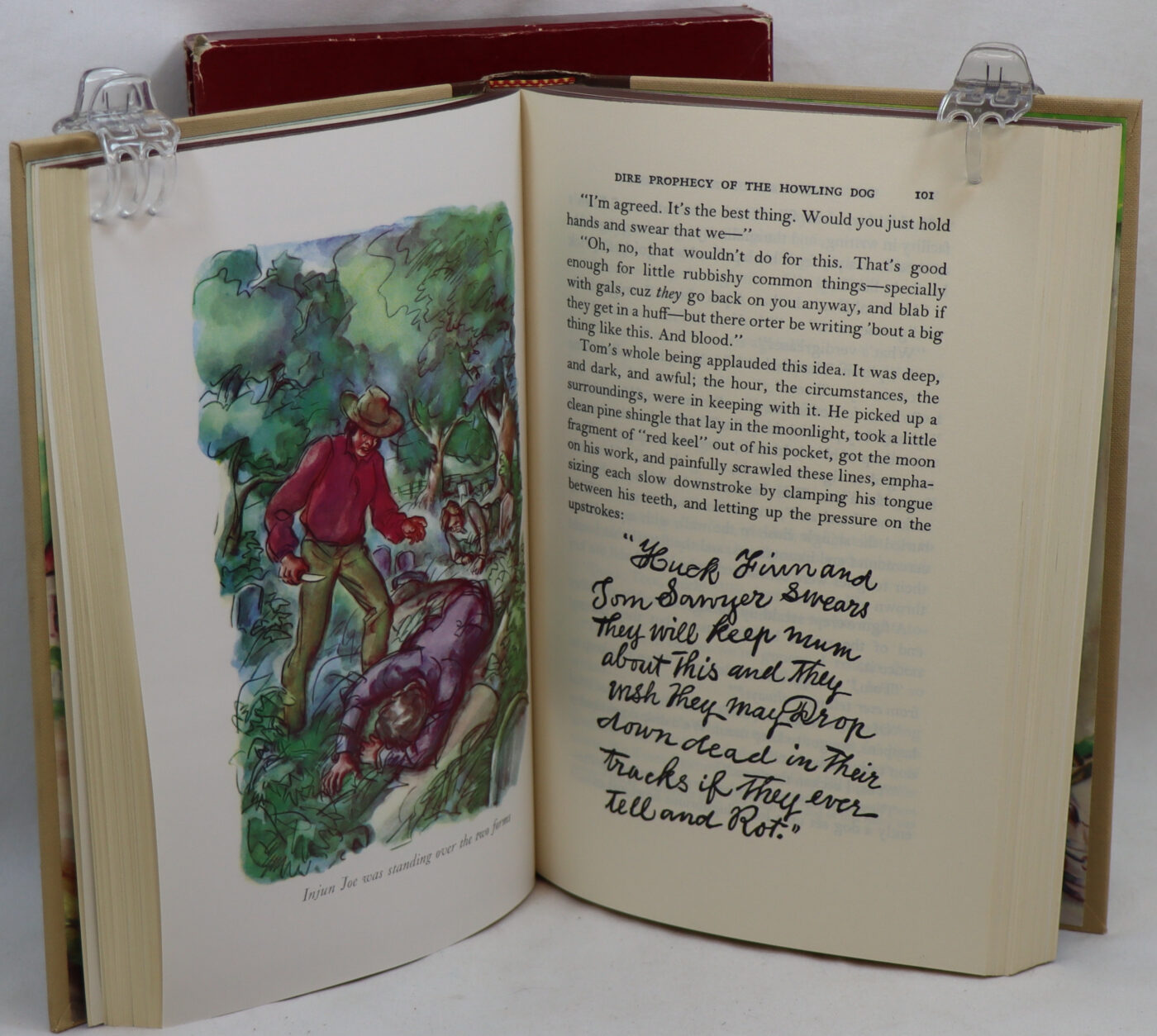
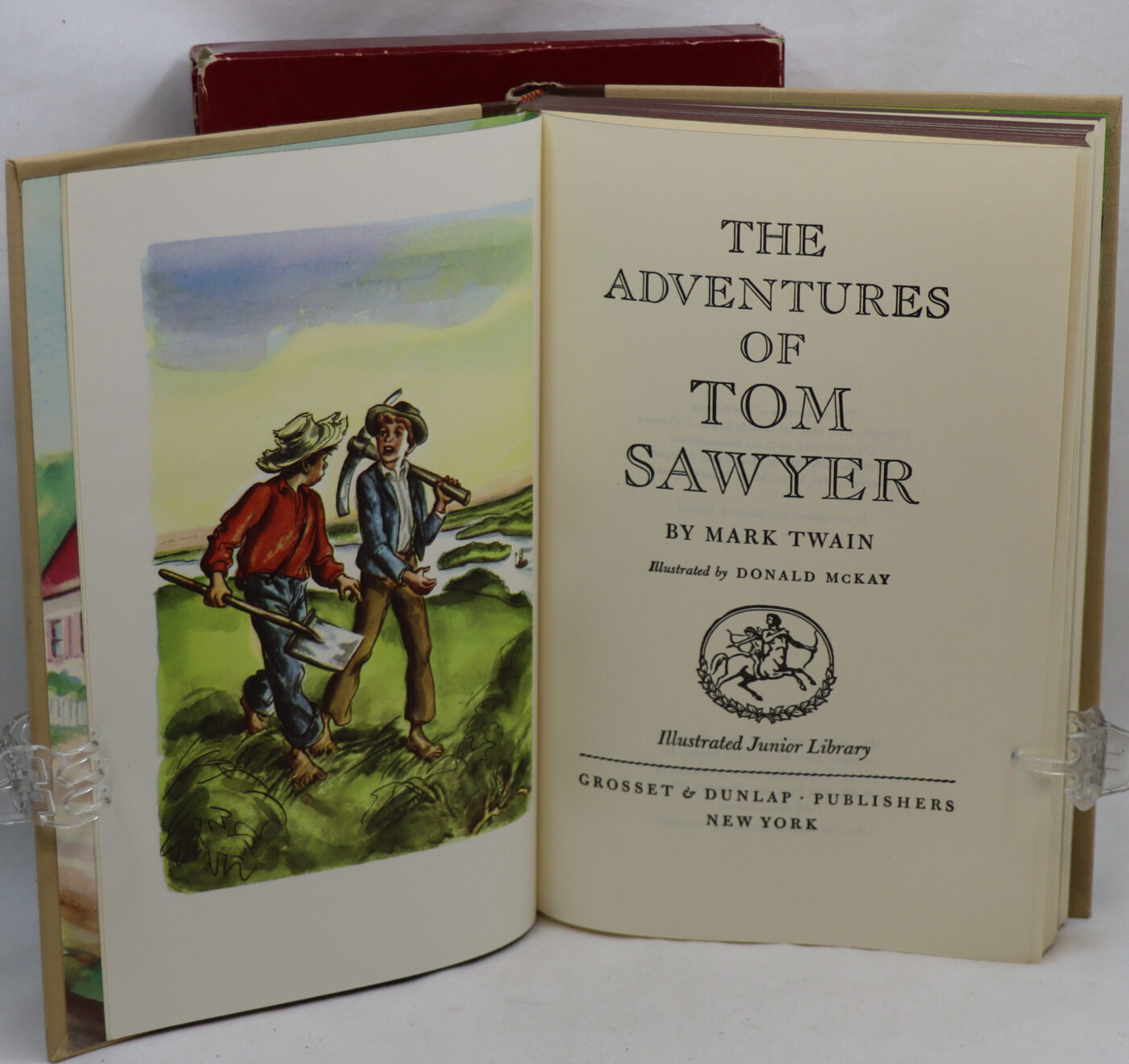
Illustrator Variant: Grosset & Dunlap issued this book with distinct design tiers. Many 1946 copies feature popular interior artwork by illustrator Donald McKay, which remains highly sought after by vintage children’s book collectors.
-
Condition Grading: “Very Good” in antiquarian terms means the book shows minor cosmetic wear (such as slight edge rubbing or faint tanning to the pages) but has a completely firm binding, intact spine, and no major stains or writing on the text pages.
Complete Chapter Directory
The novel’s 35 chapters and conclusion span a rich narrative arc from Tom’s early mischief and the famous whitewashing episode to the adventures in the cave and the search for treasure, as outlined in the Library of Congress catalog records.
Core Themes of The Adventures of Tom Sawyer
Published in 1876, the novel blends lighthearted boyish escapades with a sharper look at 19th-century American society. Its central themes include:
-
Moral Growth vs. Social Conformity: Tom evolves from a self-centered prankster into someone who accepts real-world accountability, choosing to do what is right (like testifying to save Muff Potter) over what is easy.
-
The Freedom of Childhood: Twain idealises the untamed freedom of youth—symbolised by skipping school, playing pirates, and exploring Jackson’s Island—contrasting it against the rigid, hypocritical expectations of adult society.
-
Hypocrisy of Small-Town Life: Through satire, the book mocks the superficial piety and strictness of the town’s adults, who obsess over church attendance and social status while remaining blind to local corruption.
Biography of Mark Twain (Samuel Clemens)
Mark Twain was the pen name of Samuel Langhorne Clemens (1835–1910), widely celebrated as the father of modern American literature.
-
Early Life on the Mississippi: Born in Florida, Missouri, Clemens grew up in the river town of Hannibal. The sights, eccentric characters, and freedom of his childhood along the Mississippi River later served as the direct blueprint for St. Petersburg in Tom Sawyer.
-
Origin of the Pen Name: As a young man, Clemens worked as a printer’s apprentice, a gold prospector, and crucially, a Mississippi riverboat pilot. His pen name, “Mark Twain,” comes from the riverboat leadsman’s cry meaning “two fathoms deep,” indicating water that was safe to navigate.
-
Literary Stardom: He found his first major success with the humorous short story “The Celebrated Jumping Frog of Calaveras County” in 1865. He went on to write masterpieces like The Adventures of Tom Sawyer (1876), Life on the Mississippi (1883), and Adventures of Huckleberry Finn (1884), the latter legendary for its authentic use of local dialect.
-
Later Hardships and Legacy: Despite making immense wealth from his books and international lecture tours, bad financial investments in technology (like a failed mechanical typesetting machine) forced him into bankruptcy. Tragically, his later years were darkened by the deaths of his beloved wife, Olivia, and three of his children. He passed away in 1910, famously predicting his own death would coincide with the return of Halley’s Comet.
Want to know more about this item?
We are happy to answer any questions you may have about this item. In addition, it is also possible to request more photographs if there is something specific you want illustrated.
Ask a question
Related products


Share this Page with a friend
