
Premila Lal's Indian Recipes
By Premil Lal
Printed: 1968
Publisher: Faber & Faber. London
| Dimensions | 15 × 22 × 3 cm |
|---|---|
| Language |
Language: English
Size (cminches): 15 x 22 x 3
Condition: Very good (See explanation of ratings)
£35.00
Buy Now
Your items

Item information
Description
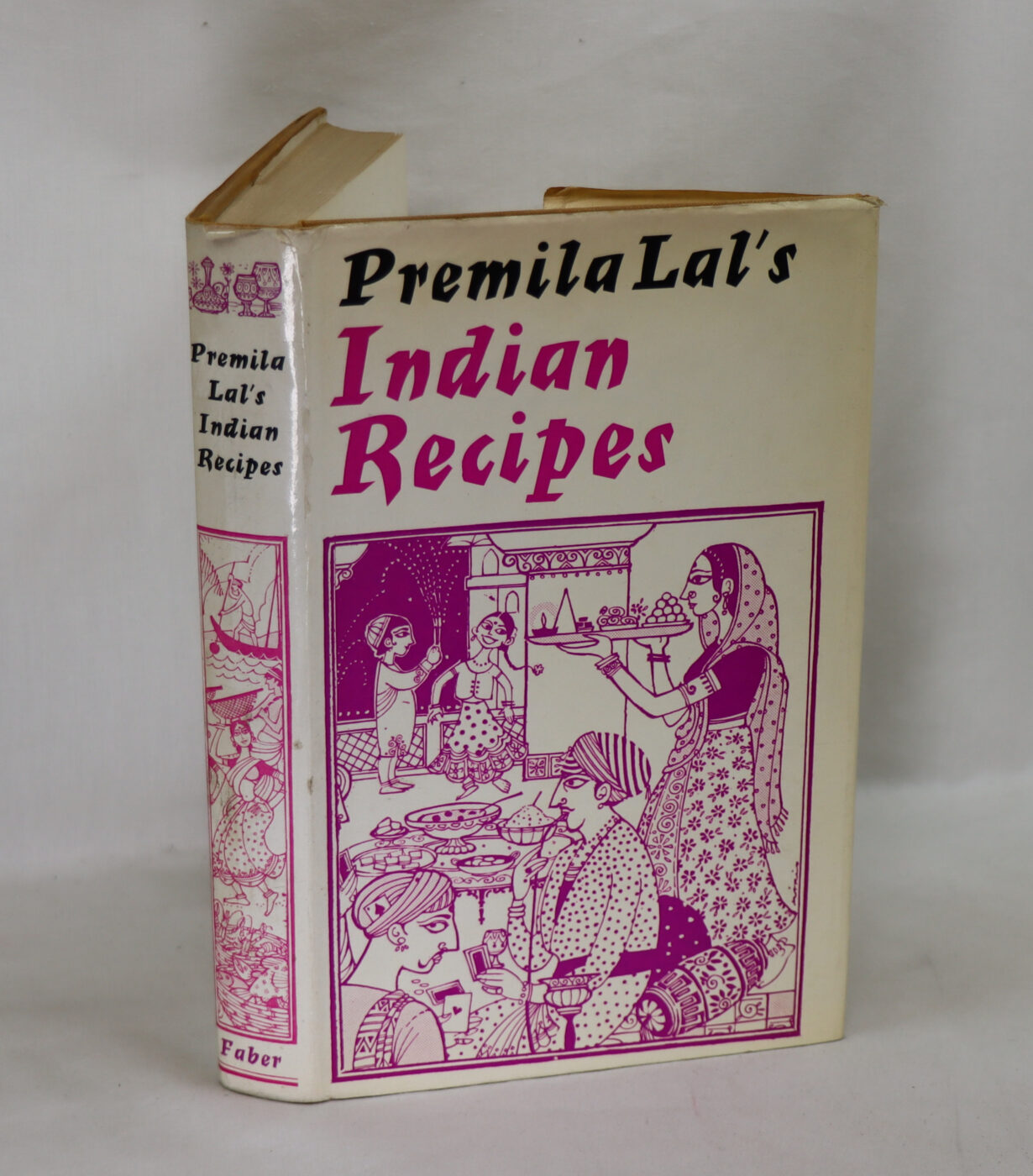
In the original dust jacket. Orange cloth binding with red title on the spine.
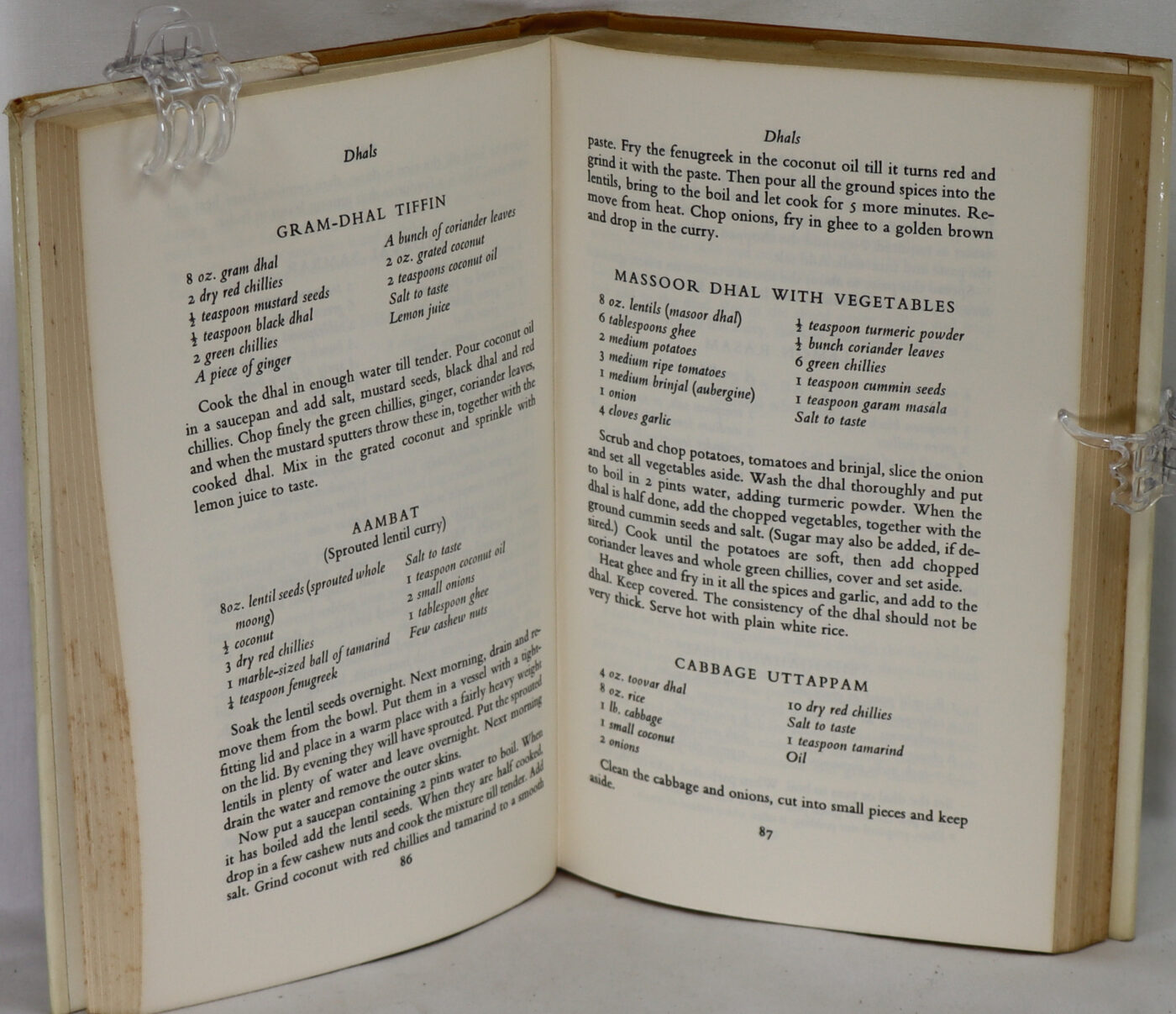
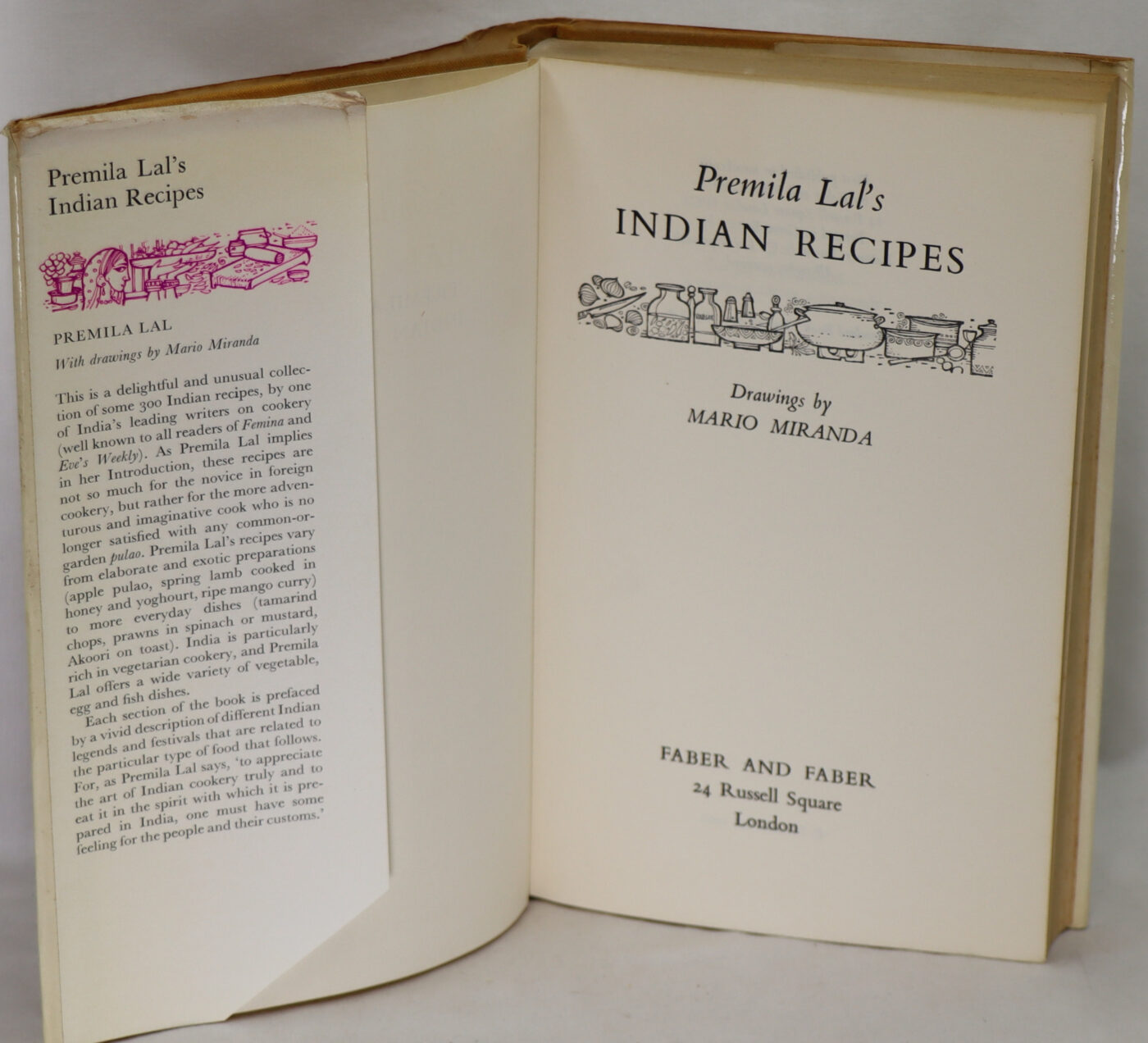
We provide an in-depth photographic presentation of this item to stimulate your feeling and touch. More traditional book descriptions are immediately available
- Note: This book carries a £5.00 discount to those that subscribe to the F.B.A. mailing list
For conditions, please view our photographs. A nice clean rare copy from the library gathered by the famous Cambridge Don, computer scientist, food and wine connoisseur, Jack Arnold LANG. Jack founded the Midsummer House, Cambridge’s paramount restaurant. This dining experience is hidden amongst the grassy pastures and grazing cattle of Midsummer Common and perched on the banks of the River Cam. The Midsummer House experience is imaginatively curated to delight and amaze, so our surprise set menu changes regularly and is our playground to showcase our reverence for purity of flavour and natural seasonal ingredients.
First edition. “Delightful & unusual collection of 300 Indian recipes, rich in vegetarian dishes. Lal’s recipes vary from elaborate and exotic preparations to more everyday dishes and includes a wide variety of vegetable, egg and fish dishes. Each section of the book is prefaced by a vivid description of different Indian legends and festivals that are related to that particular type of food.”–Dust Jacket. Illustrated by Mario Miranda. Index. Light orange cloth with maroon titling and decoration on the spine. Dust Jacket shows very mild wear, with light edge wear, mild sunning to rear. The interior is clean, crisp, tight & bright, unmarked. 264 pp. Approx. 5.75″ x 8.75″. A very attractive copy.
Premila La whose real name is Kiki Watsa. It was some of these more egregious misconceptions about the foods of India that occupied most of my luncheon conversation with Premila Lal, whose real name is Kiki Watsa but who is known within the Indian culinary universe by her nom de cuisine. Premila Lal had come to lunch at the Oberoi Hotel’s small Kandahar Restaurant which specializes in the spicy, marinated, and grilled foods of Pakistan, Afghanistan, and northwestern India, as well as in an unusual green paratha bread, rich with butter and fenugreek. She wished to talk about the cuisine of India and how she evolved into her country’s version of Elizabeth David. A most forceful woman, she illustrated her contentions by pointing out the diversity in Indian food as well as examples of dishes that lack heat: lamb cooked in a fine sauce of purŽed green and yellow lentils; apams, rice and coconut pancakes cooked with coconut milk; corn on the cob roasted and rubbed with lime juice, salt, and a touch of paprika; potatoes roasted in the tandoor; candy made from saffron, pistachios, almonds, and rosewater. And, she added, the use of cinnamon, cloves, cardamom, and chilies is restrained in the best of Indian cookery.
It was years ago as a university art student that Premila Lal was asked to take on, without payment, the writing of a food and recipe column for a magazine called Flair. “At the time I had only eight recipes given to me by my mother. I began with these. It was enough for the magazine. And they also gave me my name. ‘Your name is Premila Lal,’ they said. I became the first cook to be a public figure in India.” From this beginning came more columns in magazines and newspapers, the first two of her cookbooks, Premila Lal’s Indian Recipes and Indian Cooking for Pleasure, and her reputation as India’s doyenne of traditional cookery. She is a straightforward person, not at all self-effacing when talking about her talents, which now embrace weaving, farming, and the practice of psychoanalysis. “First you cook, then you wonder why you cook,” she smiles. There are, she said, some fine restaurants in Bombay that are serious about the authenticity of their foods, and she suggested that I ought to visit them. “But perhaps you should not go to a restaurant. Come to my home and allow me and my cook to prepare dinner. Would that be pleasant?” Indeed. So that evening I went off to Premila Lal’s huge high-ceilinged house, a leftover from English rule and a registered landmark that is situated on a road called Cuffe Parade. There I had some of my first foods in India, some of the best I was to have — a pomfret, a flounderlike fish, that had been baked in a tandoor; rice cooked with onions, peas, cinnamon, and black pepper; roasted sausage-shaped ground lamb with raw onions; cooked shredded cabbage with fresh mustard seeds; chicken braised in the style of Goa, with a hot coconut-milk curry; a fine dal of lentils boiled with turmeric, ginger, and garlic; and an absolutely marvelous gulab jamun, meaning “rose fruit” — an egg-shaped cake of Indian cream cheese filled with pistachios. It had been warmed in Indian rum and sprinkled with rosewater before serving. They were sweet and light, and I used them as the standard against which I judged the gulab jamuns of other chefs as I traveled around India. Those of Premila Lal were the first, the best. Which wouldn’t have surprised her at all !
Want to know more about this item?
We are happy to answer any questions you may have about this item. In addition, it is also possible to request more photographs if there is something specific you want illustrated.
Ask a question
Related products





Share this Page with a friend
