
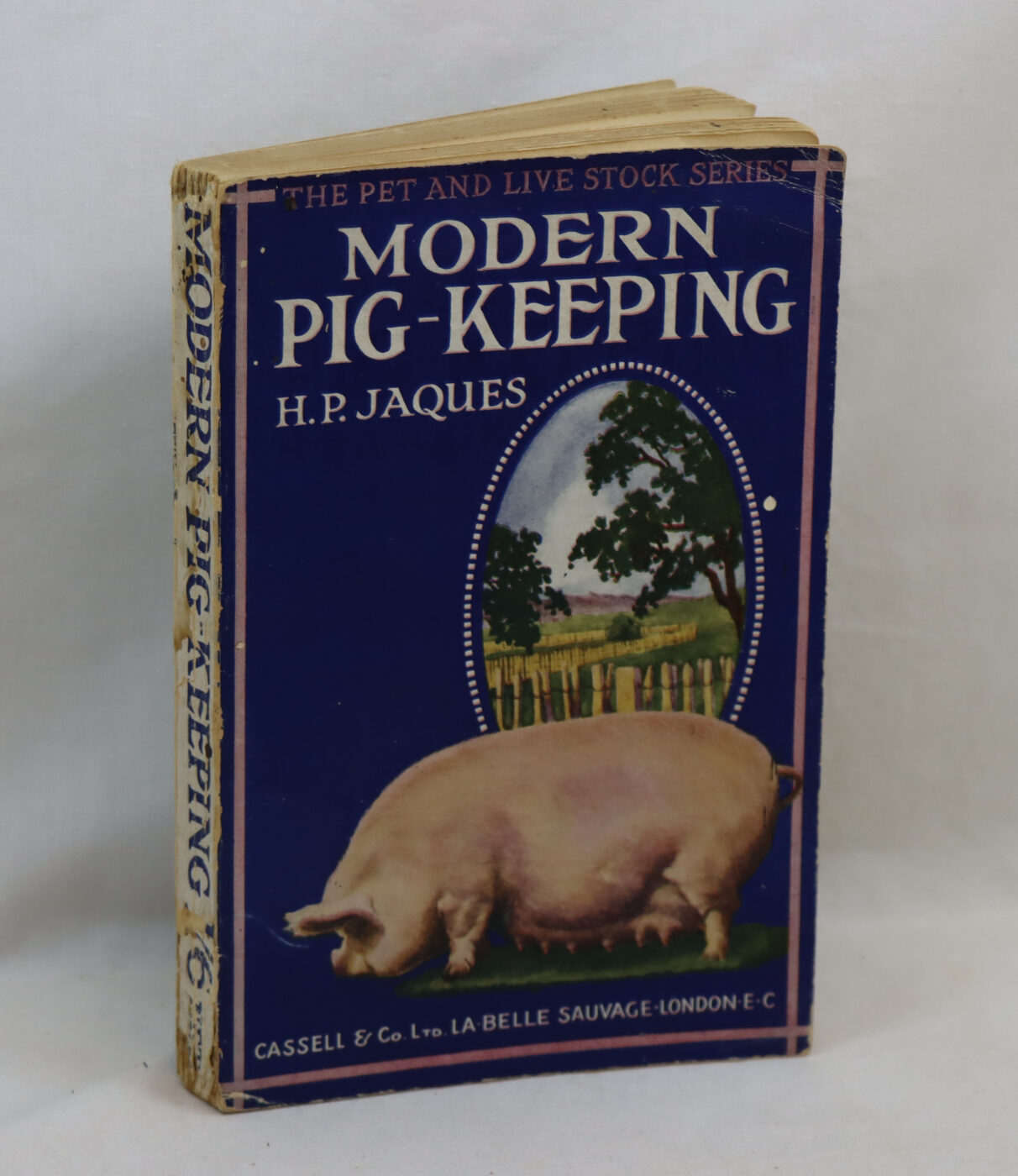
Modern Pig Keeping.
By H P Jaques
Printed: 1934
Publisher: Cassell & Co. London
| Dimensions | 13 × 19 × 2 cm |
|---|---|
| Language |
Language: English
Size (cminches): 13 x 19 x 2
Condition: Fair (See explanation of ratings)
£43.00
Buy Now


Item information
Description
Paperback. White cover with black title.
We provide an in-depth photographic presentation of this item to stimulate your feeling and touch. More traditional book descriptions are immediately available
Note: This book carries a £5.00 discount to those that subscribe to the F.B.A. mailing list
Now an increasingly rare book.
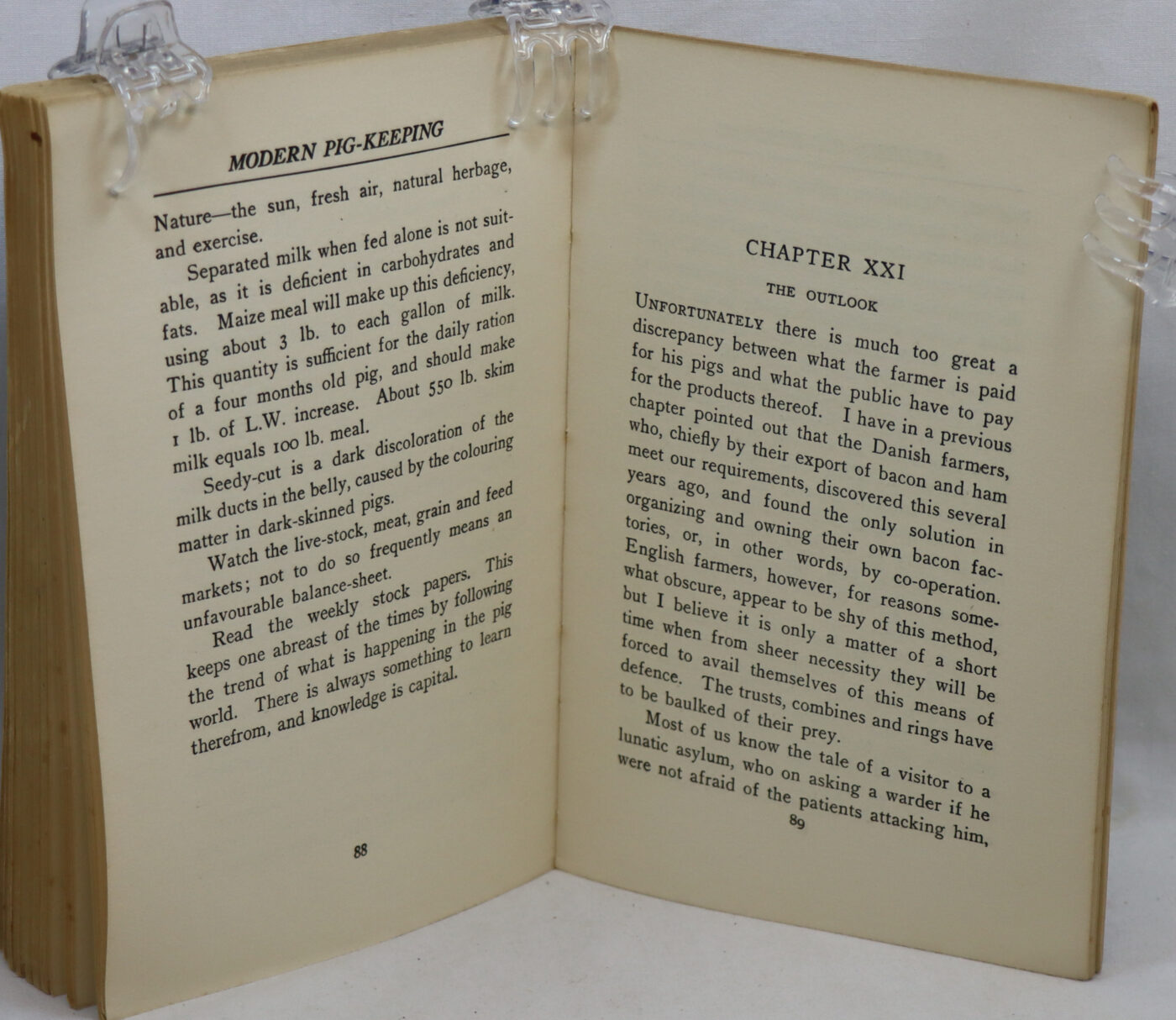
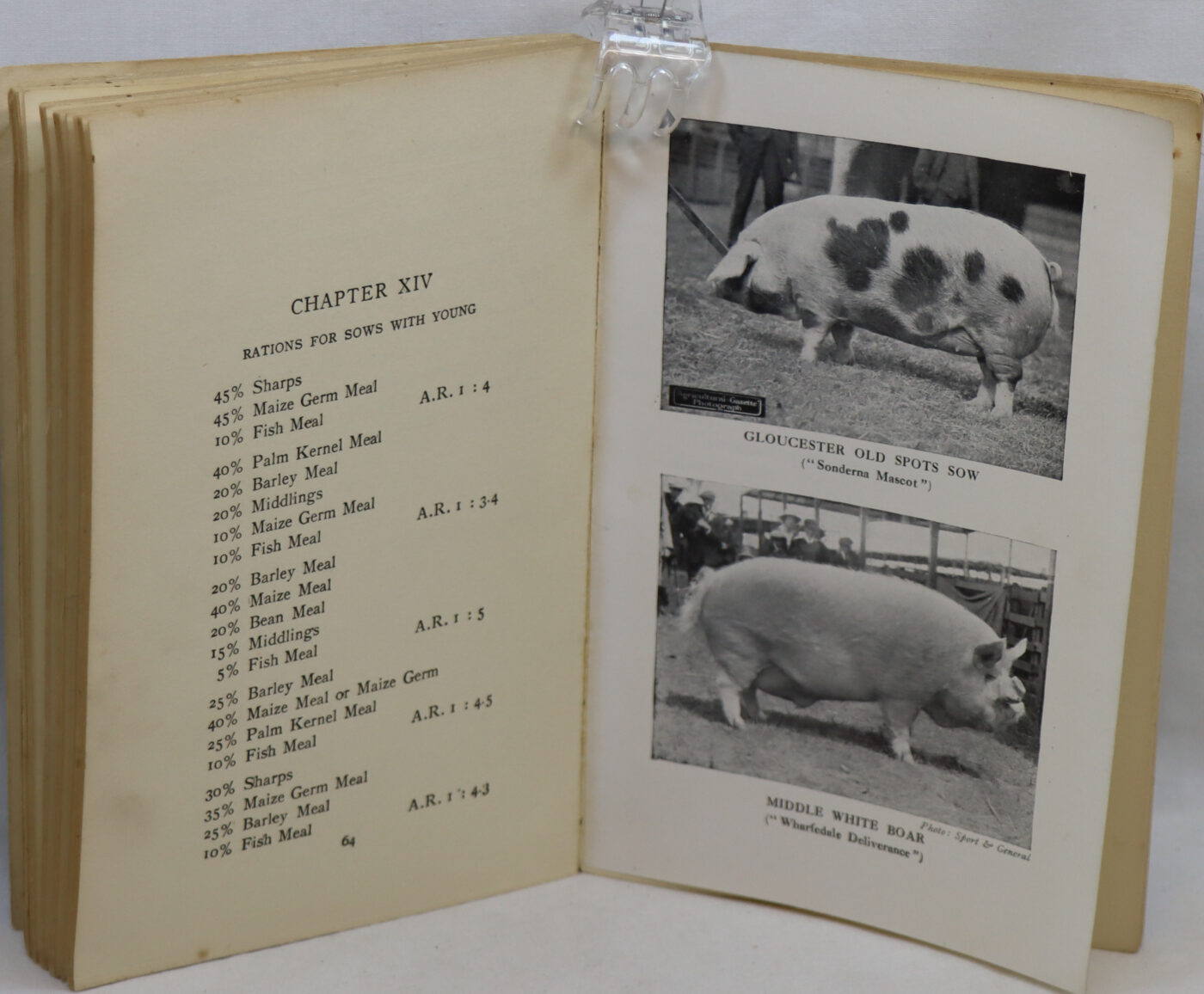
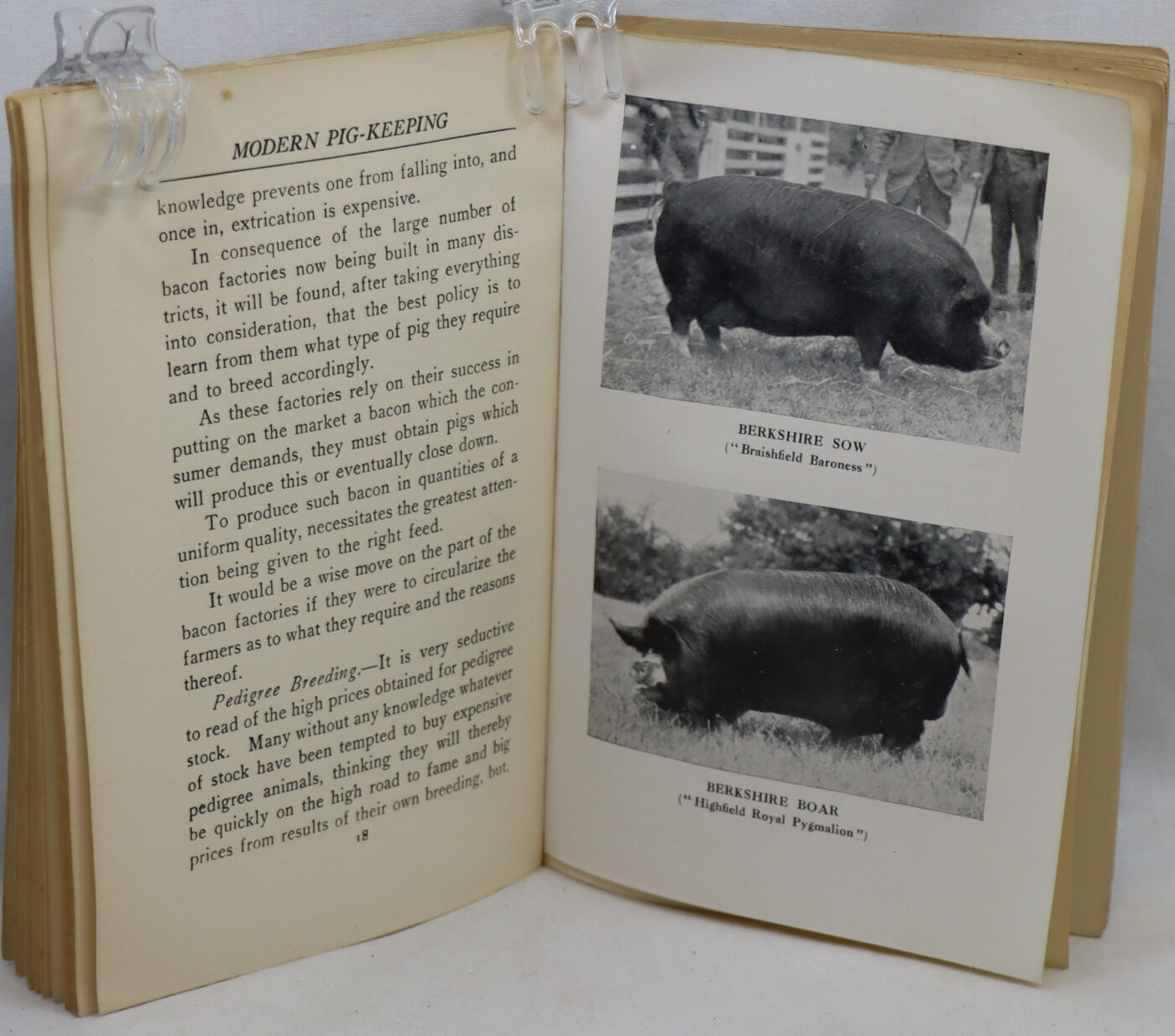
Originally published in 1924 and regularly revised since then, this book is an exhaustive study of the craft of pig-keeping. Full of detailed instructions from a more natural era of farming, this book tells all that you need to know to successfully rear pigs, and is still of great practical use today. Many of the earliest books, particularly those dating back to the 1900s and before, are now extremely scarce and increasingly expensive. Hesperides Press are republishing these classic works in affordable, high-quality, modern editions, using the original text and artwork. Contents Include: What’s Wrong? The Danish System The Open-Air System The Breeds The Breeding Herd Farrowing and Weaning The Foods Feeding Registration and Identification Marks Vitamins The Absorption of Foods Balanced Rations Rations For In-Pig Sows and Gilts Rations For Sows With Young Rations For Young Pigs Rations For Pigs From 3 to 6 Months Old Rations For Fattening Pigs Weighing Diseases Short Notes The Outlook Imports of Bacon, Hams, Pork and Lard Pig Societies Breeders’ Tables Memoranda
NOTE: This is an original book from the library gathered by the famous Cambridge Don, computer scientist, food and wine connoisseur, Jack Arnold LANG. Note: Jack founded the Michelin Guide ‘Midsummer House’- Cambridge’s paramount restaurant. This dining experience is hidden amongst the grassy pastures and grazing cattle of Midsummer Common and perched on the banks of the River Cam.
In 2008, Jack was one of the co-founders of the Raspberry Pi Foundation, alongside other members of the Department, and acted as the Foundation’s Chair. The project’s original goals were modest: to build and distribute low-cost computers for prospective applicants to our Computer Science degree. Initially the project was a “success disaster”, as Jack would say, as demand far outstripped the low-scale manufacturing plans. Ultimately the Raspberry Pi became the UK’s most successful computer with more than 60 million sold to date. Jack was drawn to the educational possibilities of the Raspberry Pi, its potential uses in emerging economies and the way it could support self-directed learning.
Want to know more about this item?
We are happy to answer any questions you may have about this item. In addition, it is also possible to request more photographs if there is something specific you want illustrated.
Ask a question






Share this Page with a friend
