
Poultry. A Guide to Management.
By Carol Twinch
ISBN: 9781852237554
Printed: 1993
Publisher: The Crowood Press. Wiltshire
| Dimensions | 15 × 21 × 1 cm |
|---|---|
| Language |
Language: English
Size (cminches): 15 x 21 x 1
Condition: Very good (See explanation of ratings)
£6.00
Buy Now
Your items

Item information
Description
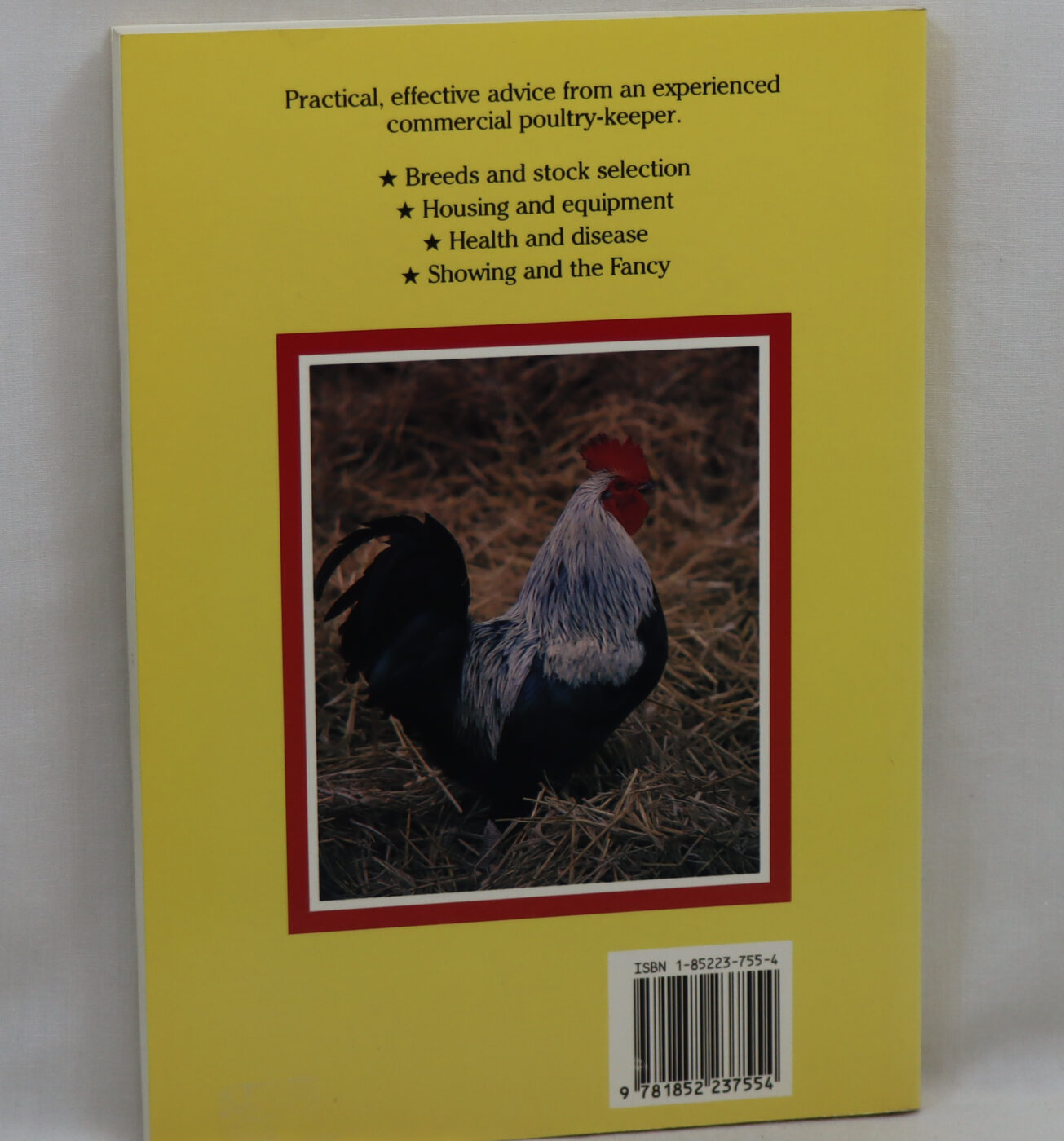
Paperback. Yellow cover with red title and hens image.
We provide an in-depth photographic presentation of this item to stimulate your feeling and touch. More traditional book descriptions are immediately available
- A £2 reduction when collected from FBA shop
Aimed at smallholders, hobbyists and enthusiasts, this book is designed to cater for the needs of those who have only limited resources, both in time and money. It offers comprehensive information on breeds, stock selection, housing and equipment, and shows how the use of controlled artificial lighting can increase egg production. Advice on breeding, health and disease make the book valuable reading to both commercial keepers and those interested in showing. Carol Twinch farms with her husband in Norfolk. With many years’ experience of commercial poultry-keeping, she is the author of “Plain and Simple Egg Production”, Editor of “Farming in East Anglia”, and a regular contributor to farming and smallholding magazines including “The Smallholder”.
NOTE: This is an original book from the library gathered by the famous Cambridge Don, computer scientist, food and wine connoisseur, Jack Arnold LANG. Note: Jack founded the Michelin Guide ‘Midsummer House’- Cambridge’s paramount restaurant. This dining experience is hidden amongst the grassy pastures and grazing cattle of Midsummer Common and perched on the banks of the River Cam.
In 2008, Jack was one of the co-founders of the Raspberry Pi Foundation, alongside other members of the Department, and acted as the Foundation’s Chair. The project’s original goals were modest: to build and distribute low-cost computers for prospective applicants to our Computer Science degree. Initially the project was a “success disaster”, as Jack would say, as demand far outstripped the low-scale manufacturing plans. Ultimately the Raspberry Pi became the UK’s most successful computer with more than 60 million sold to date. Jack was drawn to the educational possibilities of the Raspberry Pi, its potential uses in emerging economies and the way it could support self-directed learning.
Want to know more about this item?
We are happy to answer any questions you may have about this item. In addition, it is also possible to request more photographs if there is something specific you want illustrated.
Ask a question




Share this Page with a friend
