
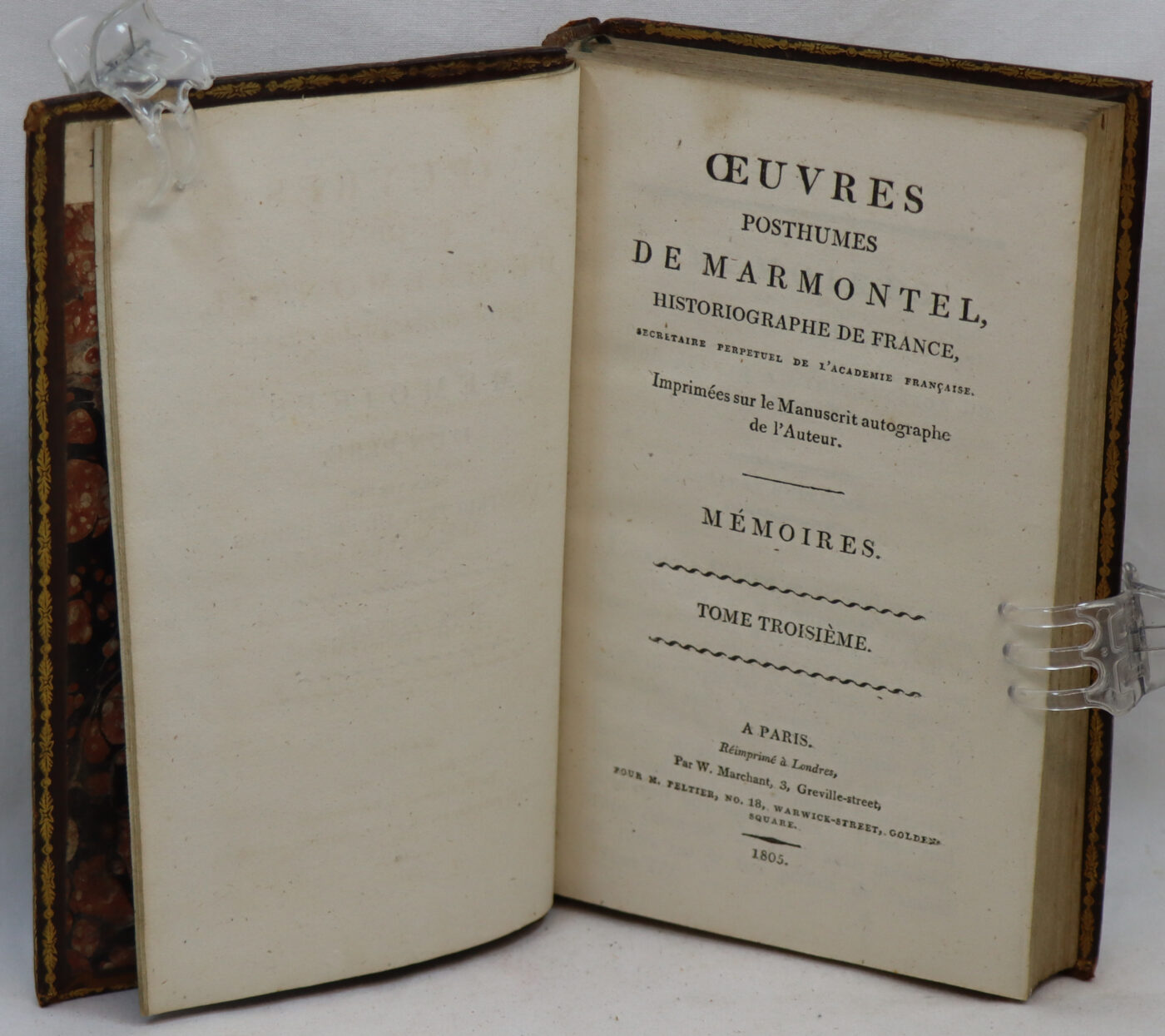
Oeurves Postumes de Marmontel. Tome Troisieme.
By Marmontel
Printed: 1805
Publisher: M Feltier. Paris
| Dimensions | 12 × 18 × 2 cm |
|---|---|
| Language |
Language: French
Size (cminches): 12 x 18 x 2
Condition: Good (See explanation of ratings)
£44.00
Buy Now
Your items

Item information
Description
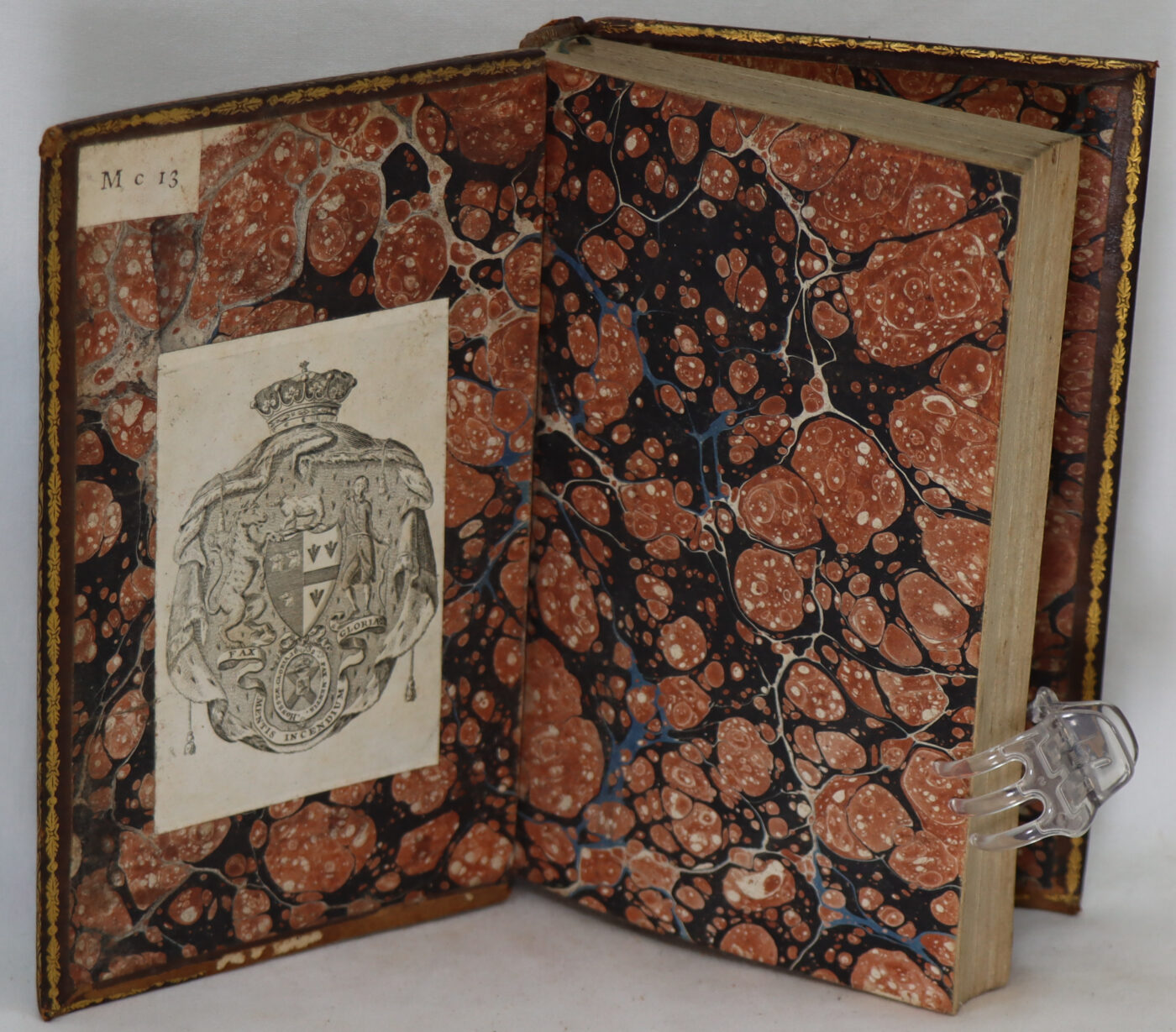
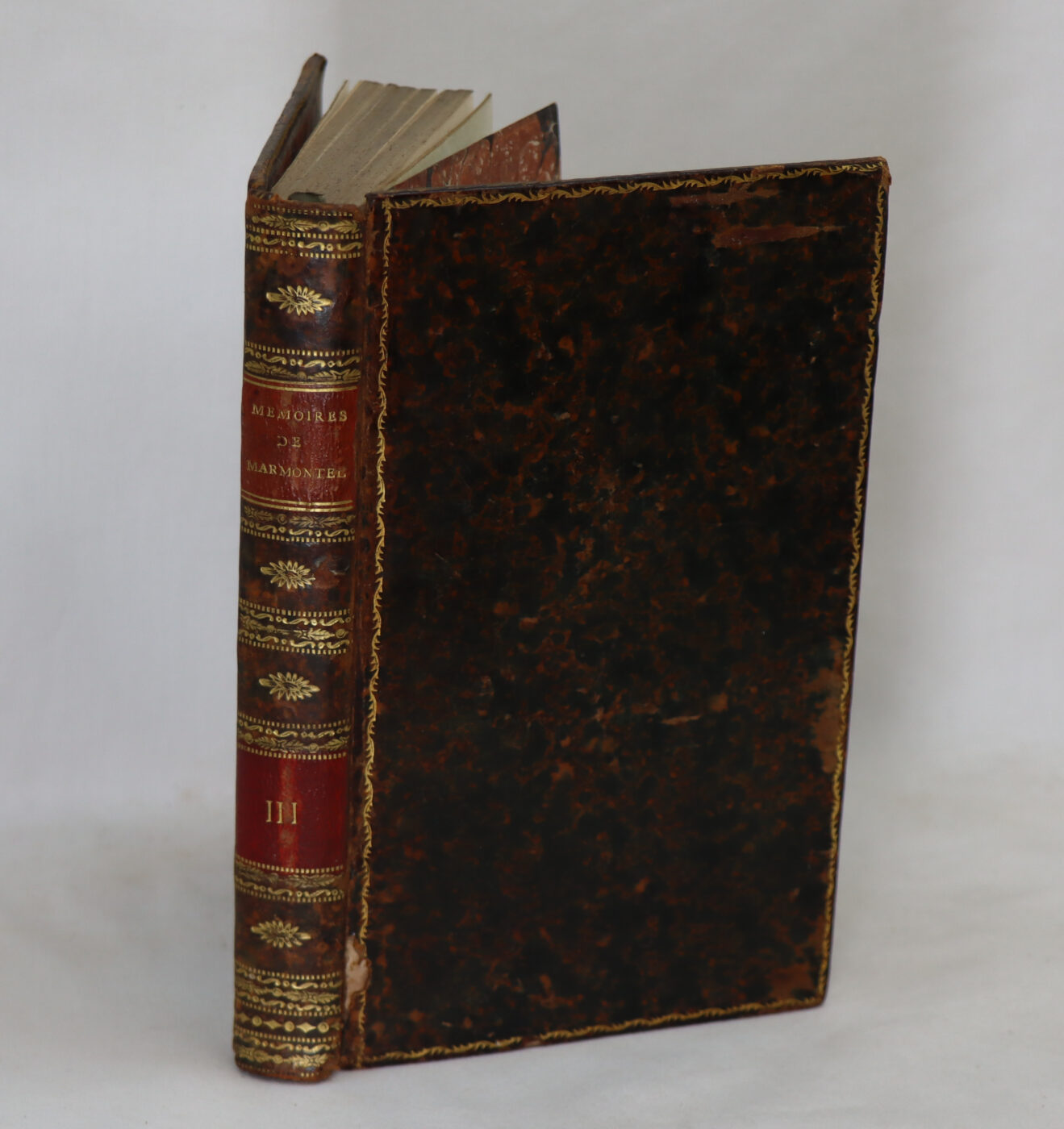
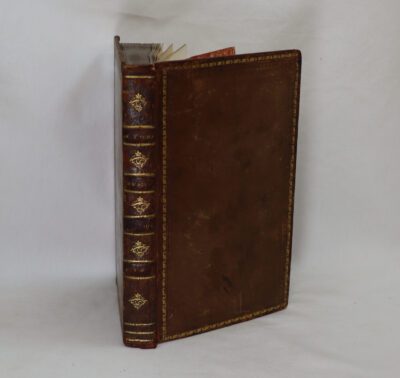
Brown calf binding with red title plates, gilt decoration and title on the spine.
We provide an in-depth photographic presentation of this item to stimulate your feeling and touch. More traditional book descriptions are immediately available.
-
Note: This book carries a £5.00 discount to those that subscribe to the F.B.A. mailing list
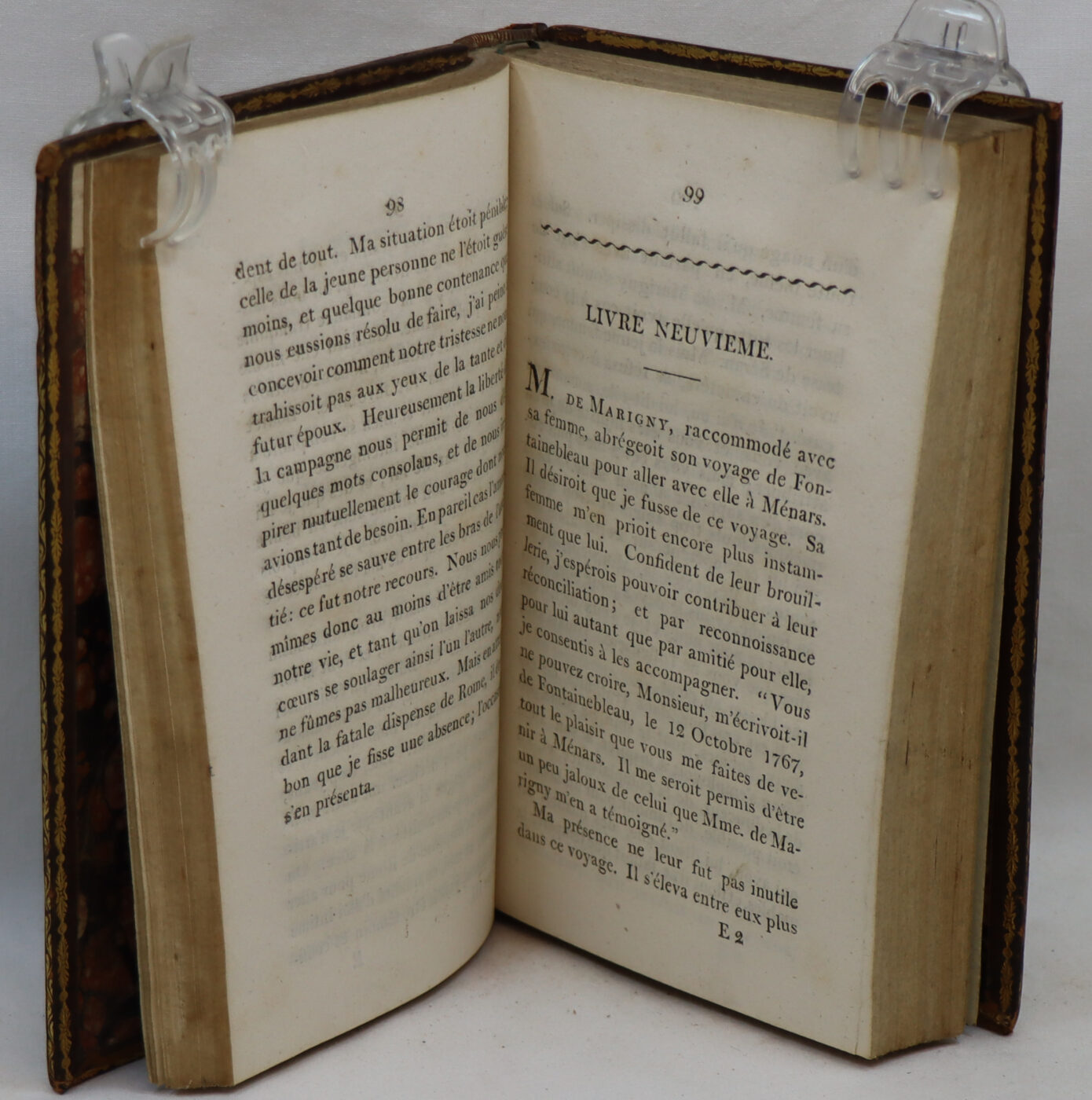
Oeuvres posthumes de Marmontel, Tome Troisième is the third volume of the posthumous memoirs ( Mémoires d’un père ) by French writer and historian Jean-François Marmontel , printed in Paris around 1804–1805. Please view our photographs. This volume is by far the most popular due to its children centrality.
Book Details
-
Author: Jean-François Marmontel (1723–1799)
-
Content: Part of his famous Memoirs of a Father to serve as instruction for his children
-
Language: French
-
Format: Small antiquarian book format (approx. 18 cm)
Historical Context
-
Posthumous Publication: Written during the French Revolution and first published after his death by his wife.
-
Significance: Provides a key firsthand look at 18th-century French intellectual life, the Encyclopédistes , and figures of the Enlightenment.
Jean-François Marmontel (French pronunciation: 11 July 1723 – 31 December 1799) was a French historian, writer and a member of the Encyclopédistes movement. He was born of poor parents at Bort, Limousin (today in Corrèze). After studying with the Jesuits at Mauriac, Cantal, he taught in their colleges at Clermont-Ferrand and Toulouse; and in 1745, acting on the advice of Voltaire, he set out for Paris to try for literary success. From 1748 to 1753 he wrote a succession of tragedies: Denys le Tyran (1748); Aristomene (1749); Cleopâtre (1750); Heraclides (1752); Egyptus (1753). These literary works, though only moderately successful on the stage, secured Marmontel’s introduction into literary and fashionable circles.He wrote a series of articles for the Encyclopédie evincing considerable critical power and insight, which in their collected form, under the title Eléments de Littérature, still rank among the French classics. He also wrote several comic operas, the two best of which probably are Sylvain (1770) and Zémire et Azore (1771). In the Gluck–Piccinni controversy he was an eager partisan of Piccinni with whom he collaborated in Roland (Piccinni) (1778) and Atys (1779), both using Jean Baptiste Lully’s libretto by Quinault as basis, Didon (1783) and Penelope (1785).
In 1758 he gained the patronage of Madame de Pompadour, who obtained for him a place as a civil servant, and the management of the official journal Le Mercure, in which he had already begun the famous series of Contes moraux. The merit of these tales lies partly in the delicate finish of the style, but mainly in the graphic and charming pictures of French society under King Louis XV. The author was elected to the Académie Française in 1763. In 1767 he published Bélisaire, now remarkable in part because of a chapter on religious toleration which incurred the censure of the Sorbonne and the archbishop of Paris. Marmontel retorted in Les Incas, ou la destruction de l’empire du Perou (1777) by tracing the cruelties in Spanish America to the religious fanaticism of the invaders.
He was appointed historiographer of France (1771), secretary to the academy (1783), and professor of history in the Lycée (1786). As a historiographer, Marmontel wrote a history of the regency (1788). Reduced to poverty by the French Revolution, Marmontel retired during the Reign of Terror to Evreux, and soon afterwards to a cottage at Abloville (near Saint-Aubin-sur-Gaillon) in the département of Eure. There he wrote Memoires d’un père (4 vols., 1804), including a picturesque review of his life, a literary history of two important reigns, a great gallery of portraits extending from the venerable Jean Baptiste Massillon, whom more than half a century previously he had seen at Clermont, to Honoré Mirabeau. The book was nominally written for the instruction of his children. It contains an exquisite picture of his own childhood in the Limousin; its value for the literary historian is great.
Marmontel lived for some time under the roof of Madame Geoffrin, and was present at her famous dinners given to artists; he was welcomed into most of the houses where the encyclopaedists met, and was a contributor to the Encyclopédie ou Dictionnaire raisonné des sciences, des arts et des métiers. He thus had at his command the best material for his portraits, and made good use of his opportunities After a short stay in Paris when elected in 1797 to the Conseil des Anciens, he died at Abloville.
He was a member of the Masonic lodge Les Neuf Sœurs.
John Ruskin named him as one of the three people in history who were the most influential for him. In his autobiography, John Stuart Mill credits Mémoires d’un père with curing him of depression.
Condition notes
Binding worn
Want to know more about this item?
We are happy to answer any questions you may have about this item. In addition, it is also possible to request more photographs if there is something specific you want illustrated.
Ask a question
Related products

Share this Page with a friend
