
Carve-Ups. The Rudest Food Reviews.
By Michelle Lovric
ISBN: 9780955617508
Printed: 2007
Publisher: Mamelok Press. Suffolk
| Dimensions | 13 × 17 × 2 cm |
|---|---|
| Language |
Language: English
Size (cminches): 13 x 17 x 2
Condition: Very good (See explanation of ratings)
£111.00
Buy Now
Your items

Item information
Description
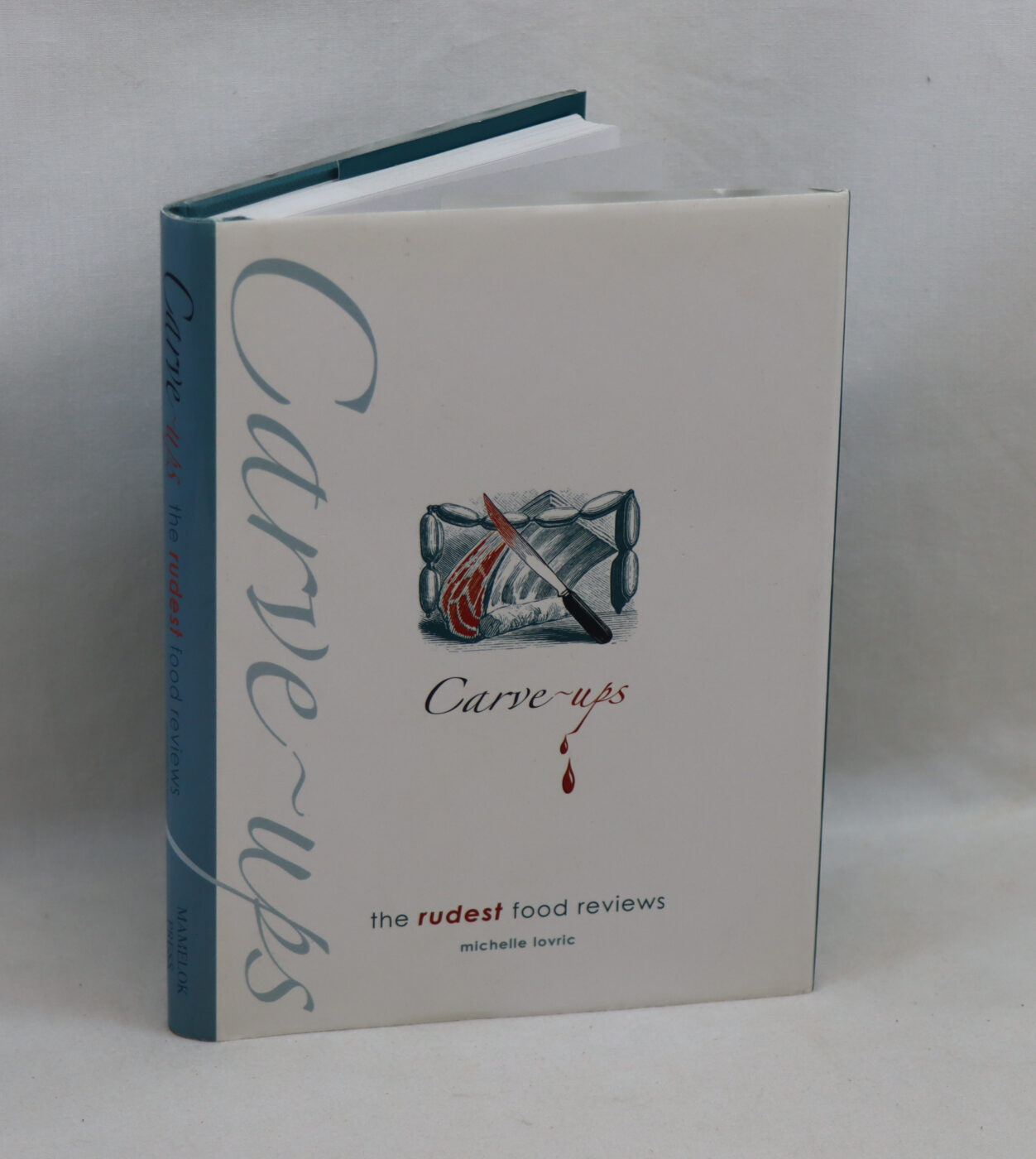
In the original dust cover. Green board binding with silver title on the spine.
We provide an in-depth photographic presentation of this item to stimulate your feeling and touch. More traditional book descriptions are immediately available
- Note: This book carries a £5.00 discount to those that subscribe to the F.B.A. mailing list
A truly lovely book, a gem of cookery humor.
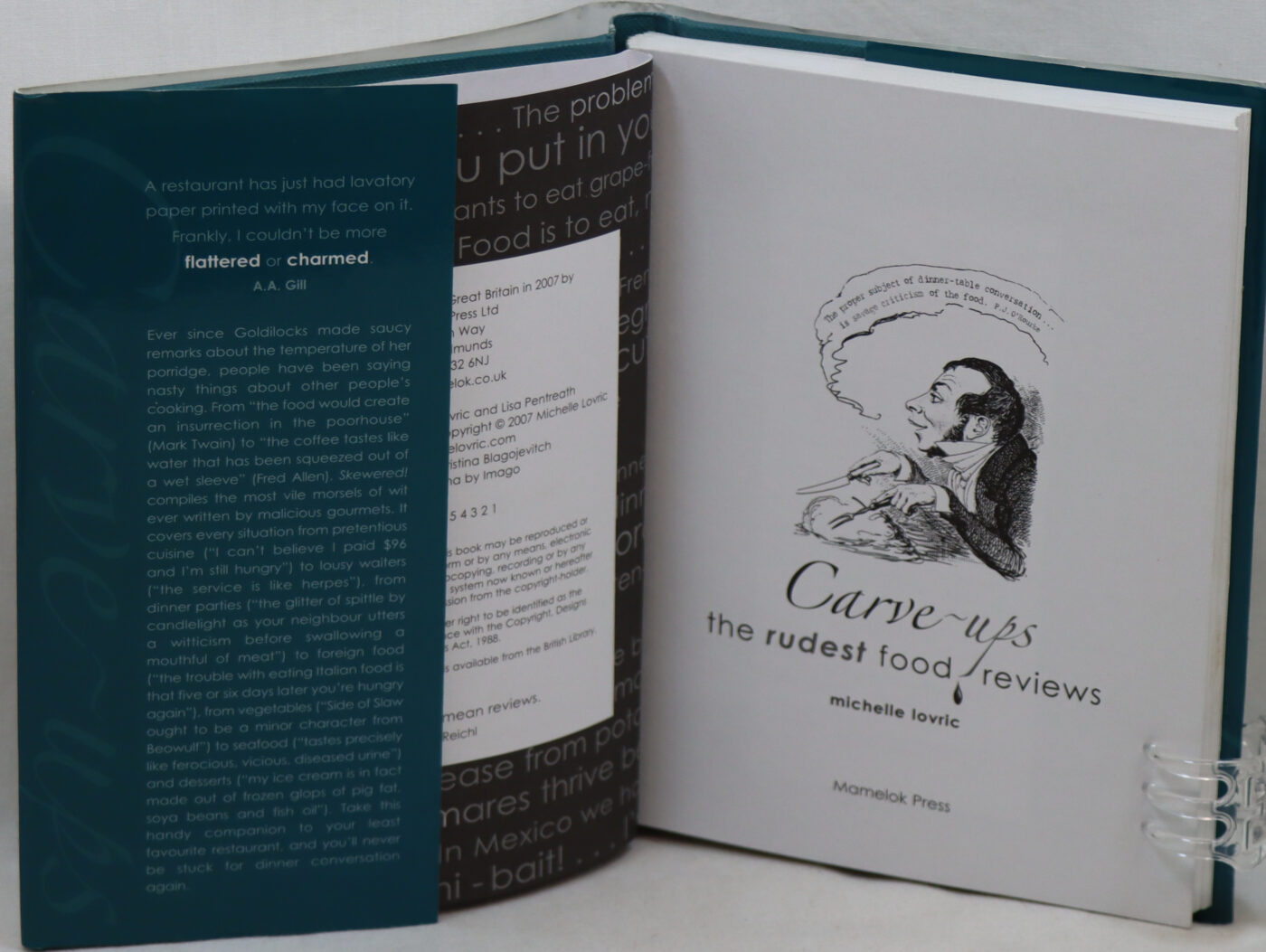
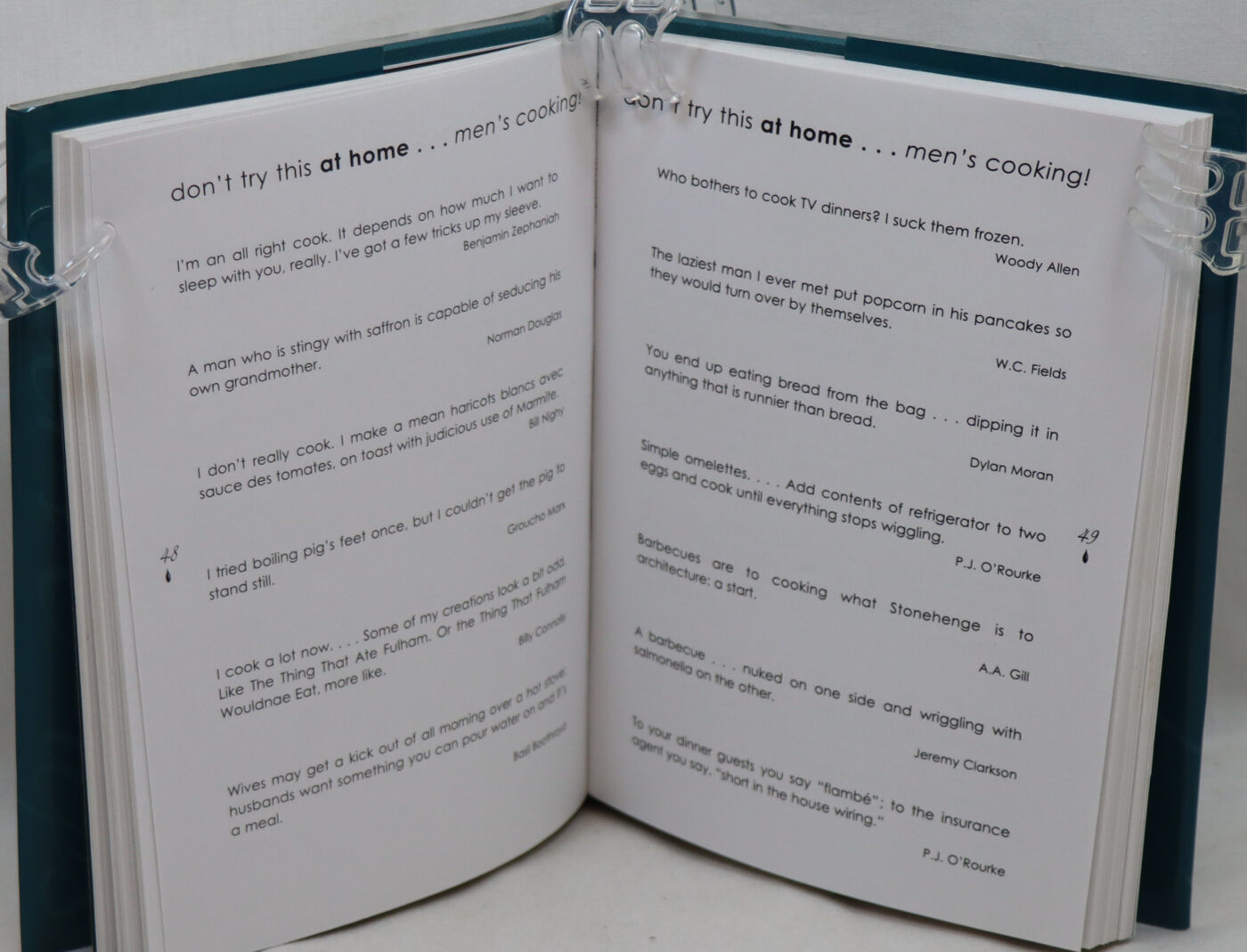
Featuring more than 600 quotations by famous foodies, this collection presents rude and highly entertaining criticism about cookery. From reviews about pretentious cuisine and lousy waitstaff to comments on vegetables, seafood, and desserts, these notable critics leave no culinary delight untouched and even offer cutting remarks about gourmet masters. Malicious quips, such as Fred Allen’s “the coffee tastes like water that has been squeezed out of a wet sleeve” or Mark Twain’s “the food would create an insurrection in the poorhouse,” give hungry diners a satisfying selection to use for conversation at their next dinner party or meal out.
Review: A seriously funny book of restaurant review excerpts, book quotations, and other blunt opinions about food, restaurants, and the chefs (cheves?) who call themselves Gods. Very quick read; I loved this one.
NOTE: This is an original book from the library gathered by the famous Cambridge Don, computer scientist, food and wine connoisseur, Jack Arnold LANG. Note: Jack founded the Michelin Guide ‘Midsummer House’- Cambridge’s paramount restaurant. This dining experience is hidden amongst the grassy pastures and grazing cattle of Midsummer Common and perched on the banks of the River Cam.
In 2008, Jack was one of the co-founders of the Raspberry Pi Foundation, alongside other members of the Department, and acted as the Foundation’s Chair. The project’s original goals were modest: to build and distribute low-cost computers for prospective applicants to our Computer Science degree. Initially the project was a “success disaster”, as Jack would say, as demand far outstripped the low-scale manufacturing plans. Ultimately the Raspberry Pi became the UK’s most successful computer with more than 60 million sold to date. Jack was drawn to the educational possibilities of the Raspberry Pi, its potential uses in emerging economies and the way it could support self-directed learning.
Want to know more about this item?
We are happy to answer any questions you may have about this item. In addition, it is also possible to request more photographs if there is something specific you want illustrated.
Ask a question
Related products


Share this Page with a friend
