
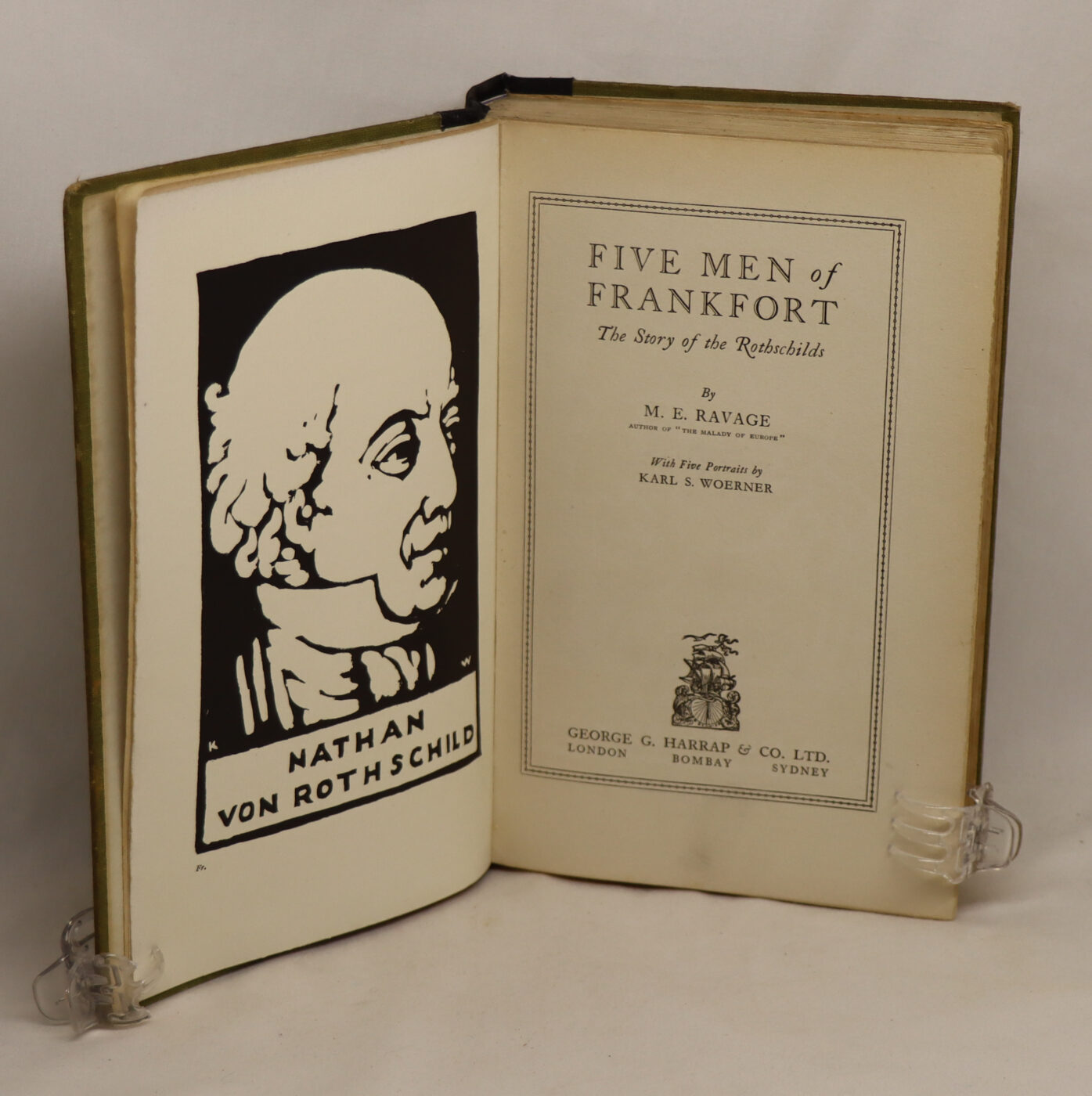
Five Men of Frankfort. The Story of the Rothschilds.
By M E Ravage
Printed: 1929
Publisher: George G Harrap & Co. London
| Dimensions | 15 × 22 × 5 cm |
|---|---|
| Language |
Language: English
Size (cminches): 15 x 22 x 5
Condition: Good (See explanation of ratings)
£54.00
Buy Now

Item information
Description
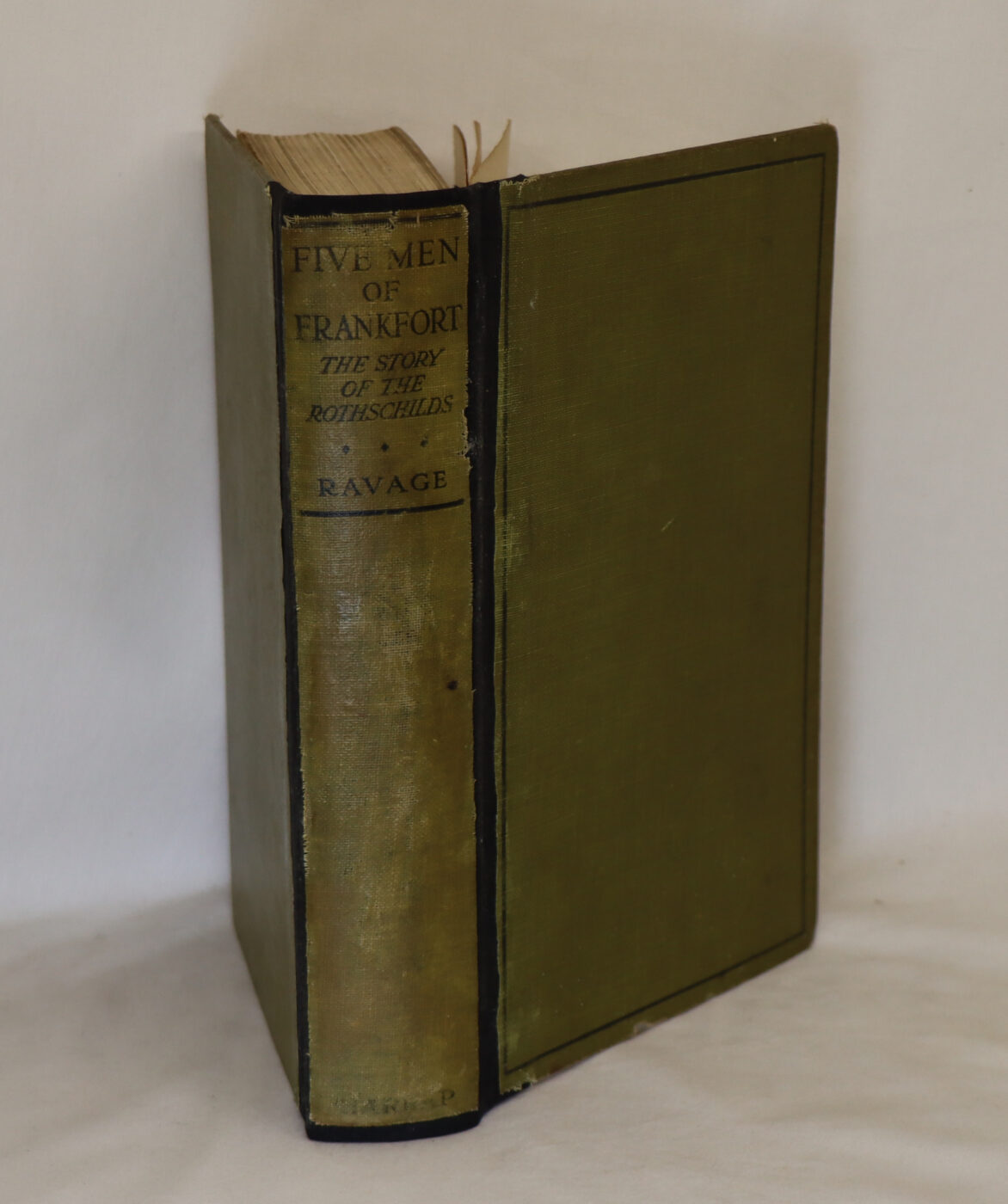
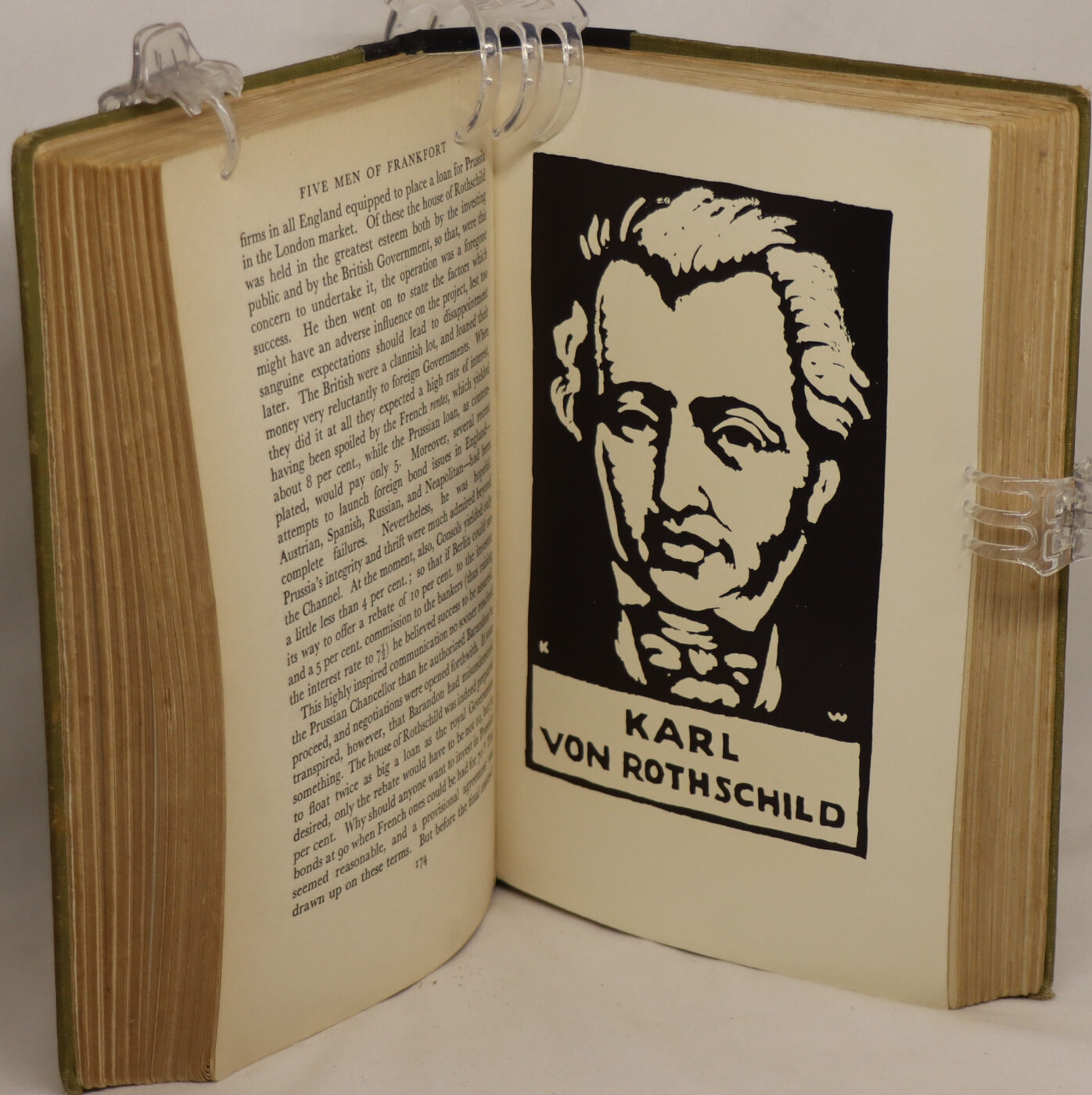
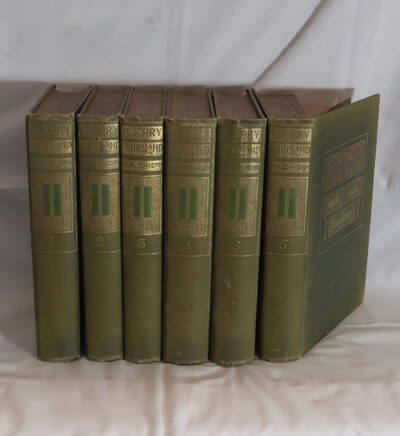
Rebacked. Green cloth binding. Original title plate on the spine.
We provide an in-depth photographic presentation of this item to stimulate your feeling and touch. More traditional book descriptions are immediately available.
- Note: This book carries a £5.00 discount to those that subscribe to the F.B.A. mailing list
This is a first UK edition of Five Men of Frankfort: The Story of the Rothschilds by Marcus Eli Ravage, published by George G. Harrap & Co. in 1929. Here is an overview of the edition’s bibliographic details, historical subject, and collectable context.
Edition Details & Identification
- Bibliographic Specs. The 1929 George G. Harrap & Co. printing is the first British hardcover edition. It is an octavo volume of 332 pages that aligns with the book’s 6 x 8.8-inch measurements.
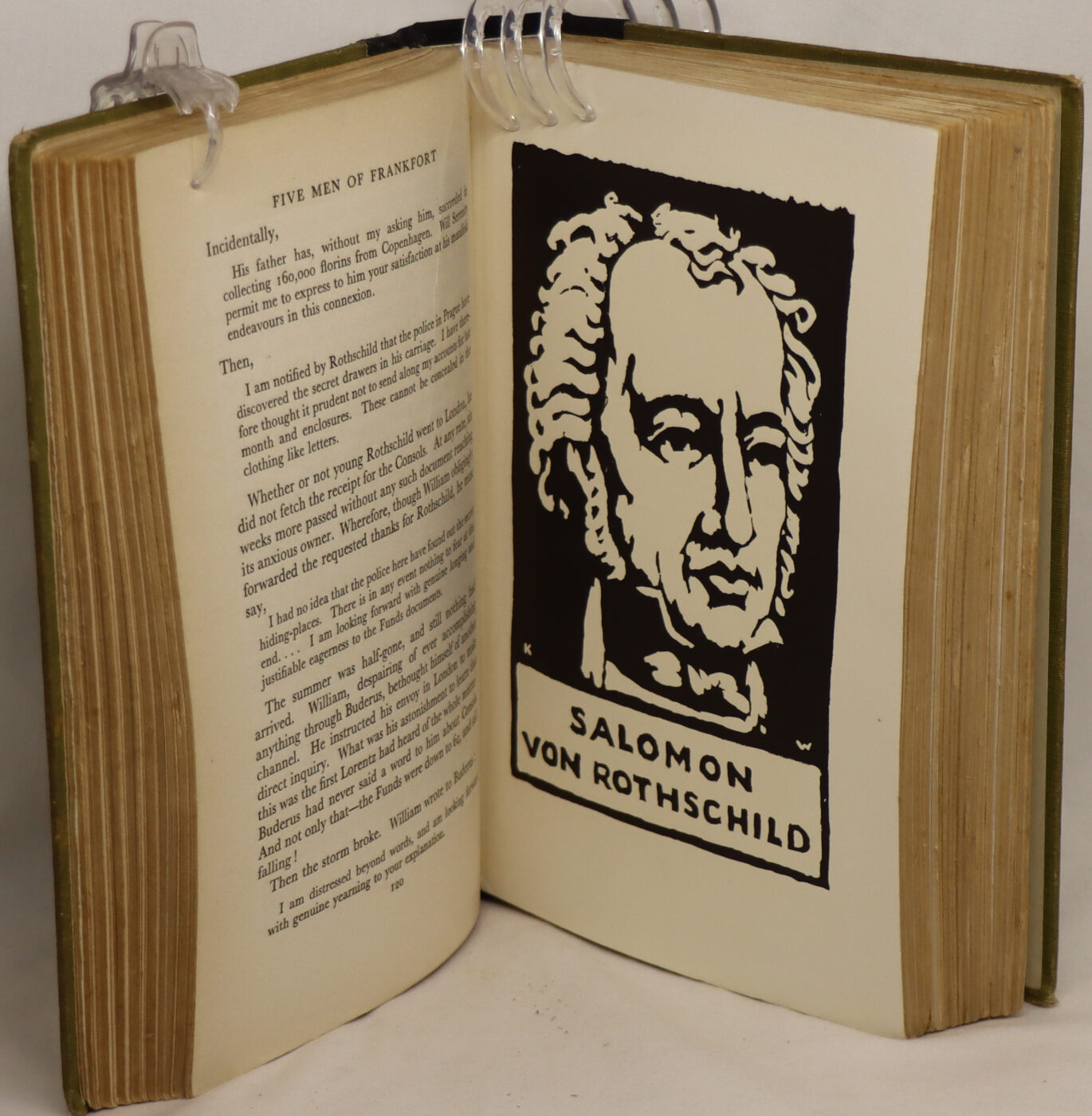
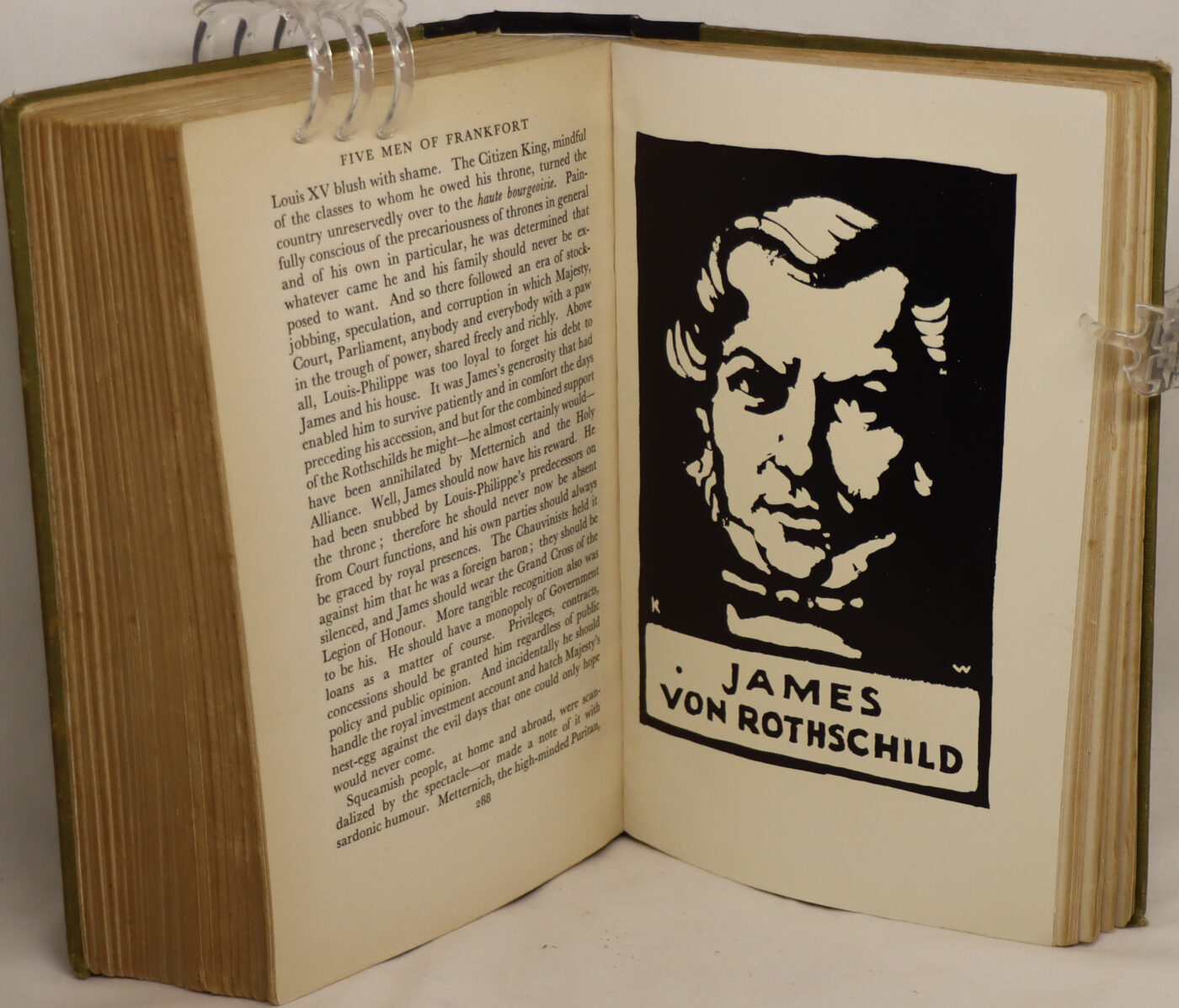
- Binding & Illustrations. First-issue copies were bound in blue cloth with gilt lettering on the spine and blind-stamped panelling on the boards. It originally included five black-and-white portrait plates by artist Karl S. Woerner.
- Original Retail Context. When first released in London in 1929, the book carried a cover price of 10/6 (ten shillings and sixpence) net.
Book Overview
- Historical Focus. Written by Romanian-American author Marcus Eli Ravage, the biography chronicles how Mayer Amschel Rothschild and his five sons built an international banking network from Frankfurt’s Jewish ghetto.
- European Expansion. The narrative tracks the five brothers as they established banking houses across Frankfurt, London, Paris, Vienna, and Naples during the Napoleonic era and the Industrial Revolution.
Collectable & Valuation Context
- Condition & Dust Jacket. For 1929 antiquarian copies in “Good” condition, market value depends heavily on whether the original dust jacket is present and if all five portrait plates remain intact.
- Comparable Market Listings. A very good first UK edition with its original unclipped dustwrapper is listed by specialist dealer The Plantagenet King for £275.00, while a 1929 US first edition (Dial Press) in good condition without a dust jacket is listed on Etsy for £55.95.
Chapter headings and price without a dust jacket
The original 1929 edition of Five Men of Frankfort contains 19 chapters, and comparable 1929 hardcover copies without a dust jacket are typically listed around £55. Because the rare Art Deco dustwrapper carries most of the edition’s collectable premium, missing jackets reduce the retail value considerably.
Chapter Headings
According to the table of contents archived by Blackwell’s, the original 1929 text is structured into the following 19 chapters:
- Chapter I. Jew Meyer, Curio Dealer
- Chapter II. Portrait of a Prince
- Chapter III. The Boys
- Chapter IV. Battle
- Chapter V. Police!
- Chapter VI. Thank God for Napoleon
- Chapter VII. Aid and Comfort to Wellington
- Chapter VIII. The Goodness of Mr. Herries
- Chapter IX. Nobility
- Chapter X. The First Loans
- Chapter XI. Honeymoon
- Chapter XII. In the Saddle
- Chapter XIII. In Quest of a Halo
- Chapter XIV. Leaden Skies
- Chapter XV. Passing of a Titan
- Chapter XVI. London
- Chapter XVII. James and His Heirs
- Chapter XVIII. Twilight
- Chapter XIX. Retrospect
NOTE: This is an original book from the library gathered by the famous Cambridge Don, computer scientist, food and wine connoisseur, Jack Arnold LANG. Note: Jack founded the Michelin Guide ‘Midsummer House’- Cambridge’s paramount restaurant. This dining experience is hidden amongst the grassy pastures and grazing cattle of Midsummer Common and perched on the banks of the River Cam.
In 2008, Jack was one of the co-founders of the Raspberry Pi Foundation, alongside other members of the Department, and acted as the Foundation’s Chair. The project’s original goals were modest: to build and distribute low-cost computers for prospective applicants to our Computer Science degree. Initially the project was a “success disaster”, as Jack would say, as demand far outstripped the low-scale manufacturing plans. Ultimately the Raspberry Pi became the UK’s most successful computer with more than 60 million sold to date. Jack was drawn to the educational possibilities of the Raspberry Pi, its potential uses in emerging economies and the way it could support self-directed learning.
Want to know more about this item?
We are happy to answer any questions you may have about this item. In addition, it is also possible to request more photographs if there is something specific you want illustrated.
Ask a question
Related products
Share this Page with a friend
