
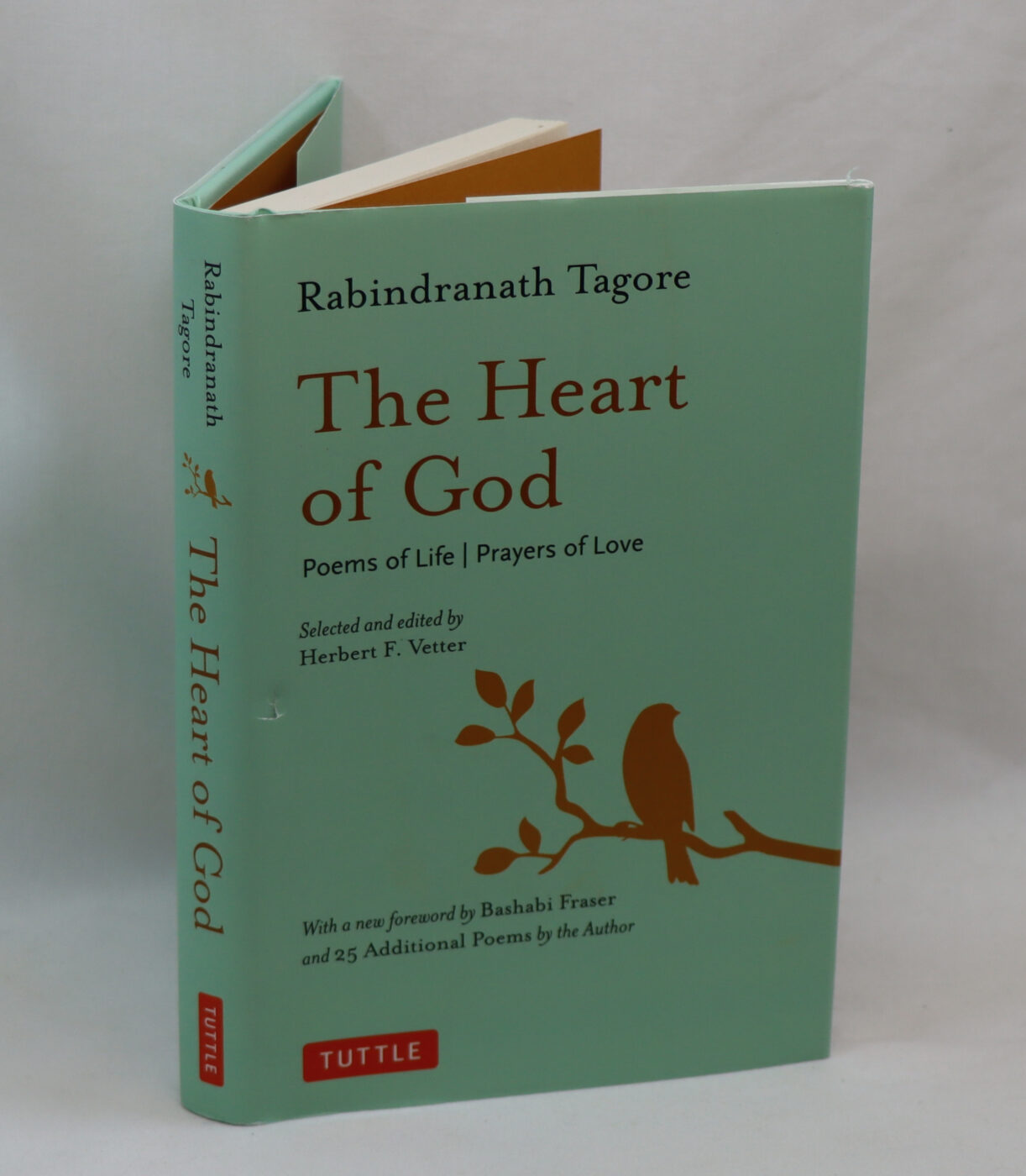
The Heart of God. Rabindranath Tagore.
By Rabindranath Tagore.
ISBN: 9781462903542
Printed: 2022
Publisher: Tuttle Publishing.
| Dimensions | 14 × 20 × 2 cm |
|---|---|
| Language |
Language: English
Size (cminches): 14 x 20 x 2
Condition: As new (See explanation of ratings)
£10.00
Buy Now

Item information
Description
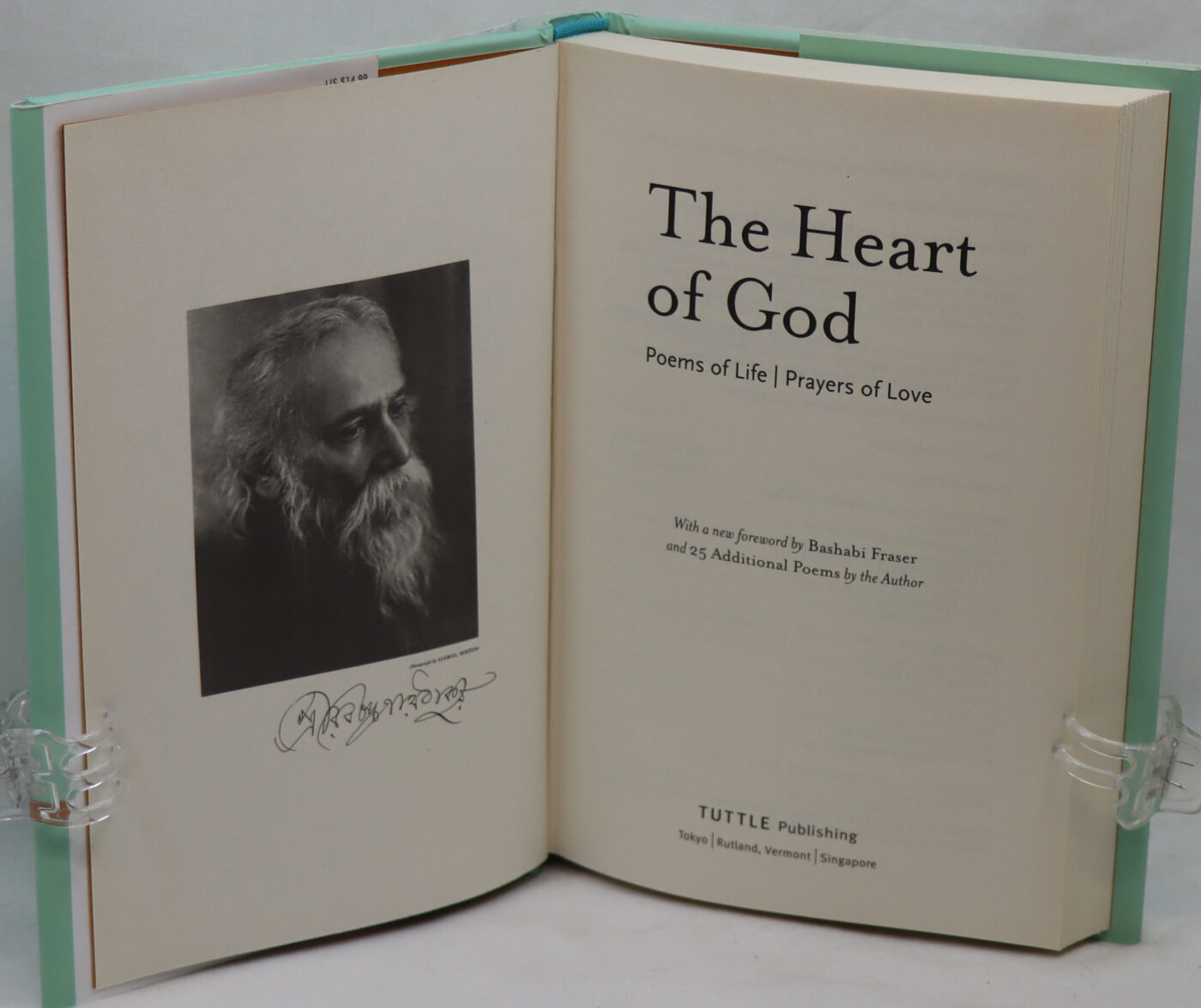
In the original dust jacket. Board binding the same as the cover.
We provide an in-depth photographic presentation of this item to stimulate your feeling and touch. More traditional book descriptions are immediately available.
- A £2 reduction when collected from FBA shop
Awarded the Noble Prize for Literature in 1913, Rabindranath Tagore (1861― 1941) is considered the most important poet of modern-day India. He was also a distinguished author, educator, social reformer, and philosopher. Today, Tagore along with Mahatma Gandhi is prized as the foremost intellectual and spiritual advocates of India’s liberation from imperial rule.
This inspiring collection of Tagore’s poetry represents his “simple prayers of common life.” Each of the seventy-seven prayers is an eloquent affirmation of the divine in the face of both joy and sorrow. Like the Psalms of David, they transcend time and speak directly to the human heart.
The spirit of this collection may be best symbolized by a single sentence by Sarvepalli Radhakrishnan, the renowned philosopher and statesman who served as president of India: “Rabindranath Tagore was one of the few representatives of the universal person to whom the future of the world belongs.”
Review: Tagore is a wonderful poet – even a philistine like me, who never reads poetry, can appreciate that. Never over-flowery and never using two words when one can suffice, these meditations cut straight to the heart of what it means to pray: to give voice to a hunger for something deeper and to express a longing that only God can fill. These poems suggest that the author himself was a man of humility and child-like faith, and this is surely a book of prayers that a person of any religion and none can appreciate. My personal favourite is ‘That I want You, only You, let my heart repeat without end’. A great interpretation of great poems.
Awarded the Nobel Prize for literature in 1913, Rabindranath Tagore (1861— 1941) is considered the most important poet of modern-day india. He was also a distinguished author, educator, social reformer, and philosopher. Today, Tagore along with Mahatma Gandhi are prized as the foremost intellectual and spiritual advocates of India’s liberation from imperial rule.
This inspiring collection of Tagore’s poetry represents his “simple prayers of common life.” Each of the seventy-seven prayers is an eloquent affirmation of the divine in the face of both joy and sorrow. Like the Psalms of David, they transcend time and speak directly to the human heart.
The spirit of this collection may be best symbolized by a single sentence by Sarvepalli Radhakrishnan, the renowned philosopher and statesman who served as president of india: “Rabindranath Tagore was one of the few representatives of the universal person to whom the future of the world belongs.”
Reverend Herbert F. Vetter, D.D. is the retired Minister at Large of The First Parish in Cambridge, Massachusetts, Chaplain to Harvard University, and the founding director of the national radio and television broadcasts of the Cambridge Forum. He is also the editor of Speak Out: Against the New Right (Beacon Press, 1982).
Rabindranath Tagore was a Nobel Laureate for Literature (1913) as well as one of India’s greatest poets and the composer of independent India’s national anthem, as well as that of Bangladesh. He wrote successfully in all literary genres, but was first and foremost a poet, publishing more than 50 volumes of poetry. He was a Bengali writer who was born in Calcutta and later traveled around the world. He was knighted in 1915, but gave up his knighthood after the massacre of demonstrators in India in 1919.
Want to know more about this item?
We are happy to answer any questions you may have about this item. In addition, it is also possible to request more photographs if there is something specific you want illustrated.
Ask a question
Related products
Share this Page with a friend
