
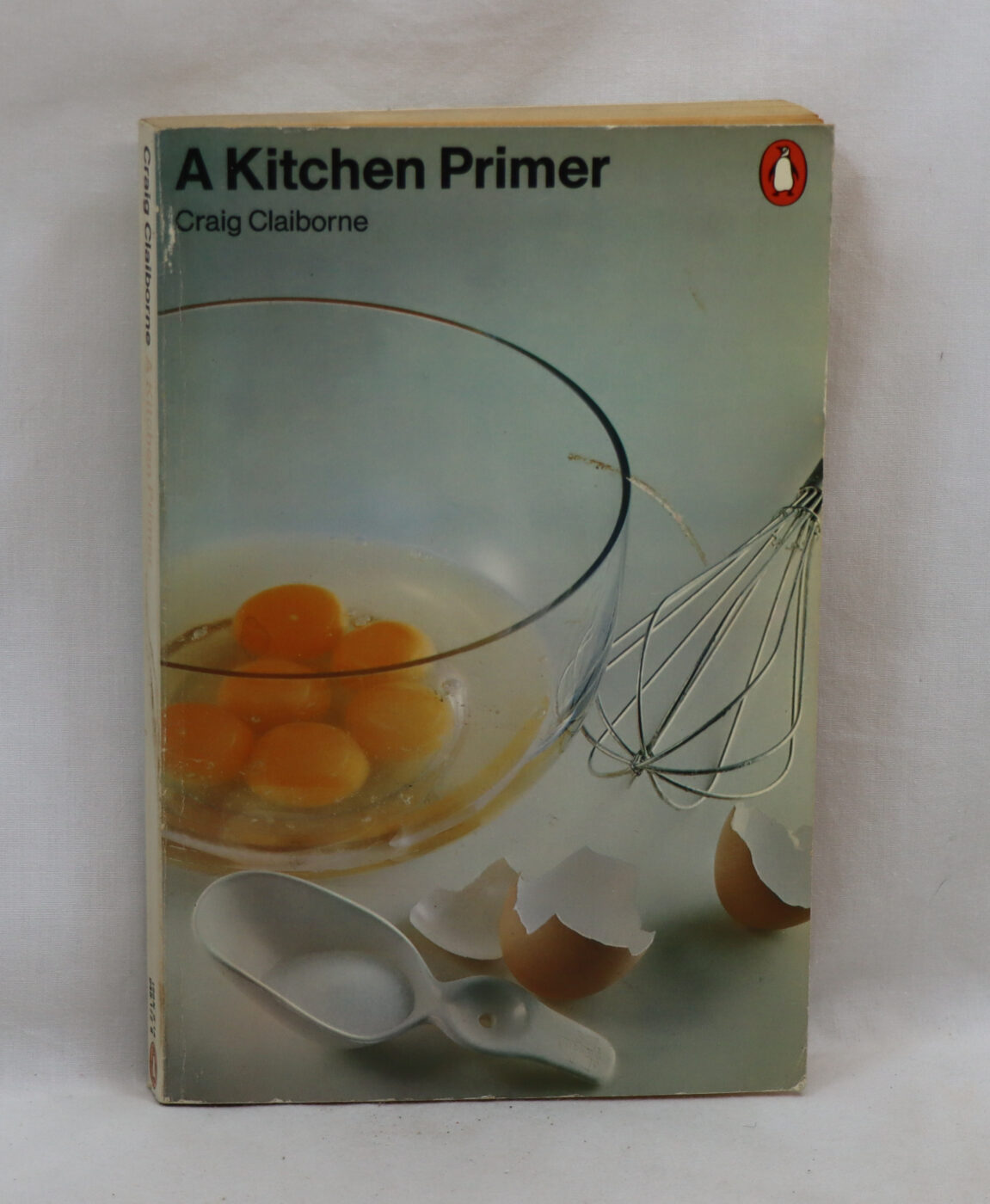
A Kitchen Primer.
By Craig Claiborne
ISBN: 9780517093627
Printed: 1973
Publisher: Penguin Books. London
| Dimensions | 13 × 20 × 1 cm |
|---|---|
| Language |
Language: English
Size (cminches): 13 x 20 x 1
Condition: Fair (See explanation of ratings)
£8.00
Buy Now
Item information
Description
Paperback. White cover with black title.
We provide an in-depth photographic presentation of this item to stimulate your feeling and touch. More traditional book descriptions are immediately available
- A £2 reduction when collected from FBA shop
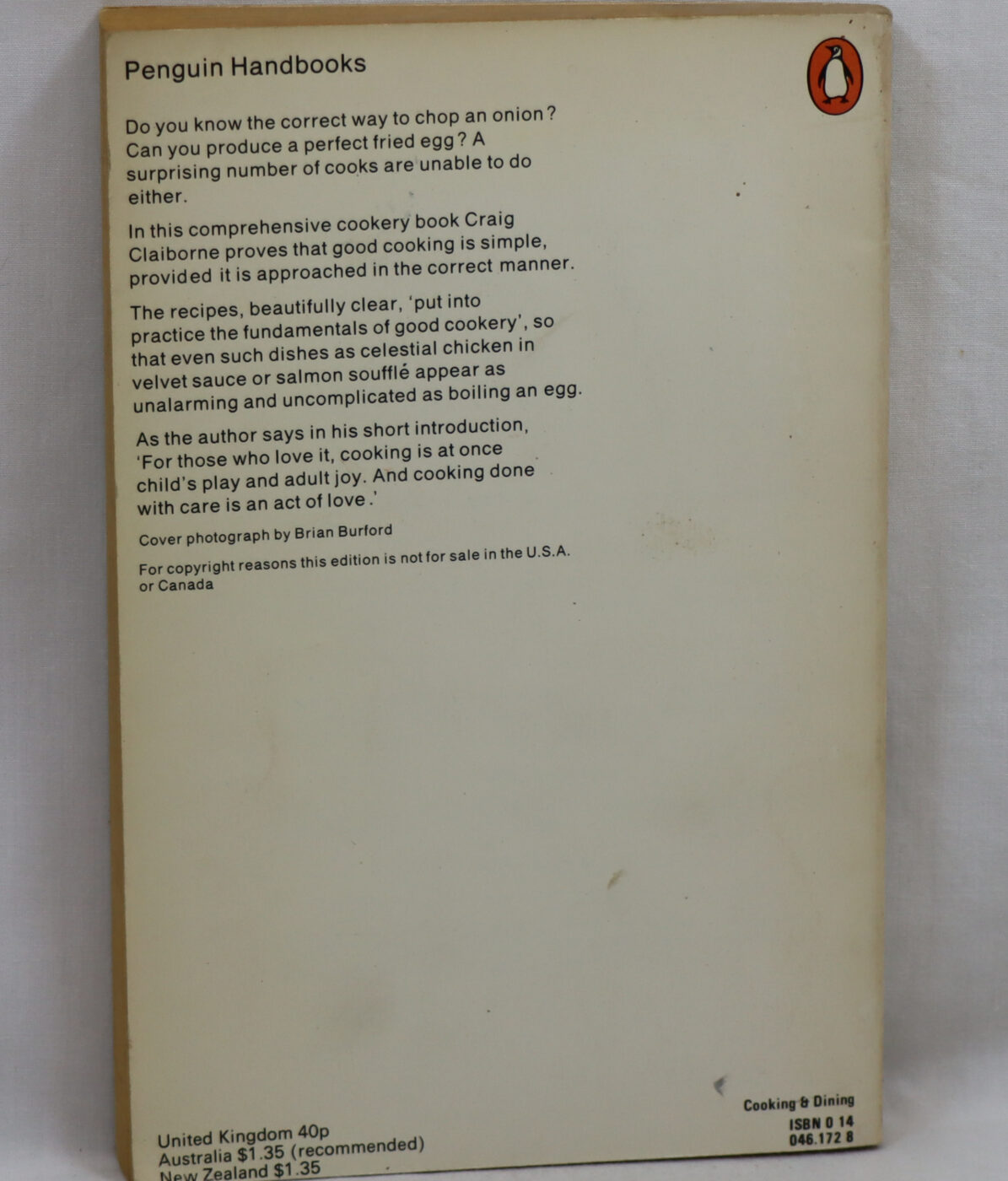
As the former food and restaurant critic for The New York Times and the author of several distinguished cookbooks, Craig Claiborne has earned a reputation as the great educator of the American palate. In this classically elegant and profusely illustrated book of recipes and techniques, he imparts the kind of culinary knowledge that is essential to making any dish — from a humble boiled egg to the most ambitious of souffles — but that most cooks only acquire through years of trial and error.
Claiborne tells us what tools and utensils make a kitchen well stocked; how to shell a shrimp or peel a peach; the whats and whys of soups and sauces, steaks and seafood, potatoes baked, whipped, and boiled. He conducts us through every step of many splendid meals, from clear soups to elaborate desserts. The fact that he does all this with the thoroughness and charm of a great teacher makes Craig Claiborne’s Kitchen Primer an invaluable aid for both the novice and the experienced chef.
Review: This is an outstanding book for the beginning cook. No more dried out pork chops or dry meatloaf. Mr. Claiborne covers every detail of cooking. Unlike most cookbooks which assume you already know certain things, like how to break an egg, or how to sautee onions, he lays out all of the basics. I’ve always had trouble cooking and most cookbooks haven’t offered any help. They have strange recipes with odd ingredients–I could never seem to find simple recipes for, say, chile or tuna casserole or baked chicken. There are always odd or exotic recipes when I just want to know how to cook a decent hamburger: what do I add to the ground beef to make it tasty and what temperature do I use to cook the patties without drying them out? I look for ground beef recipes and I see “Creole Weiners” and “Hamburger-Corn Pie”. What?
The other problem with every other cookbook I’ve tried is that they give instructions with the assumption that you know how to do these things. For example, I remember the first time I used one cookbook recipe and the instructions said to “sautee the onions.” Great, what does “sautee” mean and how do I do it? Or, make the patties and cook the burgers. On what heat? Should I coat the frying pan in butter or use a little water? You know what I’m talking about.
“Craig Claiborne’s Kitchen Primer” to the rescue. He begins by listing, with pictures, the basic equipment you’ll need. He follows by giving instructions on cooking basics such as the proper way to crack an egg, how to sautee onions, how to scramble an egg, even the proper way to cut up vegetables. AND his recipes are delicious and easy to prepare. His best piece of advice? Have everything ready and on the counter before you start: practical advice for sure, as you don’t want to start preparing the entree and find you need some thyme or you don’t have enough flour.
In short, this is the absolutely best cookbook I have found (and I have many sitting unused on my bookshelves) for learning, preparing and serving up delicious food to your family without the need for becoming a gourmet cook.
NOTE: This is an original book from the library gathered by the famous Cambridge Don, computer scientist, food and wine connoisseur, Jack Arnold LANG. Note: Jack founded the Michelin Guide ‘Midsummer House’- Cambridge’s paramount restaurant. This dining experience is hidden amongst the grassy pastures and grazing cattle of Midsummer Common and perched on the banks of the River Cam.
In 2008, Jack was one of the co-founders of the Raspberry Pi Foundation, alongside other members of the Department, and acted as the Foundation’s Chair. The project’s original goals were modest: to build and distribute low-cost computers for prospective applicants to our Computer Science degree. Initially the project was a “success disaster”, as Jack would say, as demand far outstripped the low-scale manufacturing plans. Ultimately the Raspberry Pi became the UK’s most successful computer with more than 60 million sold to date. Jack was drawn to the educational possibilities of the Raspberry Pi, its potential uses in emerging economies and the way it could support self-directed learning.
Want to know more about this item?
We are happy to answer any questions you may have about this item. In addition, it is also possible to request more photographs if there is something specific you want illustrated.
Ask a question
Related products






Share this Page with a friend
