
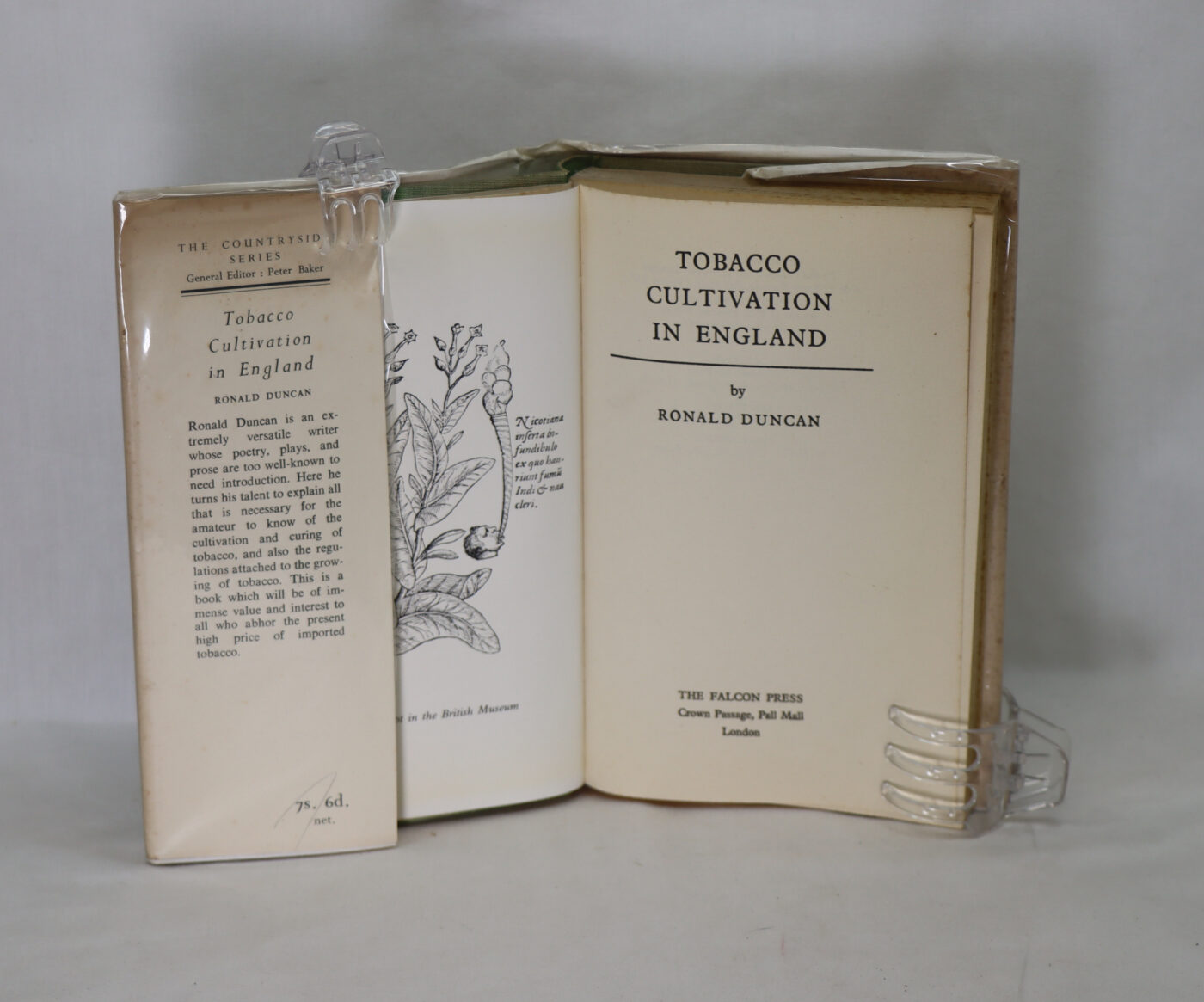
Tobacco Cultivation in England.
By Ronald Duncan
Printed: 1951
Publisher: Falcon Press. London
Edition: First edition
| Dimensions | 13 × 20 × 3 cm |
|---|---|
| Language |
Language: English
Size (cminches): 13 x 20 x 3
Condition: Good (See explanation of ratings)
£15.00
Buy Now

Item information
Description
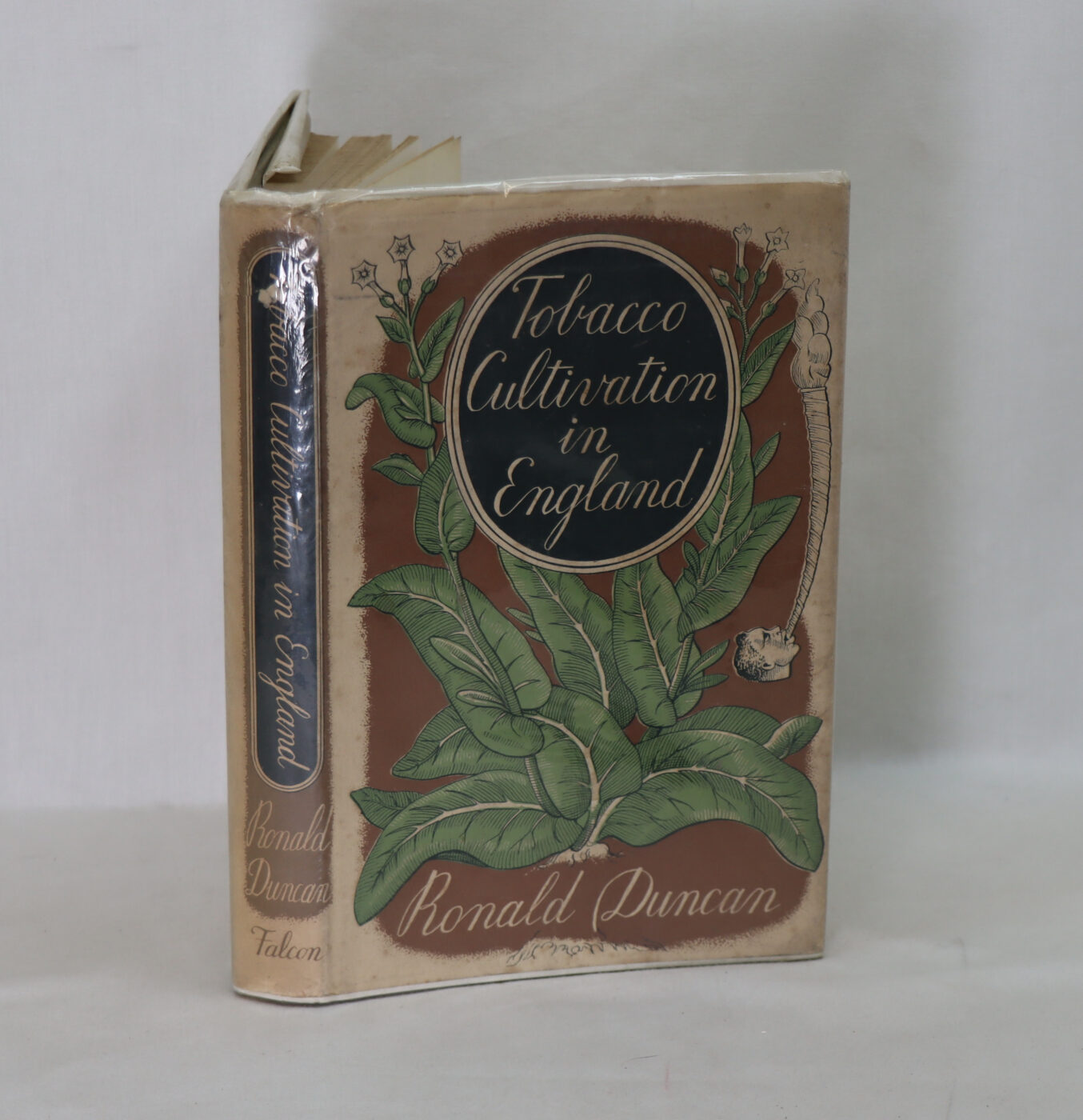
In the original dust jacket. Green cloth binding with gilt title on the spine.
We provide an in-depth photographic presentation of this item to stimulate your feeling and touch. More traditional book descriptions are immediately available
- Note: This book carries a £5.00 discount to those that subscribe to the F.B.A. mailing list
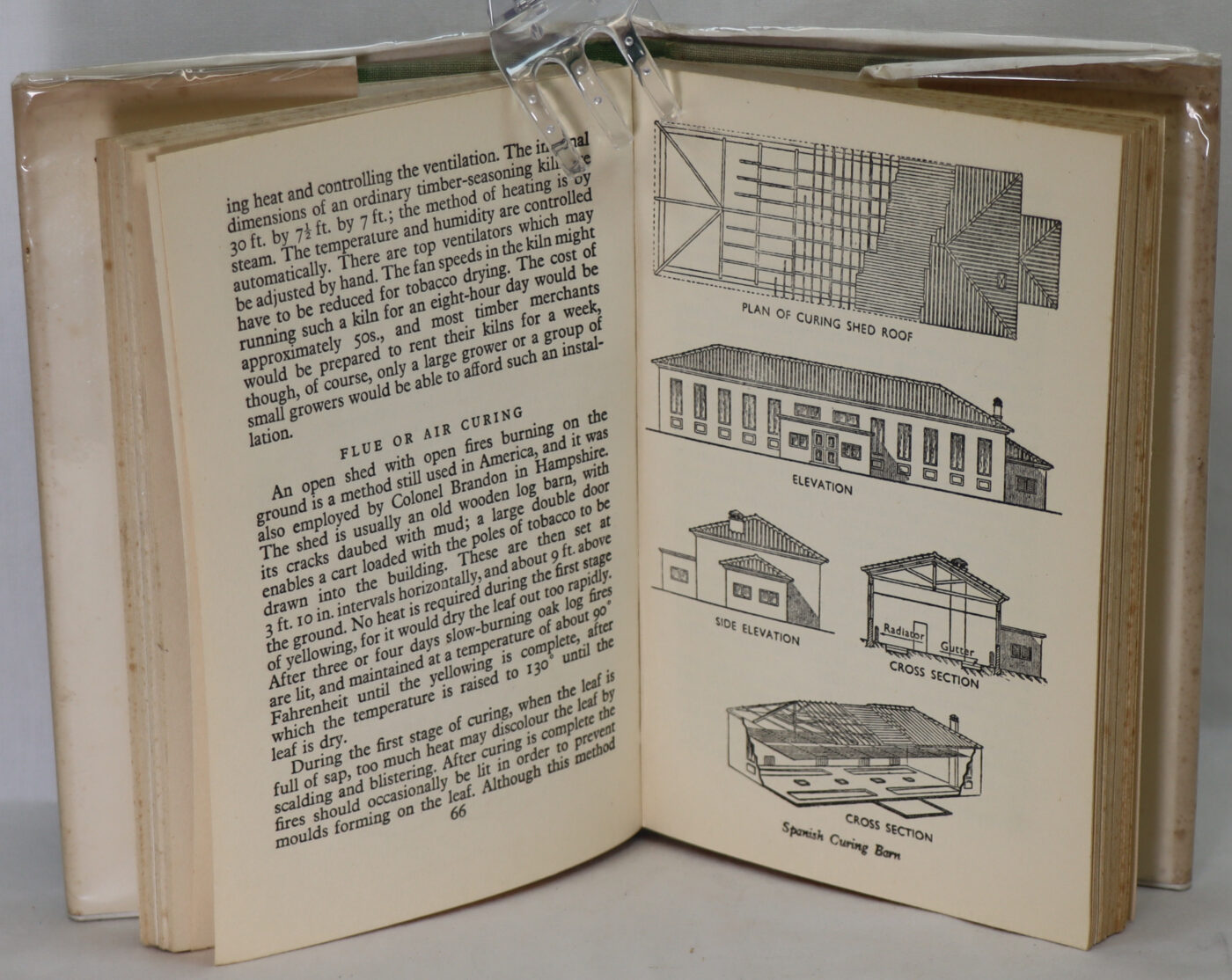
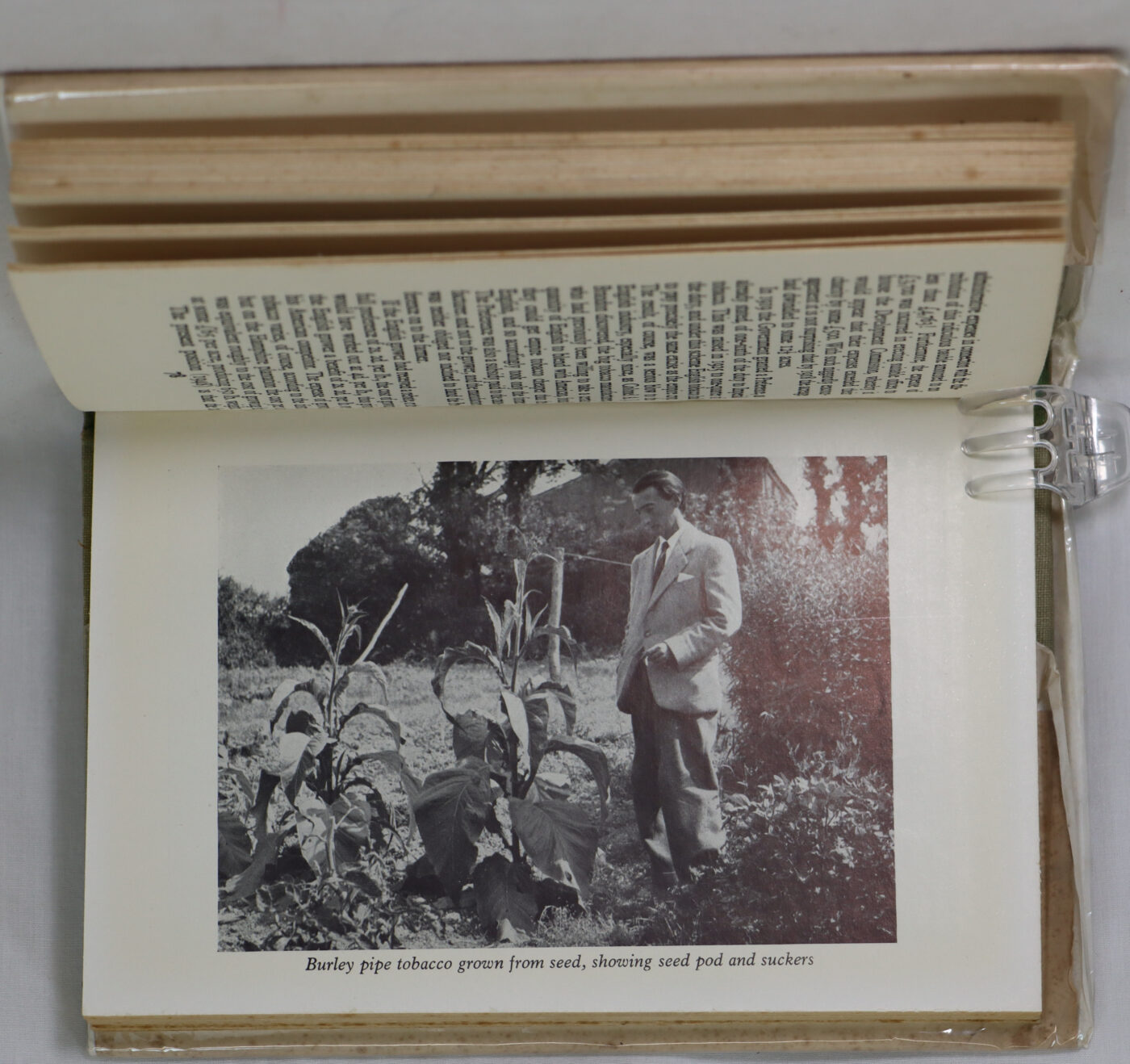
First Edition. For conditions please view our photographs. Condition: Good. 1951. 141 pages. Pictorial dust jacket over green cloth. Black and white illustrations. Pages and binding are presentable with no major defects. Minor issues present such as mild cracking, inscriptions, and inserts.
English tobacco cultivation was a brief but intense phenomenon, primarily in the 17th century, focused on producing tobacco for the English domestic market, particularly snuff, and was ultimately suppressed by Parliament to protect the economic interests of the American colony of Virginia. Although initially met with resistance, prohibition was strictly enforced, leading to the decline of commercial cultivation and the transition of England to a consumer of imported tobacco, though limited experimental growing continued into the 20th century.
Early Cultivation & Profitability (16th & 17th Centuries)
Introduction:
Tobacco was first introduced to England in 1586 by Sir Walter Raleigh and by the early 17th century, it was being cultivated commercially in England, with demand and profits being high.
Focus on Domestic Use:
The English crop was primarily for domestic consumption, especially for snuff, which was a popular and refined form of tobacco among the aristocracy.
Parliamentary Suppression & Economic Competition (17th Century)
Monopoly for Virginia:
In 1619, the Crown granted a monopoly on tobacco to the Virginia Company, a move that made the growing of tobacco in England illegal in an effort to protect the colony’s economy.
Enforcement & Resistance:
Despite strong resistance from farmers, who were met with armed groups and protests, Parliamentary prohibition was continually enforced.
Limited Commercial Success:
These statutory prohibitions, combined with heavy taxes, made it difficult for English farmers to compete with the economic advantages of tobacco grown in Virginia and later the Caribbean.
Later Attempts & Limited Success (18th Century – 20th Century)
Revival of Interest:
Interest in English tobacco cultivation resurfaced in the late 18th and early 19th centuries, with some suggesting significant profit could be made if regulations were removed.
Experimental Schemes:
Limited commercial cultivation was allowed for experimental purposes in the early 20th century, with approved areas including Norfolk, Suffolk, and Hampshire.
Ongoing Decline:
However, the complex processing involved, combined with onerous government regulations, meant that tobacco farming ultimately did not survive as a significant industry.
Want to know more about this item?
We are happy to answer any questions you may have about this item. In addition, it is also possible to request more photographs if there is something specific you want illustrated.
Ask a question






Share this Page with a friend
