
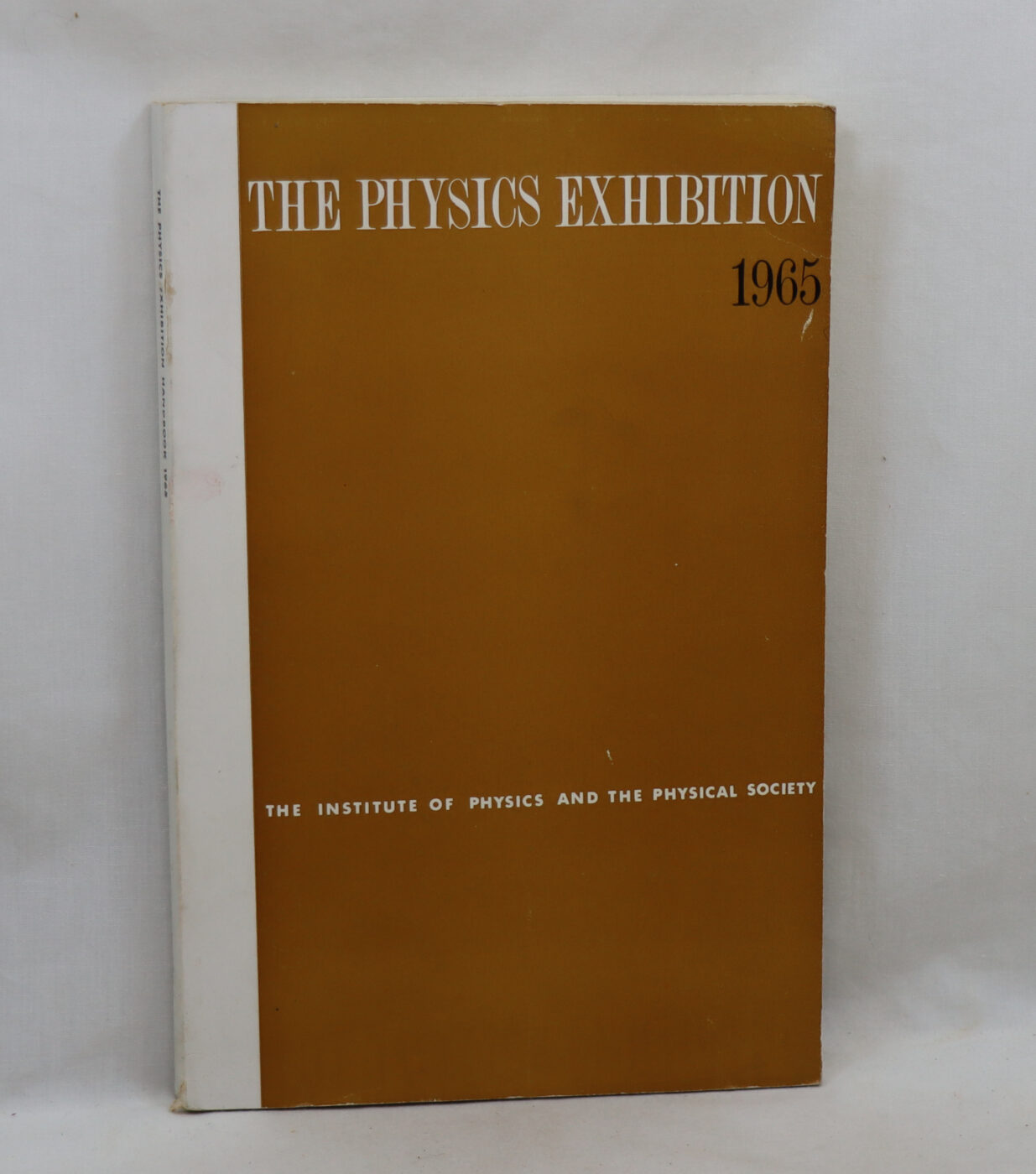
The Physics Exibition. 1965.
Printed: 1965
Publisher: The Institute of Physics and the Physical Society. London
| Dimensions | 18 × 27 × 1 cm |
|---|---|
| Language |
Language: English
Size (cminches): 18 x 27 x 1
Condition: Good (See explanation of ratings)
£44.00
Buy Now
Your items

Item information
Description
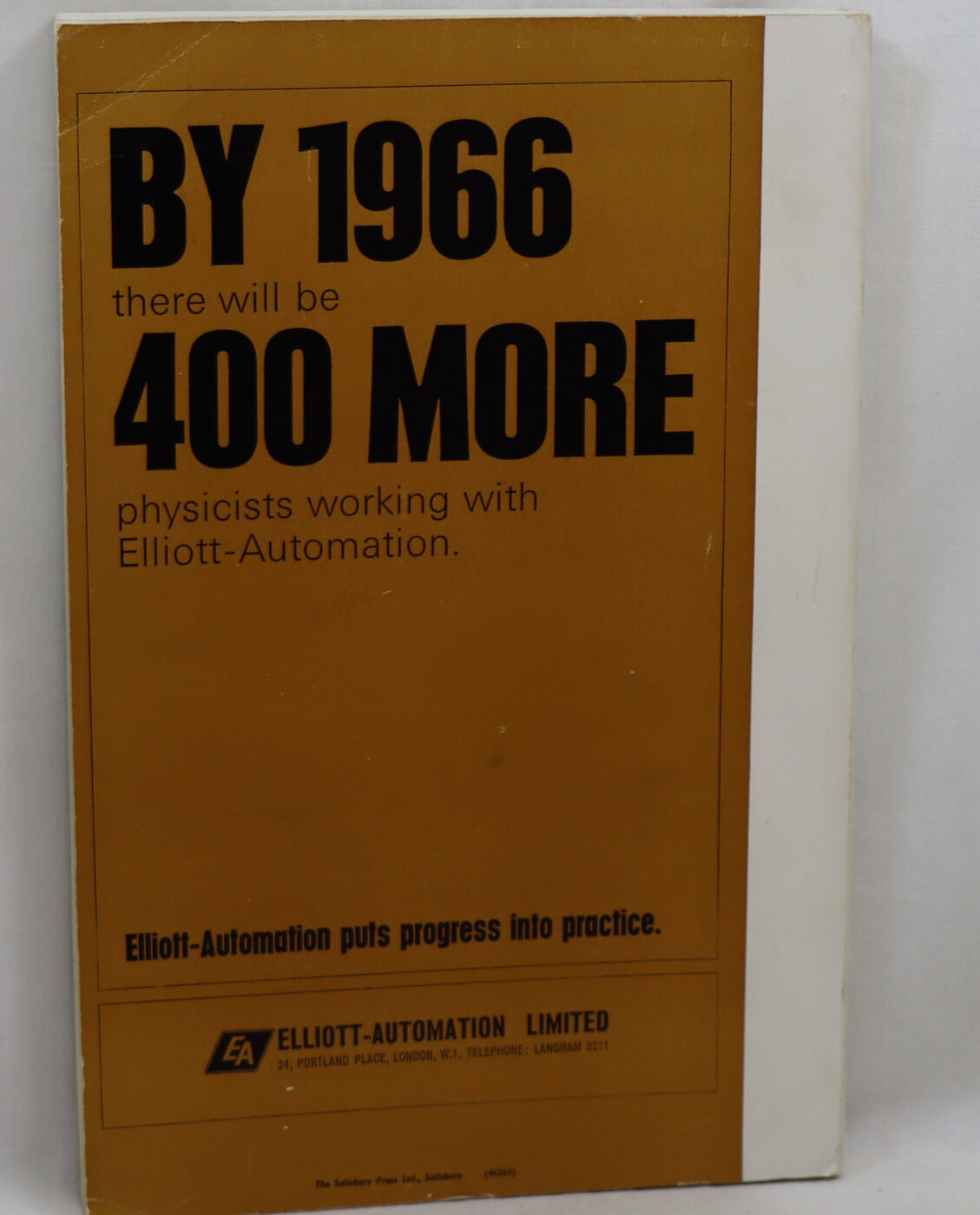
Paperback. Tan cover with white title.
We provide an in-depth photographic presentation of this item to stimulate your feeling and touch. More traditional book descriptions are immediately available
Note: This book carries a £5.00 discount to those that subscribe to the F.B.A. mailing list
A worthy memorial copy.
The 1965 Physics Exhibition, organized by The Institute of Physics and the Physical Society in London, featured cutting-edge scientific instruments, research, and advancements. Often accompanied by a handbook or catalogue published by the society, these annual exhibitions showcased advancements in atomic energy, electronics, and lab equipment.
Contextual Information:
- Publisher: The Institute of Physics and The Physical Society.
- Location: London.
- Content: The catalogue for this event generally lists exhibitors and descriptions of new apparatus displayed.
- Availability: While not directly found on Amazon UK, similar historical publications (like the 125 Years anniversary book) are available from scientific publishers or specialized book sellers, as shown on 125 Years: The Physical Society & The Institute of Physics on Amazon.co.uk.
These publications are valuable historical records for researchers exploring 20th-century instrument development and the history of physics in the UK.
The modern Institute of Physics and its predecessors have served the needs of physics and physicists for 125 years. In celebration of this anniversary, 125 Years: The Physical Society and The Institute of Physics charts the history of the Institute from its origins to the present day. It provides a fascinating account of the people and events that shaped the Institute’s development and includes the:
- Emergence of physics as a separate scientific discipline
- Formation of the Physical Society of London
- Establishment of the Institute of Physics
- Granting of a Royal Charter to the Institute of Physics
- Final decades of the millennium
Separate chapters are devoted to the educational, professional, and publishing activities of the Institute.
Pioneers such as Guthrie, Glazebrook, and Phillips could not have envisaged the ways in which the modern Institute has developed, but would surely approve of the way it is moving forward to the next millennium.
NOTE: This is an original book from the library gathered by the famous Cambridge Don, computer scientist, food and wine connoisseur, Jack Arnold LANG. Note: Jack founded the Michelin Guide ‘Midsummer House’- Cambridge’s paramount restaurant. This dining experience is hidden amongst the grassy pastures and grazing cattle of Midsummer Common and perched on the banks of the River Cam.
In 2008, Jack was one of the co-founders of the Raspberry Pi Foundation, alongside other members of the Department, and acted as the Foundation’s Chair. The project’s original goals were modest: to build and distribute low-cost computers for prospective applicants to our Computer Science degree. Initially the project was a “success disaster”, as Jack would say, as demand far outstripped the low-scale manufacturing plans. Ultimately the Raspberry Pi became the UK’s most successful computer with more than 60 million sold to date. Jack was drawn to the educational possibilities of the Raspberry Pi, its potential uses in emerging economies and the way it could support self-directed learning.
Want to know more about this item?
We are happy to answer any questions you may have about this item. In addition, it is also possible to request more photographs if there is something specific you want illustrated.
Ask a question
Related products





Share this Page with a friend
