
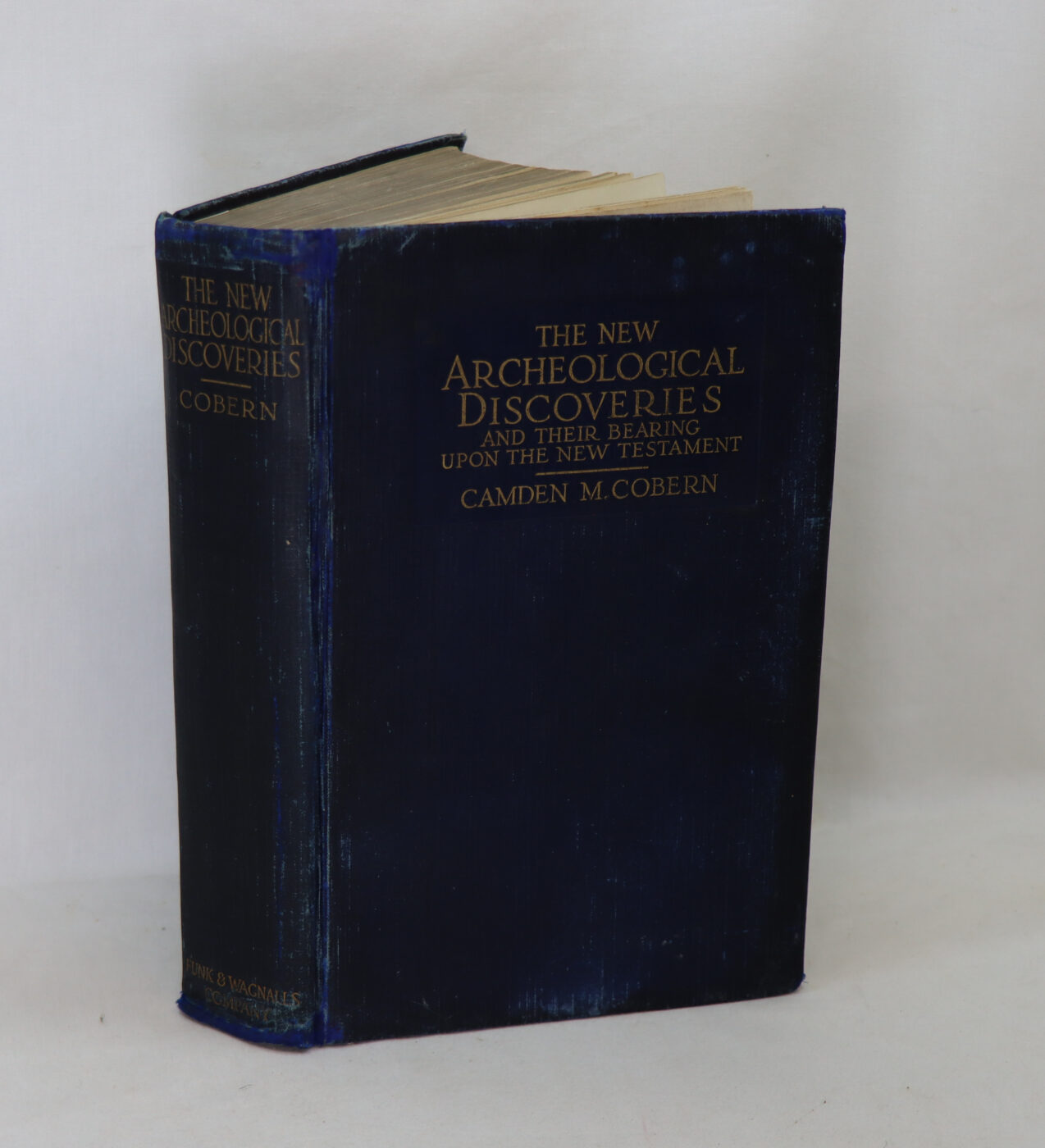
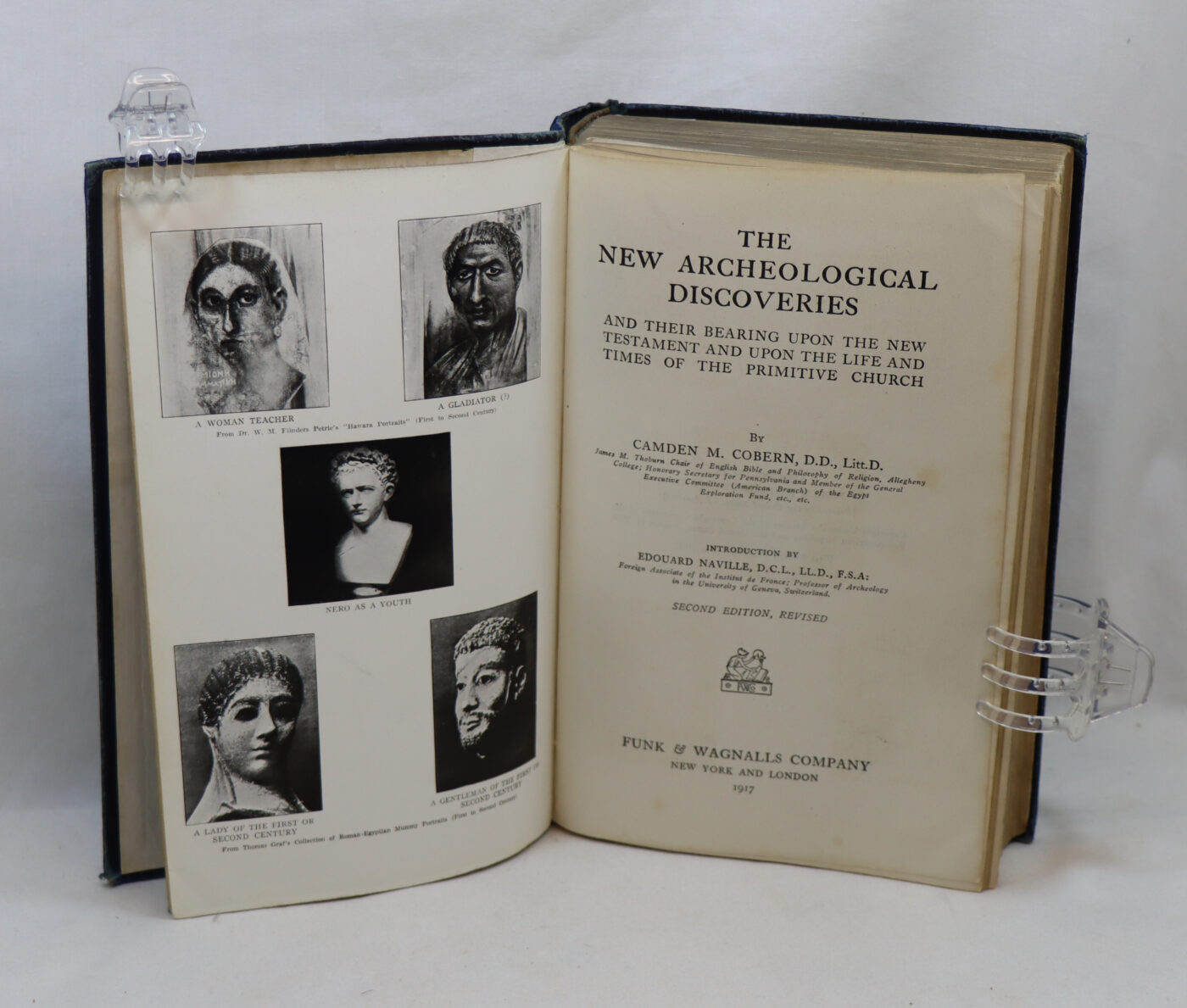
The New Archaeological Discoveries and their Bearing on the New Testament.
By Camden M Cobern
Printed: 1917
Publisher: Funk & Wagnall Co. New York
| Dimensions | 16 × 23 × 5 cm |
|---|---|
| Language |
Language: English
Size (cminches): 16 x 23 x 5
Condition: Good (See explanation of ratings)
£44.00
Buy Now

Item information
Description
Navy cloth binding with a gilt title on the spine and front board. Has repair on inside hinges.
We provide an in-depth photographic presentation of this item to stimulate your feeling and touch. More traditional book descriptions are immediately available.
- Note: This book carries a £5.00 discount to those that subscribe to the F.B.A. mailing list
In a theological sense, this is a great work.
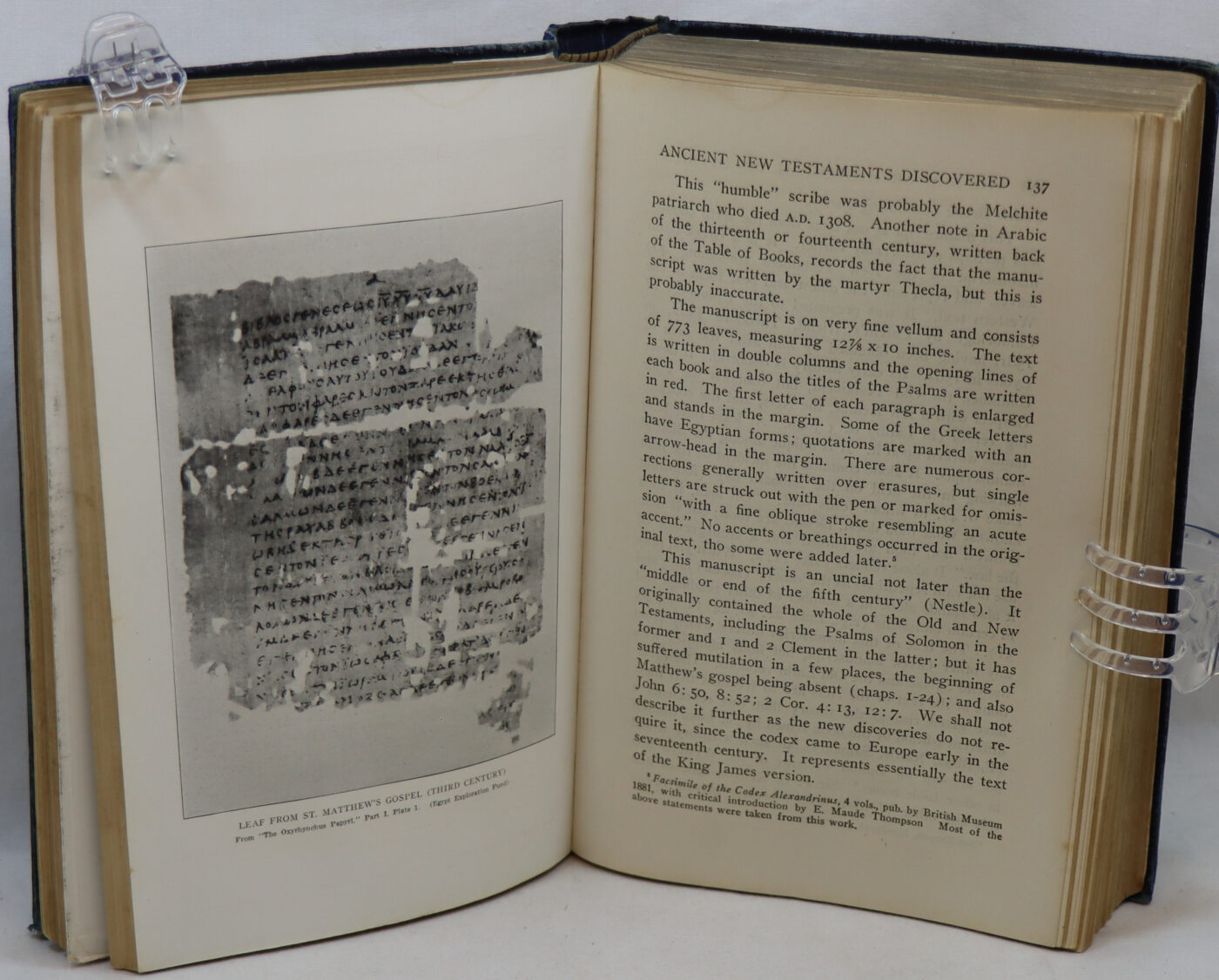
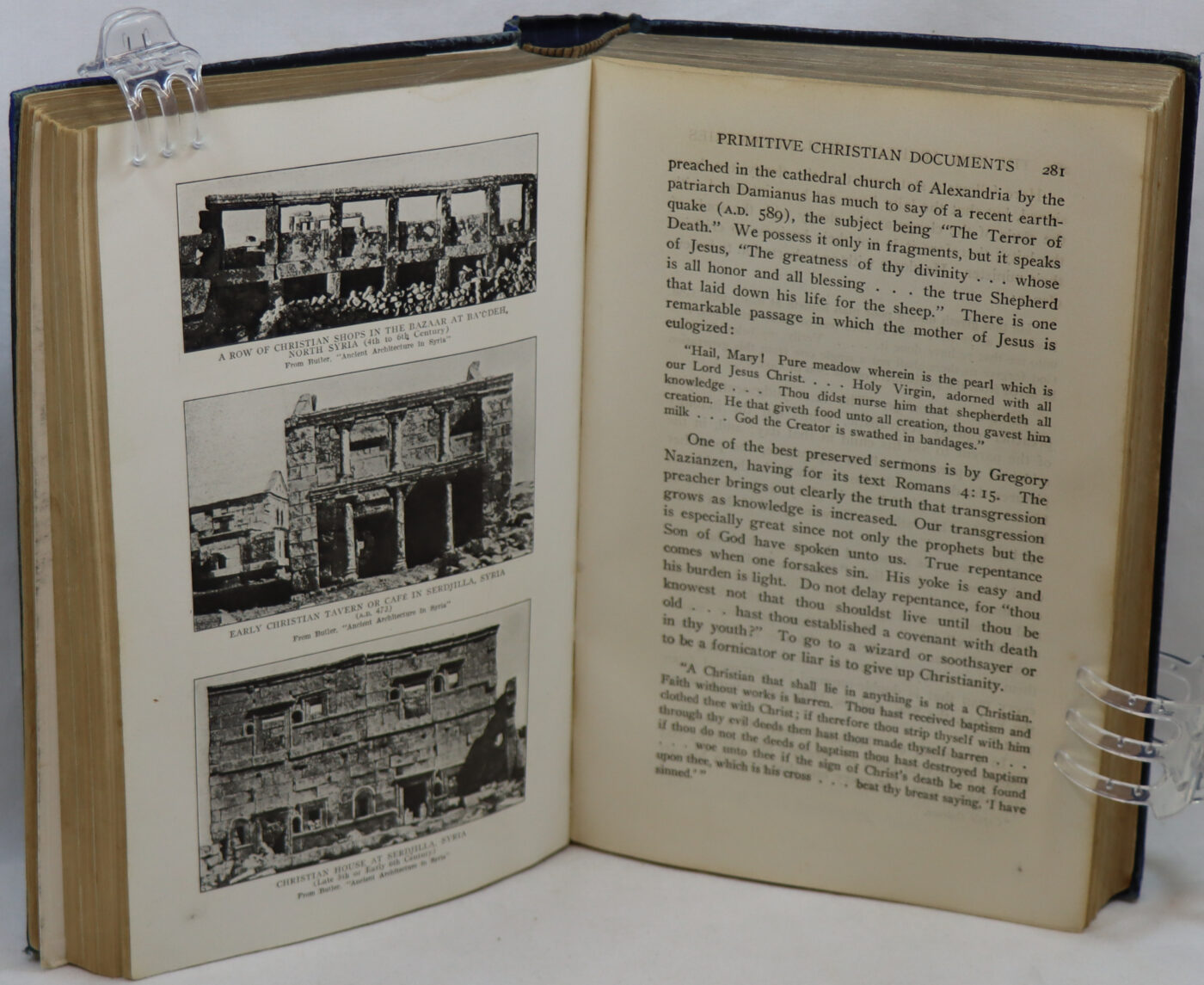
The New Archaeological Discoveries and Their Bearing Upon the New Testament (1917) by Dr. Camden M. Cobern is a classic exploration of how early 20th-century excavations and papyri discoveries illuminated the text and cultural context of the New Testament.
Core Purpose: Written to serve as a comprehensive summary of discoveries for laypeople and scholars alike, the book examines hundreds of unearthed Greek and Coptic papyri, inscriptions, and artifacts. Cobern aimed to prove that the New Testament writings were deeply rooted in the historical, linguistic, and cultural realities of the 1st-century Greco-Roman world rather than being written in a unique theological vacuum.
Key Themes and Insights
- The “Common” Language: A major revelation discussed by Cobern is that the New Testament was written in Koine (common) Greek—the everyday language used in the streets and marketplaces of the Roman Empire, as evidenced by newly discovered personal letters and business documents of the era.
- Corroboration of Texts: The book draws on archaeological finds to establish the historical reliability of the Gospels and Epistles, countering earlier skeptical theories that suggested the New Testament was compiled much later.
- Insights on Primitive Christianity: By analyzing buried hoards of papyri, Cobern provided vivid details about the daily lives, religious habits, and societal struggles of the early Church members.
Historical Significance
Because it synthesized vast amounts of scattered archaeological and papyrological data, the work was highly regarded as a pioneer text in biblical archaeology. It provided an apologetic defense of the New Testament by demonstrating that its documents fit seamlessly into the known historical context of antiquity.
NOTE: This is an original book from the library gathered by the famous Cambridge Don, computer scientist, food and wine connoisseur, Jack Arnold LANG. Note: Jack founded the Michelin Guide ‘Midsummer House’- Cambridge’s paramount restaurant. This dining experience is hidden amongst the grassy pastures and grazing cattle of Midsummer Common and perched on the banks of the River Cam.
In 2008, Jack was one of the co-founders of the Raspberry Pi Foundation, alongside other members of the Department, and acted as the Foundation’s Chair. The project’s original goals were modest: to build and distribute low-cost computers for prospective applicants to our Computer Science degree. Initially the project was a “success disaster”, as Jack would say, as demand far outstripped the low-scale manufacturing plans. Ultimately the Raspberry Pi became the UK’s most successful computer with more than 60 million sold to date. Jack was drawn to the educational possibilities of the Raspberry Pi, its potential uses in emerging economies and the way it could support self-directed learning.
Condition notes
Hinges repaired
Want to know more about this item?
We are happy to answer any questions you may have about this item. In addition, it is also possible to request more photographs if there is something specific you want illustrated.
Ask a question
Related products


Share this Page with a friend
