
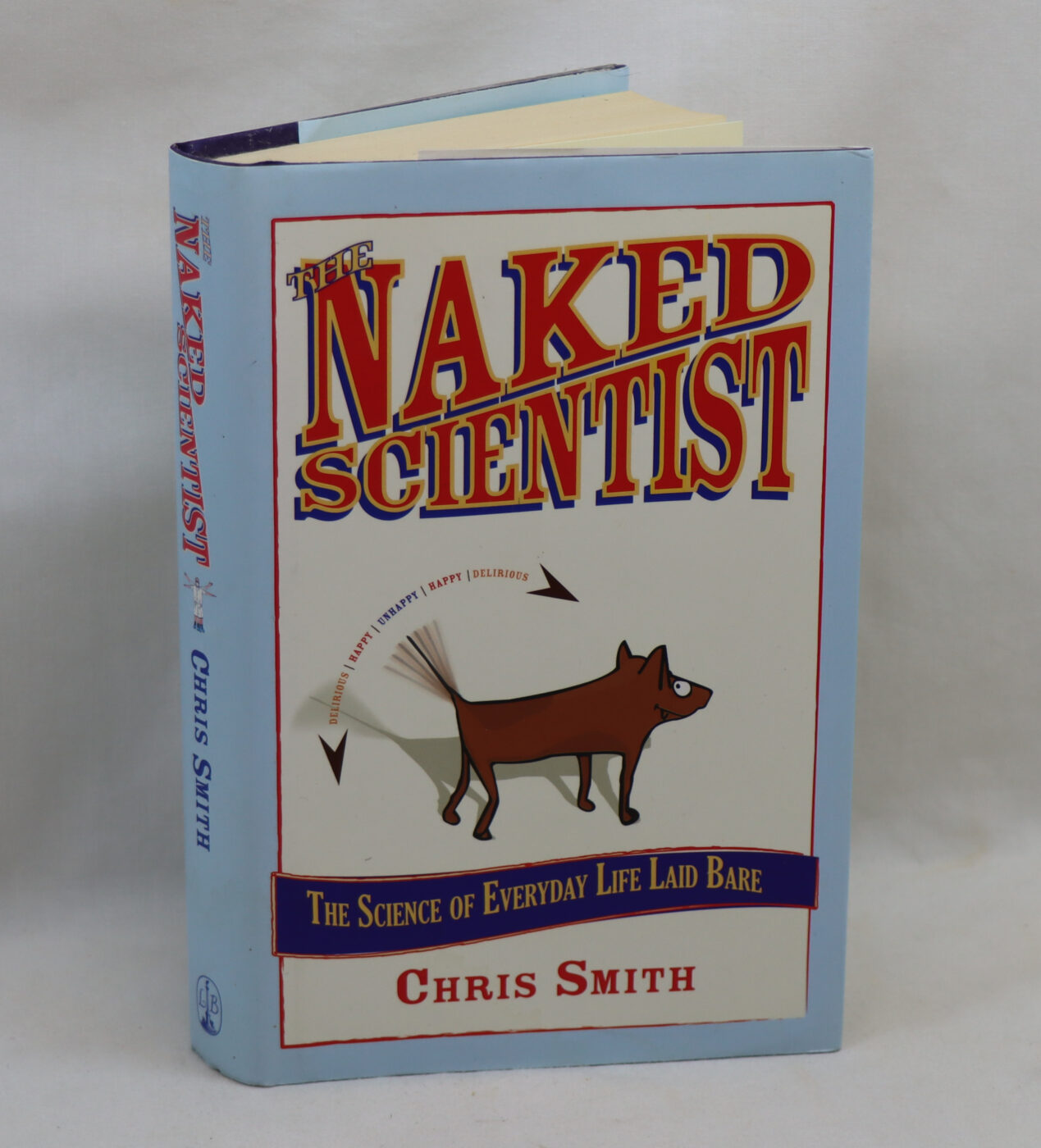
The Naked Scientist.
By Chris Smith
ISBN: 9781741666458
Printed: 2010
Publisher: Little Brown. London
| Dimensions | 14 × 21 × 4 cm |
|---|---|
| Language |
Language: English
Size (cminches): 14 x 21 x 4
Condition: Good (See explanation of ratings)
£16.00
Buy Now
Your items

Item information
Description
In the original dust cover. Blue cloth binding with red title on the spine.
We provide an in-depth photographic presentation of this item to stimulate your feeling and touch. More traditional book descriptions are immediately available
- Note: This book carries a £5.00 discount to those that subscribe to the F.B.A. mailing list
Why use expensive beauty products when you can moisturise with jellyfish? Have you ever suspected pollution was to blame for your children’s plummeting IQ? Ready to take a sea change …on Mars? And how about chopping an onion that doesn’t make you cry? This is the perfect present for enquiring minds. Compelling, quirky and packed full of curious facts, The Naked Scientist: Life Under the Microscope is a treasure trove of cutting-edge research, far-flung factoids and the ability to see into our scientific future, answering those fascinating questions you never thought to ask.
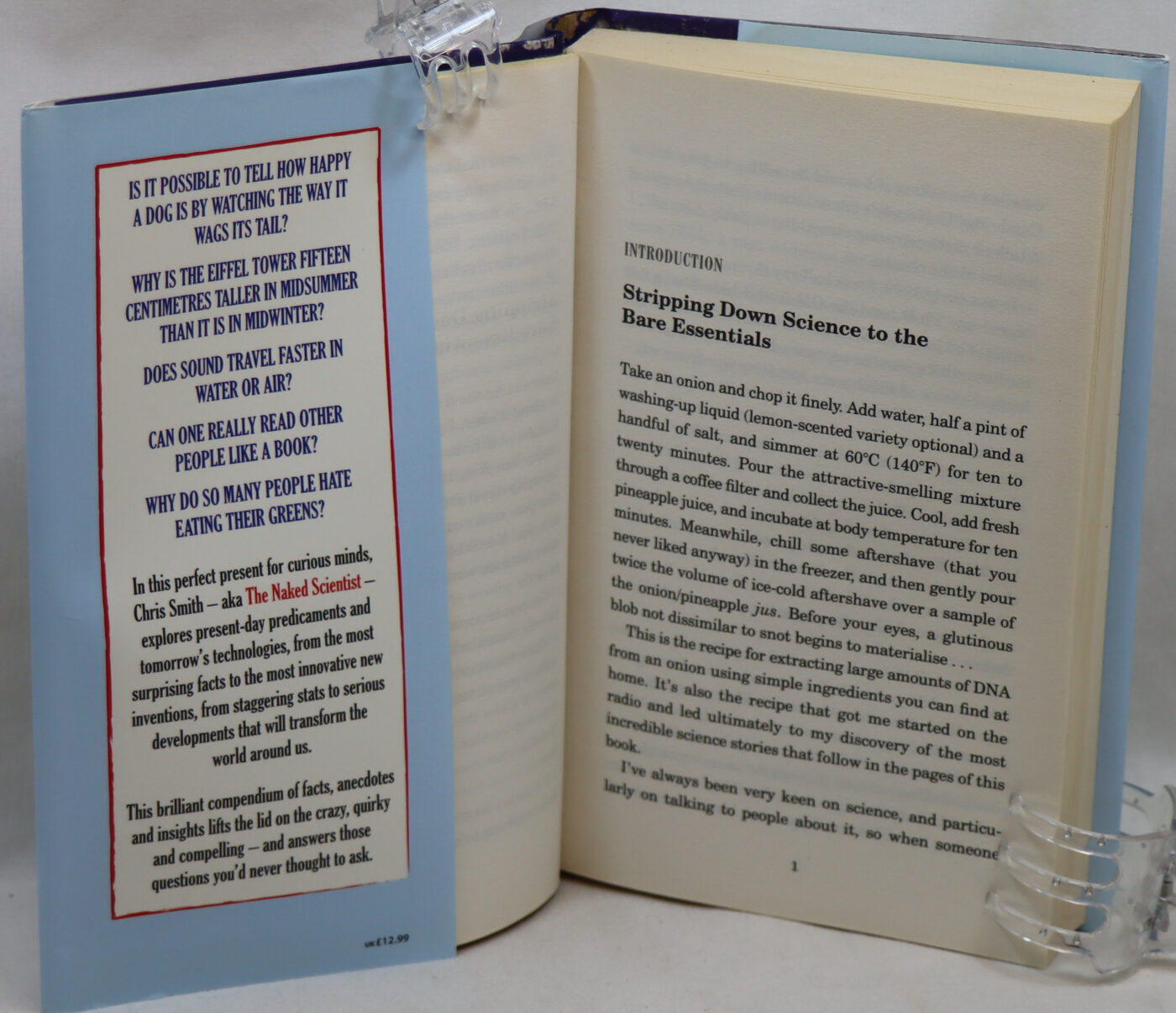
Is it possible to tell how happy a dog is by watching the way it wags its tail? Why is the Eiffel Tower 15 centimetres taller in mid-summer than it is in mid-winter? Does sound travel faster in water or air? Can one really read other people like a book? Why do so many people hate eating their greens? Firmly in the tradition of DOES ANYTHING EAT WASPS? New scientific kid on the block Chris Smith – aka THE NAKED SCIENTIST – explores present-day predicaments and tomorrow’s technologies, from the most surprising facts to the most innovative new inventions, from staggering stats to serious developments that will transform the world around us. In this fascinating book, top scientist Chris Smith uses his wit and charm to lift the lid on the curious, crazy and compelling – and answer those questions you never thought to ask.
Review: Chris Smith is a hero of British science communication with his excellent The Naked Scientists radio show/podcast (I have to say I hate the name, but you can’t have everything). In this book he collects together a series of really interesting scientific discoveries, which may be quirky or deeply significant. In theory this is an excellent idea, but there were two reasons the book didn’t work particularly well for me. One was that far too many of the stories were medical/biological. This probably reflects the fact that Smith is a medical doctor, but the radio show doesn’t suffer from this limitation, so it was a bit of a surprise. The book really should be labelled The Naked Biologist. More significantly, although the science was interesting, the presentation wasn’t. It was like reading a collection of press releases – after a while the reader loses the will to live, or at least to read on. I think the approach would have been much better if Smith had picked maybe a quarter of the topics and gone into them in more depth. This isn’t a fatal flaw – it’s fine as a dip-in book (perhaps one to keep in the smallest room), but it is not one that many readers would want to plough through from cover to cover. There are lots of good stories here, but we are getting the synopsis without the storytelling, and that is a shame.
NOTE: This is an original book from the library gathered by the famous Cambridge Don, computer scientist, food and wine connoisseur, Jack Arnold LANG. Note: Jack founded the Michelin Guide ‘Midsummer House’- Cambridge’s paramount restaurant. This dining experience is hidden amongst the grassy pastures and grazing cattle of Midsummer Common and perched on the banks of the River Cam.
In 2008, Jack was one of the co-founders of the Raspberry Pi Foundation, alongside other members of the Department, and acted as the Foundation’s Chair. The project’s original goals were modest: to build and distribute low-cost computers for prospective applicants to our Computer Science degree. Initially the project was a “success disaster”, as Jack would say, as demand far outstripped the low-scale manufacturing plans. Ultimately the Raspberry Pi became the UK’s most successful computer with more than 60 million sold to date. Jack was drawn to the educational possibilities of the Raspberry Pi, its potential uses in emerging economies and the way it could support self-directed learning.
Want to know more about this item?
We are happy to answer any questions you may have about this item. In addition, it is also possible to request more photographs if there is something specific you want illustrated.
Ask a question
Related products






Share this Page with a friend
