
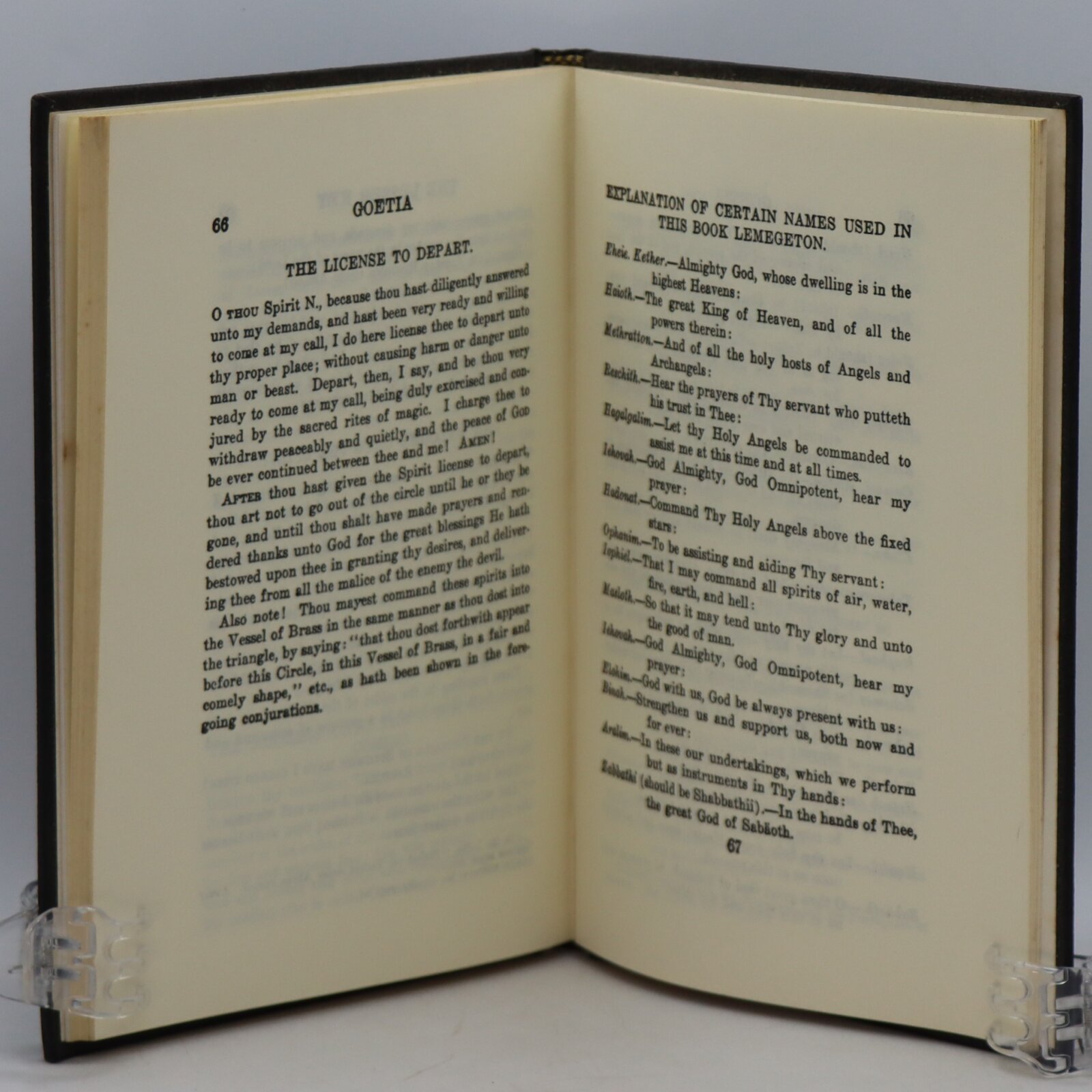
The Lesser Key of Solomon. Goetia.
By L W De Lawrence
Printed: 1916
Publisher: De Laurence Scott & Co.
| Dimensions | 14 × 20 × 1.5 cm |
|---|
Language: Not stated
Size (cminches): 14 x 20 x 1.5
Condition: Fine (See explanation of ratings)
£295.00
FREE shipping
Buy Now

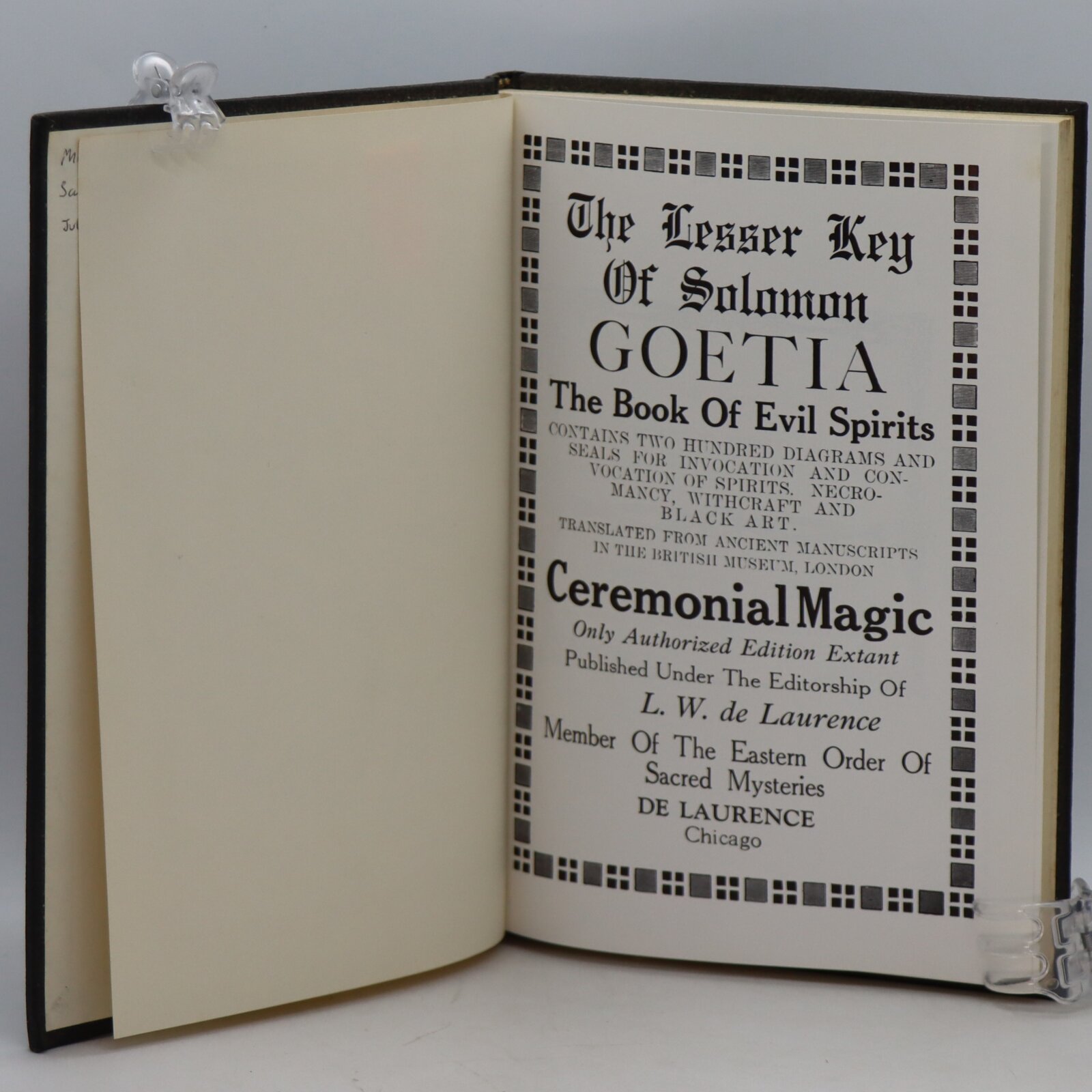
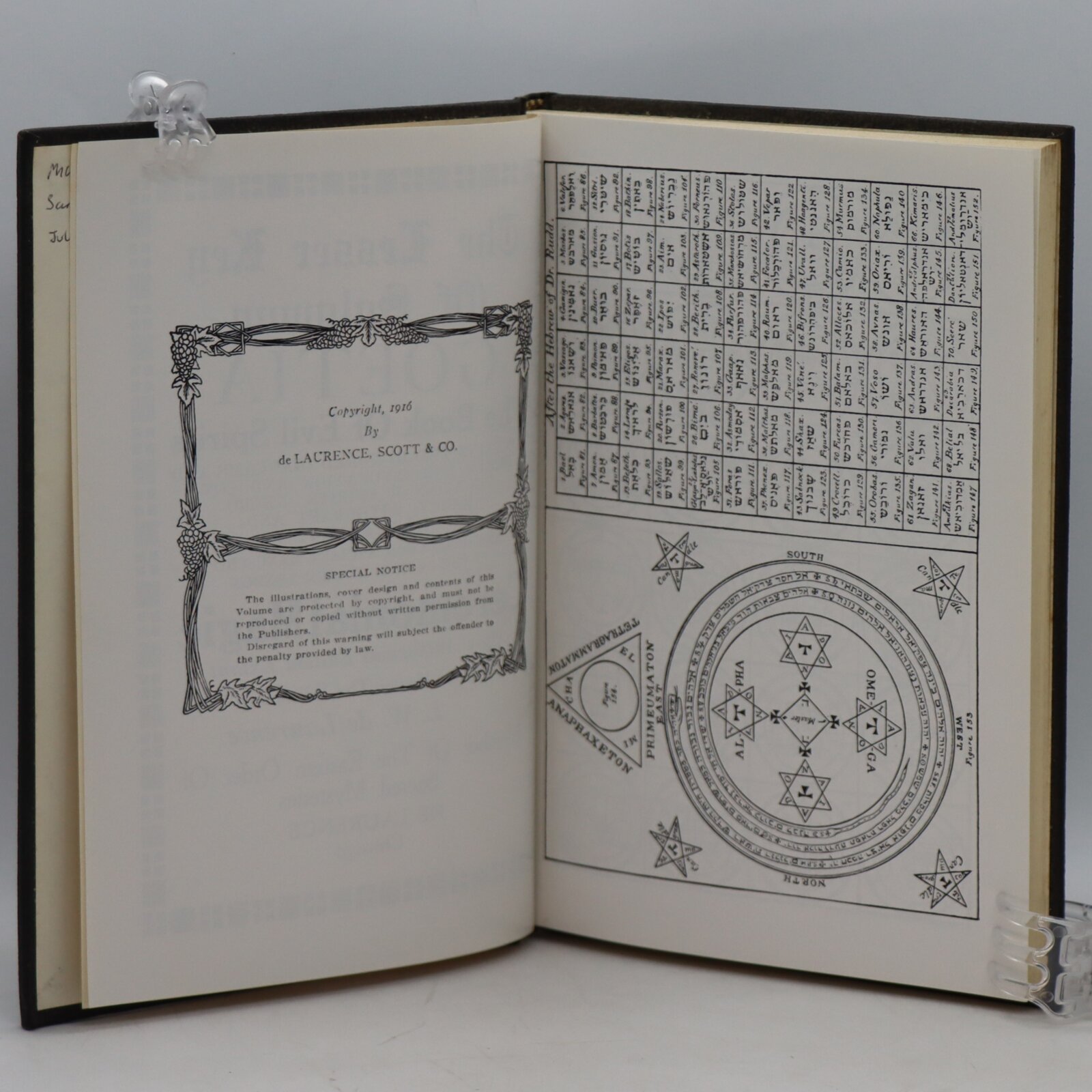
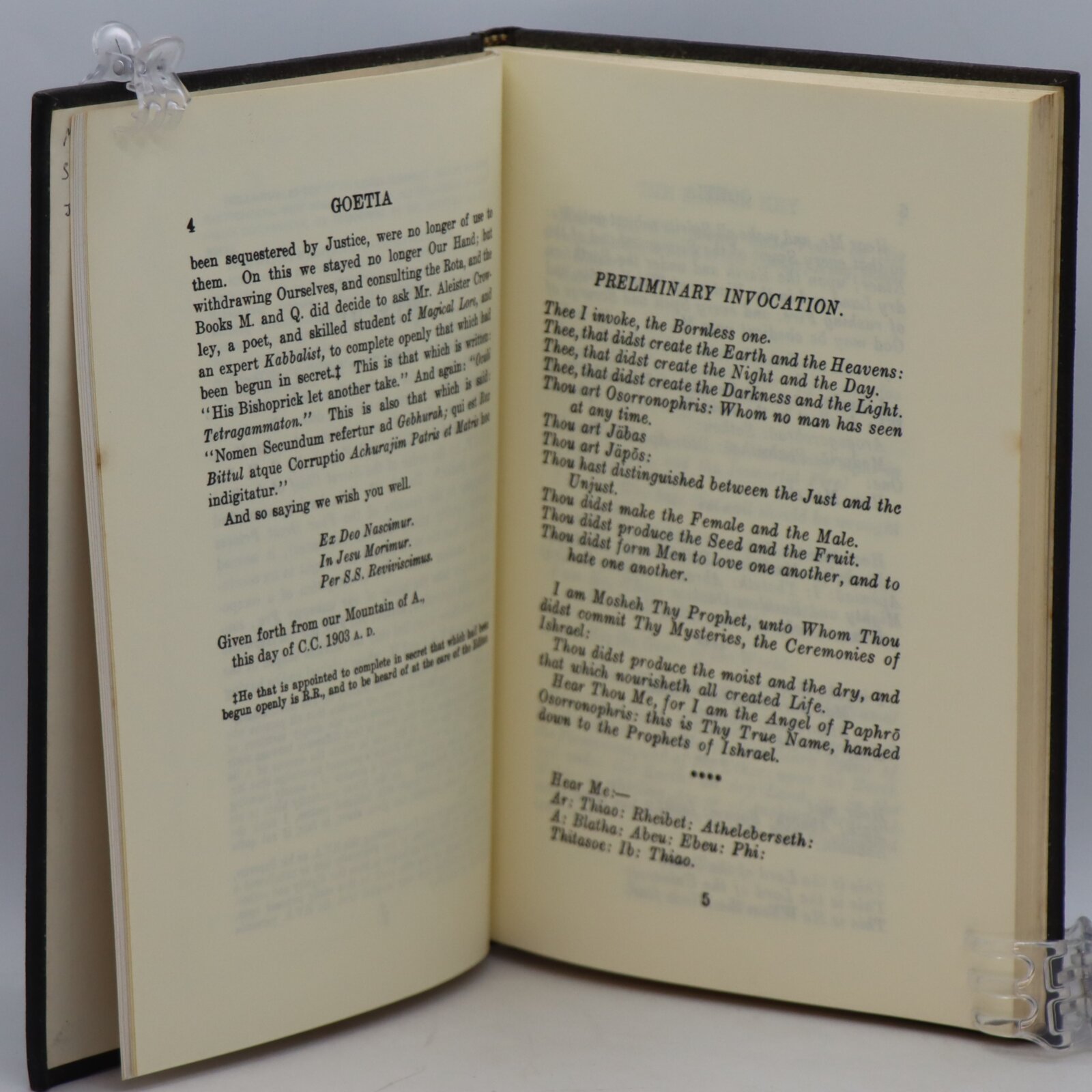
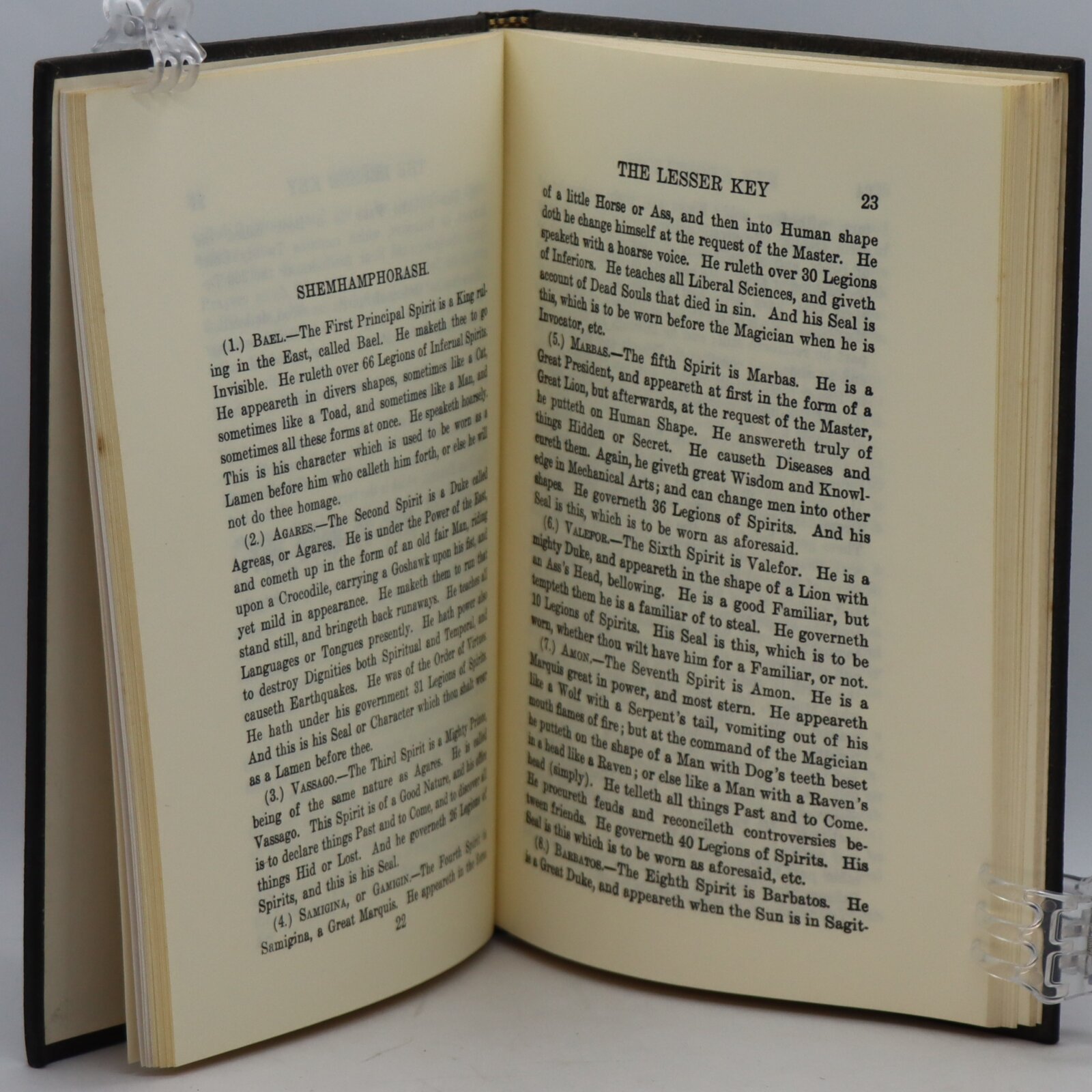

Item information
Description
Black cloth binding with gilt title on the spine and front board.
F.B.A. provides an in-depth photographic presentation of this item to stimulate your feel and touch. More traditional book descriptions are immediately available.
This is a meaningful book on ‘BLACK MAGIC’
The book is about the evocation of demons it is a rare book blessed by evil. Those of you who lack a strong faith should NOT buy it.
The Lesser Key of Solomon, also known as Lemegeton Clavicula Salomonis or simply Lemegeton, is an anonymous grimoire on demonology. It was compiled in the mid-17th century, mostly from materials a couple of centuries older. It is divided into five books—the Ars Goetia, Ars Theurgia-Goetia, Ars Paulina, Ars Almadel, and Ars Notoria.
This book is modelled on that which was once held in esteem by Sir Isaac Newton. English physicist and mathematician Isaac Newton produced works exploring chronology, and biblical interpretation (especially of the Apocalypse), and alchemy. Some of this could be considered occult. Also, Newton described himself as a “natural philosopher”, and his work is grounded in Aristotelian metaphysics. Newton’s scientific work may have been of lesser personal importance to him, as he placed emphasis on rediscovering the wisdom of the ancients. In this sense, some historians, including economist John Maynard Keynes, believe that any reference to a “Newtonian Worldview” as being purely mechanical in nature is somewhat inaccurate. Historical research on Newton’s occult studies in relation to his science have also been used to challenge the disenchantment narrative within critical theory.
After purchasing and studying Newton’s alchemical works, Keynes, for example, opined in 1942 at the tercentenary of Newton’s birth that “Newton was not the first of the age of reason, he was the last of the magicians.” In the Early Modern Period of Newton’s lifetime, the educated embraced a world view different from that of later centuries. Distinctions between science, superstition, and pseudoscience were still being formulated, and a devoutly Christian biblical perspective permeated Western culture.
Want to know more about this item?
We are happy to answer any questions you may have about this item. In addition, it is also possible to request more photographs if there is something specific you want illustrated.
Ask a question
Related products




Share this Page with a friend
