
The Itinerants. Russian Realist Artists.
ISBN: 9789053569139
Printed: 1982
Publisher: Pan Books. London
| Dimensions | 22 × 29 × 1.5 cm |
|---|---|
| Language |
Language: English
Size (cminches): 22 x 29 x 1.5
Condition: Good (See explanation of ratings)
£20.00
Buy Now
Your items


Item information
Description
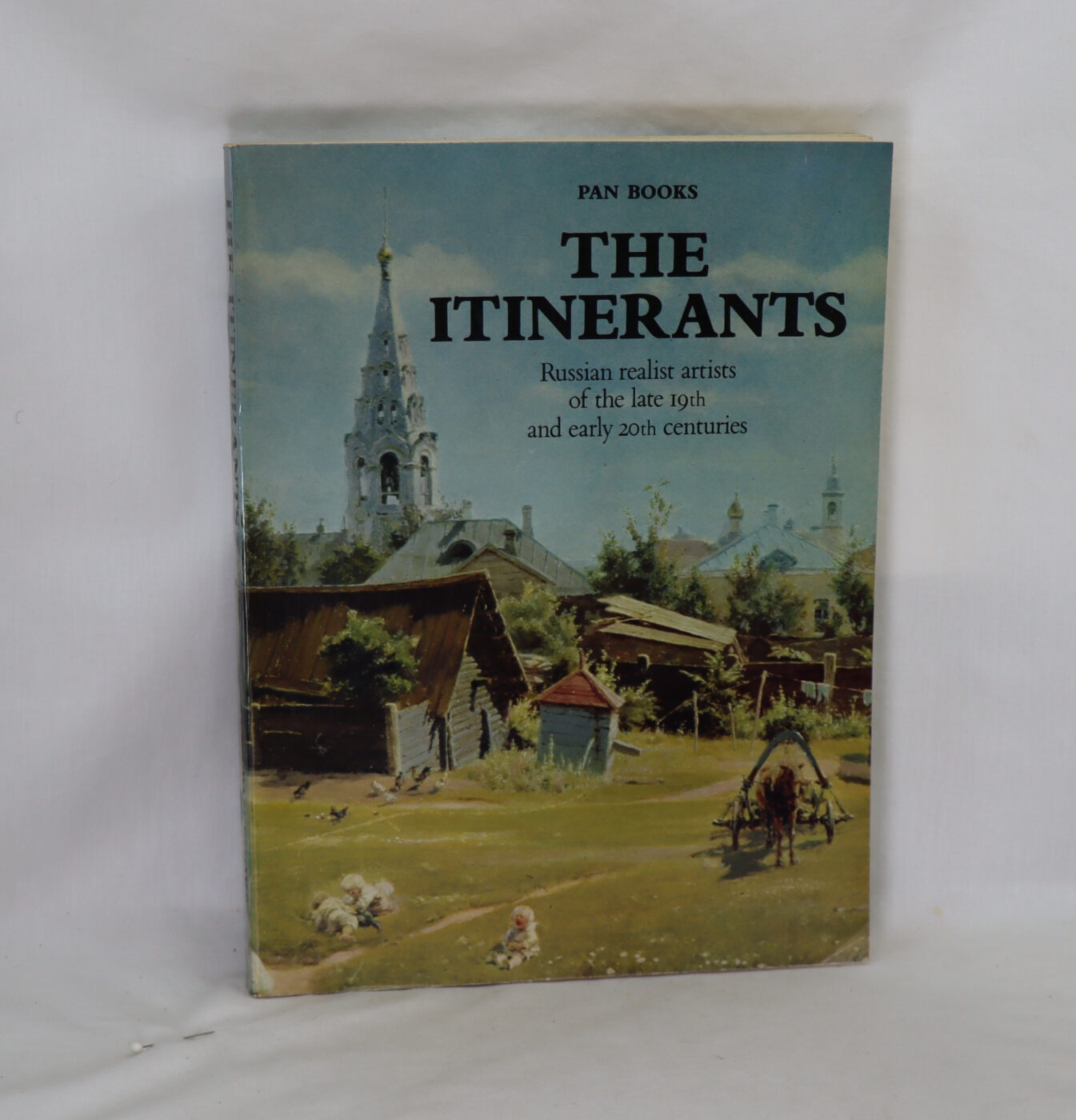
Paperback. Black title and rural scene on the cover.
We provide an in-depth photographic presentation of this item to stimulate your feeling and touch. More traditional book descriptions are immediately available
-
Note: This book carries a £5.00 discount to those that subscribe to the F.B.A. mailing list
Please view the photographs for conditions. Russian realist artists of the. Late 19th and early 20th centuries. This book is a must for any art collector.
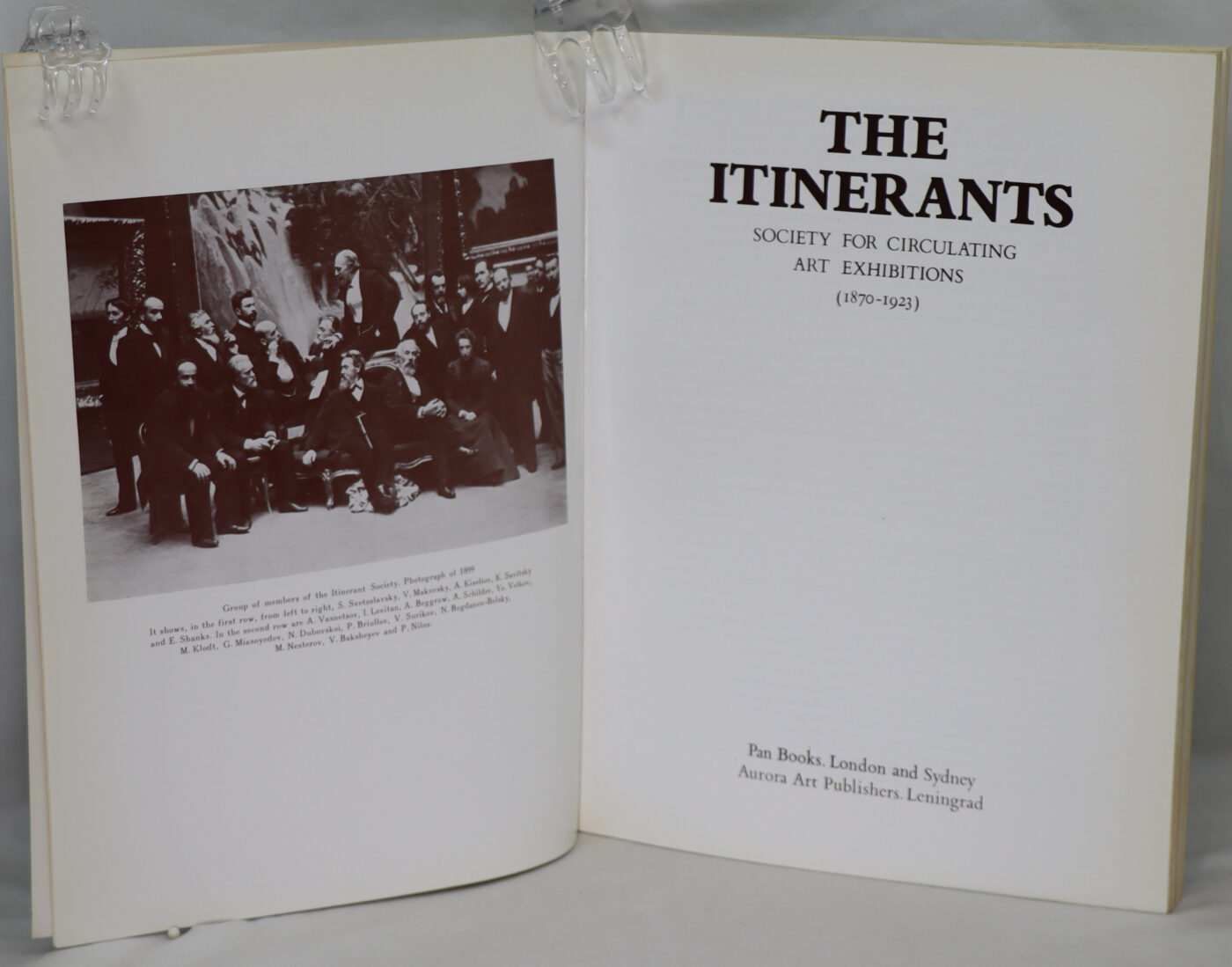
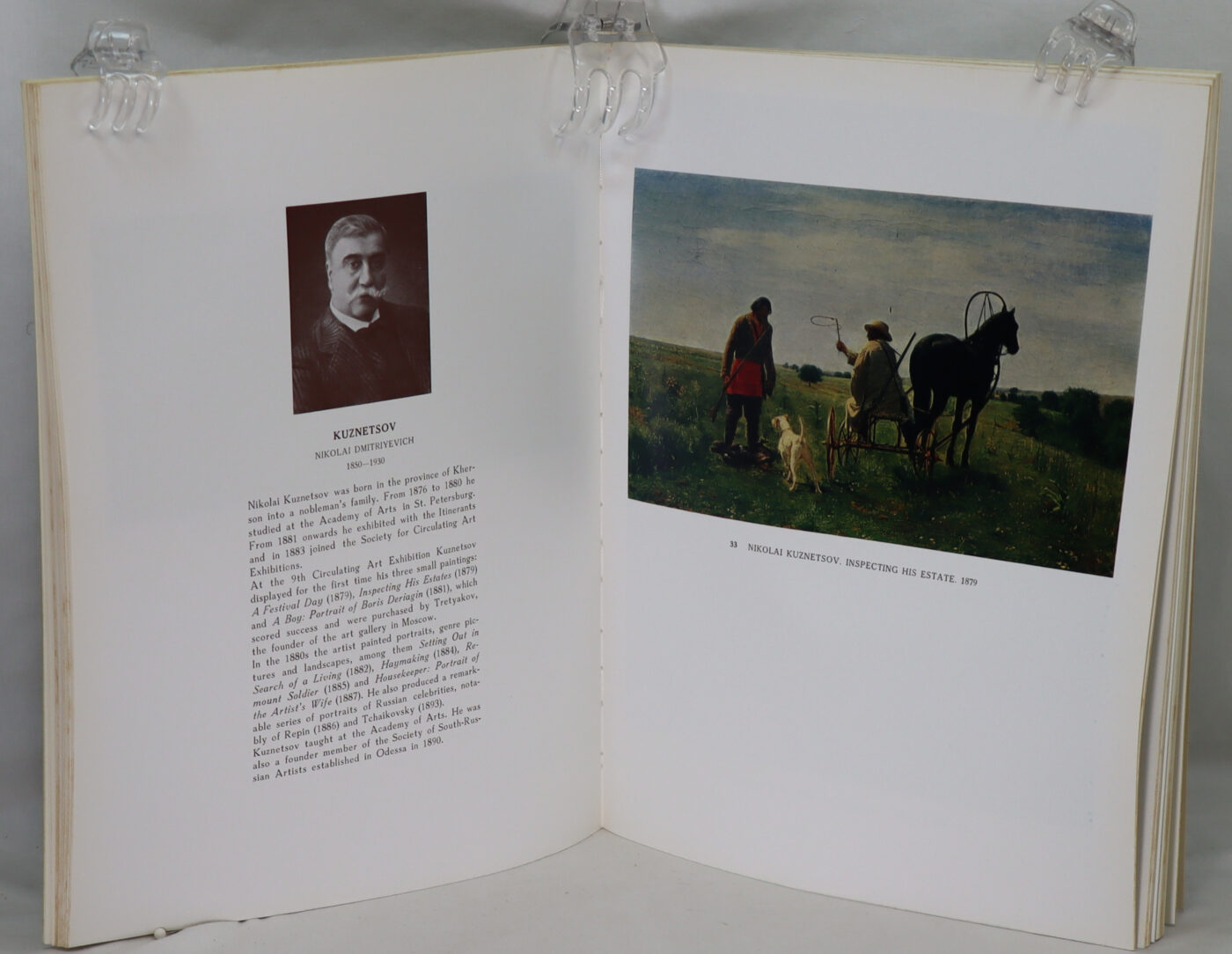
Review: Russian painting in the first half of the 19th century was dominated by the conservative Russian Academy of Arts. As a result, in 1863, a group of progressive artists formed the independent Association of Free Artists that, in 1968, led to the Society of Traveling Exhibitions of the Works of Russian Artists, also called the Wanderers, Itinerants and Peredvizhniki. Over the next 25 years most of the major Russian painters of the period became members, (Korovin, Riabushkin, Verashchagin and Meshkov were amongst those who did not join but contributed to its exhibitions) and the Society’s members organised 48 exhibitions, created 3504 works that were seen by a million viewers and used to counter social and economic injustices. The Society continued until 1923, when they were incorporated into the Association of Artists of Revolutionary Russia (AKhRR). This book presents the work of 47 artists in the Society, including a single female, Antonina Rzhevskaya, shown in 114 colour plates, each accompanied by a brief biographical text and a photograph of the artist. Personally, I find such contemporary photographs very interesting. Indeed, the Frontispiece is a photograph of members of the Society in 1899 – all men except for `E. Shanks’ (Emily Shanks, 1857-1936, a British painter living in Moscow, and the first woman to be elected to the Society) and with the usual few looking away from the camera. The illustration on the front cover is a detail from Vasily Polenov’s “A Courtyard in Moscow”, 1878. In an introductory essay, translator unknown, Andrei Lebedev presents a history of the Society and describes many of the illustrated works. This is very interesting as it summarises Russian 19th century art history to provide a context for the formation and activities of the Society. The works are presented in alphabetical order of the artists, from Abram Arkhipov “Laundresses”, undated, to Stanislaw Zhukovsky, “The Dam”, 1909. A number of the artists came from peasant stock, including Arkhipov, Korin, Lebedev, Maximov, Popov, that would have prevented them from participating in the Academy’s activities. The great works are here, Sergei Ivanov’s “Death of a Migrant Peasant”,1889, with the despair of the remaining family palpable; Isaac Levitan’s “The Vladimirka Road”, 1892, the road heading east from Moscow to Siberia along which many exiled walked in shackles; Vasily Polenov’s “Overgrown Pond”, 1880, peaceful and timeless; Ilya Repin’s “Religious Procession in Kursk Province”, 1880-83, and “They did not Expect Him”, 1884-88, the return of the exile; Alexei Savrasov’s “The Rooks Have Returned”, 1871, the welcome sight of the birds returning in the spring; Ivan Shishkin’s, “Rye”, 1878, showing the crop that so many lives depended on, and “Pine Trees in the Sunlight”, 1886, the motif that the artist made his own; Vasily Surikov’s “Menshikov at Beriosov”, 1883, and Nikolai Yaroshenko’s “Life is Everywhere”, 1888. The portraits have a degree of psychological insight that would be difficult to match, Vasily Perov’s “Portrait of the Dramatist Alexander Ostrovsky”, 1871, and “Portrait of Dostoyevsky”, 1872; Repin’s “The Archdeacon”, 1877, the nose revealing the priest’s alcoholic secret, “Portrait of the Artist Ivan Kramskoi”, 1882, “Portrait of Pavel Tretyakov”, 1883, the artist’s recognition of the collector, “Portrait of the Art Critic, Vladimir Stasov”, 1883, the artist’s recognition of the anti-Academy critic, and “Portrait of the Composer Modest Musorgsky”, 1881; Ivan Kramskoi’s “Mina Moiseyev”, 1882, the lined face of the peasant revealing the hard life he has lived; Nikolai Gay’s “Portrait of Leo Tolstoy”, 1884; Nikolai Kuznetsov’s “Portrait of Tchaikovsky”, 1893, one of the most reproduced portrait of the composer; Mikhail Nesterov’s “The Hermit”, 1888-89, and “Portrait of the Artist Levitan”, 1893, and Nikolai Kasatkin’s “Woman Miner”, 1894, showing the inner strength of this minor and, by definition, Russia’s women. The genre works include Vasily Baksheyev’s “The Prose of Life”, 1892-93; Ivan Bogdanov’s “The Novice”, 1893; Nikolai Bogdanov-Belsky’s “Oral Reckoning”, 1895; Nicolai Kasatkin’s “Poor People Collecting Coal in an Abandoned Pit”, 1894; Alexei Korin’s “The Sick Painte”r, 1892; Sergei Korovin’s “Village Community Meeting”, 1883; Kiryak Kostandi “Setting Out in Search of a Living”, 1885; Klavdy Lebedev’s “To See Their Son”, 189: Vladimir Makovsky’s “Bank Failure”, 1881, “On the Boulevard”, 1886-87, and “A Doss House”, 1889; Vasily Maximov’s “Division of the Family Possessions”, 1876; Grigory Miasoyedov’s “The Zemstvo is Dining”, 1872; Nikolai Nevrev’s “Dividing the Inheritance”, 1888; Nikolai Orlov’s “Tax-collecting”, 1895; Nikolai Pimonenko’s “Haymaking”, 1907; Antonina Rzhevskaya’s “A Merry Pause”, 1897; Konstantin Savitsky’s “Repair Work on the Railway”, 1874, and “Off to War”, 1888; Victor Vasnetsov’s “News from the Front”, 1878, and Nikolai Yaroshenko’s “The Convict”, 1878. Amongst the few historical works are Ivan Repin’s “Ivan the Terrible and his Son Ivan, November 16, 1581”, 1885, and “The Zaporozhye Cossacks Writing a Mocking Letter to the Turkish Sultan”, 1880-91; Victor Vasnetsov’s “Vitiaz[Knight] at the Crossroads”, 1882, Vasily Surikov’s ,”The Boyarina Morozova”, 1887, “Suvorov’s Army Crossing the Alps in 1799”, 1899, and “Morning of the Execution of the Strelski”, 1881, Nikolai Gay’s “Peter the Great Interrogating Tsarevich Alexei at Peterhof”, 1871. The landscapes include Alexander Kiseliov’s “The Caucasus, Mountain Stream”, 1897, Arkhip Kuinji’s “After the Storm (After the Rain)”, 1879; Isaac Levitan’s “Deep Waters”, 1892: Ilya Ostroukhov’s “The North Wind”, 1890; Sergei Svetoslavsky’s “Early Spring”, 1895; Apollinary Vasnetsov’s “My Native Land”, 1886; Yefim Volkov’s “October”, 1883, and Alexei Stepanov’s “Elks”, 1889. I hope that one day there will be an exhibition on the less-well-known (to Western eyes) Itinerants because, like the unknown French Impressionists, there will be some valuable areas for art scholars and historians to explore, and because the art history of this period of Russian art is much more than just the summation of the work of acknowledged masters such as Perov, Kramskoi, Repin, Surikov, Shishkin, Levitan and Serov. The same is true for sculptors, such as Antokolsky, Volnukhin and Konionkov, whose work is generally overlooked in the story of the Itinerants. In the 1899 group photograph, mentioned above, in addition to Emily Shanks, A. Beggrov, A. Schilder and P. Nilus are just names in a list. These paintings are still relatively unknown and deserve to be included in considerations of European 19th century art.
Want to know more about this item?
We are happy to answer any questions you may have about this item. In addition, it is also possible to request more photographs if there is something specific you want illustrated.
Ask a question
Related products
Share this Page with a friend
