
The Golden Bough.
By Sir James Goerge Frazer
Printed: 1922
Publisher: Macmillan & Co. London
Edition: Abridged edition
| Dimensions | 16 × 23 × 4 cm |
|---|---|
| Language |
Language: English
Size (cminches): 16 x 23 x 4
Condition: Good (See explanation of ratings)
£34.00
Buy Now
Your items


Item information
Description
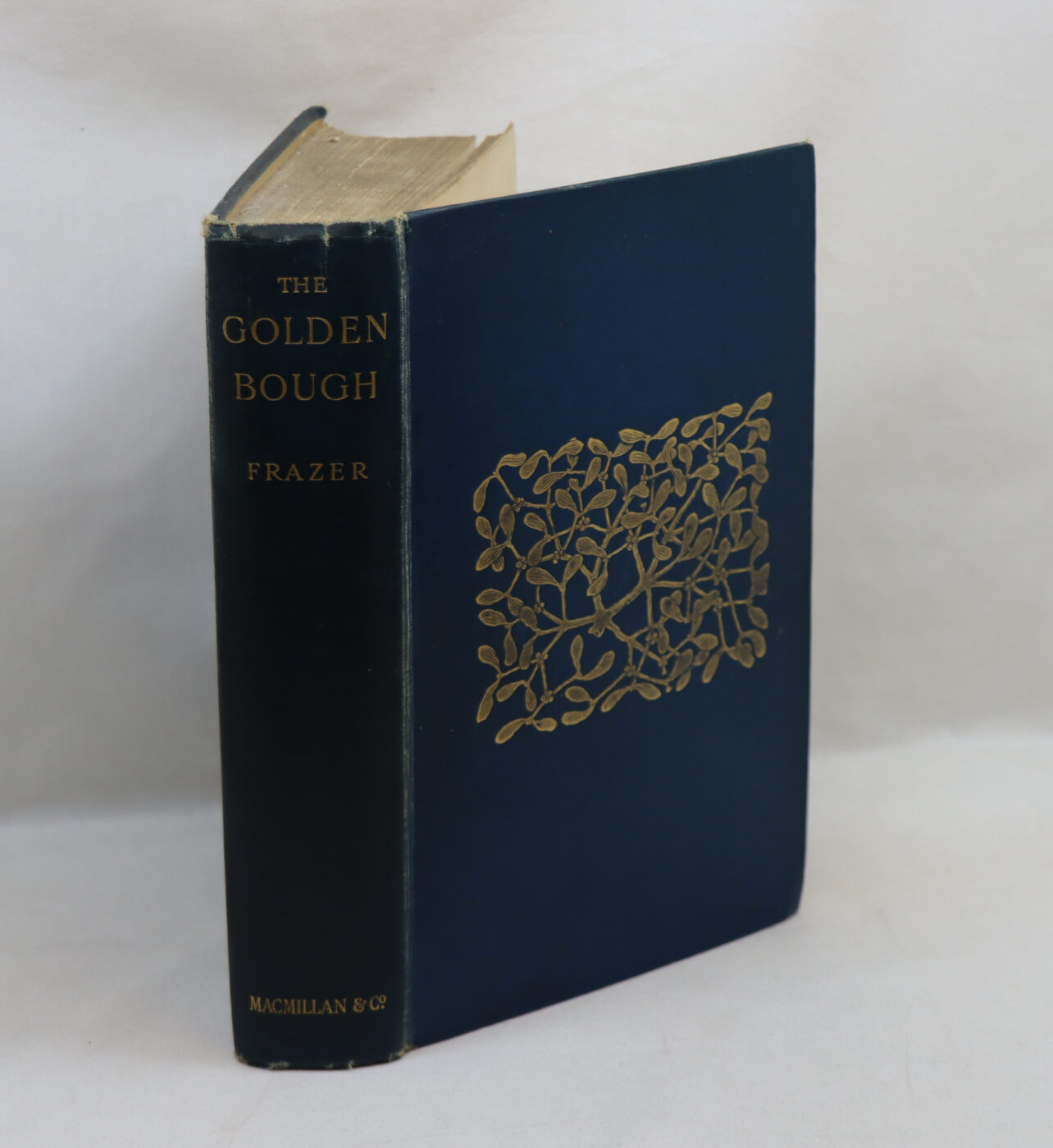
Navy cloth binding with gilt title on the spine. Gilt decoration on the front board.
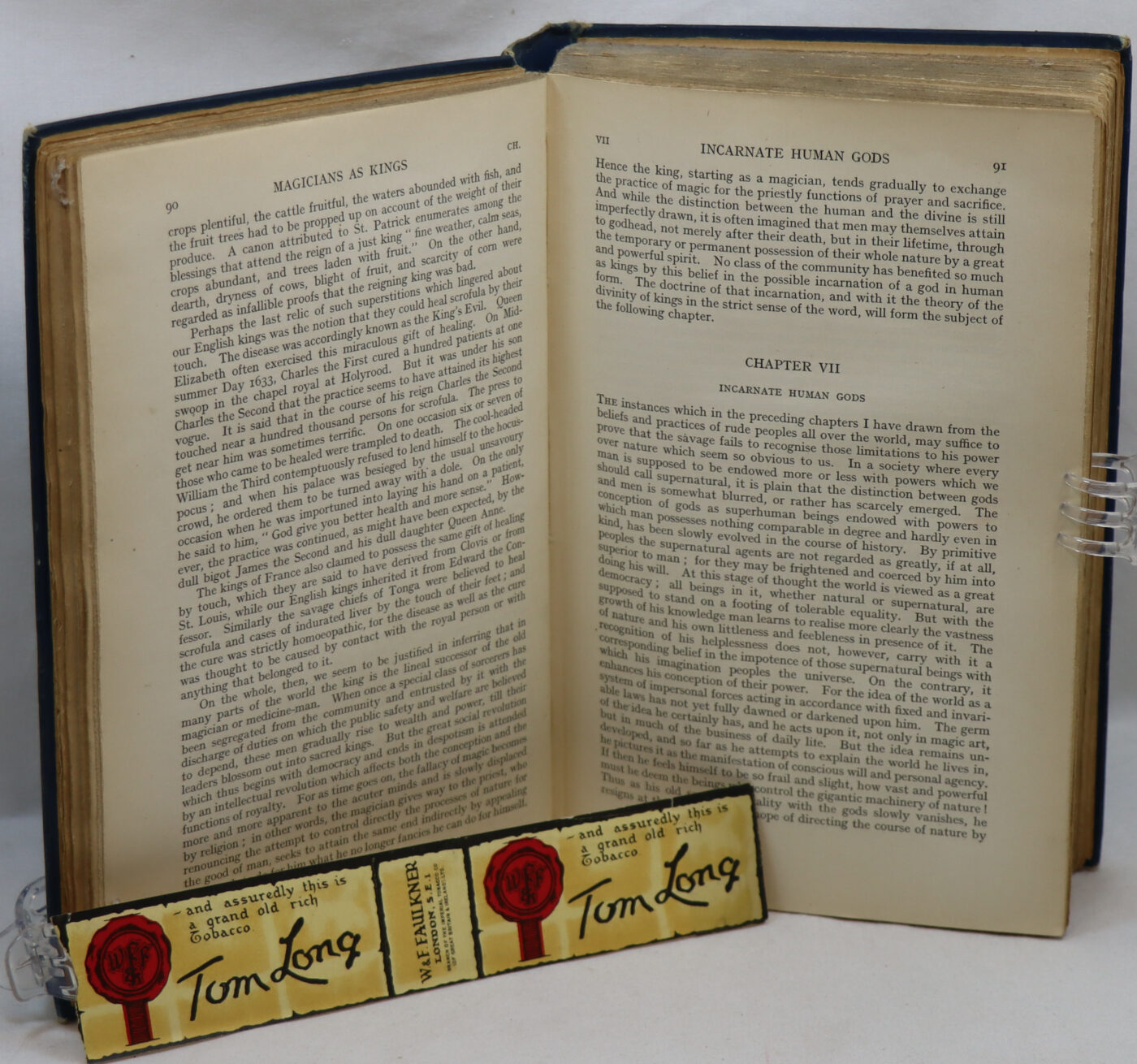
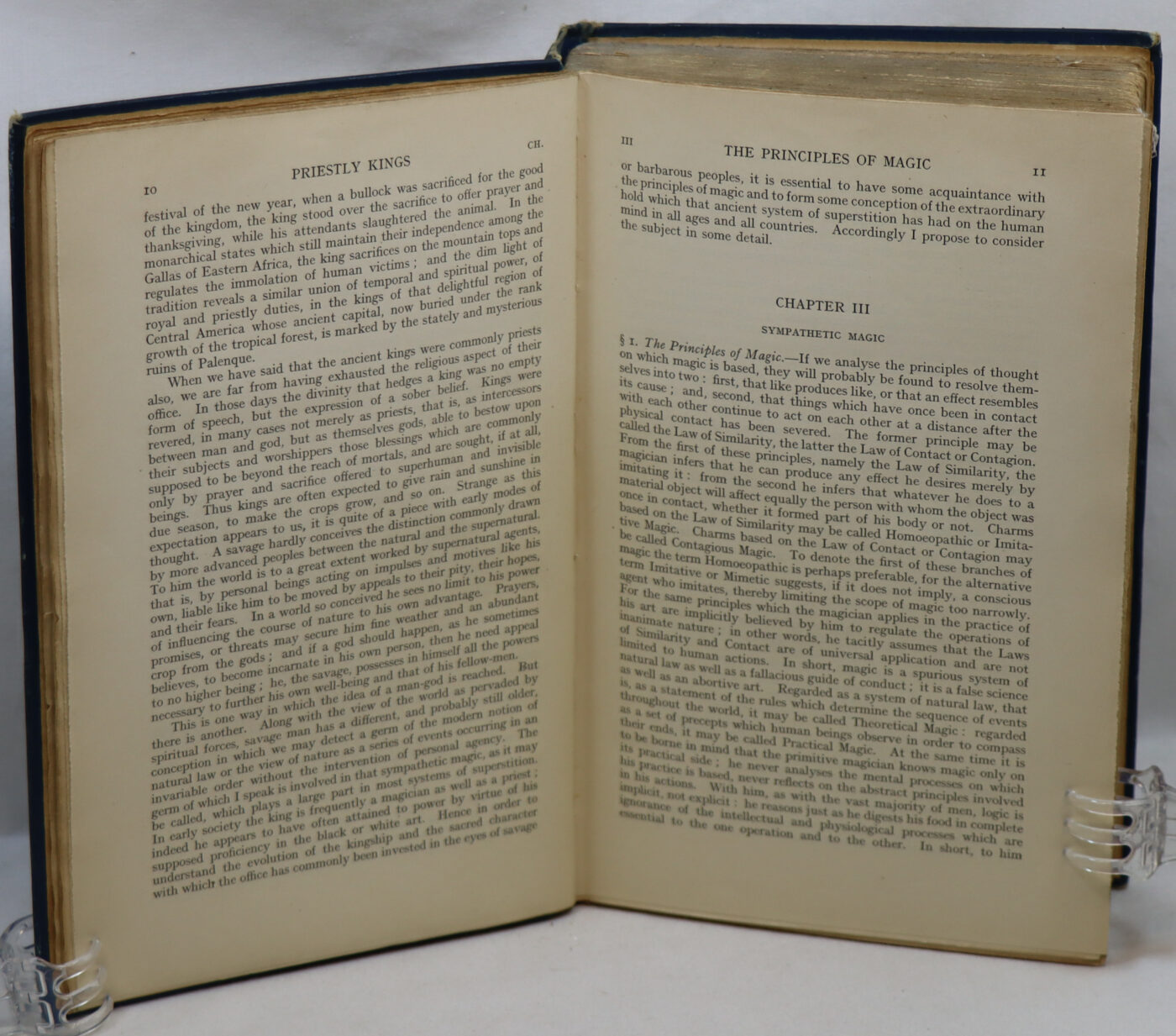
We provide an in-depth photographic presentation of this item to stimulate your feeling and touch. More traditional book descriptions are immediately available
- Note: This book carries a £5.00 discount to those that subscribe to the F.B.A. mailing list
For conditions, please view our photographs. An original book from the library gathered by the famous Cambridge Don, computer scientist, food and wine connoisseur, Jack Arnold LANG.
This is a prized Lang family copy.
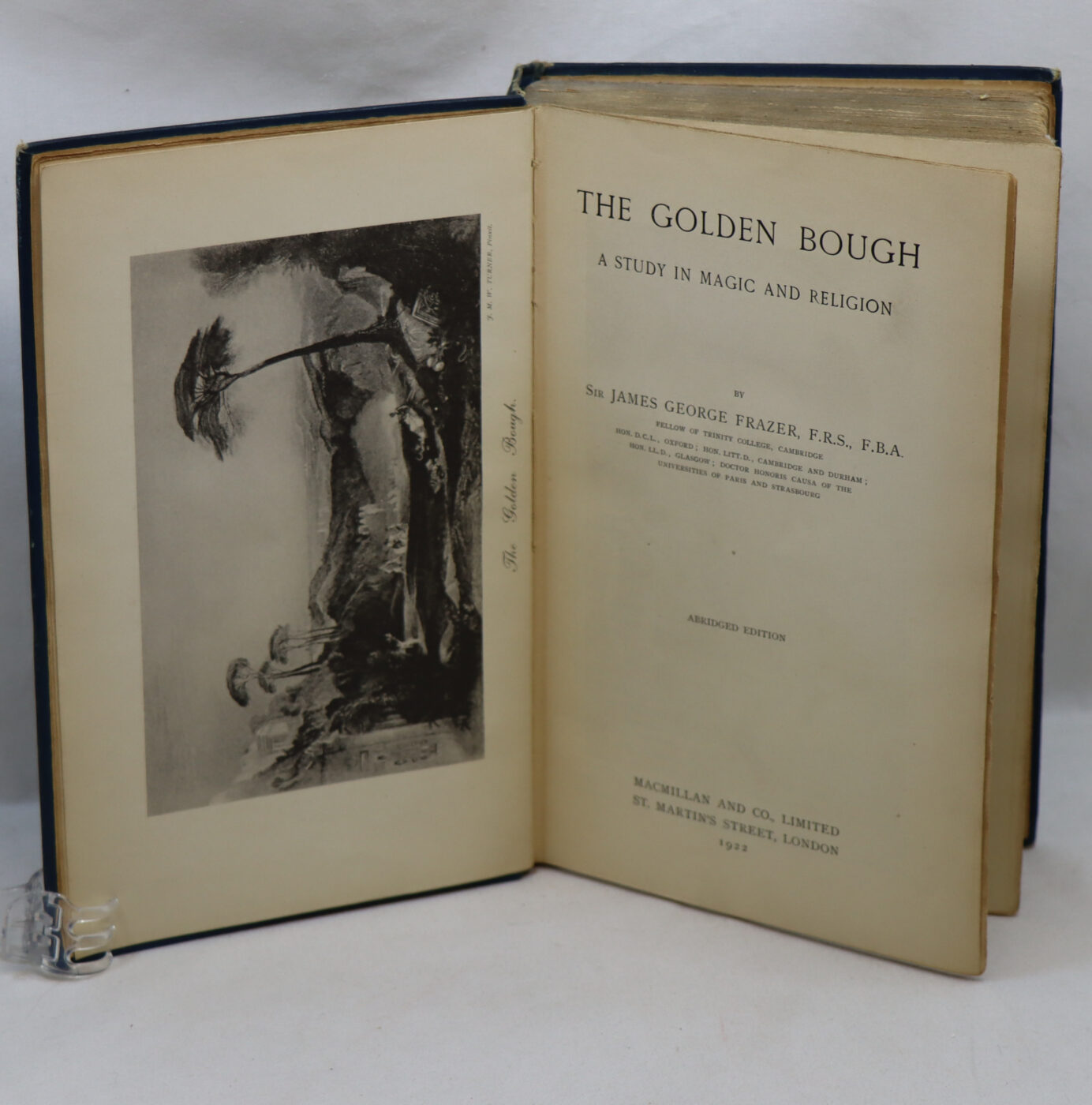
The entry describes the 1922 abridged edition of Sir James George Frazer’s classic anthropological work, The Golden Bough: A Study in Magic and Religion, published by Macmillan & Co. in London, a significant one-volume condensation of his multi-volume research, noted for its influence on literature and anthropology despite later scientific critiques, and it mentions dimensions (6.4 x something) for a specific print run of this seminal text.
The Golden Bough: A Study in Comparative Religion (retitled The Golden Bough: A Study in Magic and Religion in its second edition) is a wide-ranging, comparative study of mythology and religion, written by the Scottish anthropologist Sir James George Frazer. The Golden Bough was first published in two volumes in 1890; in three volumes in 1900; and in twelve volumes in the third edition, published 1906–1915. It has also been published in several different one-volume abridgments. The work was for a wide literate audience raised on tales as told in such publications as Thomas Bulfinch’s The Age of Fable, or Stories of Gods and Heroes (1855). The influence of The Golden Bough on contemporary European literature and thought has been substantial.
Frazer attempted to define the shared elements of religious belief and scientific thought, discussing fertility rites, human sacrifice, the dying god, the scapegoat, and many other symbols and practices whose influences had extended into 20th-century culture. His thesis is that the most ancient religions were fertility cults that revolved around the worship and periodic sacrifice of a sacred king in accordance with the cycle of the seasons. Frazer proposed that mankind’s understanding of the natural world progresses from magic through religious belief to scientific thought.
Frazer’s thesis was developed in relation to an incident in Virgil’s Aeneid, in which Aeneas and the Sibyl present the golden bough taken from a sacred grove to the gatekeeper of Hades to gain admission. The incident was illustrated by J. M. W. Turner’s 1834 painting The Golden Bough. Frazer mistakenly states that the painting depicts the lake at Nemi, though it is actually Lake Avernus.The lake of Nemi, also known as “Diana’s Mirror”, was a place where religious ceremonies and the “fulfillment of vows” of priests and kings were held.Frazer based his thesis on the pre-Roman priest-king Rex Nemorensis, a priest of Diana at Lake Nemi, who was ritually murdered by his successor. The king was the incarnation of a dying and reviving god, a solar deity who underwent a mystic marriage to a goddess of the Earth, died at the harvest and was reincarnated in the spring. Frazer claims that this legend of rebirth was central to almost all of the world’s mythologies.
Frazer wrote in a preface to the third edition of The Golden Bough that while he had never studied Georg Wilhelm Friedrich Hegel, his friend James Ward, and the philosopher J. M. E. McTaggart, had both suggested to him that Hegel had anticipated his view of “the nature and historical relations of magic and religion”. Frazer saw the resemblance as being that “we both hold that in the mental evolution of humanity an age of magic preceded an age of religion, and that the characteristic difference between magic and religion is that, whereas magic aims at controlling nature directly, religion aims at controlling it indirectly through the mediation of a powerful supernatural being or beings to whom man appeals for help and protection.” Frazer included an extract from Hegel’s Lectures on the Philosophy of Religion (1832).
Want to know more about this item?
We are happy to answer any questions you may have about this item. In addition, it is also possible to request more photographs if there is something specific you want illustrated.
Ask a question
Related products


Share this Page with a friend
