
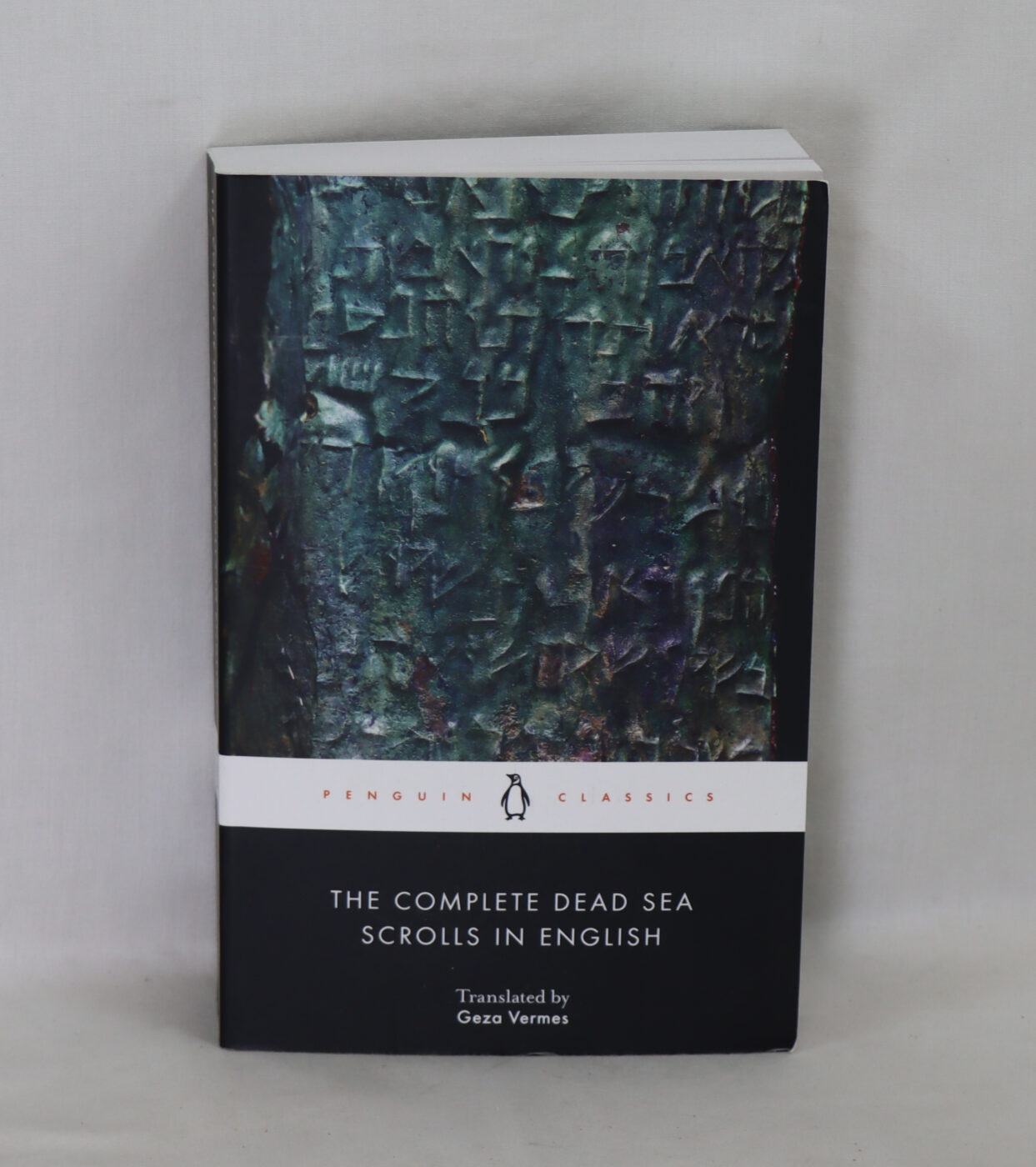
The Complete Dead Sea Scrolls in English.
By Geza Vermes
ISBN: 9780141901930
Printed: 2011
Publisher: Penquin Books.
| Dimensions | 13 × 20 × 3 cm |
|---|---|
| Language |
Language: English
Size (cminches): 13 x 20 x 3
Condition: As new (See explanation of ratings)
£15.00
Buy Now


Item information
Description
Paperback. Black cover with white title.
We provide an in-depth photographic presentation of this item to stimulate your feeling and touch. More traditional book descriptions are immediately available
- Note: This book carries a £5.00 discount to those that subscribe to the F.B.A. mailing list
For the conditions of this new book, please view our photographs.
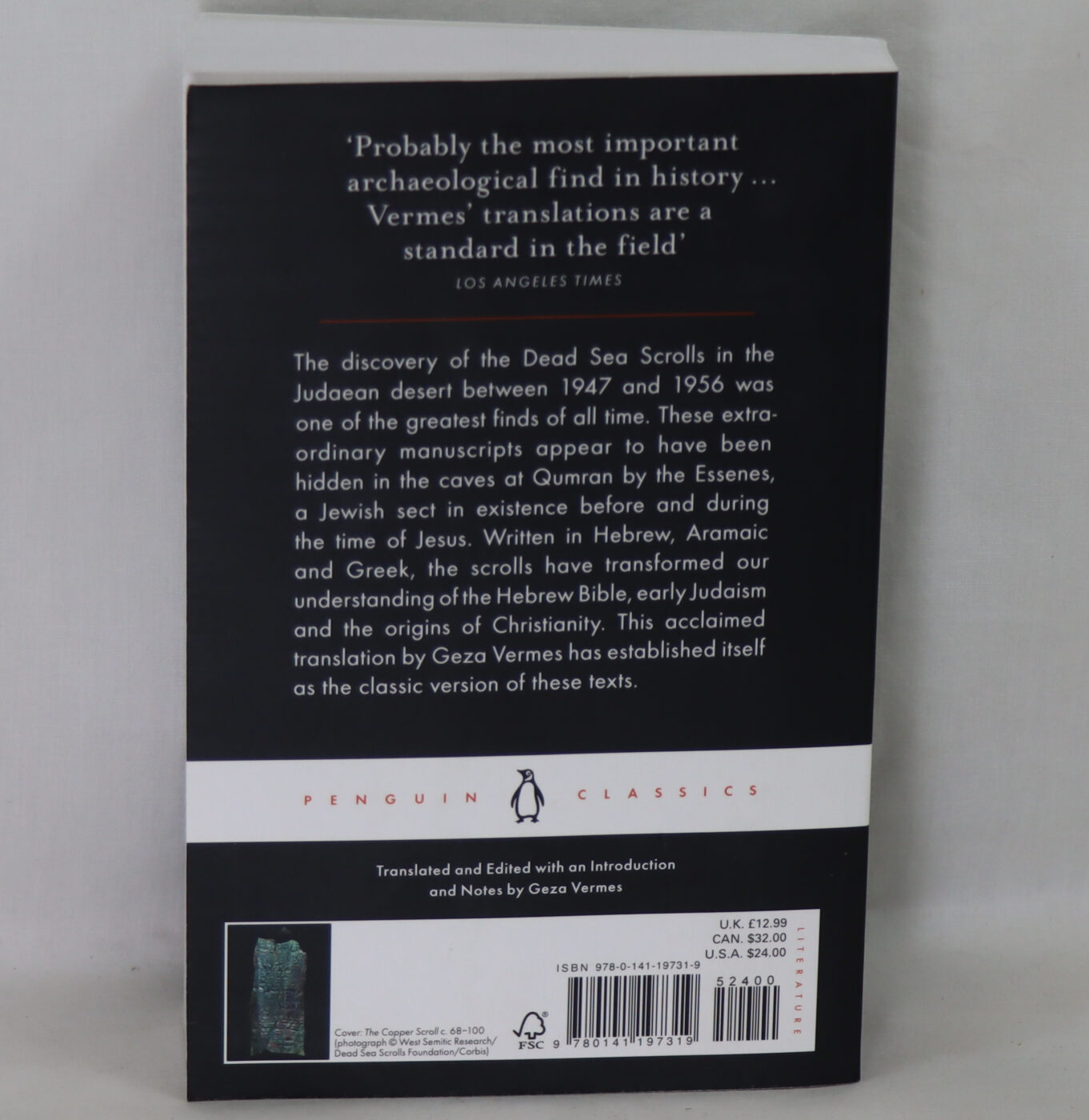
‘Probably the most important archaeological find in history … Vermes’ translations are a standard in the field’ Los Angeles Times
The discovery of the Dead Sea Scrolls in the Judaean desert between 1947 and 1956 was one of the greatest finds of all time. These extraordinary manuscripts appear to have been hidden in the caves at Qumran by the Essenes, a Jewish sect in existence before and during the time of Jesus. Written in Hebrew, Aramaic and Greek, the scrolls have transformed our understanding of the Hebrew Bible, early Judaism and the origins of Christianity. This acclaimed translation by Geza Vermes has established itself as the classic version of these texts. Translated and edited with an Introduction and Notes by Geza Vermes
Reviews:
-
- No translation of the Scrolls is either more readable or more authoritative than that of Vermes — John J. Collins ― The Times Higher Education Supplement
- Fascinating, not least because of Geza Vermes’ wonderful introduction and translation — Justin Cartwright ― Daily Telegraph, Books of the Year
- Discovered on the northwest shore of the Dead Sea in the decade after the Second World War, the Dead Sea Scrolls are a historical and religious record of immense significance, altering our understanding of Jewish and early Christian history. This book transforms our understanding of the Hebrew Bible, early Judaism and the origins of Christianity.
Géza Vermes, FBA (22 June 1924 – 8 May 2013) was a British academic, Biblical scholar, and Judaist of Jewish–Hungarian descent—one who also served as a Roman Catholic priest in his youth—and scholar specialized in the field of the history of religion, particularly ancient Judaism and early Christianity. He is best known for his complete translation of the Dead Sea Scrolls into English; his research focused on the Dead Sea Scrolls and other Ancient Hebrew writings in Aramaic such as the Targumim, and on the life and religion of Jesus. Vermes was one of the most important voices in contemporary Jesus research, and he has been described as the greatest Jesus scholar of his time. Vermes’ written work on Jesus focuses principally on the Jewishness of the historical Jesus, as seen in the broader context of the narrative scope of Jewish history and theology, while questioning and challenging the basis of the Christian doctrine on Jesus.
Want to know more about this item?
We are happy to answer any questions you may have about this item. In addition, it is also possible to request more photographs if there is something specific you want illustrated.
Ask a question
Related products



Share this Page with a friend
