
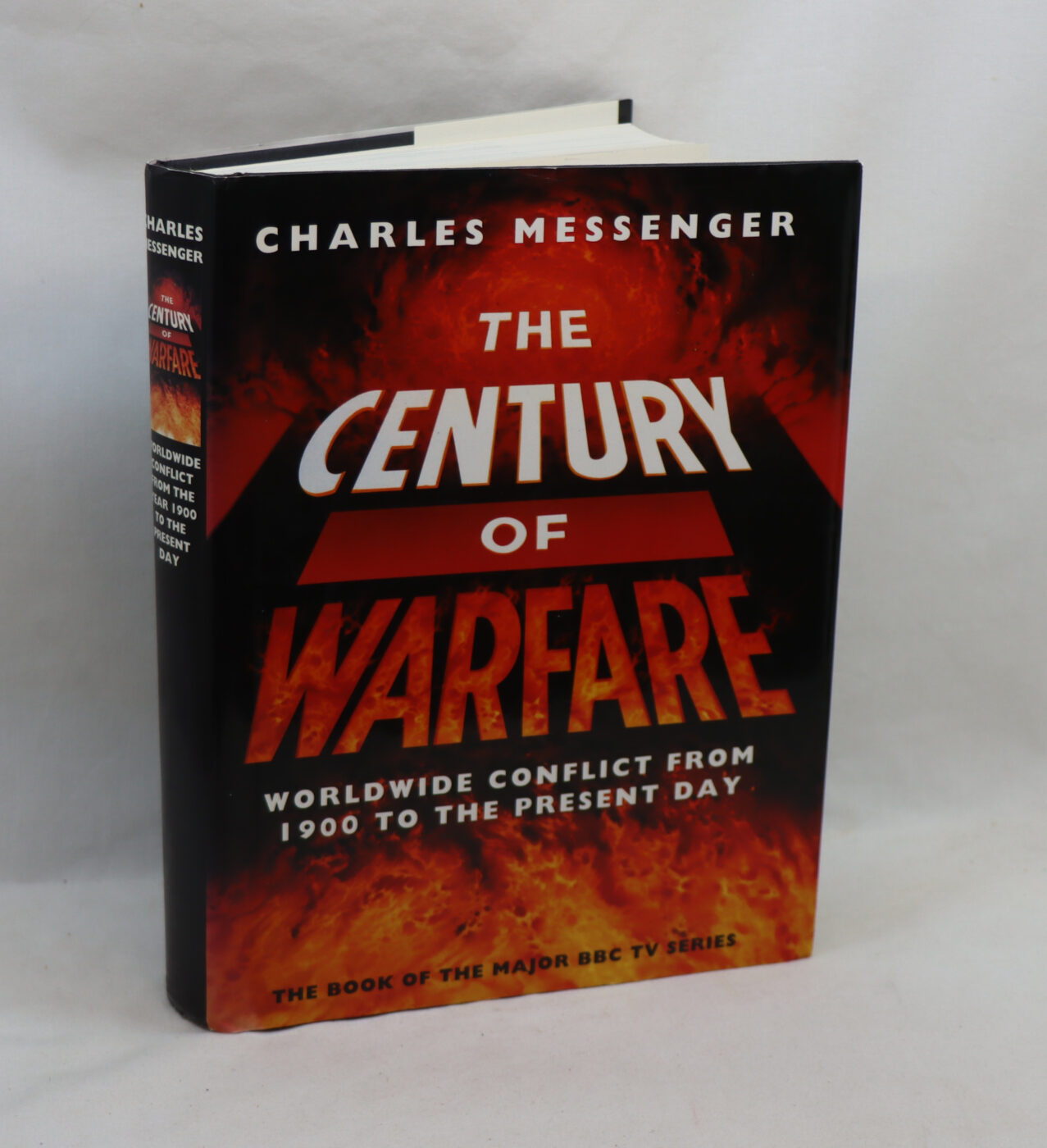
The Century of Warfare.
By Charles Messenger
ISBN: 9780002555470
Printed: 1995
Publisher: BCA. London
| Dimensions | 20 × 25 × 3 cm |
|---|---|
| Language |
Language: English
Size (cminches): 20 x 25 x 3
Condition: Very good (See explanation of ratings)
£27.00
Buy Now
Your items


Item information
Description
In the original dust jacket. Black cloth binding with gilt title on the spine.
We provide an in-depth photographic presentation of this item to stimulate your feeling and touch. More traditional book descriptions are immediately available.
Note: This book carries a £5.00 discount to those that subscribe to the F.B.A. mailing list
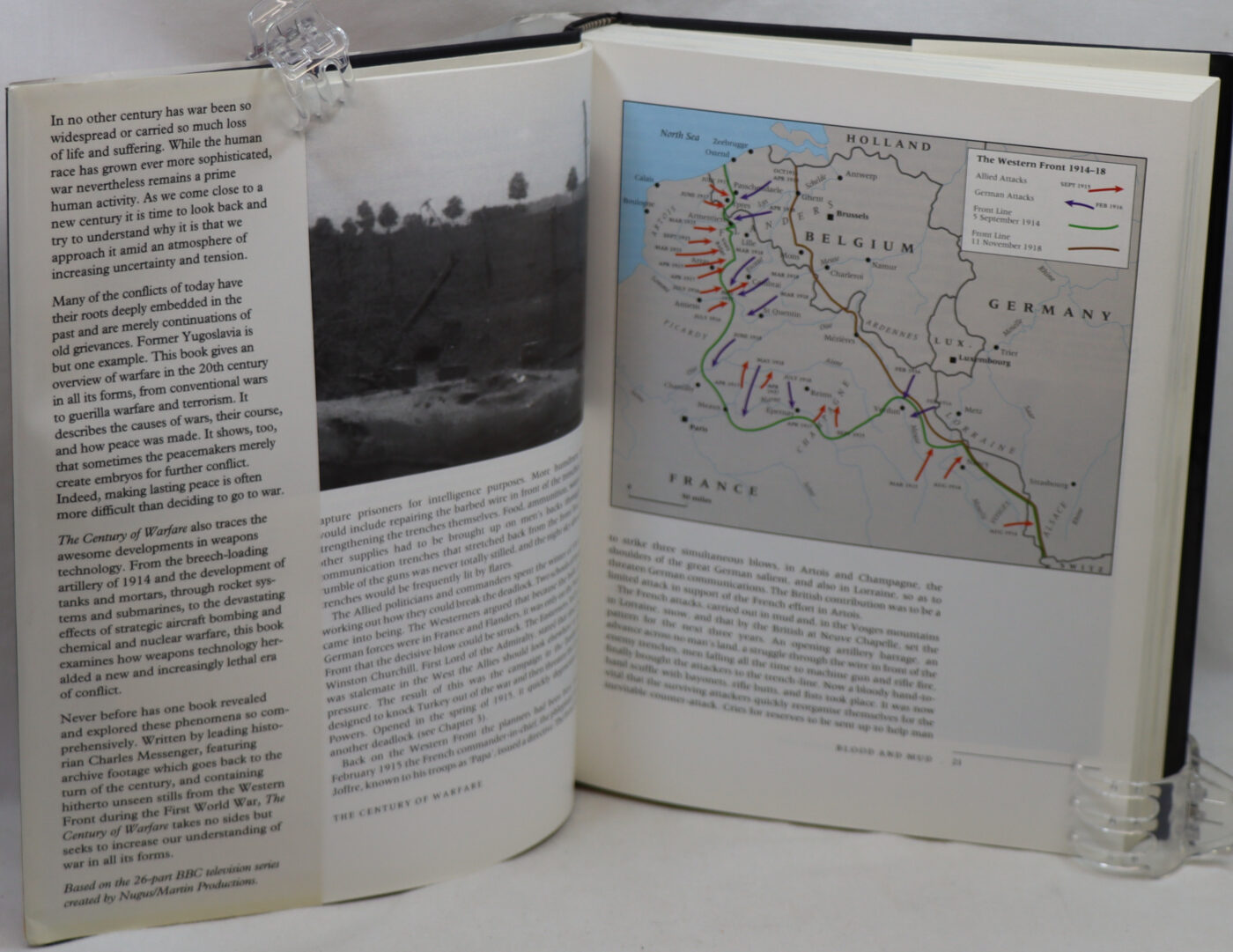
1st BCA Edition. This book gives an overview of warfare in the 20th century in all its forms, from conventional wars to guerilla warfare and terrorism. It describes the causes of wars, their course, and how peace was made. It shows, too, that sometimes the peacemakers merely create embryos for further conflict. Indeed, making lasting peace is often more difficult than deciding to go to war. This book also traces the awesome developments in weapons technology. From the breech-loading artillery of 1914 and the development of tanks and mortars, through rocket systems and submarines, to the devastating effects of strategic aircraft bombing and chemical and nuclear warfare, this book examines how weapons technology heralded a new and increasingly lethal era of conflict. Illustrated. 429 pp.
Namely, a comprehensive account of modern conflict which traces the causes of wars in the international arena, their course and how peace was made, and describes in detail how battle has changed with the huge development in weapons technology that the century has brought.
Reviews:
- The most comprehensive and authoritative overview of warfare in the 20th century, ‘The Century of Warfare’ describes the causes of wars, their course, and how peace was made. Tracing international and internal conflict from the Boer War to the civil wars of Former Yugoslavia and Rwanda, it clarifies the issues behind today’s wars, whose roots so often lie in the battles of the past.
- In no other century has war been so widespread and carried so much suffering and loss of life. Leading historian Charles Messenger traces the awesome developments in weapons technology, from the breech-loading artillery of 1914 to the devastating effect of strategic aircraft bombing and chemical and nuclear warfare, and examines how this technology heralded a new and increasingly lethal era of conflict. He takes no sides but seeks to increase our understanding of war in all its forms, from conventional battles to guerrilla warfare and terrorism.
- Featuring hundreds of photographs, including many hitherto unseen stills from the Western Front during the First World War, ‘The Century of Warfare’ also gives a stunning pictorial record of the changing face of modern warfare.
- “A very readable introduction to the subject of war in the twentieth century. It is an ideal book for the beginner or the layman who wants a general overview of the nature and conduct of modern war”
JOURNAL OF THE ROYAL MILITARY ACADEMY, SANDHURST - “Imagine the challenge to cover, in just 429 pages, nearly 160 large and small wars that have occurred since the beginning of the century. Charles Messenger, in ‘The Century of Warfare’… has responded to the challenge well”
SOLDIER
NOTE: This is an original book from the library gathered by the famous Cambridge Don, computer scientist, food and wine connoisseur, Jack Arnold LANG. Note: Jack founded the Michelin Guide ‘Midsummer House’- Cambridge’s paramount restaurant. This dining experience is hidden amongst the grassy pastures and grazing cattle of Midsummer Common and perched on the banks of the River Cam.
In 2008, Jack was one of the co-founders of the Raspberry Pi Foundation, alongside other members of the Department, and acted as the Foundation’s Chair. The project’s original goals were modest: to build and distribute low-cost computers for prospective applicants to our Computer Science degree. Initially the project was a “success disaster”, as Jack would say, as demand far outstripped the low-scale manufacturing plans. Ultimately the Raspberry Pi became the UK’s most successful computer with more than 60 million sold to date. Jack was drawn to the educational possibilities of the Raspberry Pi, its potential uses in emerging economies and the way it could support self-directed learning.e
Want to know more about this item?
We are happy to answer any questions you may have about this item. In addition, it is also possible to request more photographs if there is something specific you want illustrated.
Ask a question
Related products

Share this Page with a friend
