
The Central Philosophy of Buddhism.
By T R V Murti
ISBN: 9781135029463
Printed: 1980
Publisher: Unwin Paperbacks. London
| Dimensions | 13 × 20 × 2 cm |
|---|---|
| Language |
Language: English
Size (cminches): 13 x 20 x 2
Condition: Fair (See explanation of ratings)
£16.00
Buy Now


Item information
Description
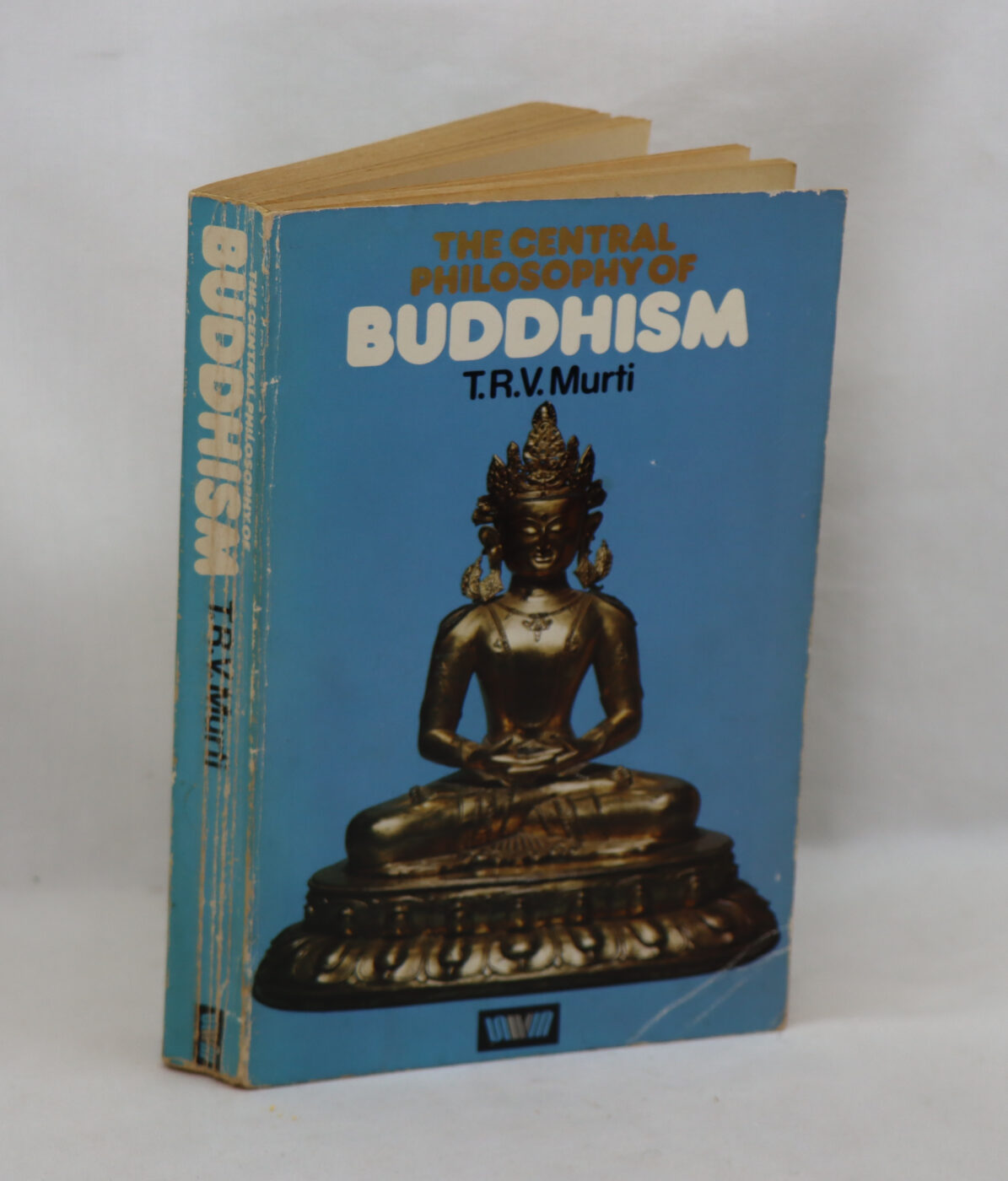
Paperback. Bluecover with white title and buddha figure on the front board.
We provide an in-depth photographic presentation of this item to stimulate your feeling and touch. More traditional book descriptions are immediately available.
- Note: This book carries a £5.00 discount to those that subscribe to the F.B.A. mailing list
Please view the photographs: a solid book which needs to be read.
Buddhism and its religious philosophy has frequently undergone periods of major regeneration. While this willingness to reformulate the insights of the Buddha for a different cultural context is one of its outstanding virtues, it is also a source of difficulties for the unguided Western student who often becomes lost and confused in the midst of this richness of ideas. In his study of the Madhyamika School, founded in the 2nd century by Nagarjuna, one of the greatest thinkers of all time.
Review: This book is for the advanced student of Buddhism: Madhyamika philosophy is not simple by any means. I think it would be impossible to understand this without having read Nagarjuna’s fundamental wisdom of the middle way. Even then, it is a tough undertaking. Murti gives the best account of the subject that I have ever read, but it is mentally taxing and mentally tiring. I don’t feel that I need to read any other books on the subject, having read this one.
TIRUPPATTUR RAMESHAYYAR VENKATACHALA MURTI was born in a South Indian middle class Brahmana family. He was educated first at Tiruppattur and later at Tiruchhirapalli where his early undergraduate study was undertaken at the then Bishop Heber College. After a gap of several years spent in the cause of Gandhi’s Nationalist movement, in 1952 he joined the Banaras Hindu University.
Siddhartha Gautama, most commonly referred to as the Buddha (lit. ’the awakened one’),was a wandering ascetic and religious teacher who lived in South Asia during the 6th or 5th century BCE and founded Buddhism. According to Buddhist legends, he was born in Lumbini, in what is now Nepal, to royal parents of the Shakya clan, but renounced his home life to live as a wandering ascetic. After leading a life of mendicancy, asceticism, and meditation, he attained nirvana at Bodh Gayā in what is now India. The Buddha then wandered through the lower Indo-Gangetic Plain, teaching and building a monastic order. Buddhist tradition holds that he died in Kushinagar and reached parinirvana (“final release from conditioned existence”).
According to Buddhist tradition, the Buddha taught a Middle Way between sensual indulgence and severe asceticism,leading to freedom from ignorance, craving, rebirth, and suffering. His core teachings are summarized in the Four Noble Truths and the Noble Eightfold Path, a training of the mind that includes ethical training and kindness toward others, and meditative practices such as sense restraint, mindfulness, dhyana (meditation proper). Another key element of his teachings are the concepts of the five skandhas and dependent origination, describing how all dharmas (both mental states and concrete ‘things’) come into being, and cease to be, depending on other dharmas, lacking an existence on their own svabhava).
While in the Nikayas, he frequently refers to himself as the Tathāgata; the earliest attestation of the title Buddha is from the 3rd century BCE, meaning ‘Awakened One’ or ‘Enlightened One’. His teachings were compiled by the Buddhist community in the Vinaya, his codes for monastic practice, and the Sutta Piṭaka, a compilation of teachings based on his discourses. These were passed down in Middle Indo-Aryan dialects through an oral tradition. Later generations composed additional texts, such as systematic treatises known as Abhidharma, biographies of the Buddha, collections of stories about his past lives known as Jataka tales, and additional discourses, i.e., the Mahāyāna sūtras.
Buddhism evolved into a variety of traditions and practices, represented by Theravāda, Mahāyāna and Vajrayāna, and spread beyond the Indian subcontinent. While Buddhism declined in India, and mostly disappeared after the 8th century CE due to a lack of popular and economic support, Buddhism has grown more prominent in Southeast and East Asia.
Want to know more about this item?
We are happy to answer any questions you may have about this item. In addition, it is also possible to request more photographs if there is something specific you want illustrated.
Ask a question
Related products





Share this Page with a friend
