
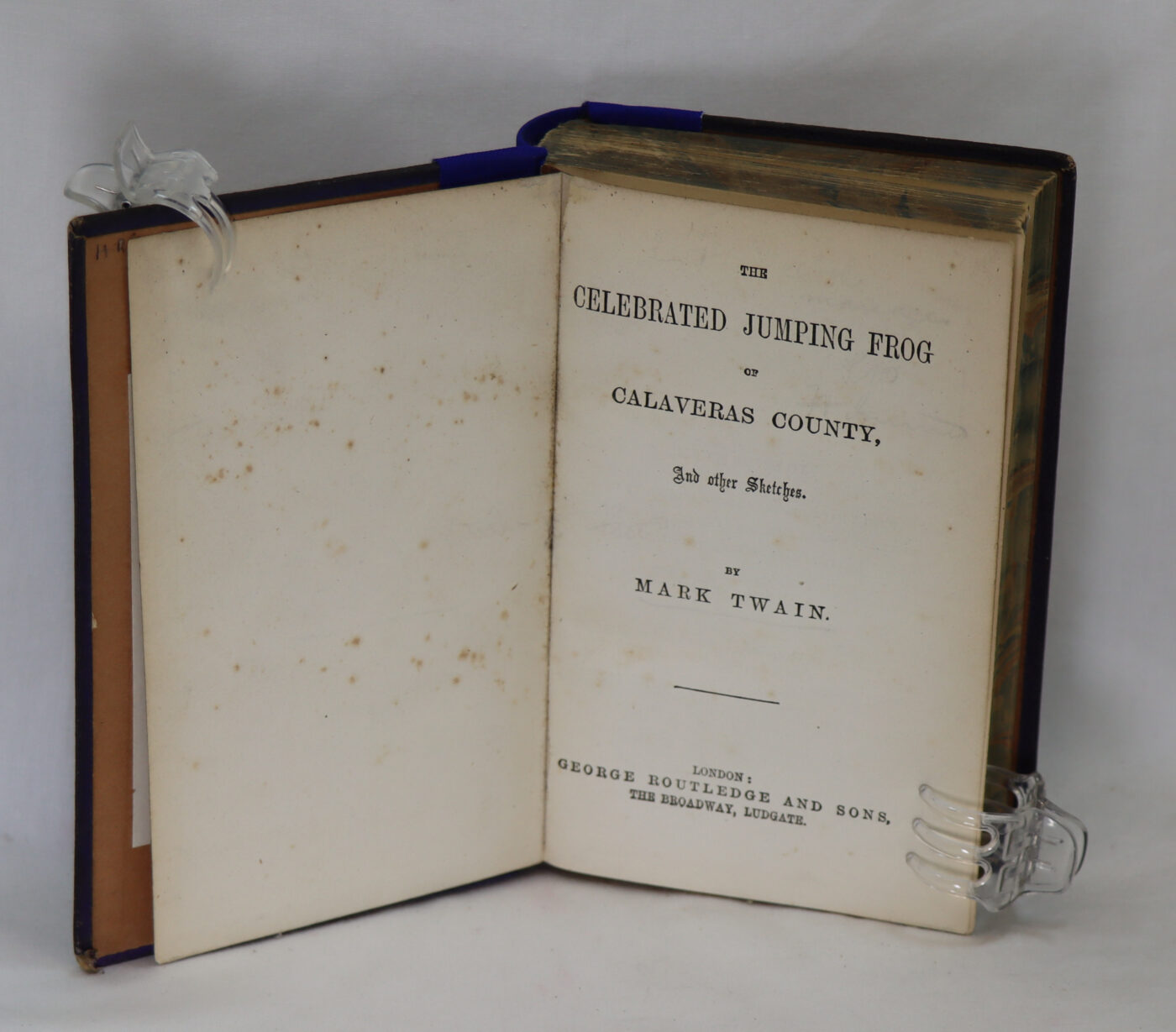
The Celebrated Jumping Frog of Calaveras County.
By Mark Twain
Printed: 1868
Publisher: George Routledge & Sons. London
| Dimensions | 11 × 16 × 3 cm |
|---|---|
| Language |
Language: English
Size (cminches): 11 x 16 x 3
Condition: Good (See explanation of ratings)
£750.00
FREE shipping
Buy Now
Your items

Item information
Description
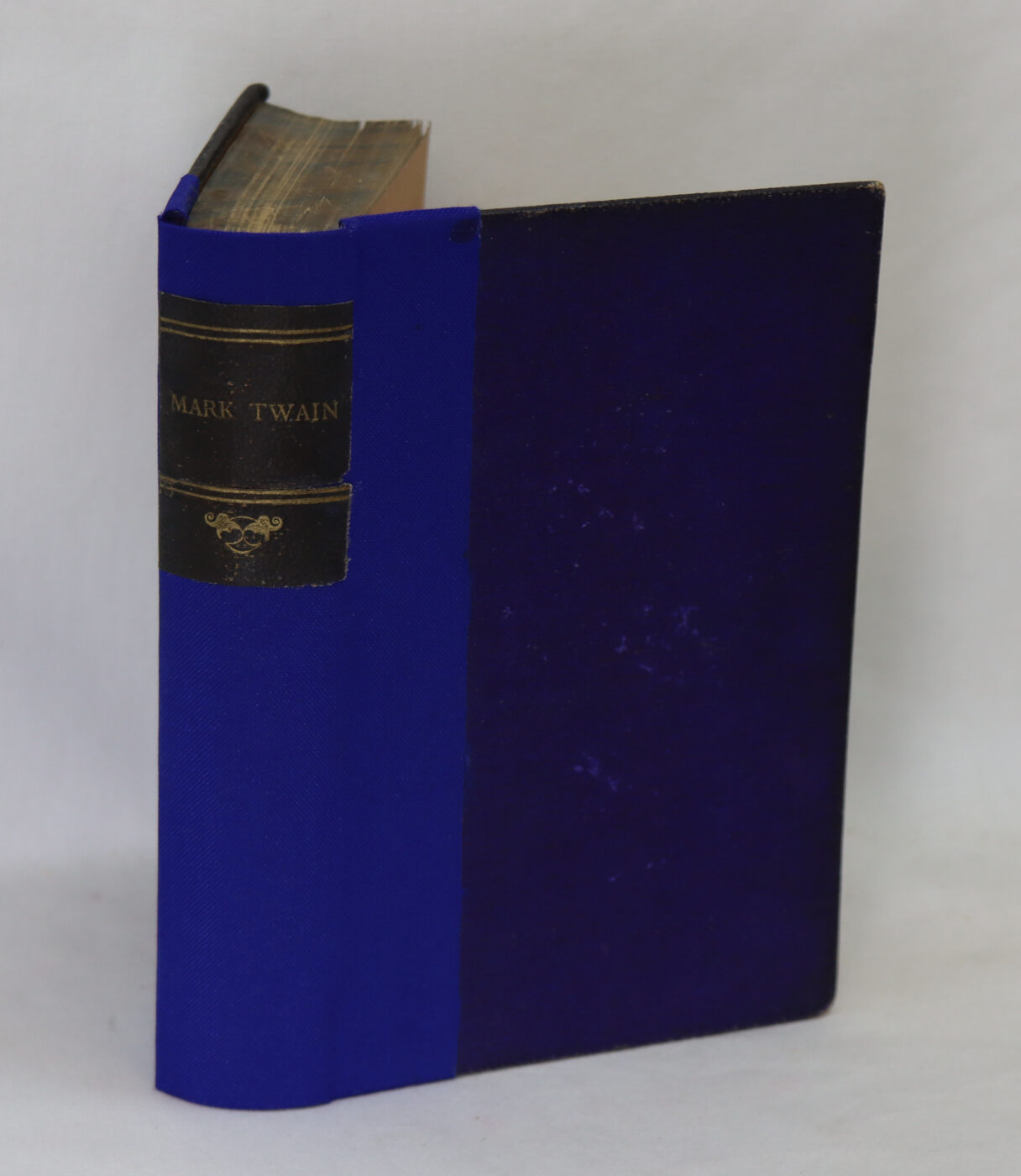
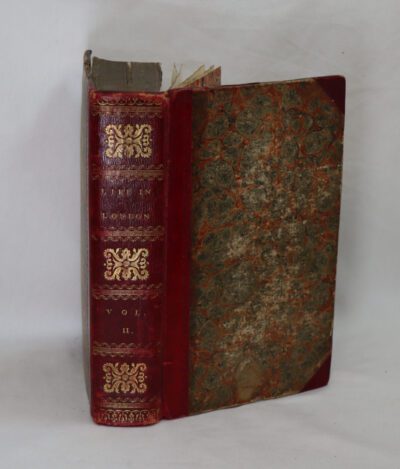
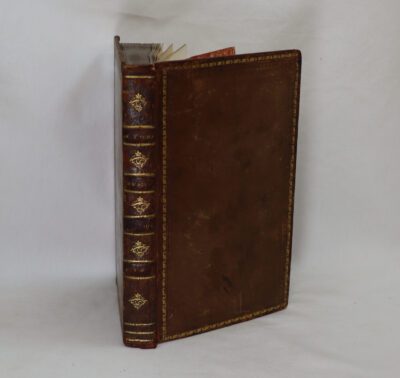
Navy cloth binding with gilt title on the re-backed spine.
We provide an in-depth photographic presentation of this item to stimulate your feeling and touch. More traditional book descriptions are immediately available.
Note: This book carries a £5.00 discount to those that subscribe to the F.B.A. mailing list
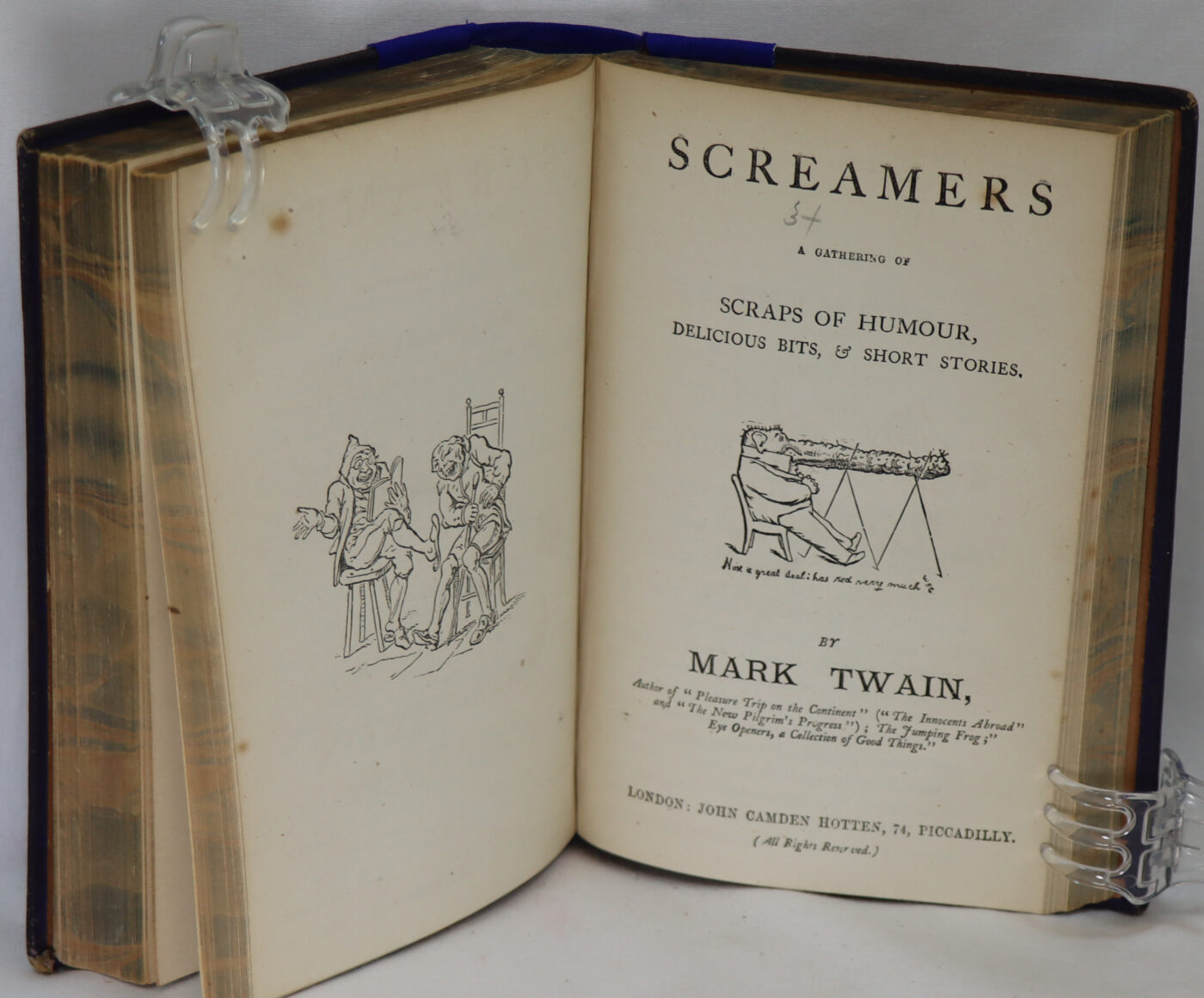
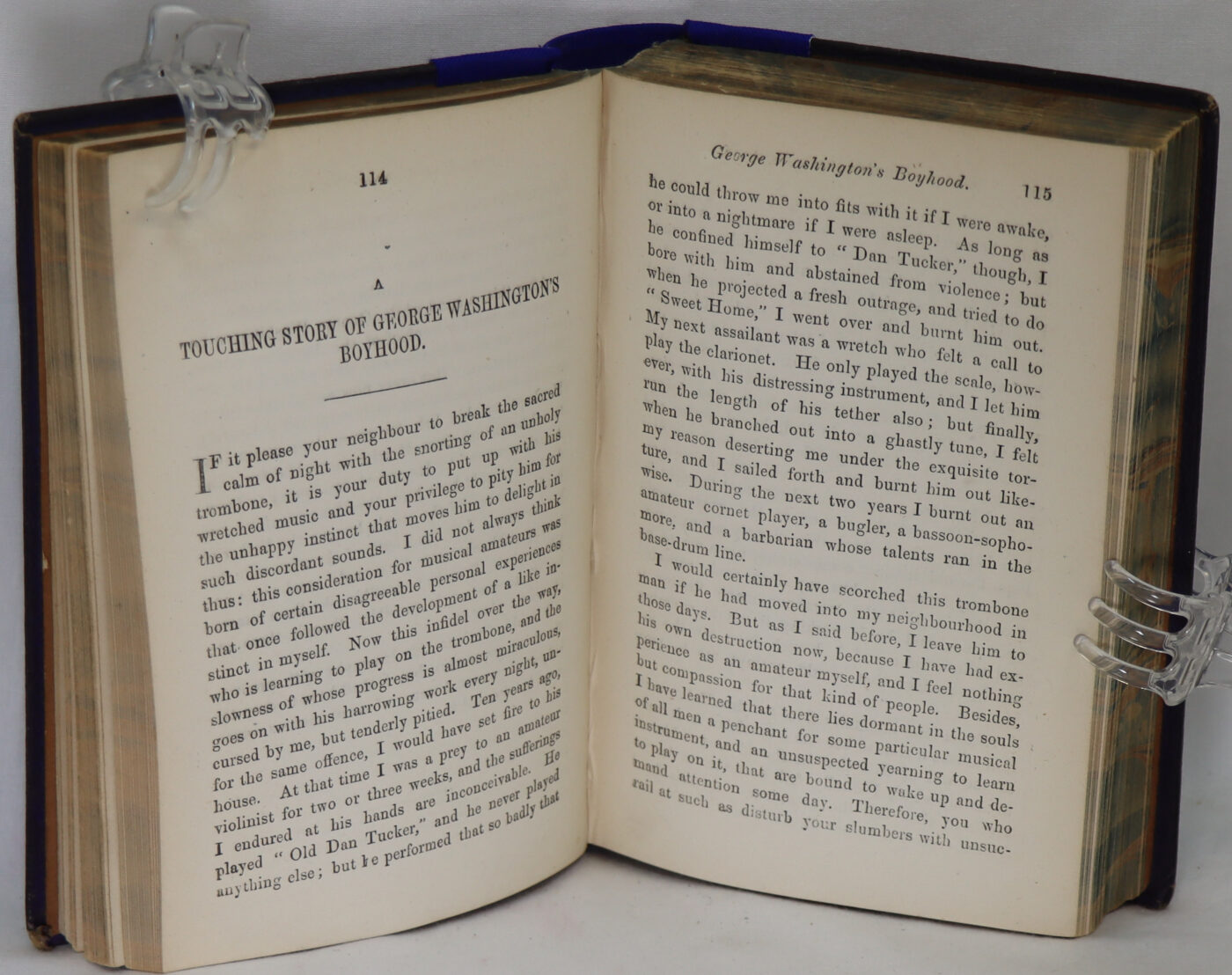
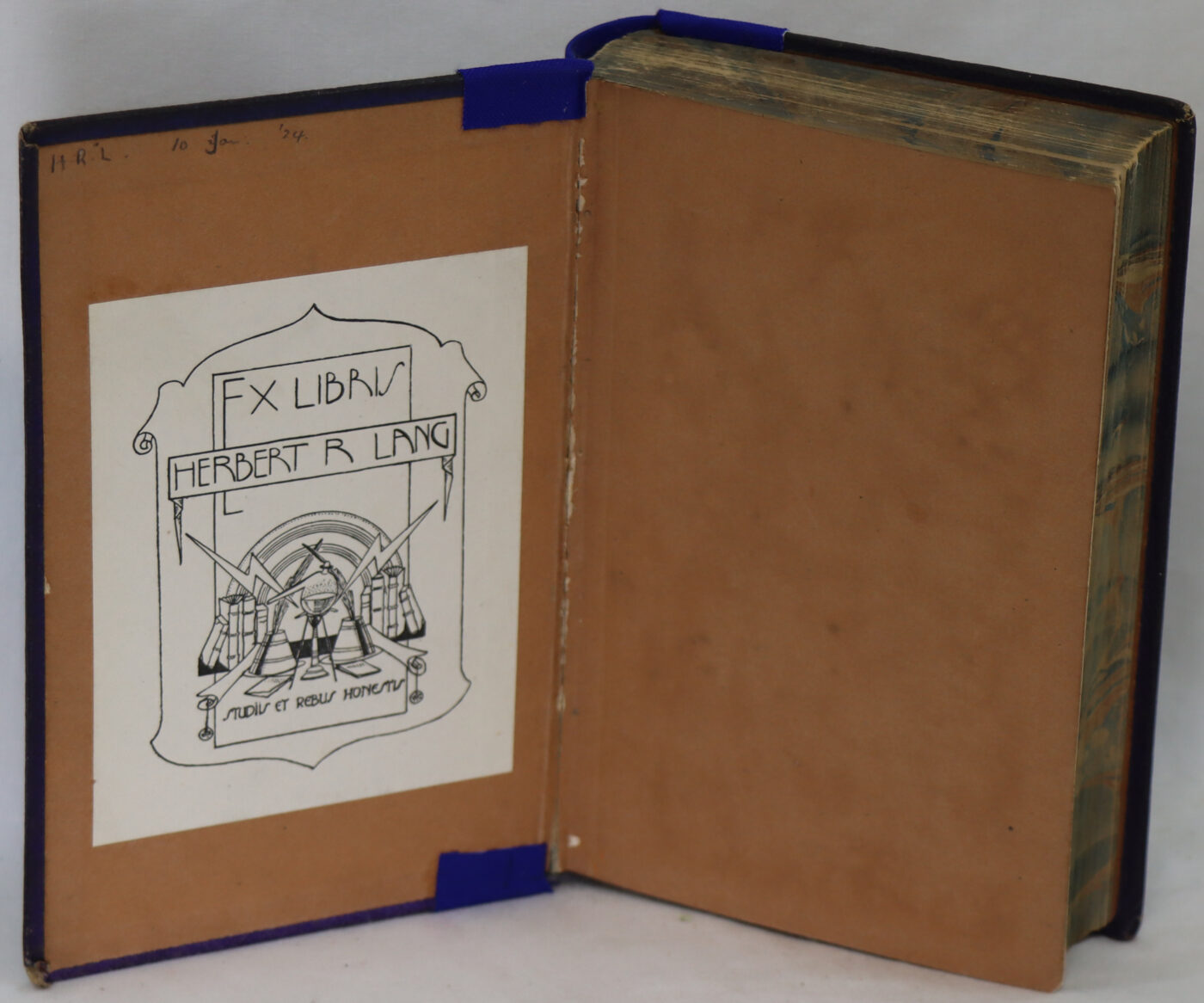
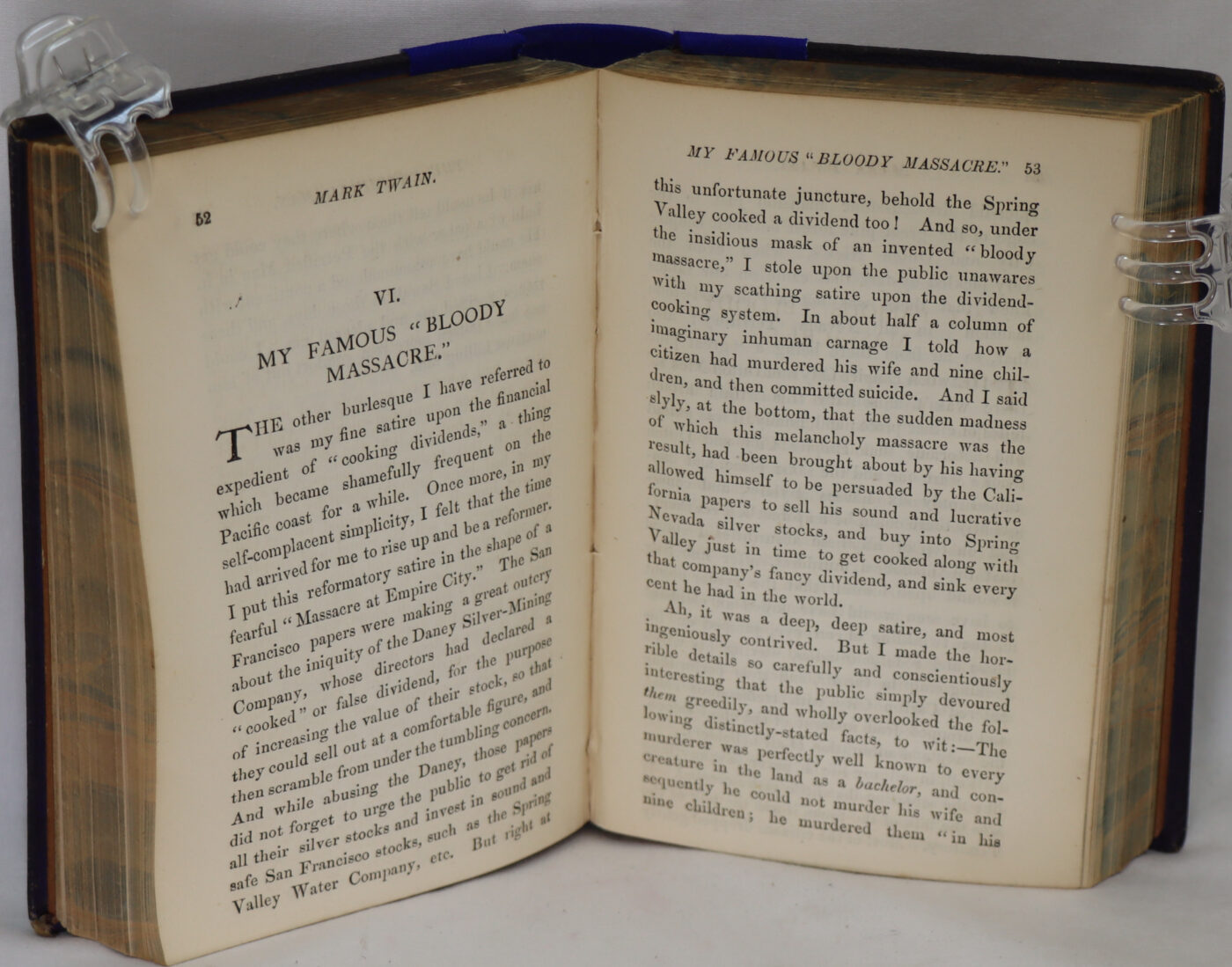
Please view our photographs of this cherished refurbished book with original printed sketches by Mark Twain. Jack Lang’s father and his grandfather were Mark Twain enthusiasts and together they built an excellent library of Mark Twain books.
This book is a legitimate and early piece of Mark Twain history. The 1868 George Routledge & Sons publication of The Celebrated Jumping Frog of Calaveras County, and Other Sketches is one of the earliest authorized British editions of Twain’s first book.
Book Details and Value
-
Historical Significance: While Twain’s genuine first edition was published in New York in 1867 by C.H. Webb, Routledge brought Twain to British readers shortly after. It served as a vital stepping stone for his transatlantic popularity.
-
Market Value: Depending on the specific condition of the binding, pages, and whether it is an octavo with advertisements, these early Routledge printings generally sell at auction or rare book sites (such as Frost Books) for anywhere between £200 to £1,000.
-
First Issue Indicators: The genuine 1867 American first edition features a gilt-stamped jumping frog. The Routledge 1868 edition is highly collectible, but authentic first American issues command the highest premiums (reaching upwards of £17,000).
“The Celebrated Jumping Frog of Calaveras County” is an 1865 short story by Mark Twain. It was his first great success as a writer and brought him national attention. The story has also been published as “Jim Smiley and His Jumping Frog” (its original title) and “The Notorious Jumping Frog of Calaveras County”. In it, the narrator retells a story he heard from a bartender, Simon Wheeler, at the Angels Hotel in Angels Camp, California, about the gambler Jim Smiley. The narrator describes him: “If he even seen a straddle bug start to go anywheres, he would bet you how long it would take him to get to wherever he going to, and if you took him up, he would foller that straddle bug to Mexico but what he would find out where he was bound for and how long he was on the road.”
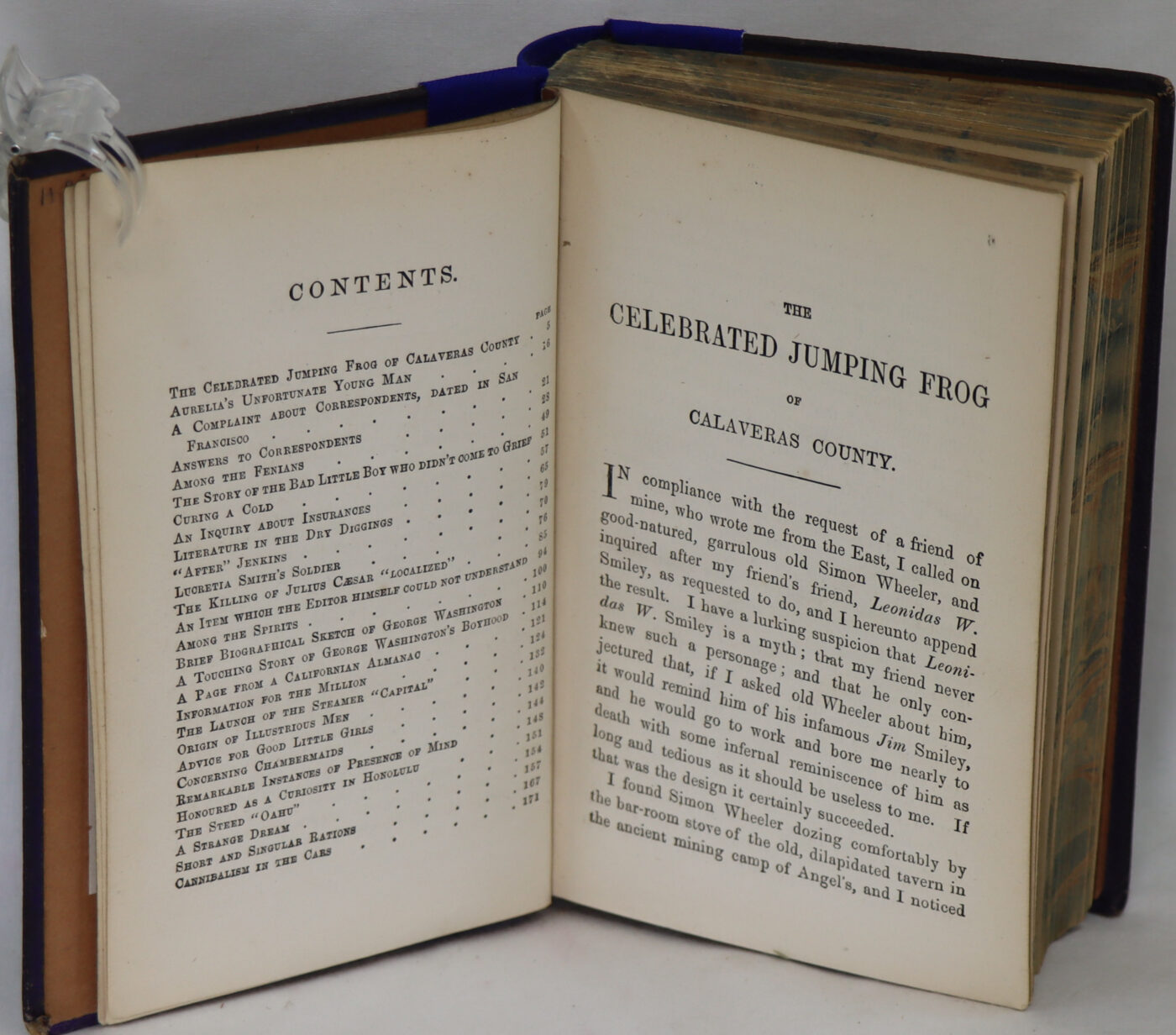
The Celebrated Jumping Frog of Calaveras County, and Other Sketches is also the title story of an 1867 collection of short stories by Mark Twain. It was Twain’s first book and collected 27 stories that were previously published in magazines and newspapers.
Twain first wrote the title short story at the request of his friend Artemus Ward, for inclusion in an upcoming book. Twain worked on two versions, but neither was satisfactory to him—neither got around to describing the jumping frog contest. Ward pressed him again, but by the time Twain devised a version he was willing to submit, that book was already nearing publication, so Ward sent it instead to The New York Saturday Press, where it appeared in the November 18, 1865, edition as “Jim Smiley and His Jumping Frog”. Twain’s colorful story was immensely popular, and was soon printed in many different magazines and newspapers. Twain developed the idea further, and Bret Harte published this version in The Californian on December 16, 1865; this time titled “The Celebrated Jumping Frog of Calaveras County”, and Smiley’s name was changed to Greeley.
Further popularity of the tale led Twain to use the story to anchor his own first book, which appeared in 1867 with a first issue run of only 1,000 copies. The first edition was issued with covers in seven colors (with no priority) — blue, brown, green, lavender, plum, red, and terra-cotta — and is sought after by book collectors, fetching thousands of dollars at auctions. In the book version, Twain changed Greeley back to Smiley.
Plot summary
The narrator is sent by a friend to interview an old man, Simon Wheeler, who might know the location of an old acquaintance named Leonidas W. Smiley. Finding Simon at an old mining camp, the narrator asks him if he knows anything about Leonidas; Simon appears not to, and instead tells a story about Jim Smiley, a man who had visited the camp years earlier.
Jim loves to gamble and will offer to bet on anything and everything, from horse races to dogfights, to the health of the local parson’s wife. He catches a frog, whom he names Dan’l Webster, and spends three months training it to jump. When a stranger visits the camp, Jim shows off Dan’l and offers to bet $40 that it can out-jump any other frog in Calaveras County. The stranger, unimpressed, says that he would take the bet if he had a frog, so Jim goes out to catch one, leaving him alone with Dan’l. While Jim is away, the stranger pours lead shot down Dan’l’s throat. Once Jim returns, he and the stranger set the frogs down and let them loose. The stranger’s frog jumps away while Dan’l does not budge, and the surprised and disgusted Jim pays the $40 wager. After the stranger has departed, Jim notices Dan’l’s sluggishness and picks the frog up, finding it to be much heavier than he remembers. When Dan’l belches out a double handful of lead shot, Jim realizes that he has been cheated and chases after the stranger, but never catches him.
At this point in the story, Simon excuses himself to go outside for a moment. The narrator realizes that Jim has no connection to Leonidas and gets up to leave, only to have Simon stop him at the door, offering to tell him about a yellow, one-eyed, stubby-tailed cow that Jim had owned. Rather than stay to hear another pointless story, the narrator excuses himself and leaves. He muses that his friend may have fabricated Leonidas as a pretext to trick him into listening to Simon’s anecdotes.
Samuel Langhorne Clemens (November 30, 1835 – April 21, 1910), known by the pen name Mark Twain, was an American writer, humorist, and essayist. He has been praised as the “greatest humorist the United States has produced”,with William Faulkner calling him “the father of American literature”.Twain’s novels include The Adventures of Tom Sawyer (1876) and its sequel, Adventures of Huckleberry Finn (1884), with the latter often called the “Great American Novel”. He also wrote A Connecticut Yankee in King Arthur’s Court (1889) and Pudd’nhead Wilson (1894) and co-wrote The Gilded Age: A Tale of Today (1873) with Charles Dudley Warner.
Twain was raised in Hannibal, Missouri, which later provided the setting for both Tom Sawyer and Huckleberry Finn. He served an apprenticeship with a printer early in his career, and then worked as a typesetter, contributing articles to his older brother Orion Clemens’s newspaper. Twain then became a riverboat pilot on the Mississippi River, which provided him the material for Life on the Mississippi (1883). Soon after, Twain headed west to join Orion in Nevada. He referred humorously to his lack of success at mining, turning to journalism for the Virginia City Territorial Enterprise.
Twain first achieved success as a writer with the humorous story “The Celebrated Jumping Frog of Calaveras County,” which was published in 1865; it was based on a story that he heard at the Angels Hotel in Angels Camp, California, where Twain had spent some time while he was working as a miner. The short story brought Twain international attention. He wrote both fiction and non-fiction. As his fame grew, Twain became a much sought-after speaker. His wit and satire, both in prose and in speech, earned praise from critics and peers, and Twain was a friend to presidents, artists, industrialists, and European royalty.
Although Twain initially spoke out in favor of American interests in the Hawaiian Islands, he later reversed his position, going on to become vice president of the American Anti-Imperialist League from 1901 until his death in 1910, coming out strongly against the Philippine–American War and American colonialism. Twain published a satirical pamphlet, “King Leopold’s Soliloquy”, in 1905 about Belgian atrocities in the Congo Free State.
Twain earned a great deal of money from his writing and lectures, but invested in ventures that lost most of it, such as the Paige Compositor, a mechanical typesetter that failed because of its complexity and imprecision. He filed for bankruptcy after these financial setbacks, but in time overcame his financial troubles with the help of Standard Oil executive Henry Huttleston Rogers, who helped Twain manage his finances and copyrights. Twain eventually paid all his creditors in full, even though his declaration of bankruptcy meant he was not required to do so. One hundred years after his death, the first volume of his autobiography was published.
Twain was born shortly after an appearance of Halley’s Comet and predicted that his death would accompany it as well, writing in 1909: “I came in with Halley’s Comet in 1835; it’s coming again next year, and I expect to go out with it. It would be a great disappointment in my life if I don’t. The Almighty has said, no doubt: ‘Now here are these two unaccountable freaks; they came in together, they must go out together.'” He died of a heart attack the day after the comet was at its closest to the Sun.
NOTE: This is an original book from the library gathered by the famous Cambridge Don, computer scientist, food and wine connoisseur, Jack Arnold LANG. Note: Jack founded the Michelin Guide ‘Midsummer House’- Cambridge’s paramount restaurant. This dining experience is hidden amongst the grassy pastures and grazing cattle of Midsummer Common and perched on the banks of the River Cam.
In 2008, Jack was one of the co-founders of the Raspberry Pi Foundation, alongside other members of the Department, and acted as the Foundation’s Chair. The project’s original goals were modest: to build and distribute low-cost computers for prospective applicants to our Computer Science degree. Initially the project was a “success disaster”, as Jack would say, as demand far outstripped the low-scale manufacturing plans. Ultimately the Raspberry Pi became the UK’s most successful computer with more than 60 million sold to date. Jack was drawn to the educational possibilities of the Raspberry Pi, its potential uses in emerging economies and the way it could support self-directed learning.
Condition notes
Rebacked
Want to know more about this item?
We are happy to answer any questions you may have about this item. In addition, it is also possible to request more photographs if there is something specific you want illustrated.
Ask a question
Related products

Share this Page with a friend
