
The Bayeux Tapestry.
ISBN: 9781033402610
Printed: 2026
Publisher: The British Museum. London
| Dimensions | 23 × 27 × 3 cm |
|---|---|
| Language |
Language: English
Size (cminches): 23 x 27 x 3
Condition: As new (See explanation of ratings)
£136.00
Buy Now
Your items


Item information
Description
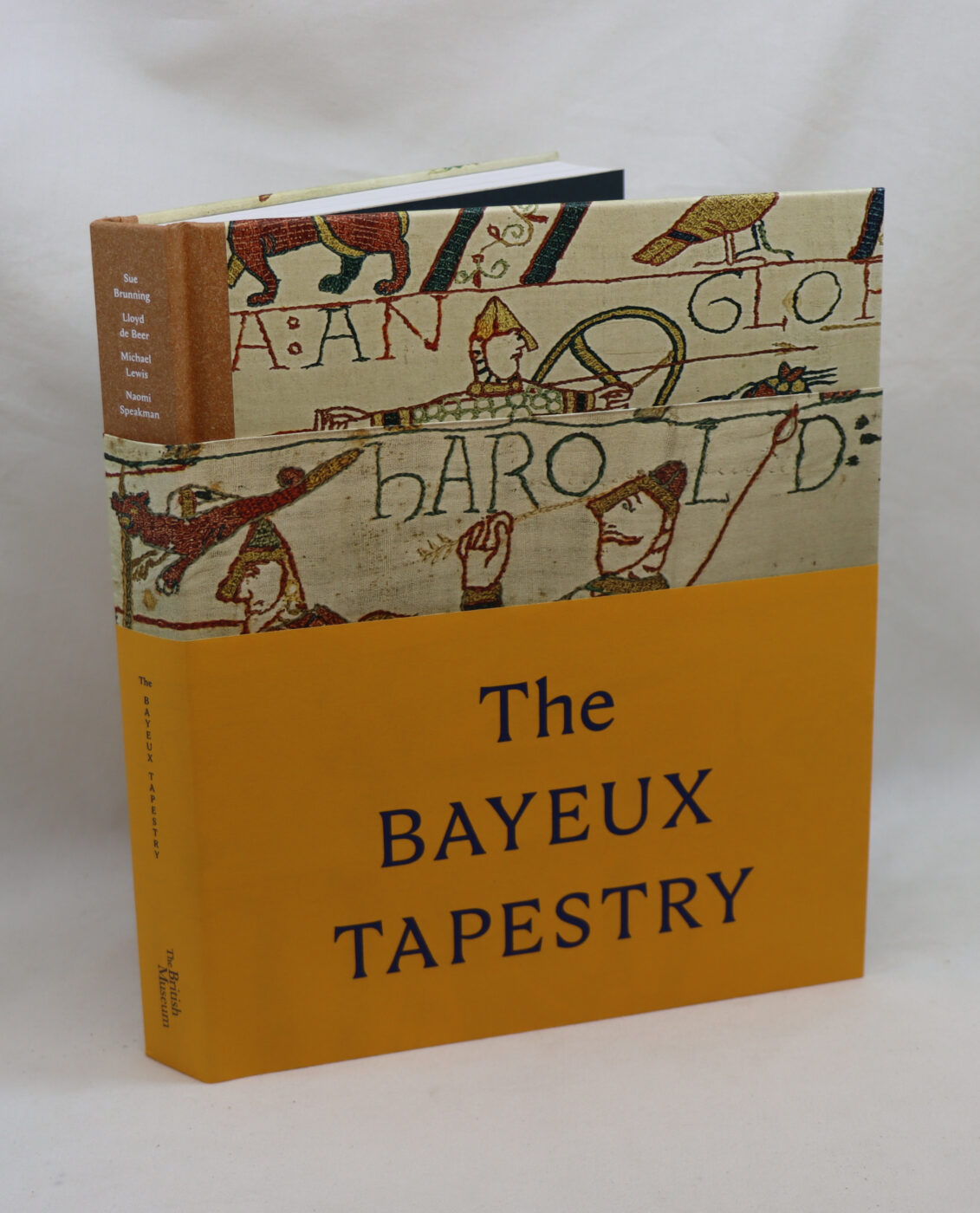
In the original dust jacket. Tapestry image hardboard with white title on the spine. Dust jacket unfolds to show a section of the tapestry image.
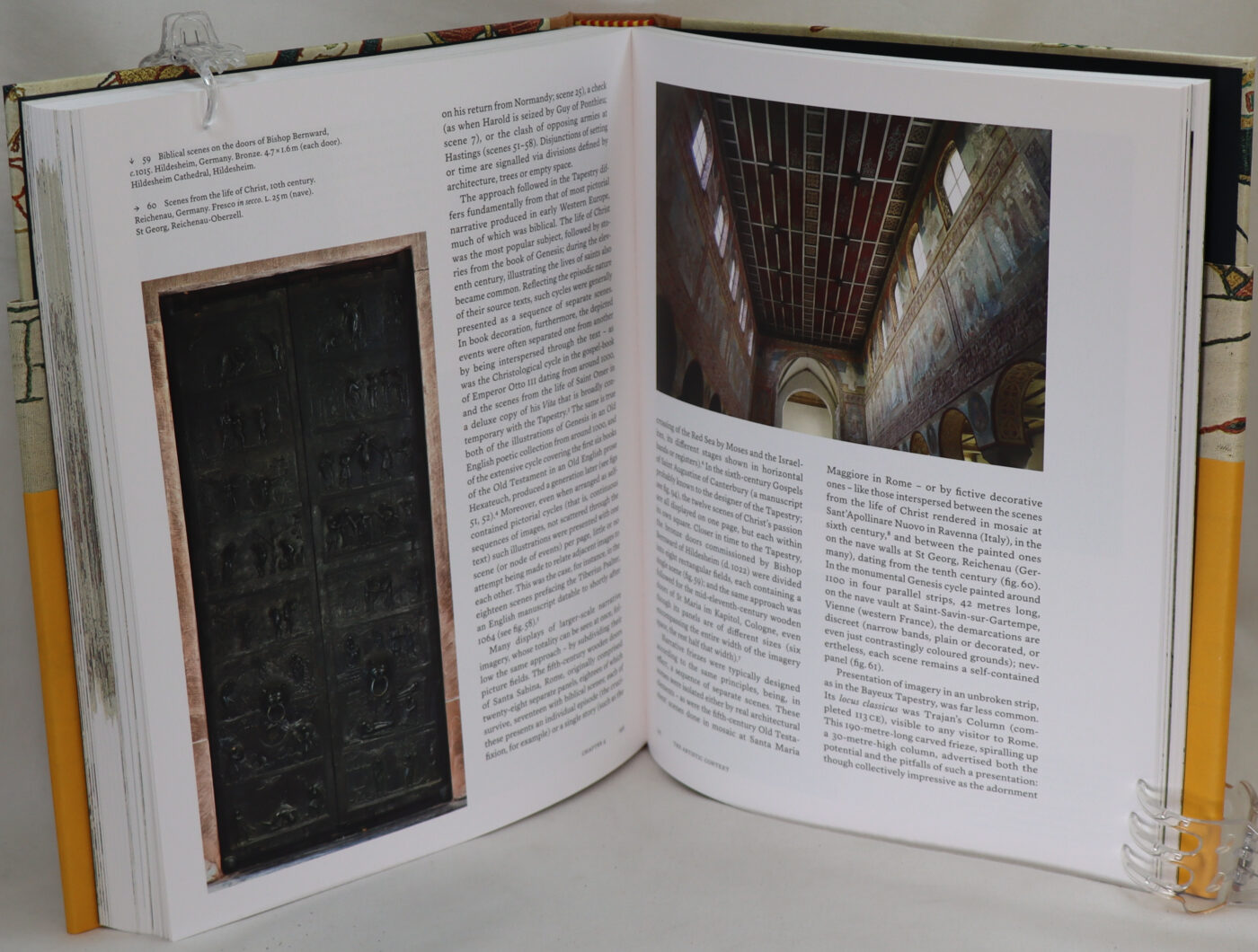
We provide an in-depth photographic presentation of this item to stimulate your feeling and touch. More traditional book descriptions are immediately available.
- Note: This book carries a £5.00 discount to those that subscribe to the F.B.A. mailing list
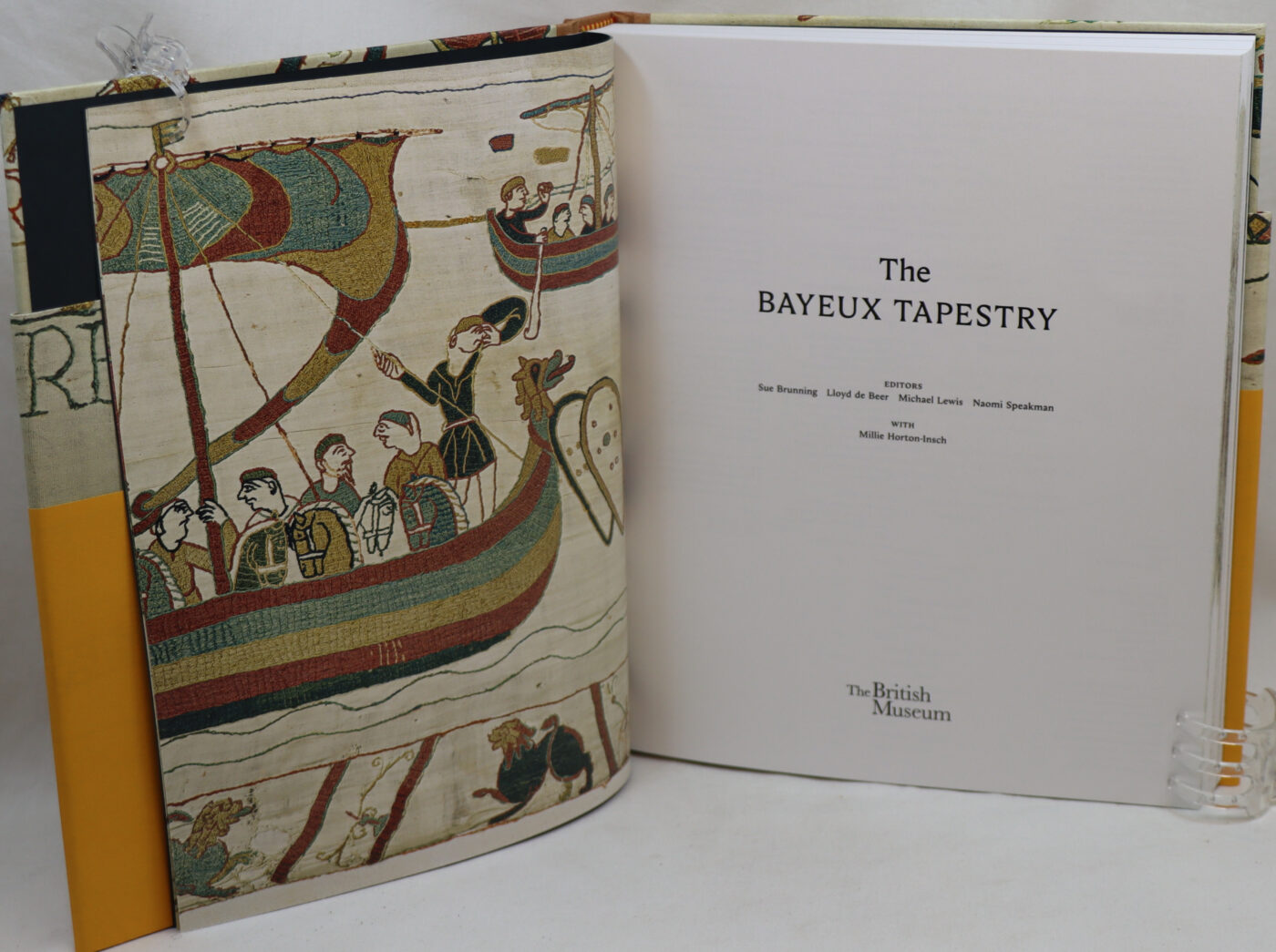
Please view our photographs and read the rubric on the book’s inside. This book details the deluxe exhibition publications released for the British Museum Online Shop’s landmark 2026 exhibition, marking the historic loan of the tapestry to the UK.
The Paperback version retails for £30 on the British Museum Online Shop. Meanwhile, the premium large-format Collectors’ Edition costs £150–£200 depending on the retailer, available at outlets such as Foyles and Amazon.co.uk.
Book Contents
The publications provide an authoritative and deeply visual guide to one of early medieval Europe’s greatest cultural treasures. Key contents include:
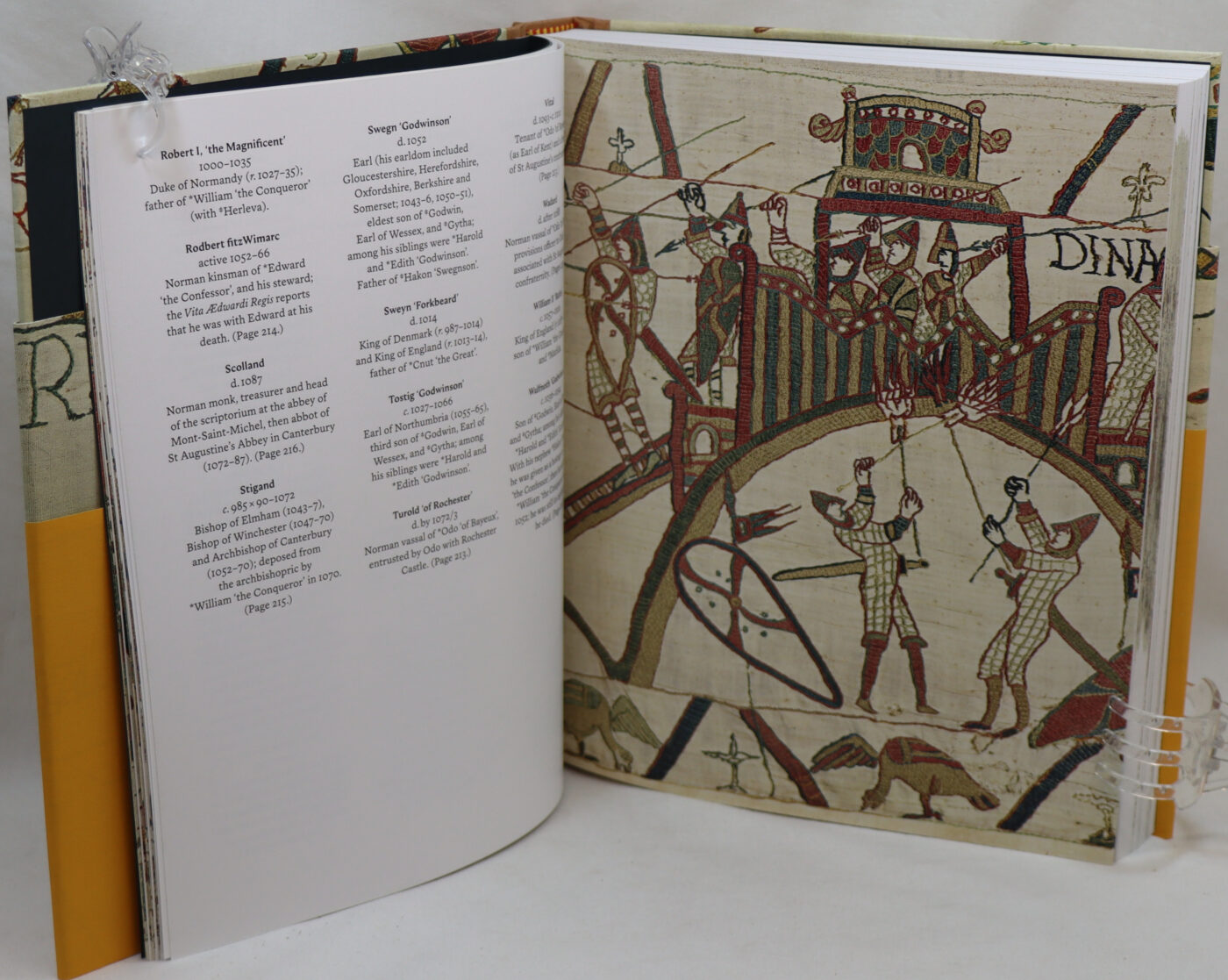
- Complete Tapestry Reproduction: High-definition photography capturing the entire 70-metre length of the linen embroidery in intimate detail—close enough to see individual woollen stitches and expressive colour choices.
- Expert Curators’ Commentary: Historical and artistic context tracking the narrative of the 1066 Norman Conquest, including William the Conqueror’s preparations, seafaring, and King Harold’s fate at the Battle of Hastings.
- Hidden Details & Marginalia: Analysis of unexpected elements found in the tapestry’s upper and lower borders, detailing everything from historical fables to daily medieval life.
- Historical Investigation: Academic perspectives unravelling the mysteries surrounding who commissioned the work (such as Bishop Odo), where it was crafted, and its survival across nine centuries.
The Bayeux Tapestry (French: Tapisserie de Bayeux) is an embroidered cloth nearly 70 metres (230 feet) long and 50 centimetres (20 inches) tall that depicts the events leading up to the Norman conquest of England, led by William, Duke of Normandy, and the Battle of Hastings in 1066. It is normally thought to have been made in England in the decades after the events it shows, although the earliest known written reference to it was in 1476. Since 2007 it has been inscribed on UNESCO’s Memory of the World Register. It is normally displayed in the Bayeux Tapestry Museum in Bayeux, Normandy, France, but this is closed for renovation until 2027, and the work is currently on display in London.
Despite its name, the work is technically an embroidery rather than a true tapestry, since the images are stitched rather than woven into the fabric. It was worked in wool thread on a coarse linen ground using four different stitches and ten natural dye colours. The cloth now consists of 58 scenes, all with Medieval Latin tituli. The surviving piece depicts 623 human figures, 994 animals, 438 plants, 37 buildings and fortifications, 41 ships and boats, and a vast array of other objects. The narrative runs from the final years of the reign of Edward the Confessor in 1064 through to the Battle of Hastings in 1066, when William, Duke of Normandy, defeated Harold Godwinson to claim the English throne. The final scenes are missing.
The tapestry gives a detailed account of the battle’s key turning points, though nearly half of its scenes actually cover events that preceded the invasion itself. It is generally thought to have been commissioned by Bishop Odo of Bayeux, William’s half-brother who appears four times, and produced in England in the years following the Conquest. Although it presents the Conquest from a viewpoint highly favourable to William, leading some historians to read it as propaganda meant to legitimise his rule and win over the Anglo-Saxon nobility, the tapestry remains an invaluable historical source on 11th-century life in the Duchy of Normandy and England, documenting clothing, castles, ships and everyday customs of the period. It also stands as one of the few surviving examples of secular Romanesque art.
According to Sylvette Lemagnen, a former conservator of the tapestry, in her book La Tapisserie de Bayeux (2005):
The Bayeux tapestry is one of the supreme achievements of the Norman Romanesque …. Its survival almost intact over nine centuries is little short of miraculous … Its exceptional length, the harmony and freshness of its colours, its exquisite workmanship, and the genius of its guiding spirit combine to make it endlessly fascinating.
In 1729, it was rediscovered by scholars at a time when it was being displayed annually in the cathedral. The tapestry was kept in the treasury of Bayeux Cathedral until the late 18th century, narrowly escaping destruction during the French Revolution. Since 1983 it has been on permanent public display at the Séminaire de Bayeux [fr].
In September 2026 the tapestry travelled outside France for the first time in its history, on loan to the British Museum in London while the Bayeux museum underwent renovation. It is due to return to France by July 2027.
Want to know more about this item?
We are happy to answer any questions you may have about this item. In addition, it is also possible to request more photographs if there is something specific you want illustrated.
Ask a question
Related products




Share this Page with a friend
