
Technology in the Ancient World.
By Henry Hodges
ISBN: 9780880298933
Printed: 1974
Publisher: Book Club Associates.
| Dimensions | 19 × 28 × 2 cm |
|---|---|
| Language |
Language: English
Size (cminches): 19 x 28 x 2
Condition: Very good (See explanation of ratings)
£16.00
Buy Now

Item information
Description
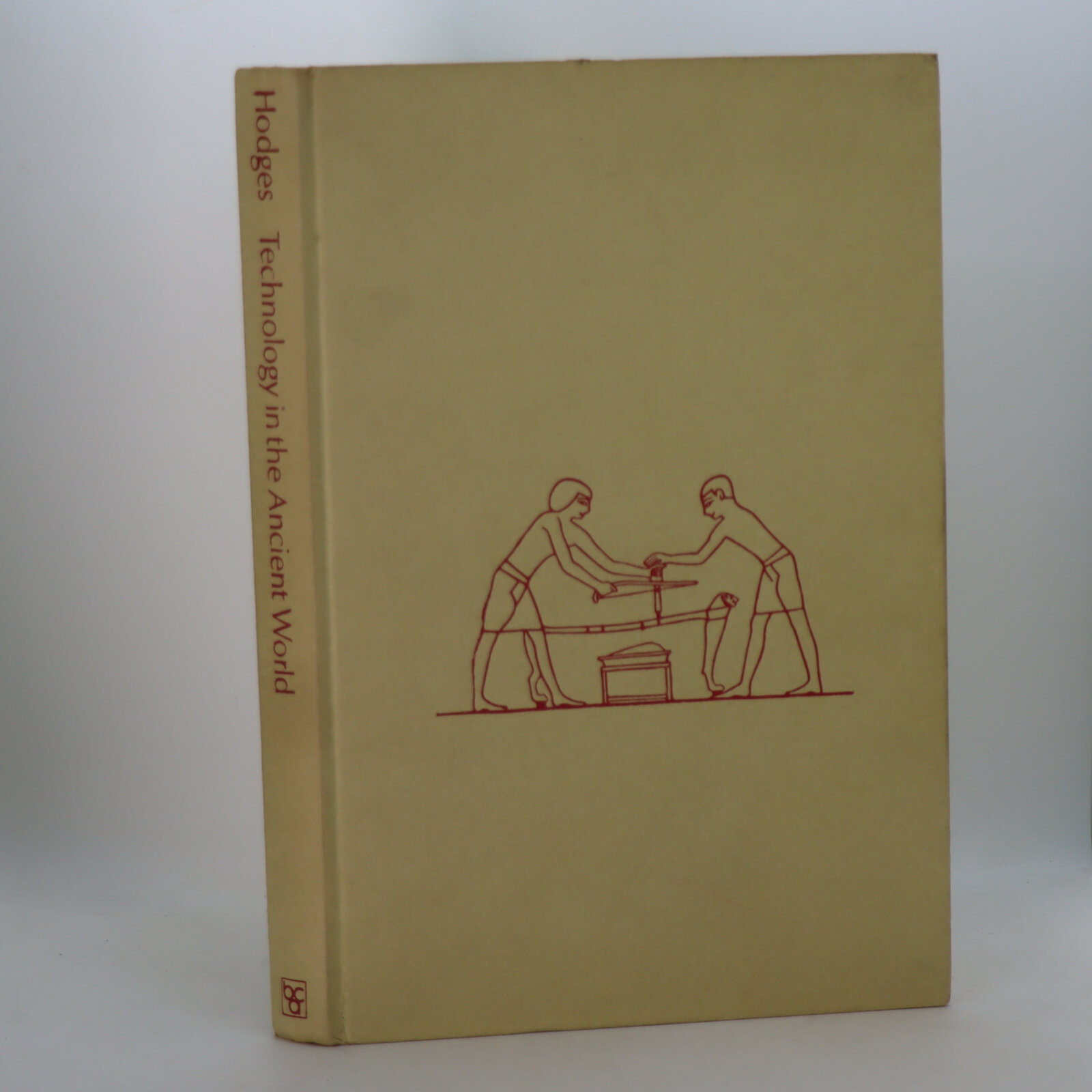
Tan cloth binding with red title on the spine. Red line drawing of working figures on the front board.
F.B.A. provides an in-depth photographic presentation of this item to stimulate your feeling and touch. More traditional book descriptions are immediately available
An essential book that should grace any good reference library.
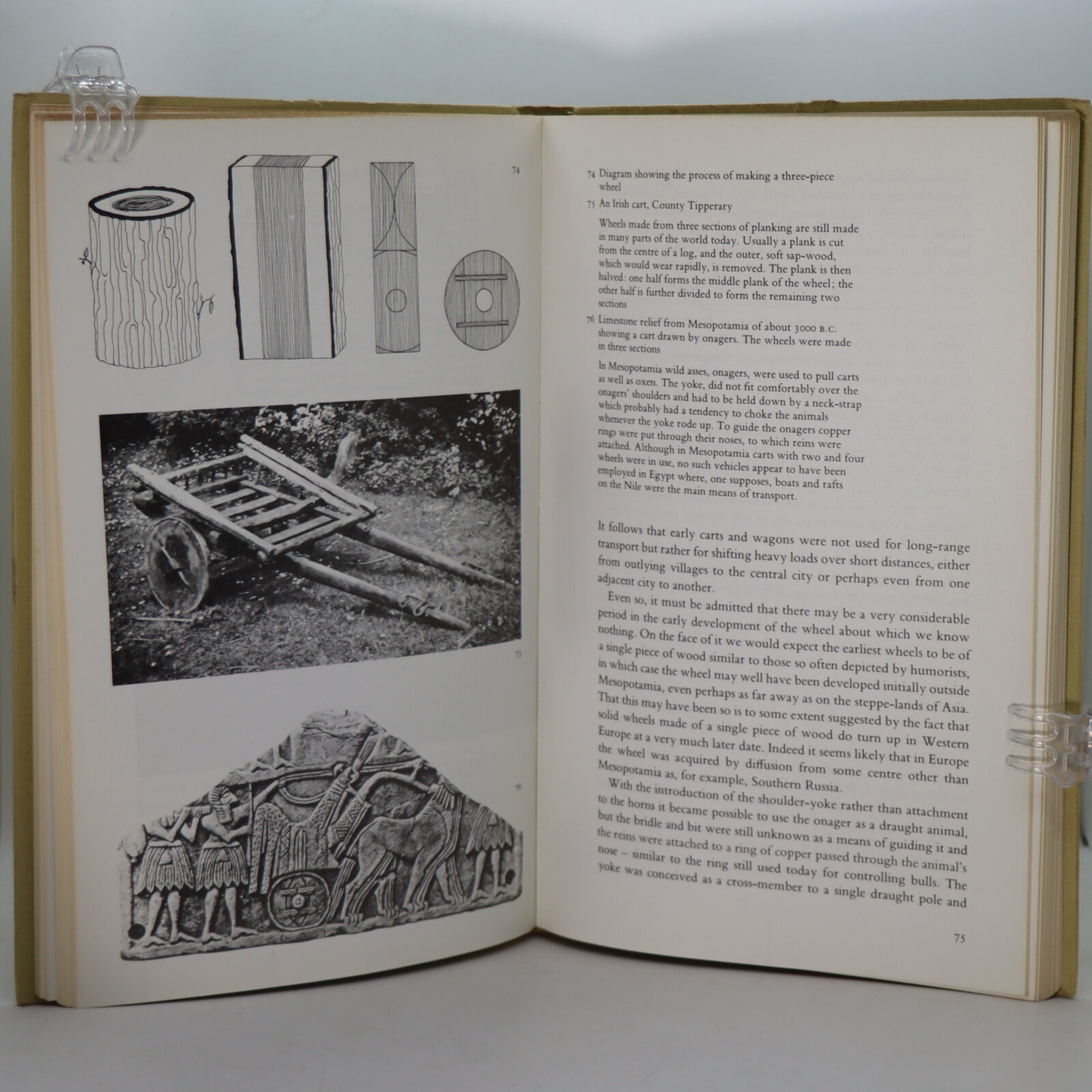
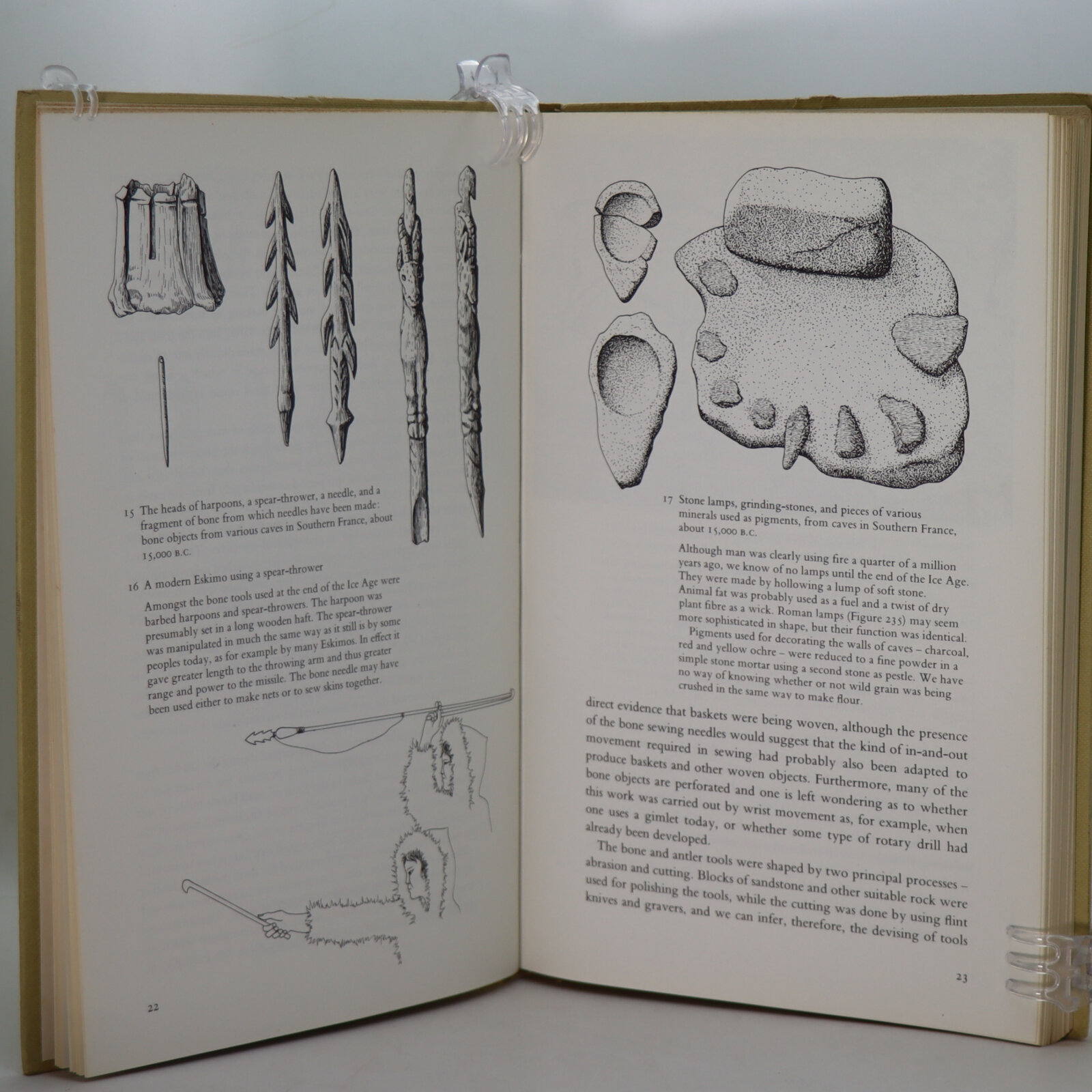
Hardback. Condition: Near Fine. Dust Jacket Condition: Near Fine. Judith Newcomer (illustrator). BCA edition hardback, 1974. In overall near fine used condition with only slight signs of age, handling and storage – no dust jacket, internally clean. Binding tight and appears little read; no annotation or inscriptions; text and illustrations bright and clear throughout. Not an old library book. Written for the general reader, this book looks at the ancient inventions that have helped shape our everyday lives. The development of mankind’s technology is traced from its origins to the end of the period of Roman domination. The book examines the inventions of agriculture, navigation and overland transportation, the inventions of city construction, water works, war, domestic life, and luxury.
Review: Written by a scholar in the subject but in an easily readable style, the author takes us on a ride from the earliest history (c. 4000 BC) to the end of the Roman era. The chronological format enables him to convey the sweep and progress of ancient technology, staring in Egypt and Mesopotamia, and moving westward to Greece and then Rome. He covers agriculture, building, metal working, weaponry, transportation, textiles, irrigation, pottery, and shows how each step is built on its predecessor. Photos and line illustrations abound. He sticks to the known facts and resists speculation. The main part of the book centres on the civilisations of the Nile and Euphrates and then Greece and Rome. A penultimate chapter looks briefly at the Indus region, China, the Steppes, Northwest Europe, and South America. I suspect that more is known about those areas since this book was written. I would have liked more technical detail about metal extraction, mining, textiles and axles.
Want to know more about this item?
We are happy to answer any questions you may have about this item. In addition, it is also possible to request more photographs if there is something specific you want illustrated.
Ask a question








Share this Page with a friend
