
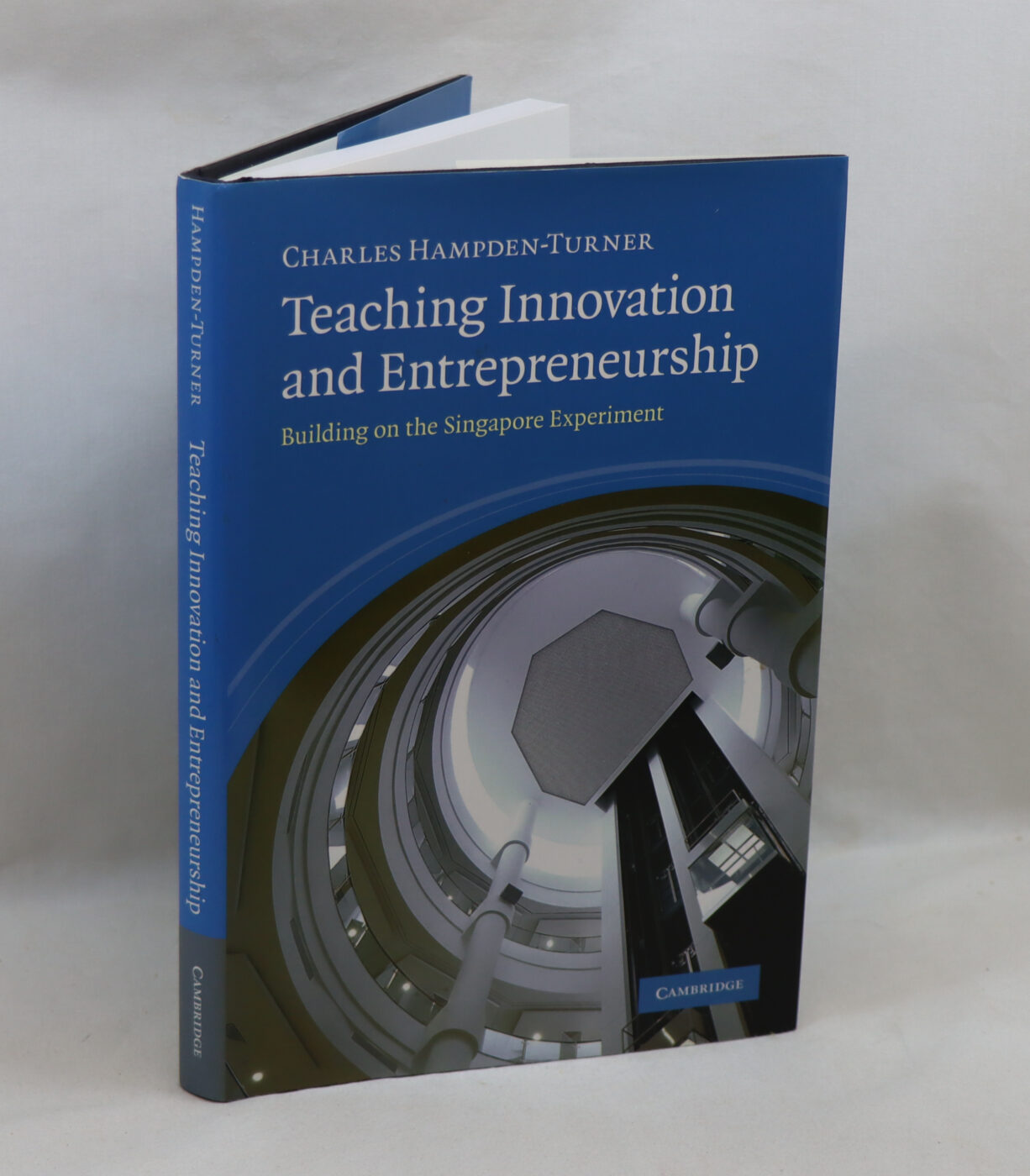
Teaching Innovation and Entrepeneurship.
By Charles Hampden-Turner
ISBN: 9781139482622
Printed: 2009
Publisher: Cambridge University Press.
| Dimensions | 18 × 23 × 2 cm |
|---|---|
| Language |
Language: English
Size (cminches): 18 x 23 x 2
Condition: Very good (See explanation of ratings)
£42.00
Buy Now
Your items

Item information
Description
In the original dust cover. Black cloth binding with gilt title on the spine.
We provide an in-depth photographic presentation of this item to stimulate your feeling and touch. More traditional book descriptions are immediately available
- Note: This book carries a £5.00 discount to those that subscribe to the F.B.A. mailing list
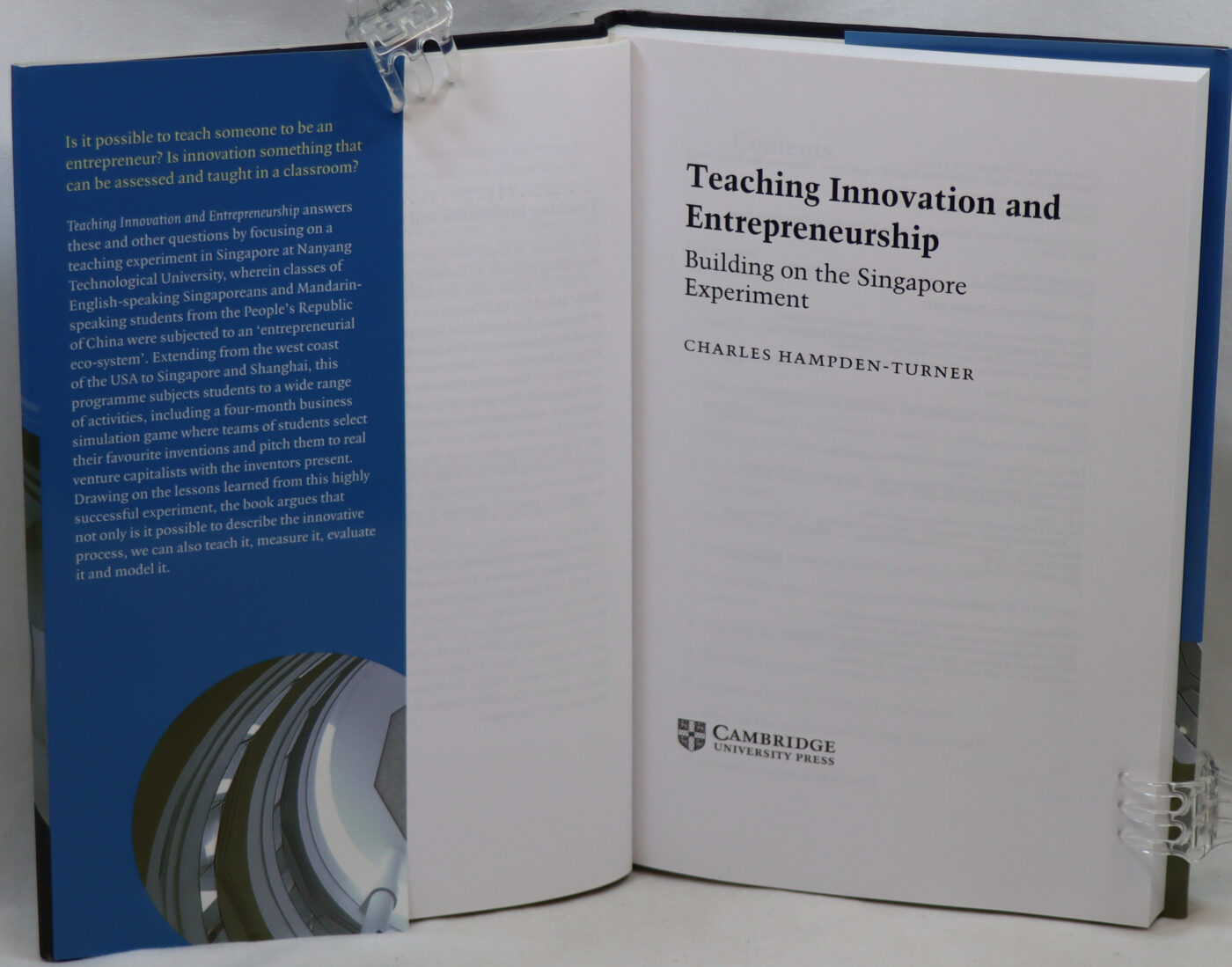
Is it possible to teach someone to be an entrepreneur? Is innovation something that can be assessed and taught in a classroom? Teaching Innovation and Entrepreneurship answers these and other questions by focusing on a teaching experiment in Singapore at Nanyang Technological University, wherein classes of English-speaking Singaporeans and Mandarin-speaking students from the People’s Republic of China were subject to an ‘entrepreneurial eco-system’. Extending from the west coast of the USA to Singapore and Shanghai, this program subjects students to a wide range of activities, including a four-month business simulation game where teams of students select their favorite inventions and pitch them to real venture capitalists with the inventors present. Drawing on the lessons learned from this highly successful experiment, the book argues that not only is it possible to describe the innovative process, we can also teach it, measure it, evaluate it and model it.
NOTE: This is an original book from the library gathered by the famous Cambridge Don, computer scientist, food and wine connoisseur, Jack Arnold LANG. Note: Jack founded the Michelin Guide ‘Midsummer House’- Cambridge’s paramount restaurant. This dining experience is hidden amongst the grassy pastures and grazing cattle of Midsummer Common and perched on the banks of the River Cam.
In 2008, Jack was one of the co-founders of the Raspberry Pi Foundation, alongside other members of the Department, and acted as the Foundation’s Chair. The project’s original goals were modest: to build and distribute low-cost computers for prospective applicants to our Computer Science degree. Initially the project was a “success disaster”, as Jack would say, as demand far outstripped the low-scale manufacturing plans. Ultimately the Raspberry Pi became the UK’s most successful computer with more than 60 million sold to date. Jack was drawn to the educational possibilities of the Raspberry Pi, its potential uses in emerging economies and the way it could support self-directed learning.
Want to know more about this item?
We are happy to answer any questions you may have about this item. In addition, it is also possible to request more photographs if there is something specific you want illustrated.
Ask a question
Related products






Share this Page with a friend
