
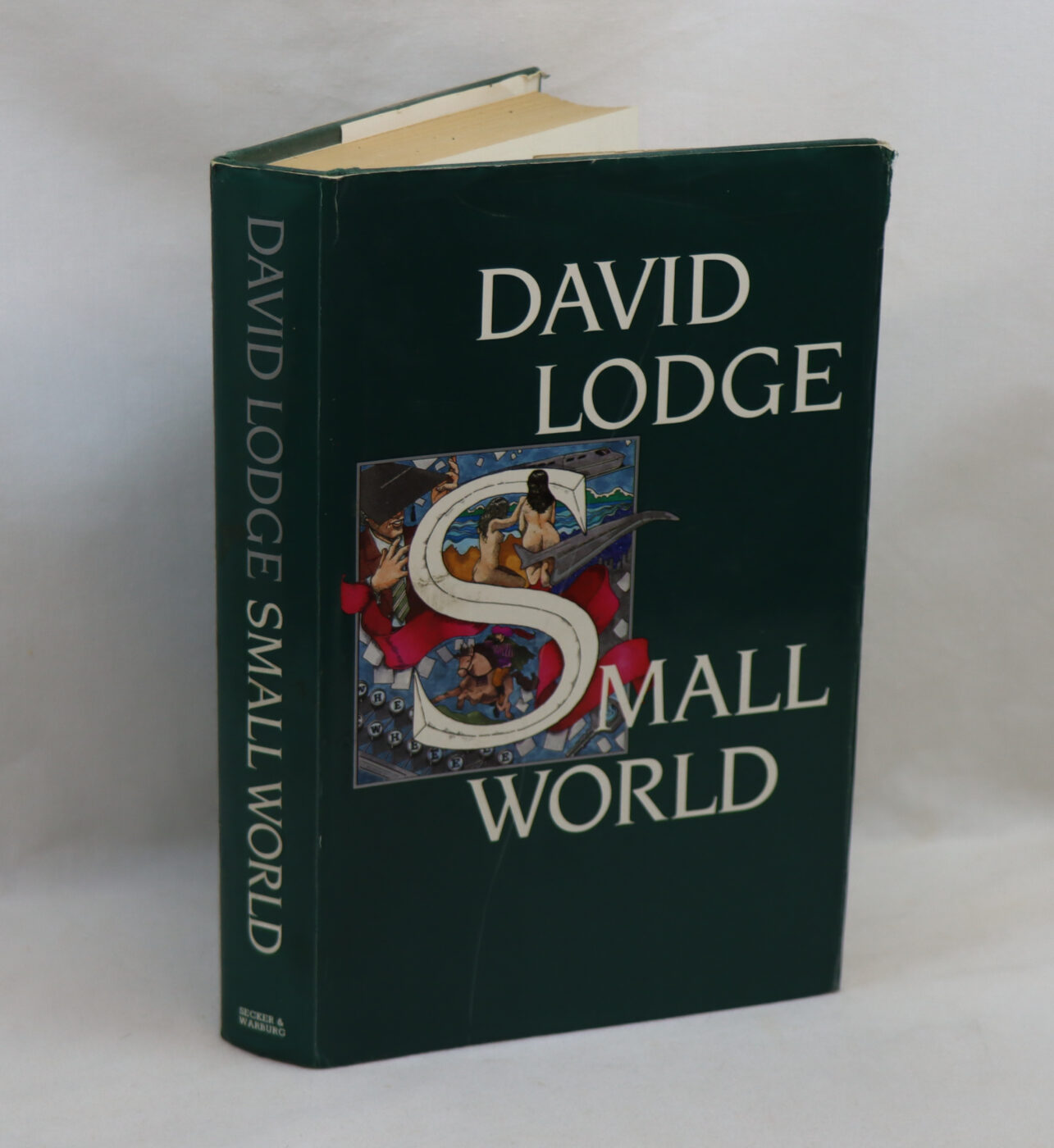
Small World.
By David Lodge
ISBN: 9780099554165
Printed: 1984
Publisher: Secker & Warburg. London
| Dimensions | 15 × 23 × 3 cm |
|---|---|
| Language |
Language: English
Size (cminches): 15 x 23 x 3
Condition: Fair (See explanation of ratings)
£22.00
Buy Now
Your items

Item information
Description
In the original dust cover. Green cloth binding with gilt title on the spine.
We provide an in-depth photographic presentation of this item to stimulate your feeling and touch. More traditional book descriptions are immediately available
- Note: This book carries a £5.00 discount to those that subscribe to the F.B.A. mailing list
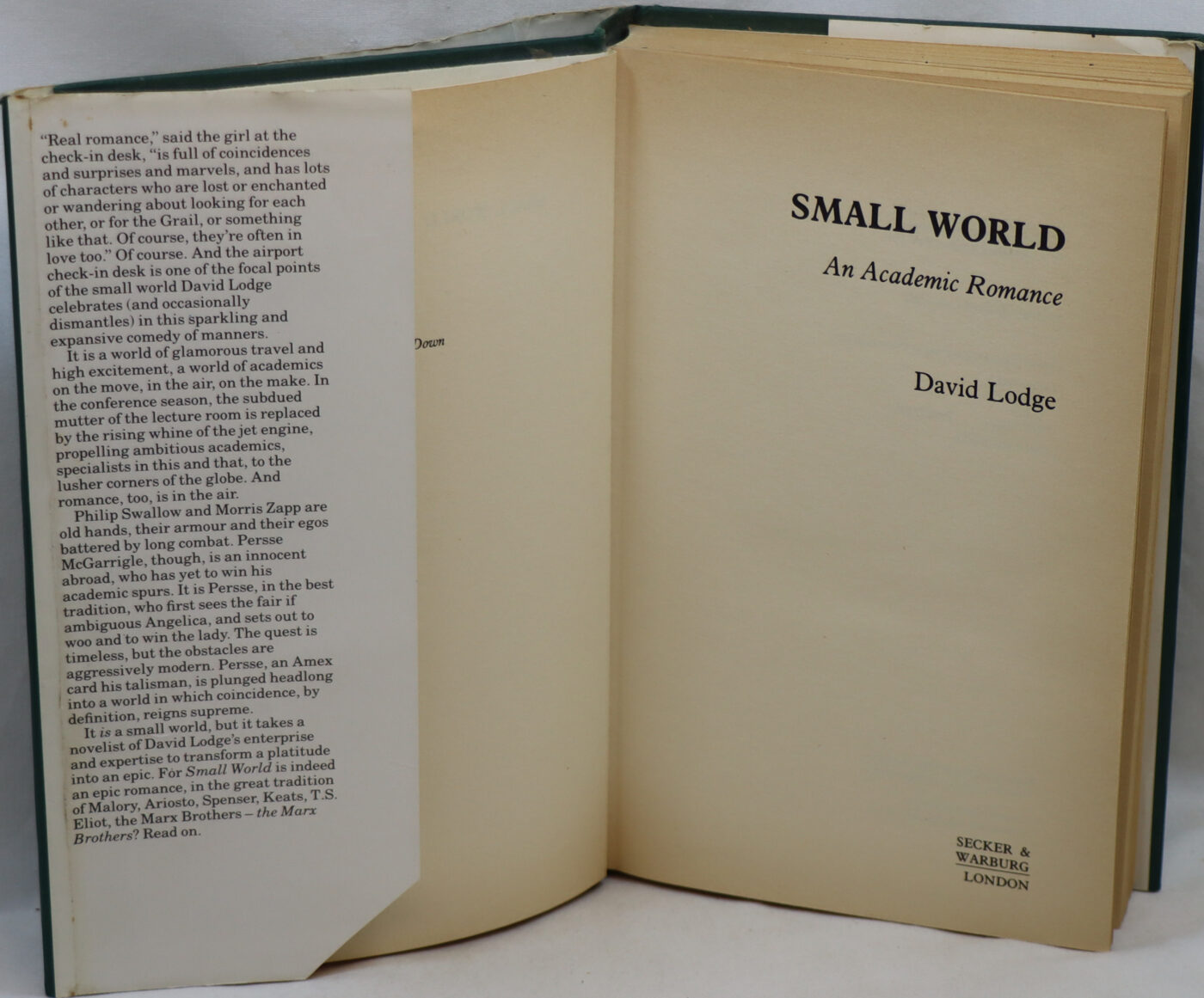
Philip Swallow, Morris Zapp, Persse McGarrigle and the lovely Angelica are the jet-propelled academics who are on the move, in the air and on the make in David Lodge’s satirical Small World. It is a world of glamorous travel and high excitement, where stuffy lecture rooms are swapped for lush corners of the globe, and romance is in the air.
Reviews
-
- The most brilliant and also the funniest novel that he has written ― London Review of Books
- Ingenious and proliferate plotting…a new comic debacle over every page ― The Times
- Academic infightings, couplings, touching, funny and frightful set pieces, dark humour, sharp wit and plain farce – here is everything one expects from this author but thricefold and three times as entertaining as anything he has written before ― Sunday Telegraph
- A wonderful tissue of outrageous coincidences and correspondences, teasing elevations of suspense and delayed climaxes ― Observer
- I have read most of Lodges books and enjoyed them. They concentrate on what he knows best; life in universities and all the rivalries over work and sex. This one I enjoyed much less Perhaps because the characters were less believable and the situation of flying around the world to conferences appeared indulgent and out of step with the reality of post Thatcher university cut backs.
David Lodge (CBE)’s novels include Changing Places, Small World and Nice Work (shortlisted for the Booker) and, most recently, A Man of Parts. He has also written plays and screenplays, and several books of literary criticism. His works have been translated into more than thirty languages. He is Emeritus Professor of English Literature at Birmingham, a Fellow of the Royal Society of Literature, and is a Chevalier de l’Ordre des Arts et des Lettres.
NOTE: This is an original book from the library gathered by the famous Cambridge Don, computer scientist, food and wine connoisseur, Jack Arnold LANG. Note: Jack founded the Michelin Guide ‘Midsummer House’- Cambridge’s paramount restaurant. This dining experience is hidden amongst the grassy pastures and grazing cattle of Midsummer Common and perched on the banks of the River Cam.
In 2008, Jack was one of the co-founders of the Raspberry Pi Foundation, alongside other members of the Department, and acted as the Foundation’s Chair. The project’s original goals were modest: to build and distribute low-cost computers for prospective applicants to our Computer Science degree. Initially the project was a “success disaster”, as Jack would say, as demand far outstripped the low-scale manufacturing plans. Ultimately the Raspberry Pi became the UK’s most successful computer with more than 60 million sold to date. Jack was drawn to the educational possibilities of the Raspberry Pi, its potential uses in emerging economies and the way it could support self-directed learning.
Want to know more about this item?
We are happy to answer any questions you may have about this item. In addition, it is also possible to request more photographs if there is something specific you want illustrated.
Ask a question
Related products


Share this Page with a friend
