
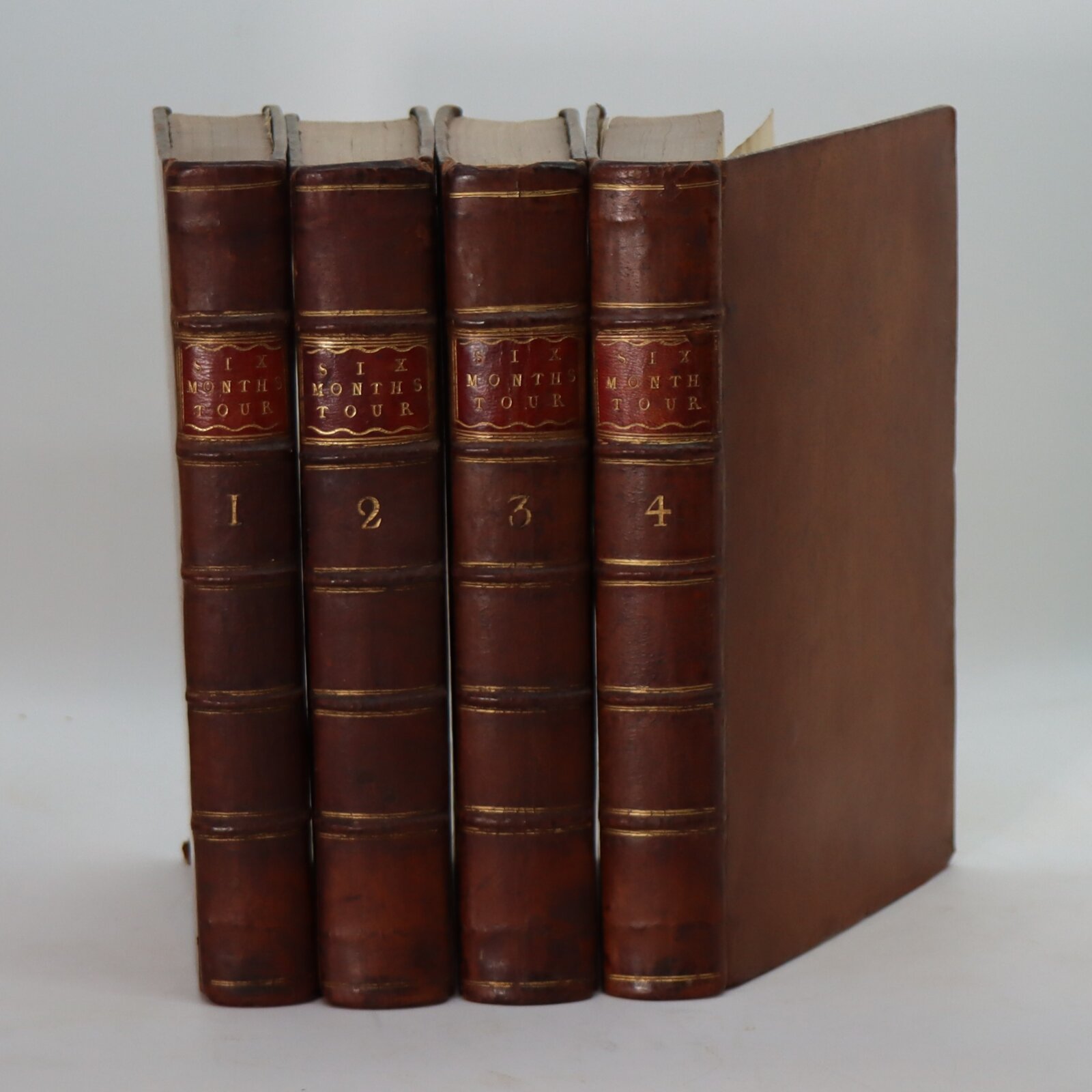
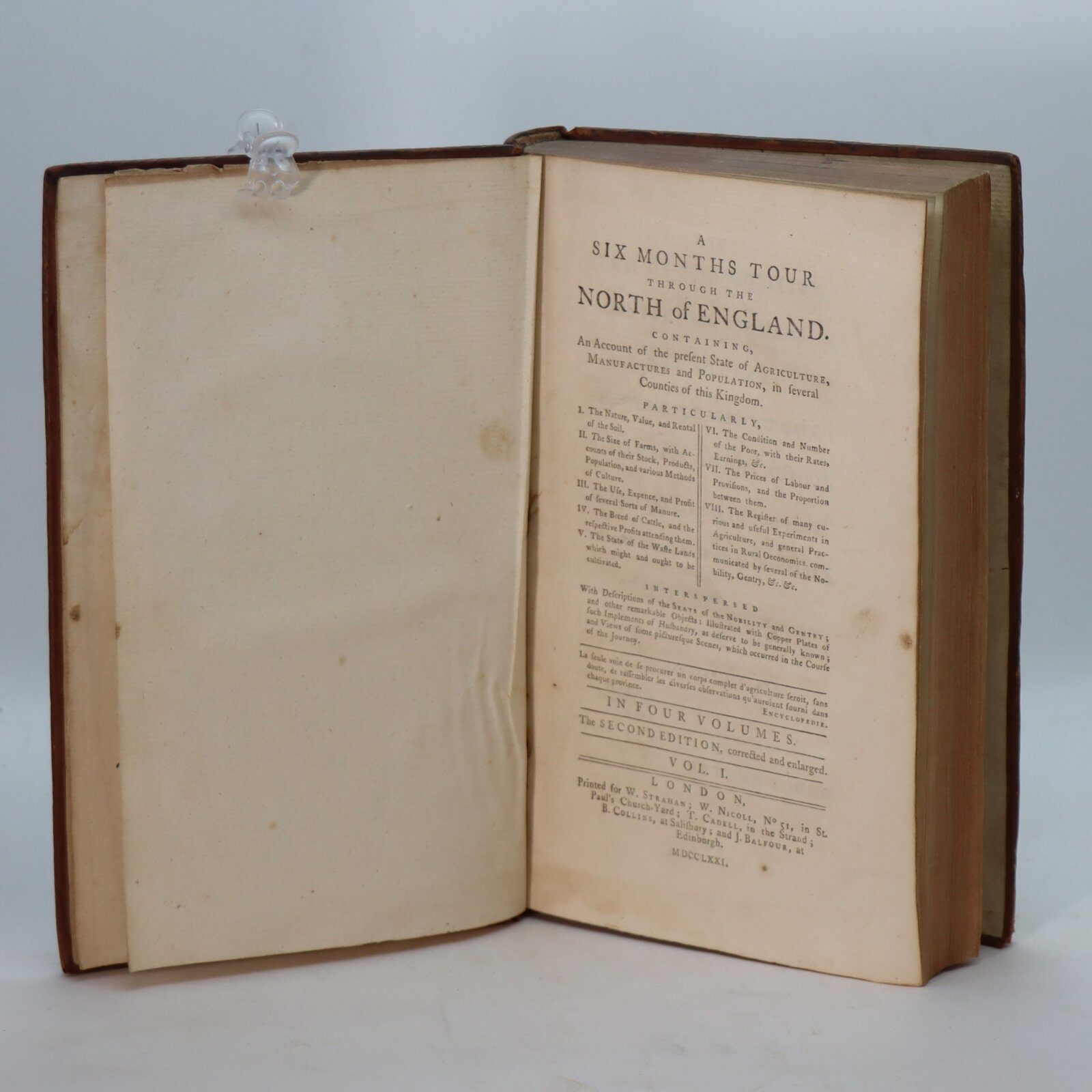
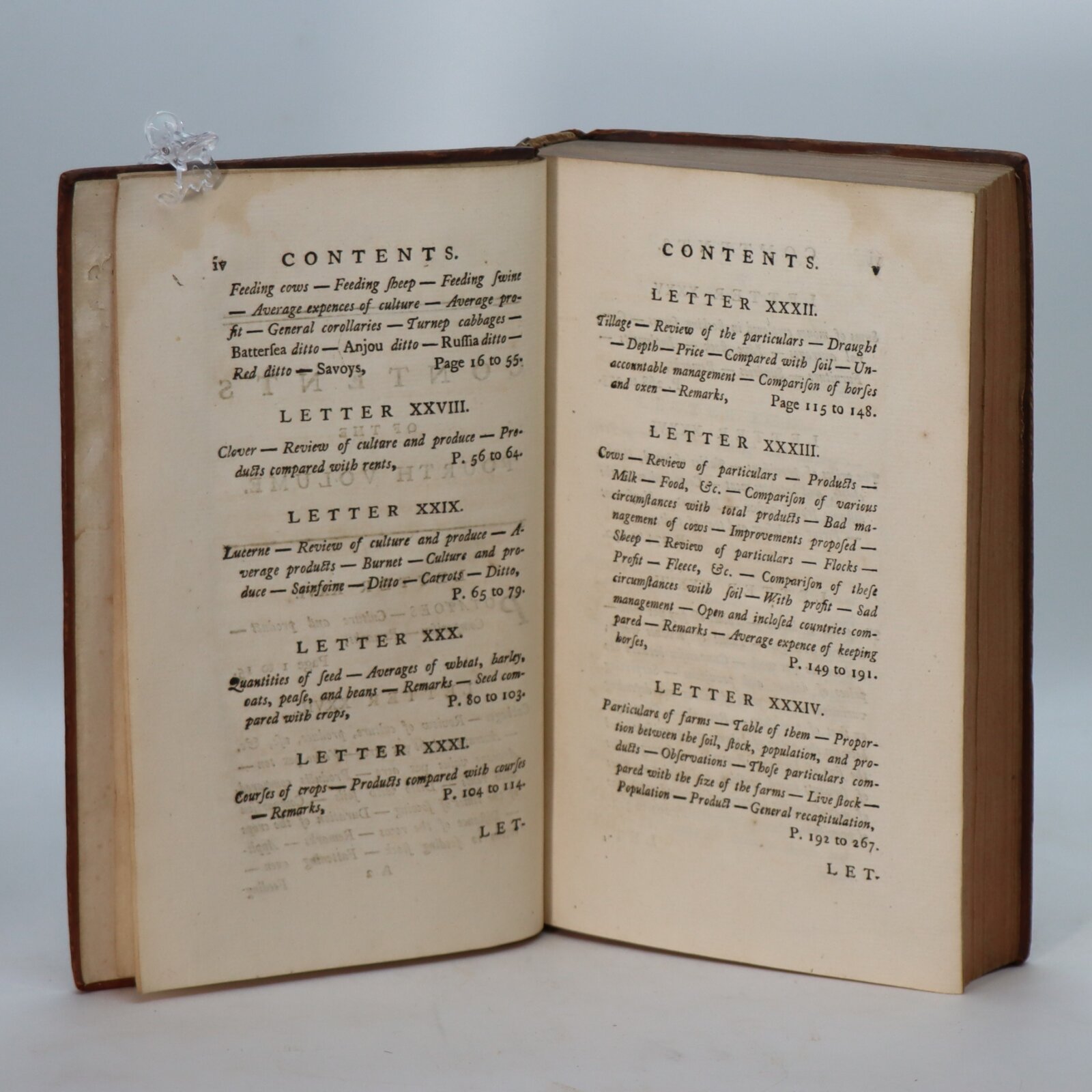
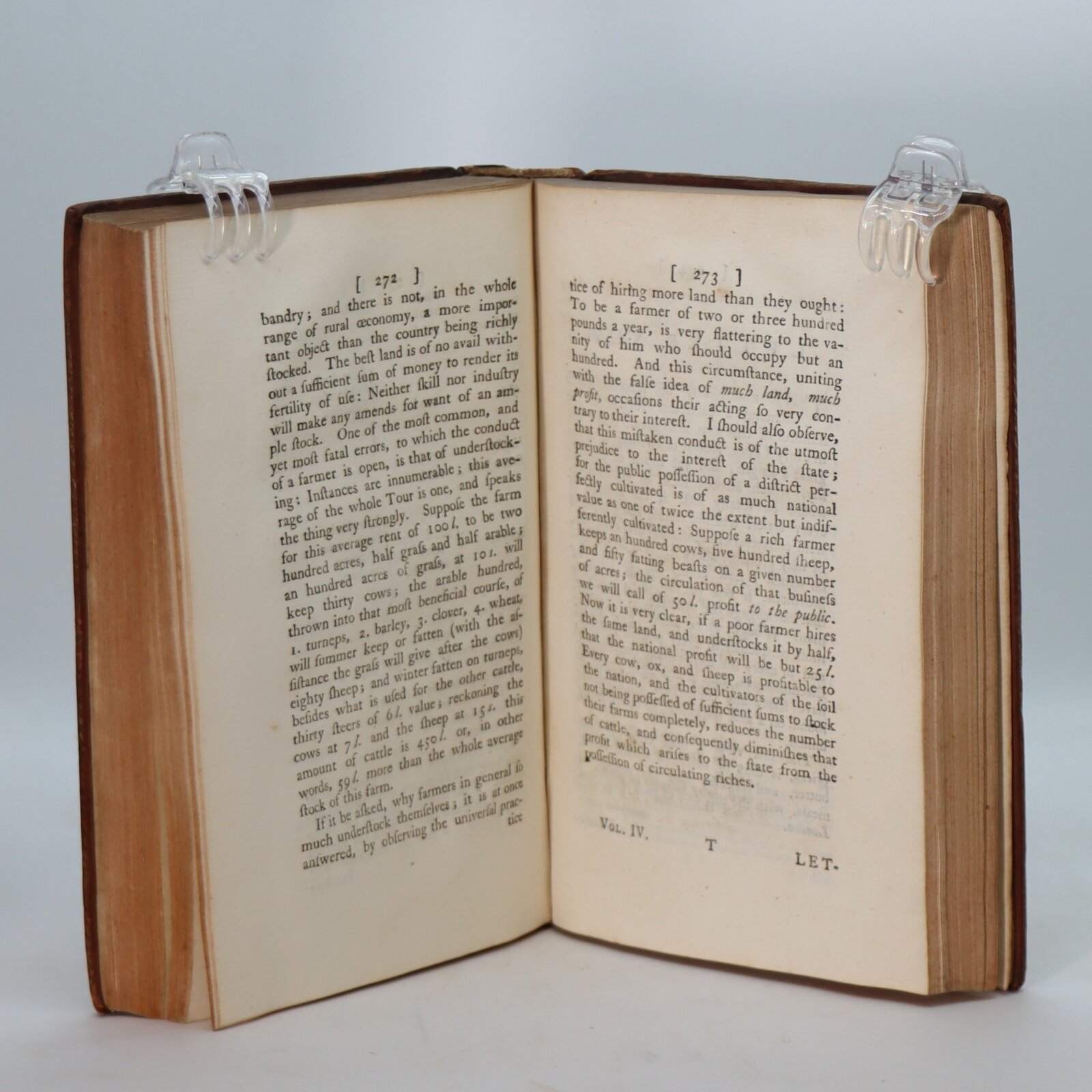
Six Month Tour. Volumes 1, 2, 3 & 4.
By Arthur Young
Printed: 1771
Publisher: W Strahan W Nichol. London
| Dimensions | 14 × 21 × 4 cm |
|---|---|
| Language |
Language: English
Size (cminches): 14 x 21 x 4
Condition: Fine (See explanation of ratings)
THIS ITEM WILL BE AVAILABLE SOON
SORRY, THIS ITEM HAS SOLD
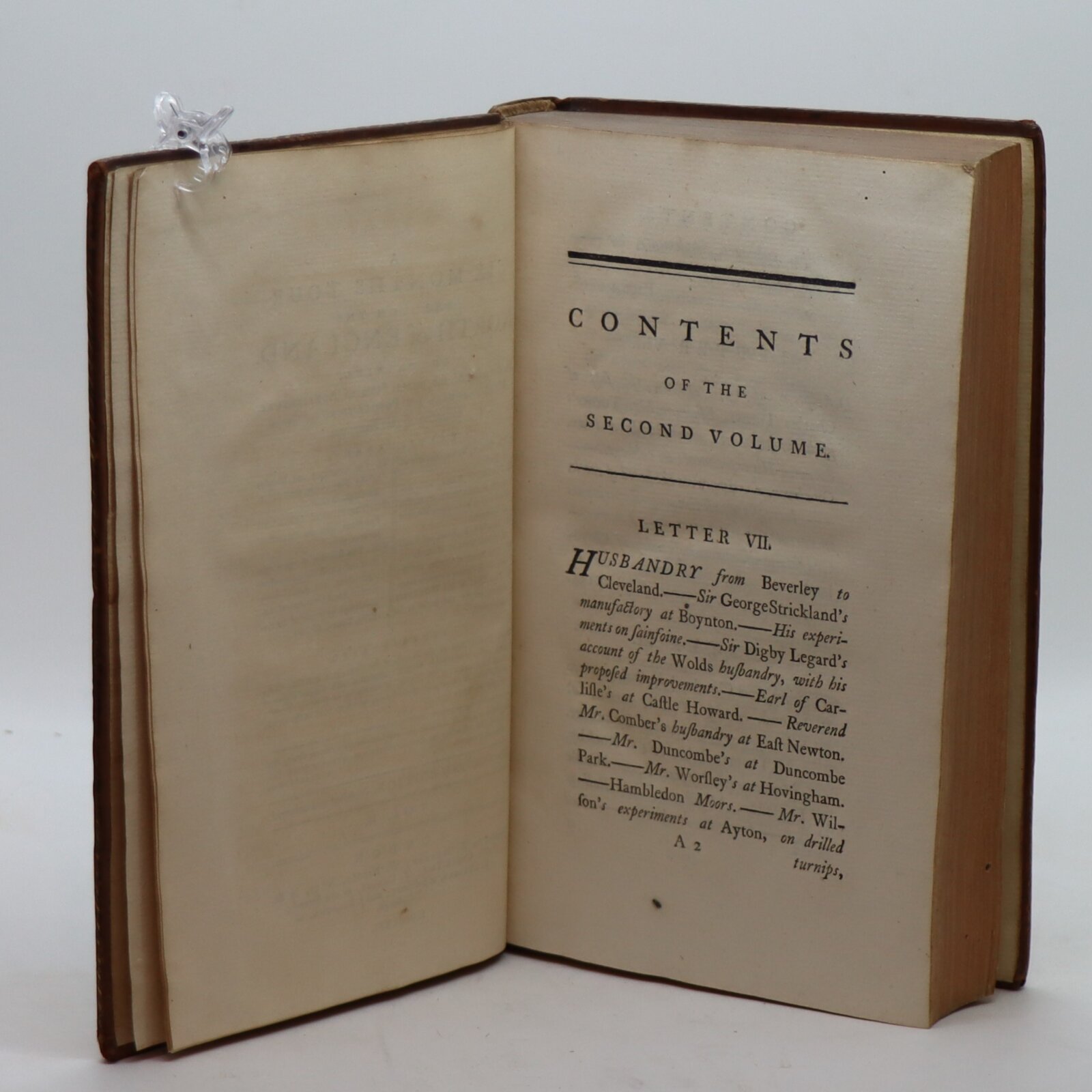
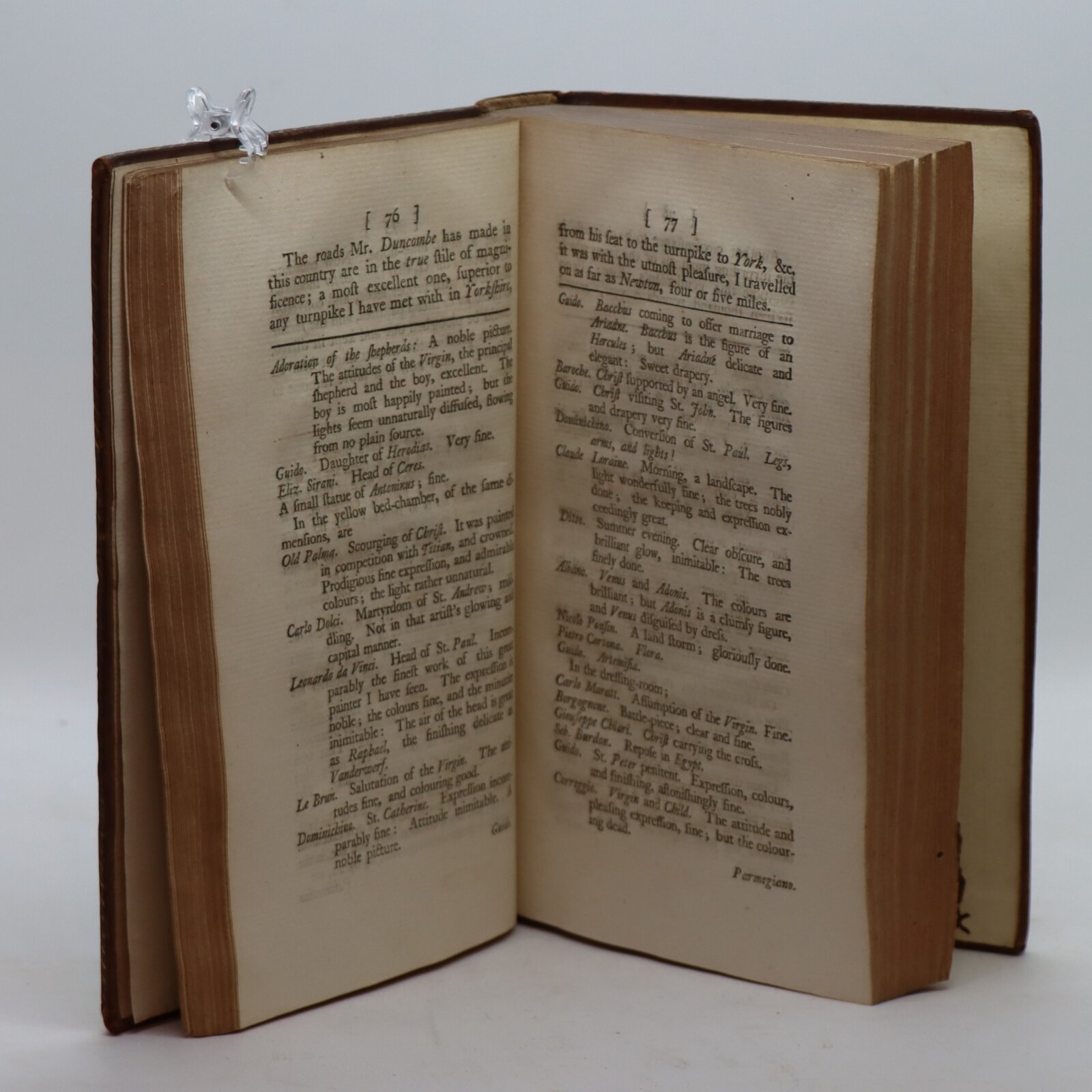
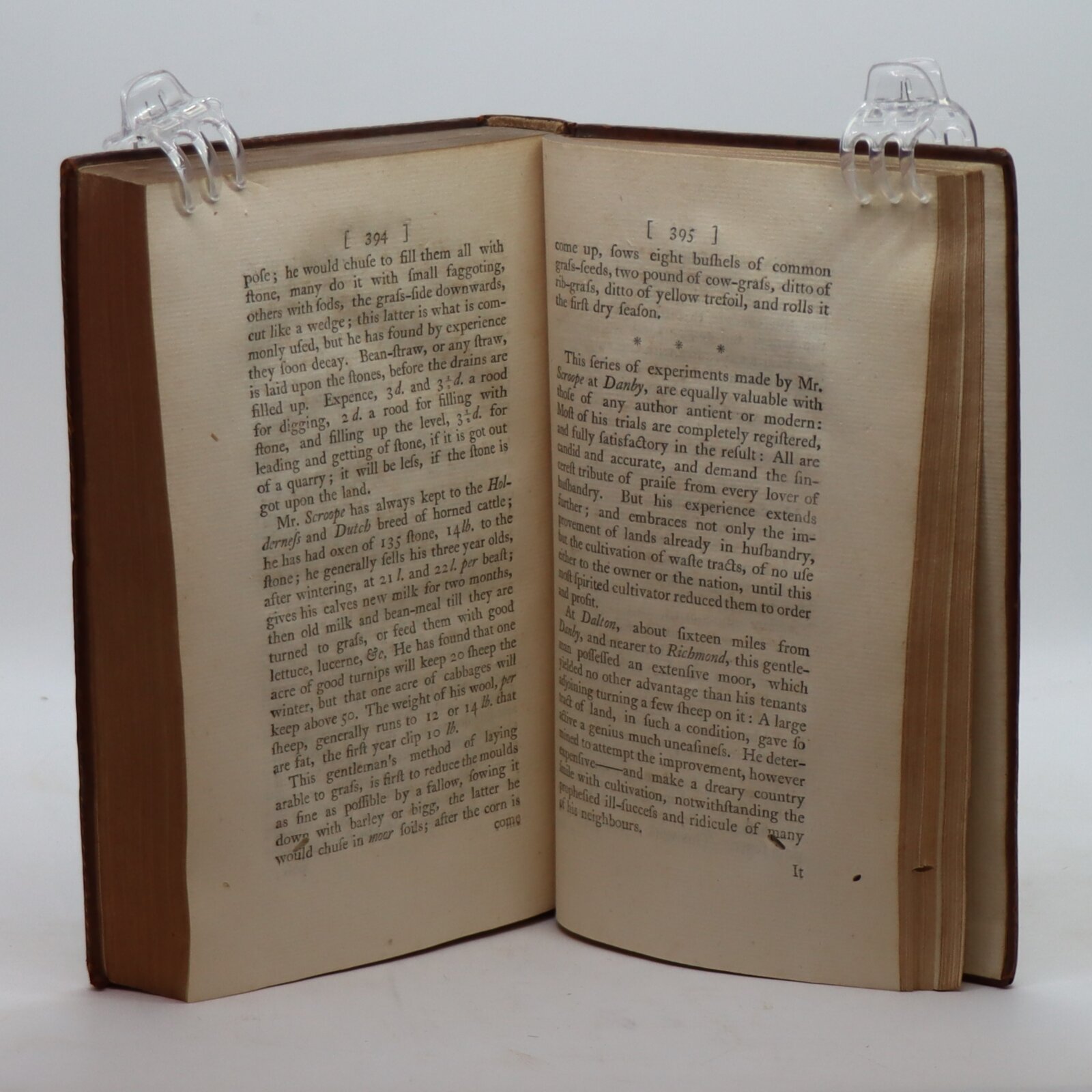
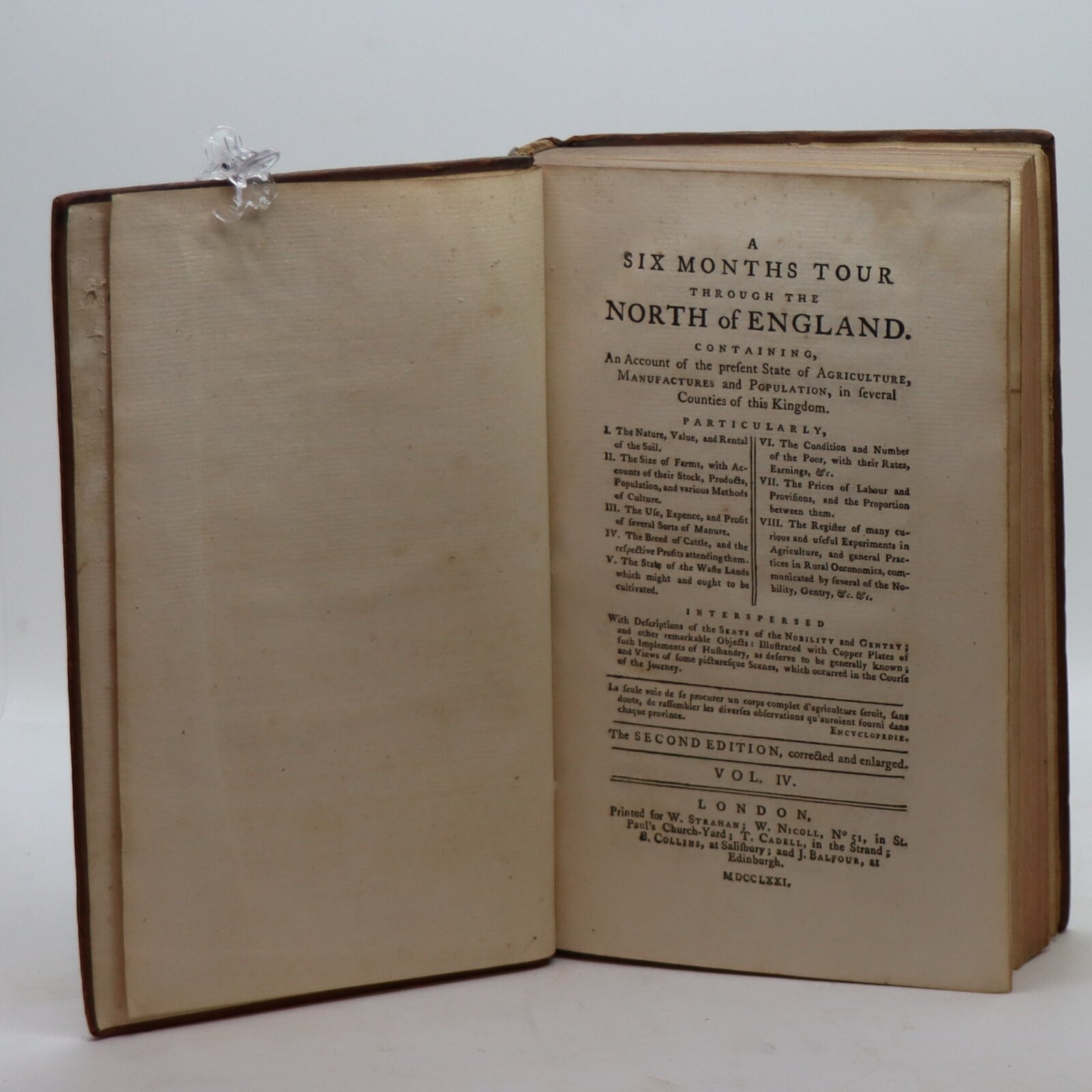
Item information
Description
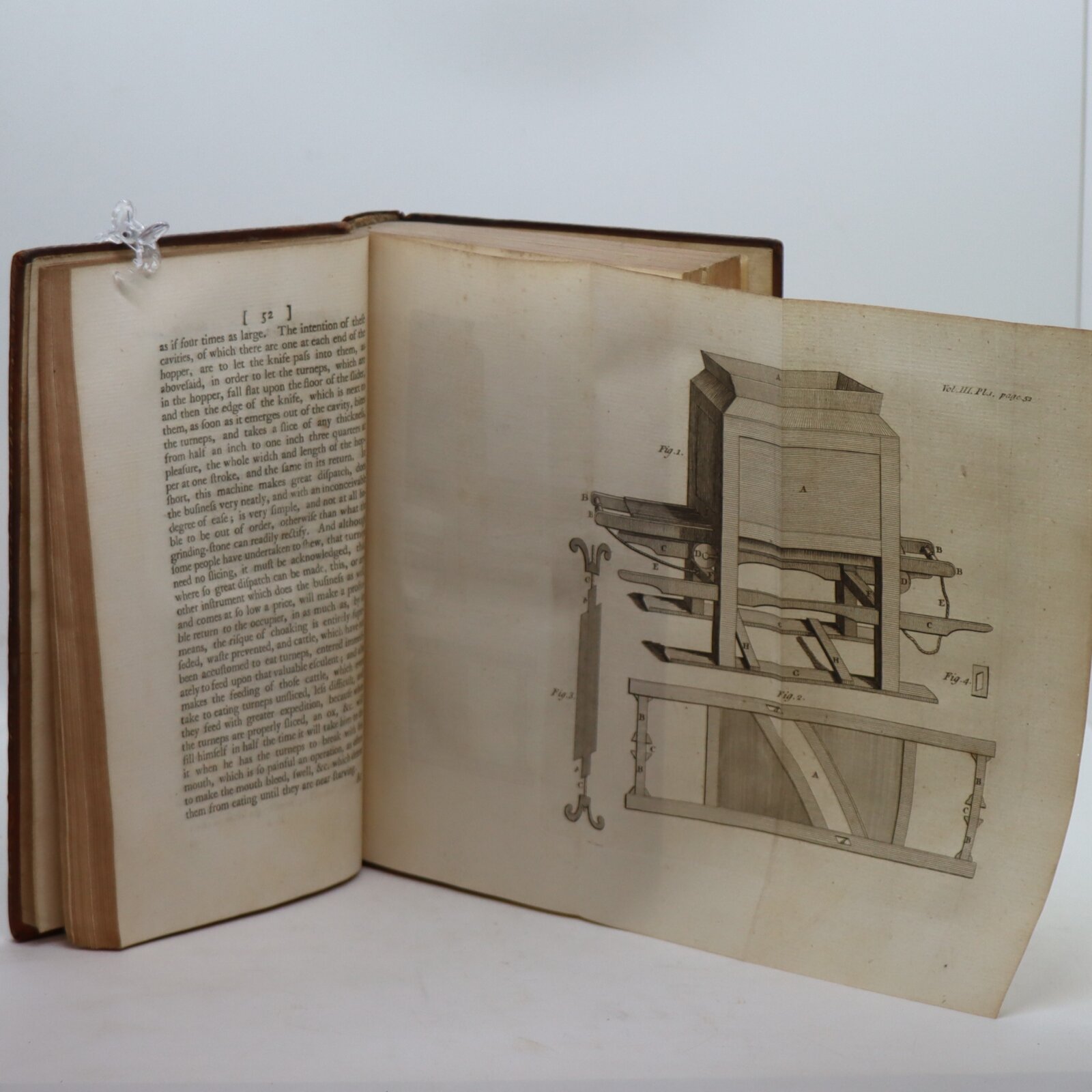
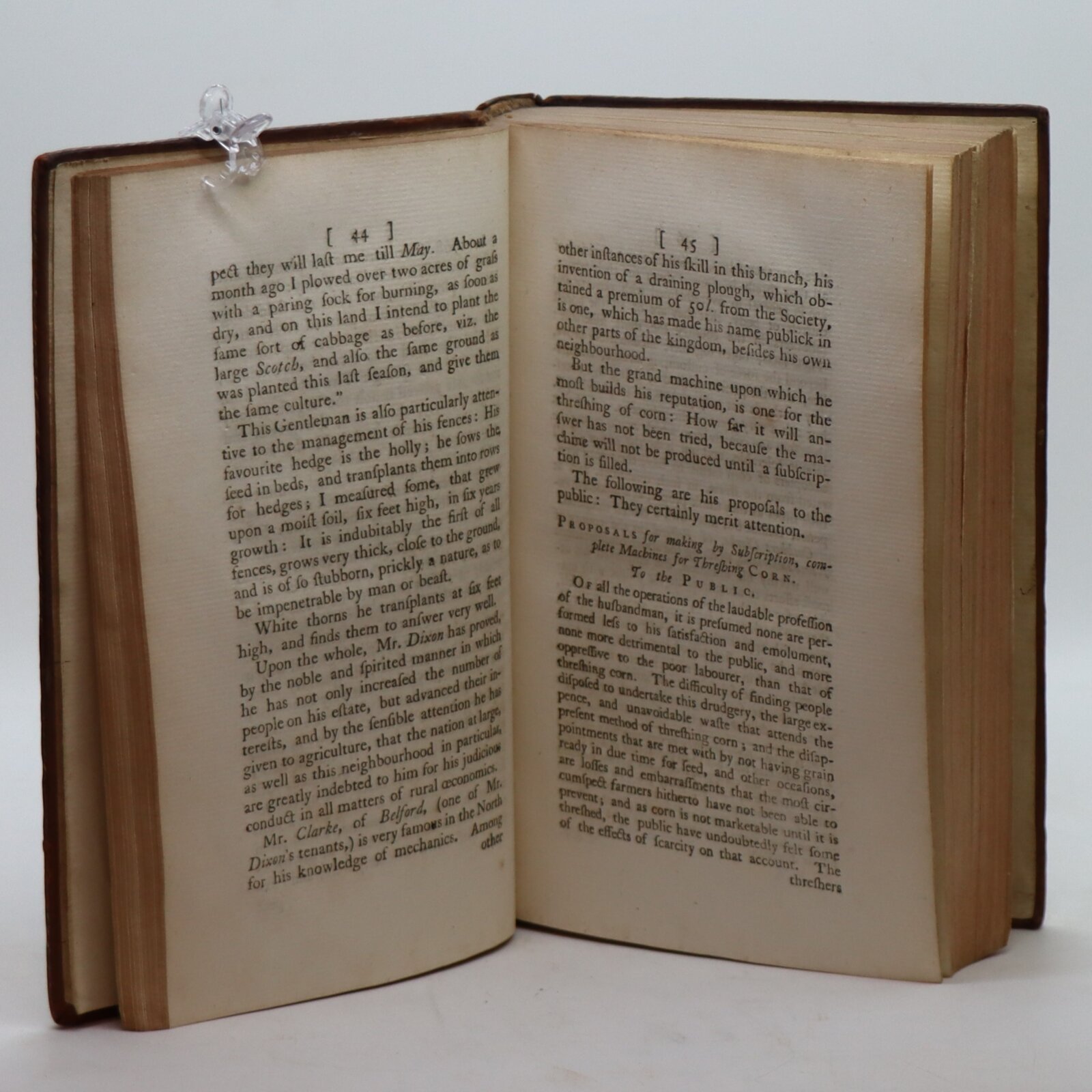
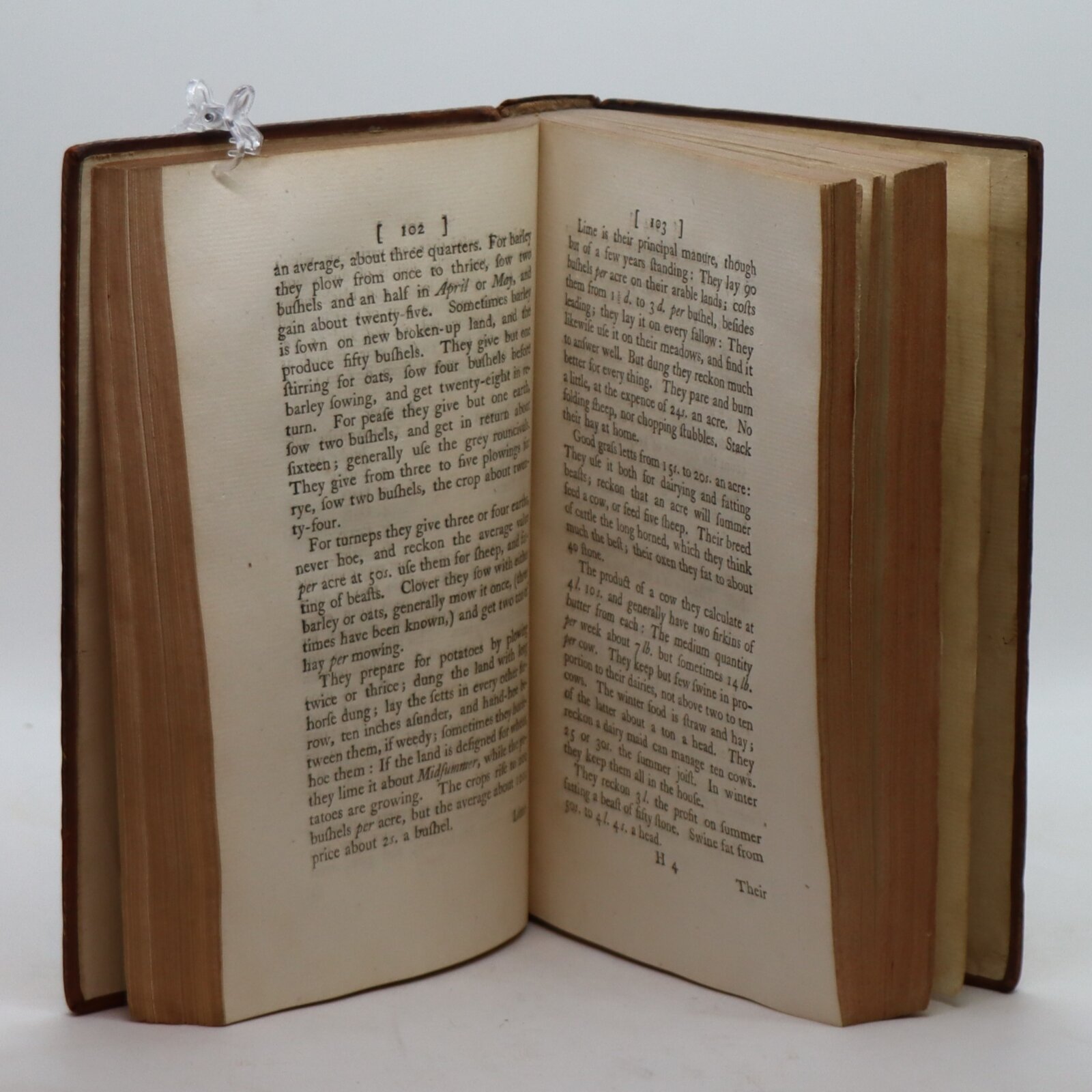
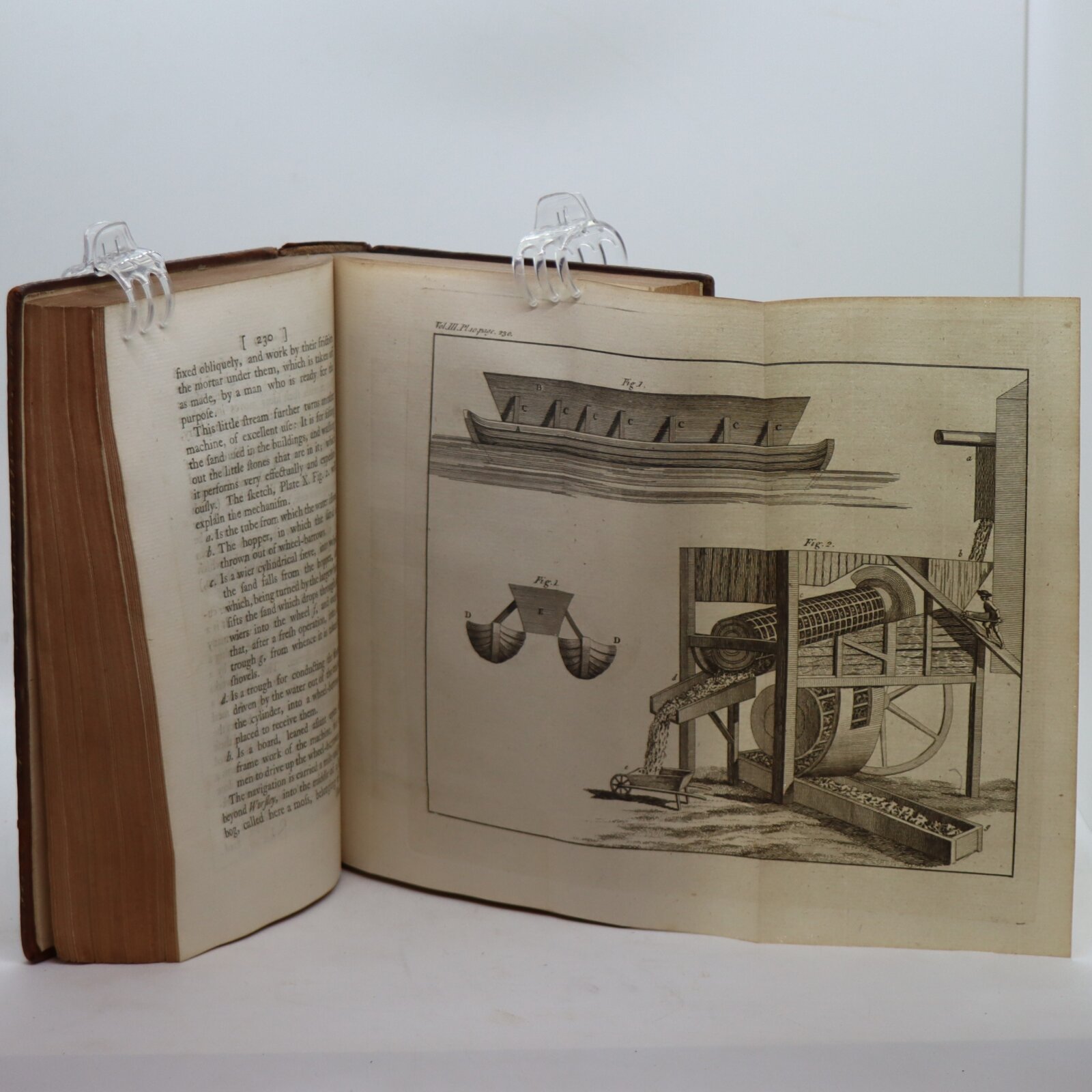
Full tan leather with red title plate, raised gilt banding with gilt lettering. Dimensions are for one volume.
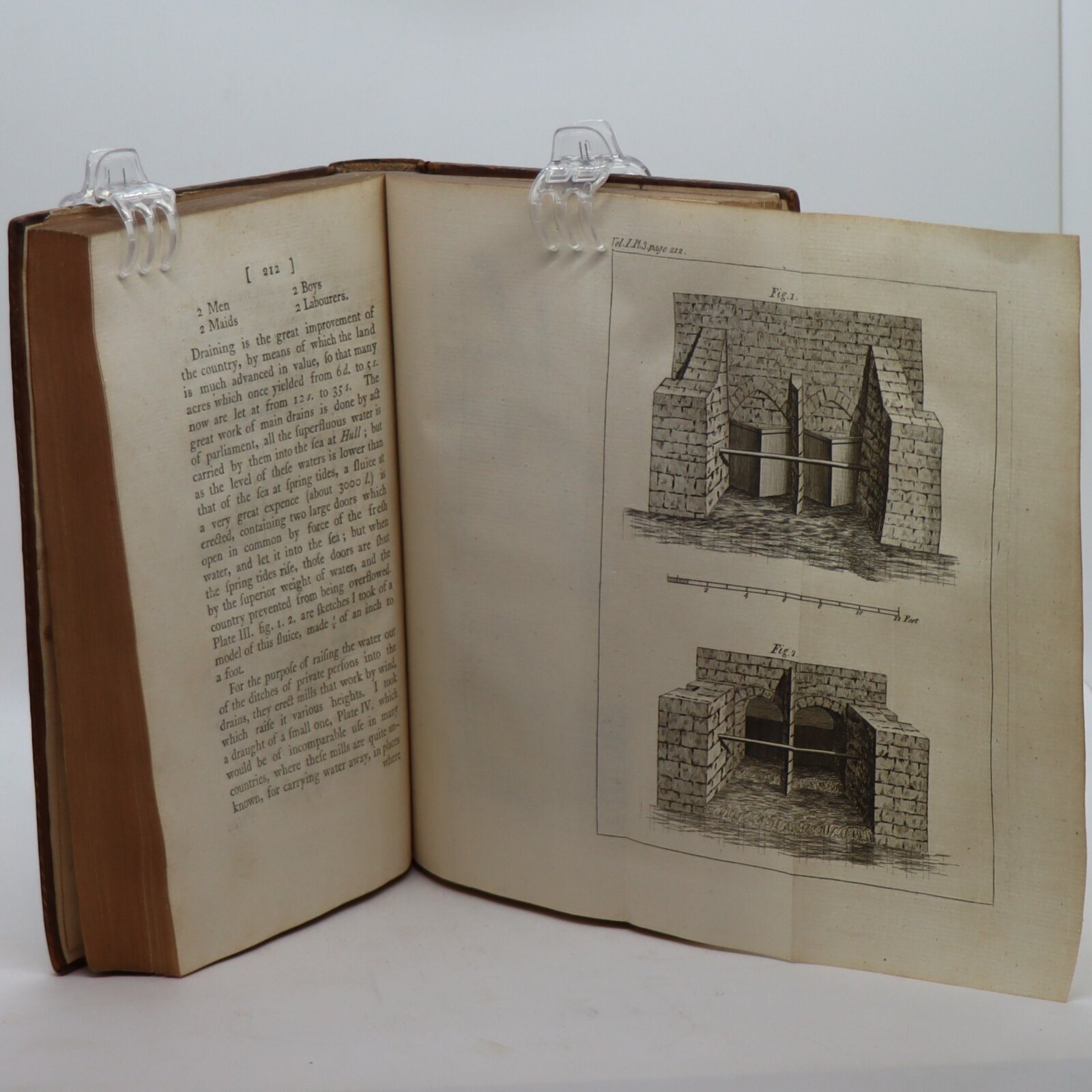
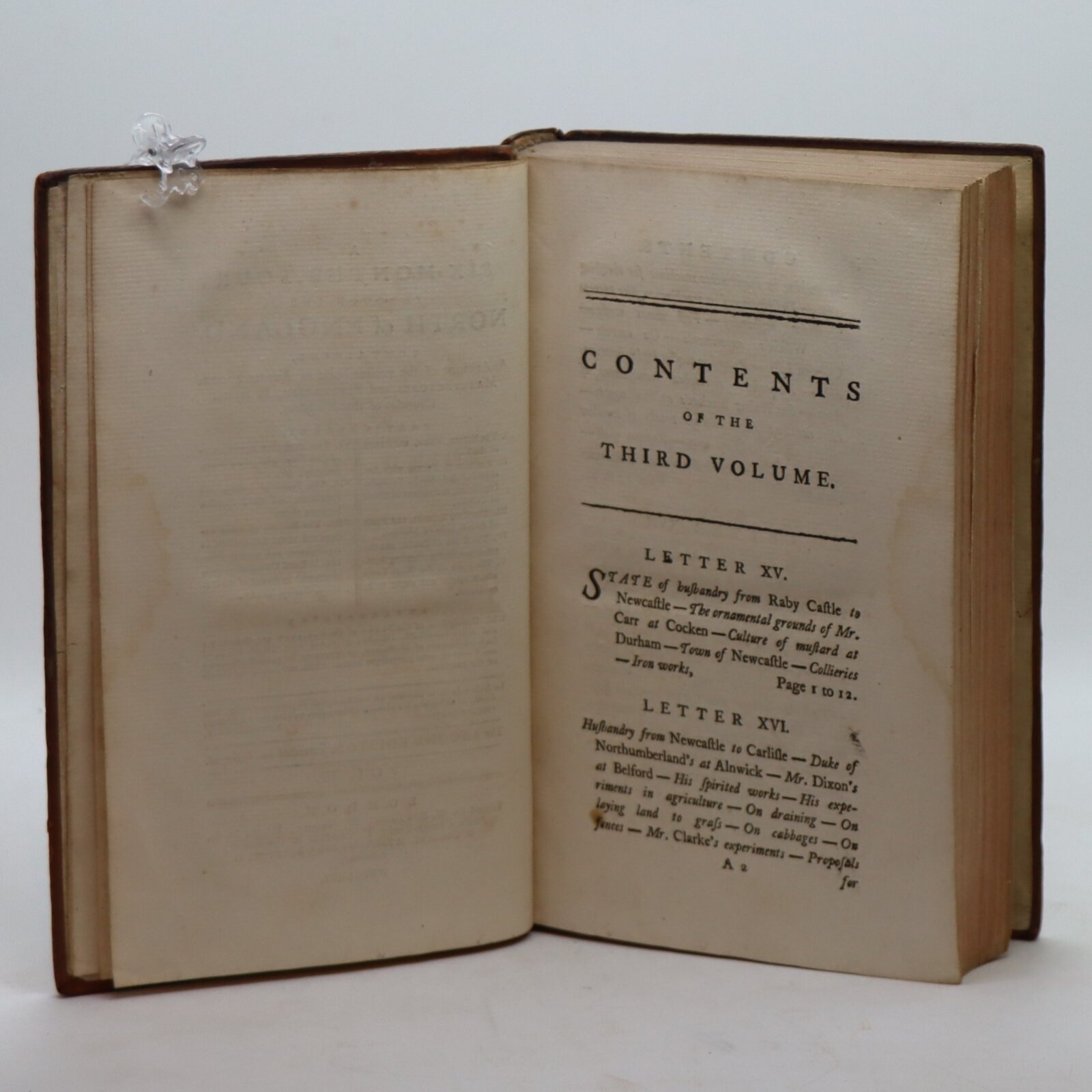
F.B.A. provides an in-depth photographic presentation of this item to stimulate your feel and touch. More traditional book descriptions are immediately available.
The Second Edition is oft regarded as the Best
Arthur Young (11 September 1741 – 12 April 1820) was an English agriculturist. Not himself successful as a farmer, he built on connections and activities as a publicist a substantial reputation as an expert on agricultural improvement. After the French Revolution of 1789, his views on its politics carried weight as an informed observer, and he became an important opponent of British reformers. Young is considered a major English writer on agriculture, although he is best known as a social and political observer. Also read widely were his Tour in Ireland (1780) and Travels in France (1792).
Young influenced contemporary observers of economic and social life, such as Frederick Morton Eden and Sir John Sinclair. He was influential too on the American improver John Beale Bordley.
More recently Young has been studied for his methods of investigation. Richard Stone (1997) presents him as a pioneer national income statistician, continuing the work of Gregory King, who had lived a century before. Young produced three estimates of the national income of England: in his Tour through the North of England, Farmer’s Tour through the East of England and Political Arithmetic. Brunt (2001) emphasises how Young collected his information, and presents him as a pioneer of sample surveys.
Condition notes
small worm hole
Want to know more about this item?
We are happy to answer any questions you may have about this item. In addition, it is also possible to request more photographs if there is something specific you want illustrated.
Ask a question



Share this Page with a friend
