
Scots Guards. Types of the British Army.
Printed: 1930
Publisher: Stevenson Clark & Co. Edinburgh
| Dimensions | 33 × 41 × 1 cm |
|---|---|
| Language |
Language: English
Size (cminches): 33 x 41 x 1
Condition: Very good (See explanation of ratings)
Please note: All prints are delivered in a sealed tube.
£56.00
Buy Now
Your items

Item information
Description
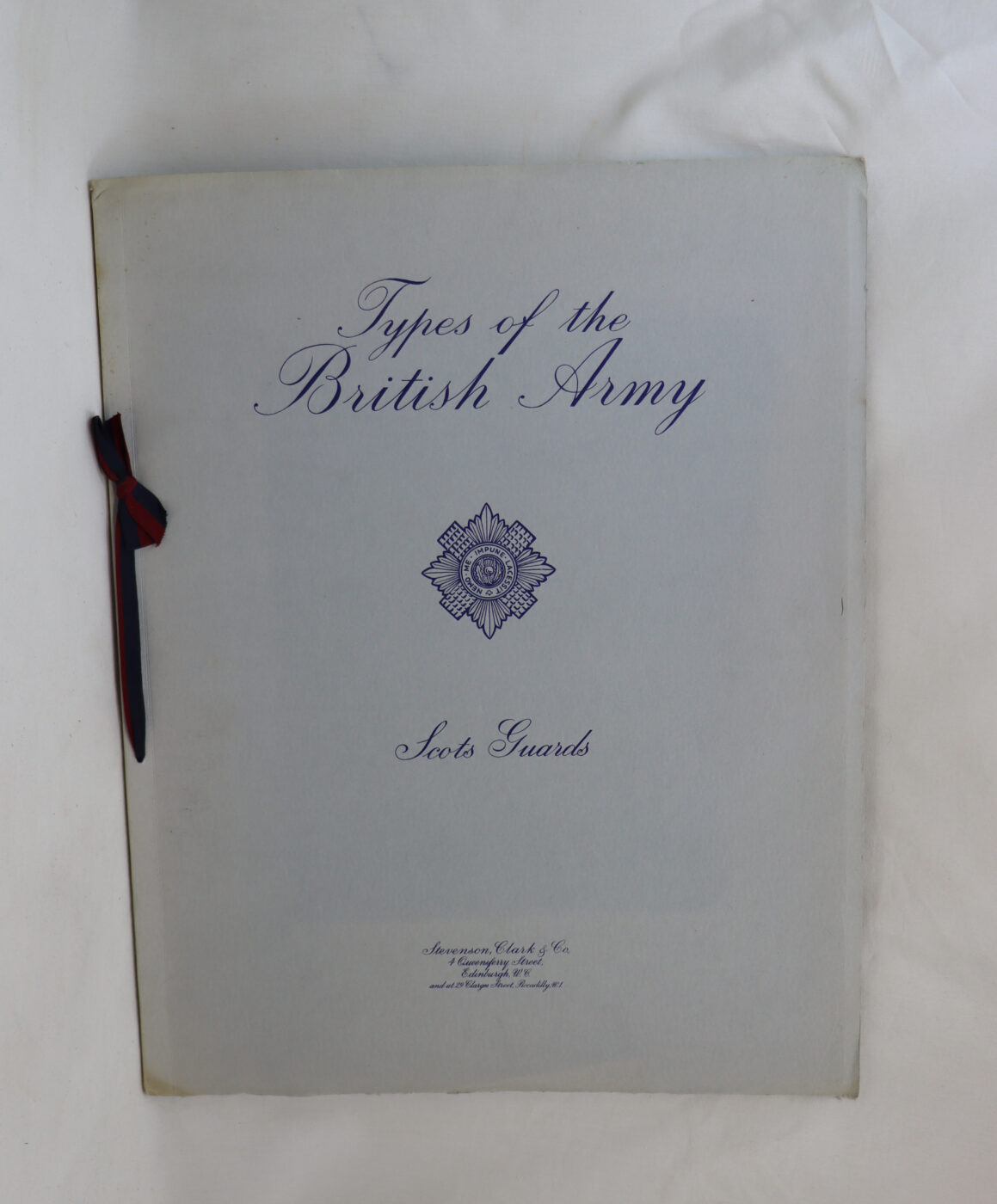
Paperback. Grey folder with navy title on the cover. spine tied with maroon and navy ribbon. Eight Atholl Prints.
- We provide an in-depth photographic presentation of this item to stimulate your feeling and touch. More traditional book descriptions are immediately available.
- Note: This book carries a £5.00 discount to those that subscribe to the F.B.A. mailing list
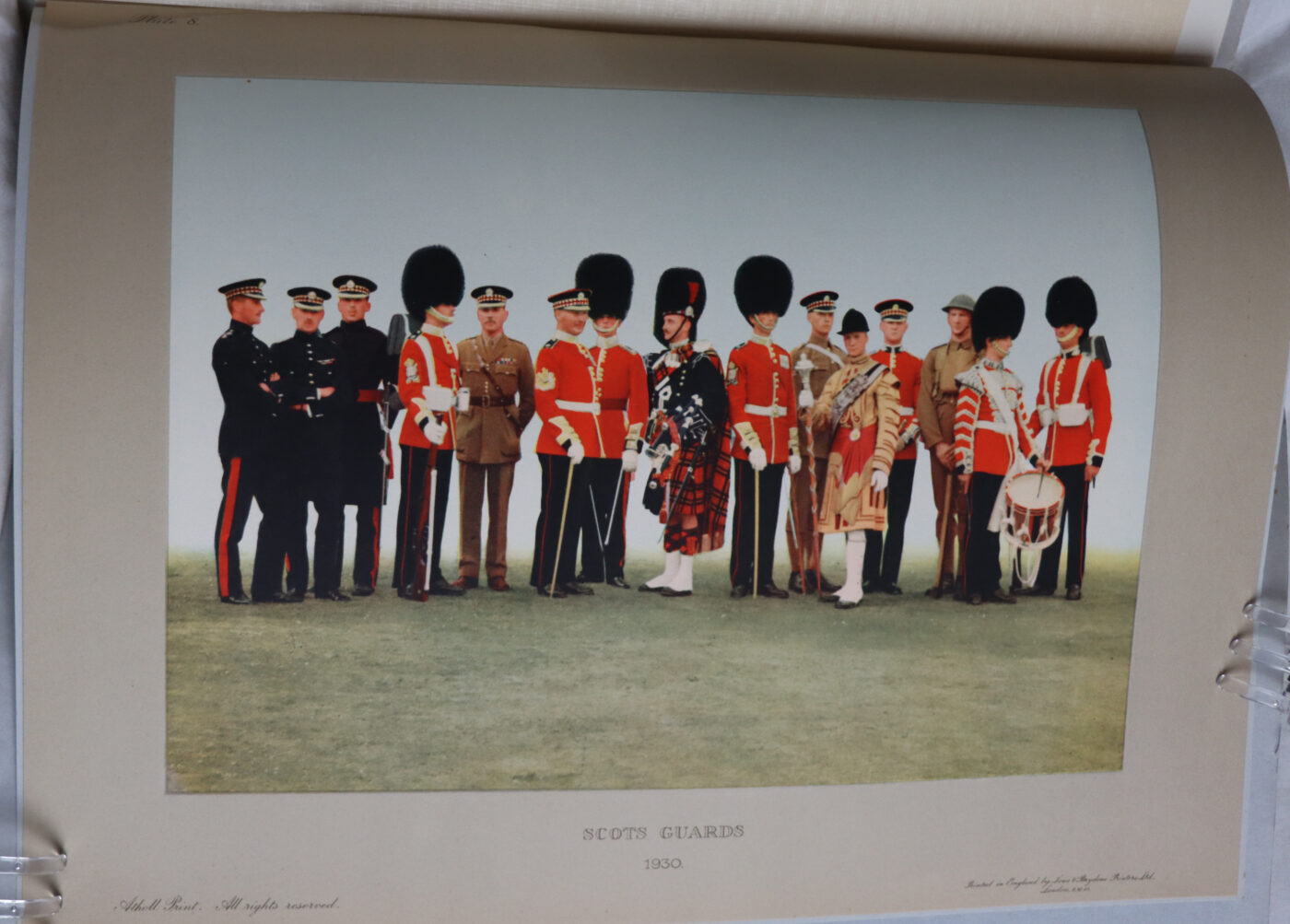
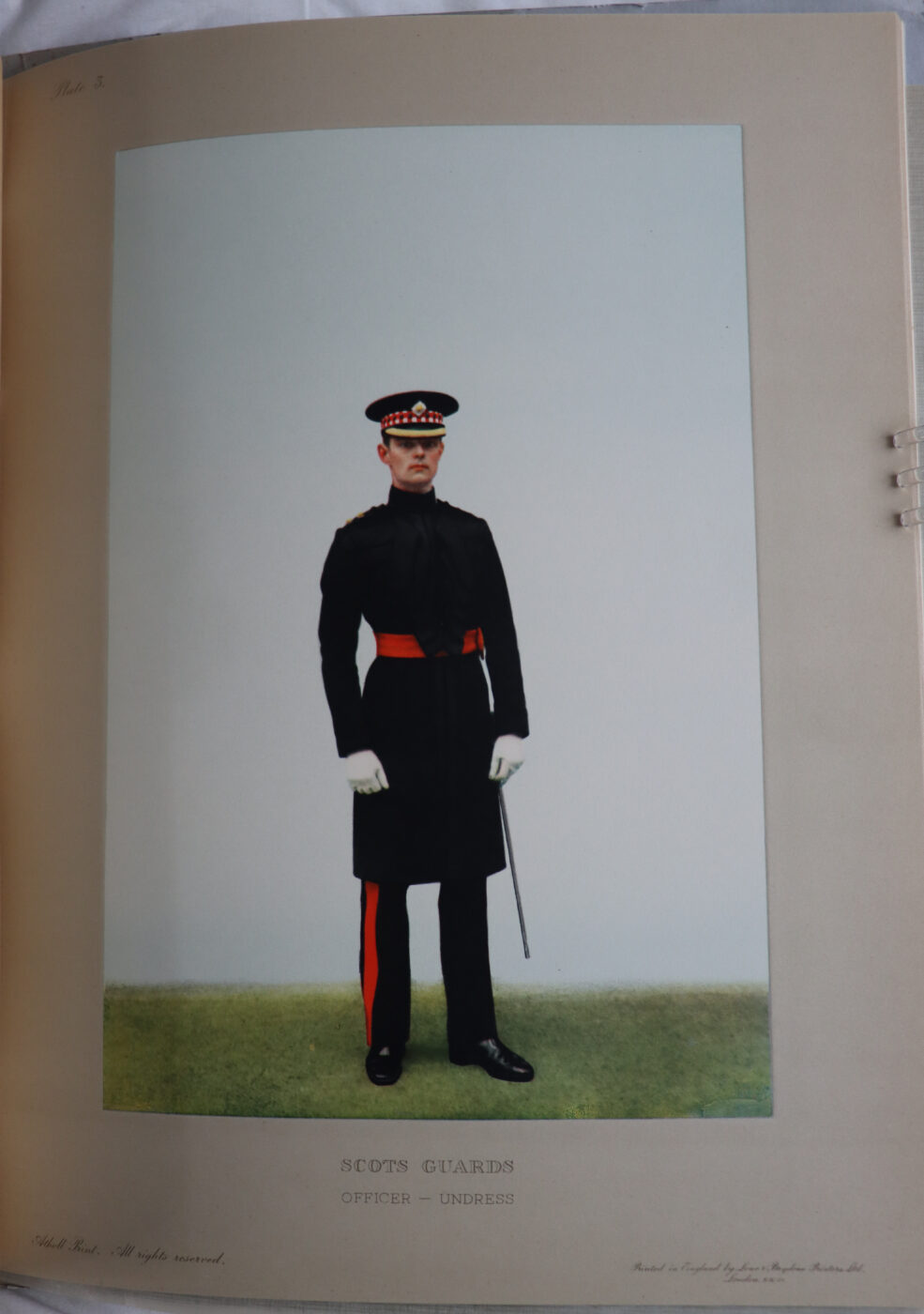
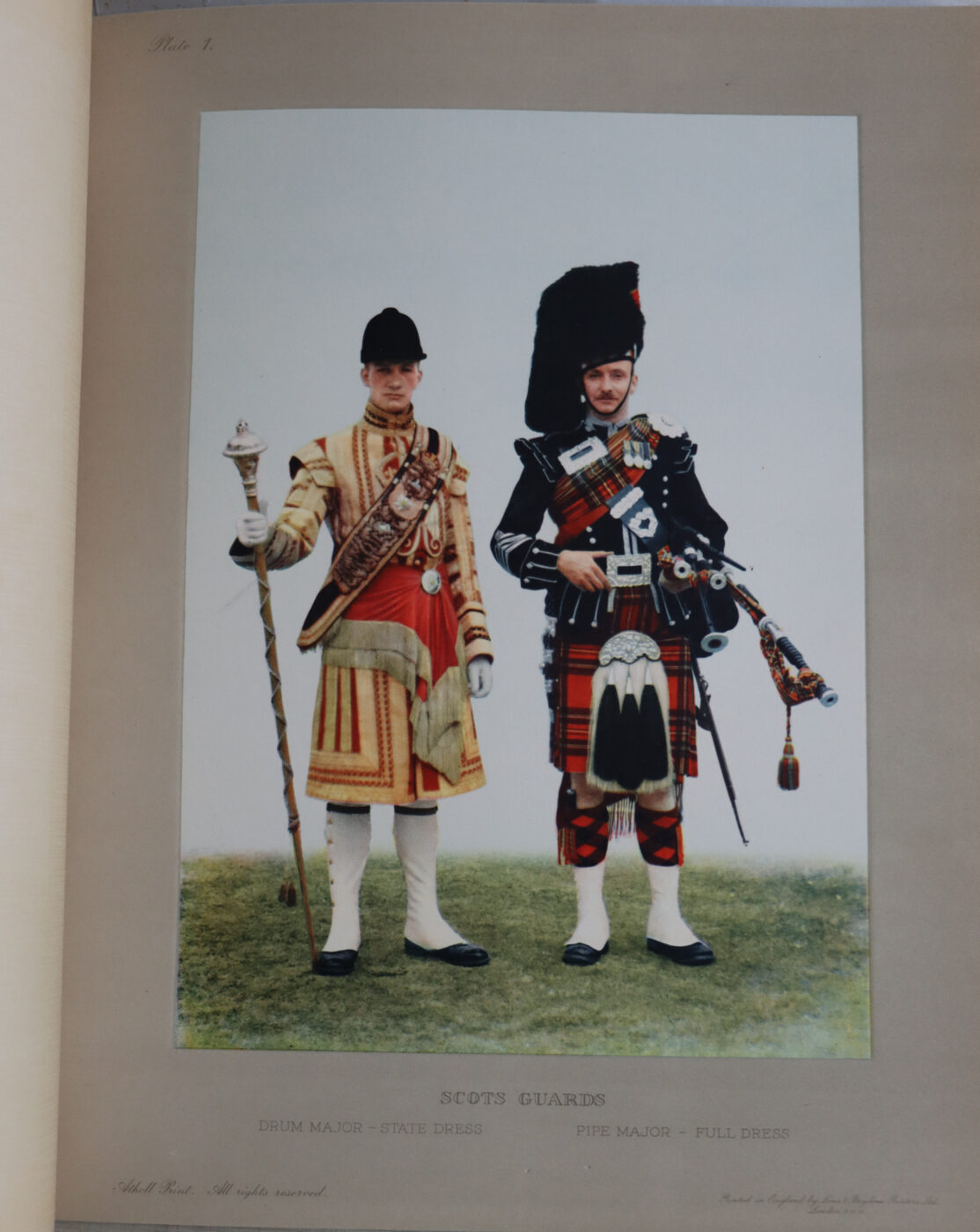
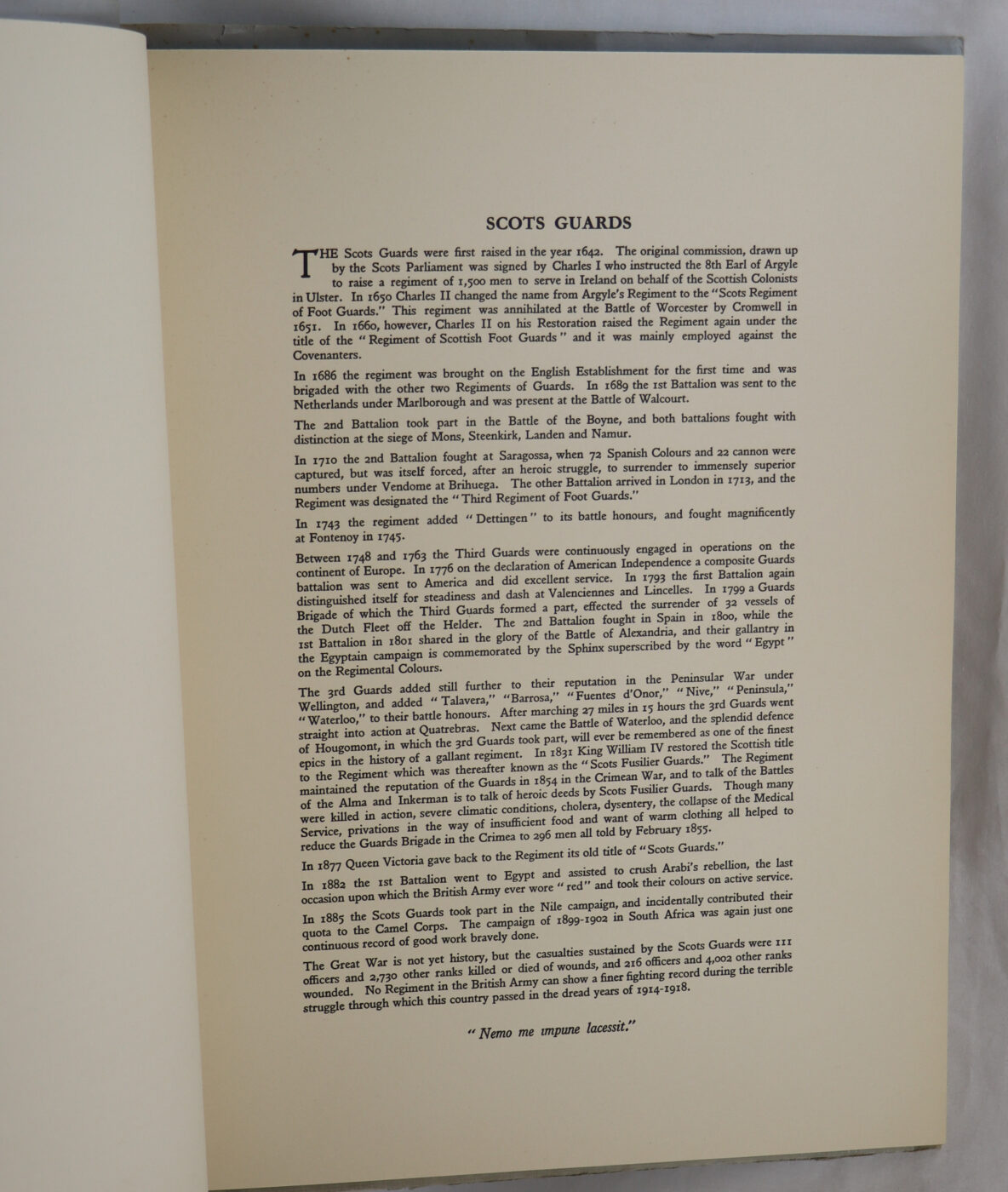
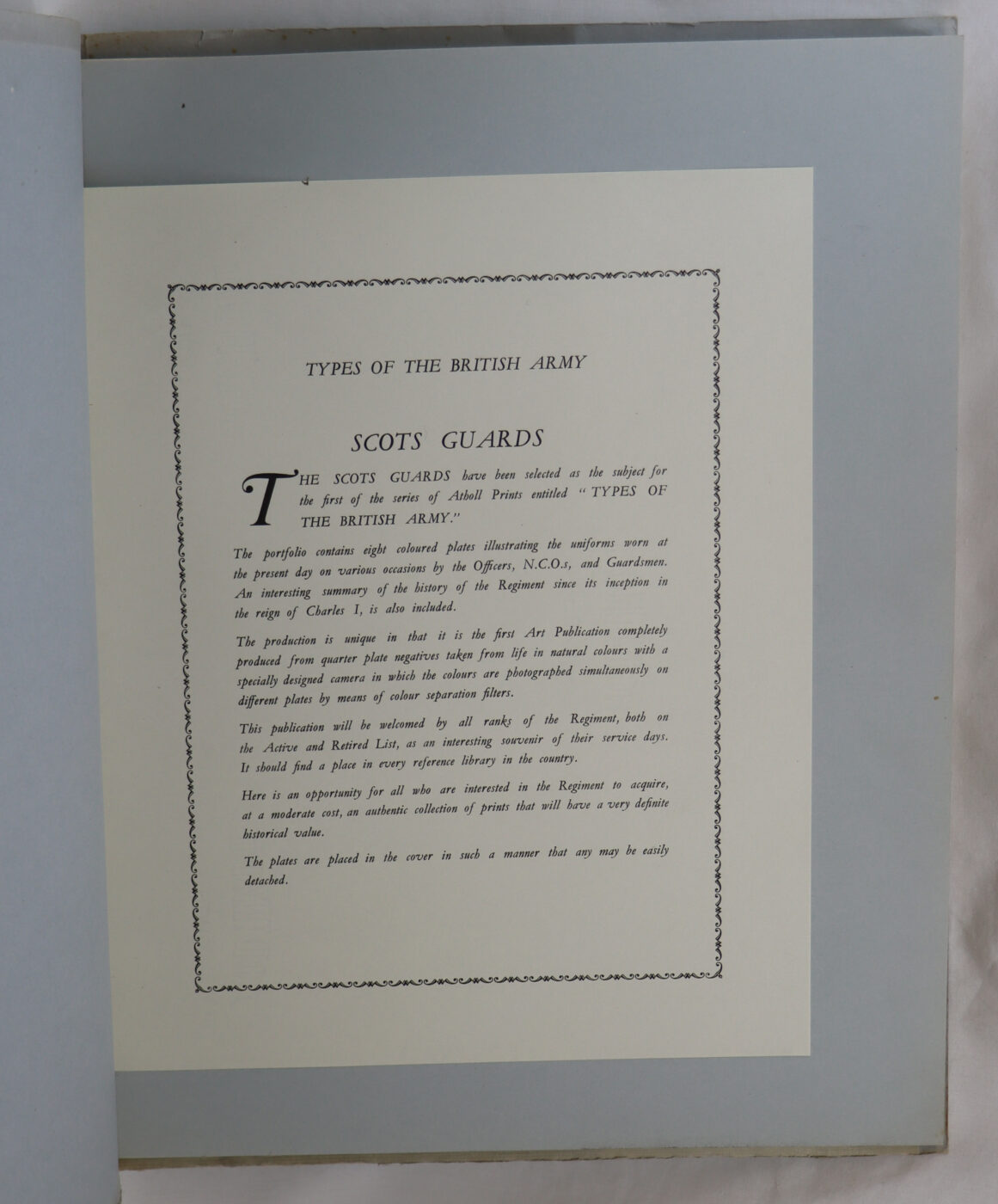
This is the first volume of the “Atholl Prints” series. It is a rare folio featuring 8 large coloured plates with tissue guards that illustrate the uniforms worn by Officers, NCOs, and Guardsmen of the Scots Guards circa 1930. It also includes a brief historical summary of the regiment.
Unpaginated, 8 plates. Card covers are bound with maroon and navy ribbon at spine. Marks and yellowing around edges to cover with small tears around edges. 32 cm x 42 cm. Internally clean. 8 large coloured photographic plates of soldiers in the Scots Guards.
Publication Details
- Title: Scots Guards. Types of the British Army (Volume 1)
- Date: c. 1930
- Publisher: Stevenson, Clark & Co. (Edinburgh)
- Format: Folio in original publisher’s grey or card covers bound with red and blue ribbon at the spine
- Language: English
Historical Context
The Scots Guards are the third most senior foot guard regiment in the British Army. As part of the Foot Guards, their primary role is both operational and ceremonial (such as the King’s Guard duties at Buckingham Palace).
The Scots Guards are a regular Mechanised Infantry regiment within the British Army’s Guards Division. They serve a dual role as elite, deployable frontline combat troops and ceremonial guards for the British Royal Family.
Combat Role
- Light Mechanised Infantry: As a STRIKE mechanized unit, they operate primarily out of the highly mobile and protected Foxhound armored vehicles to rapidly cross the battlefield and deploy onto difficult objectives.
- Operational Deployments: They maintain a high-readiness posture for global operations.
Ceremonial Role
- Public Duties: Their ceremonial company (F Company) is frequently tasked with guarding royal residences like Buckingham Palace and Windsor Castle.
- The Bearskin: Like the other Foot Guards, they wear the famous bearskin cap and red tunic, but are uniquely distinguished by having no plume on the bearskin, buttons grouped in threes, and the Order of the Thistle emblem.
Structure & Sub-Units
Within the broader framework of the British Army, the regiment comprises several key components:
- 1st Battalion: The active, deployable fighting component of the regiment.
- F Company: Dedicated to executing ceremonial and public duties in London.
- Pipes and Drums: A renowned musical and marching sub-unit carrying on traditional Scottish heritage.
- London Guards: Following a restructure, the Scots Guards’ reserve elements were integrated into this Army Reserve formation.
Want to know more about this item?
We are happy to answer any questions you may have about this item. In addition, it is also possible to request more photographs if there is something specific you want illustrated.
Ask a question


Share this Page with a friend
