
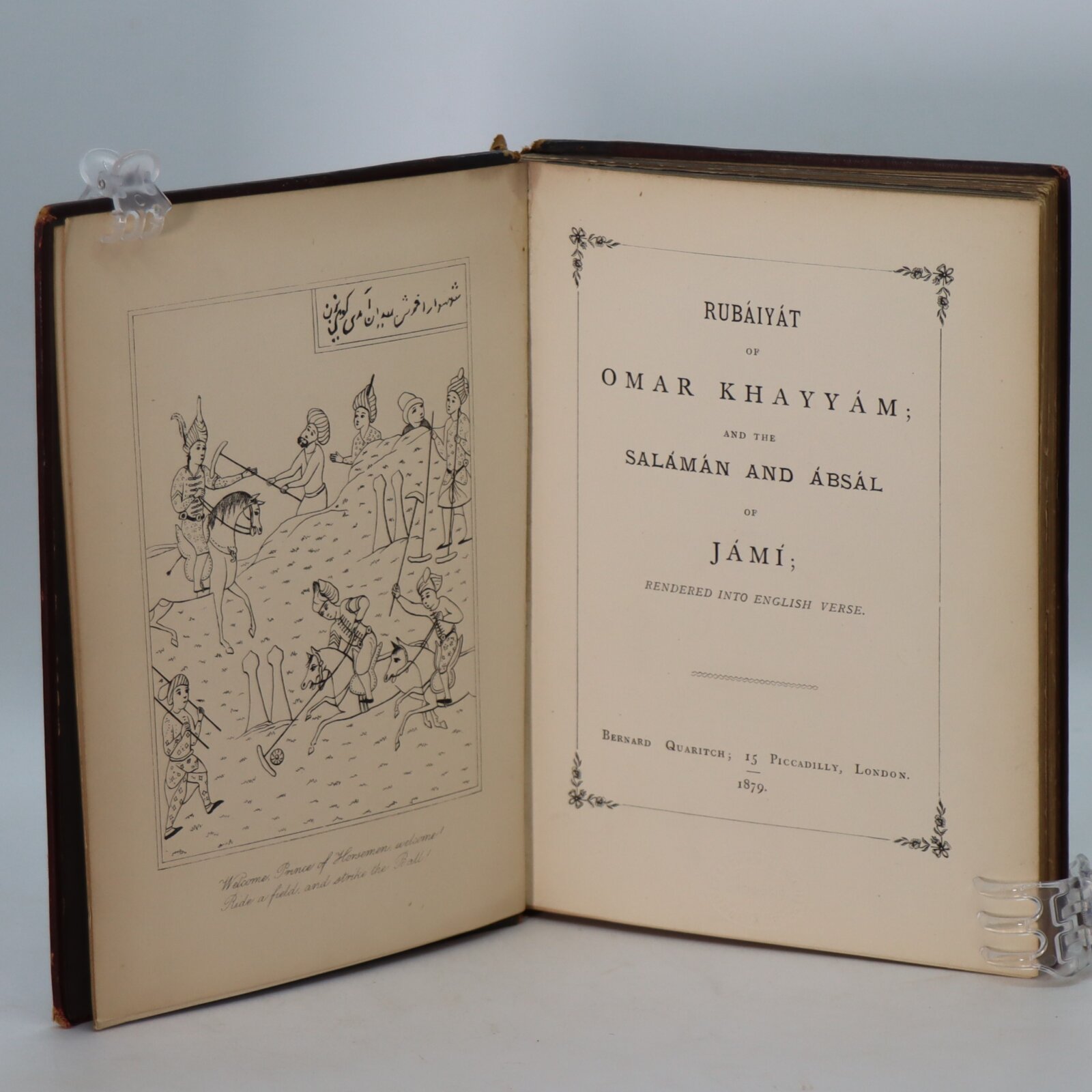
Rubaiyat of Omar Khayyam.
Printed: 1879
Publisher: Bernard Quaritch. London
| Dimensions | 14 × 18 × 2 cm |
|---|---|
| Language |
Language: English
Size (cminches): 14 x 18 x 2
Condition: Fine (See explanation of ratings)
£180.00
FREE shipping
Buy Now

Item information
Description
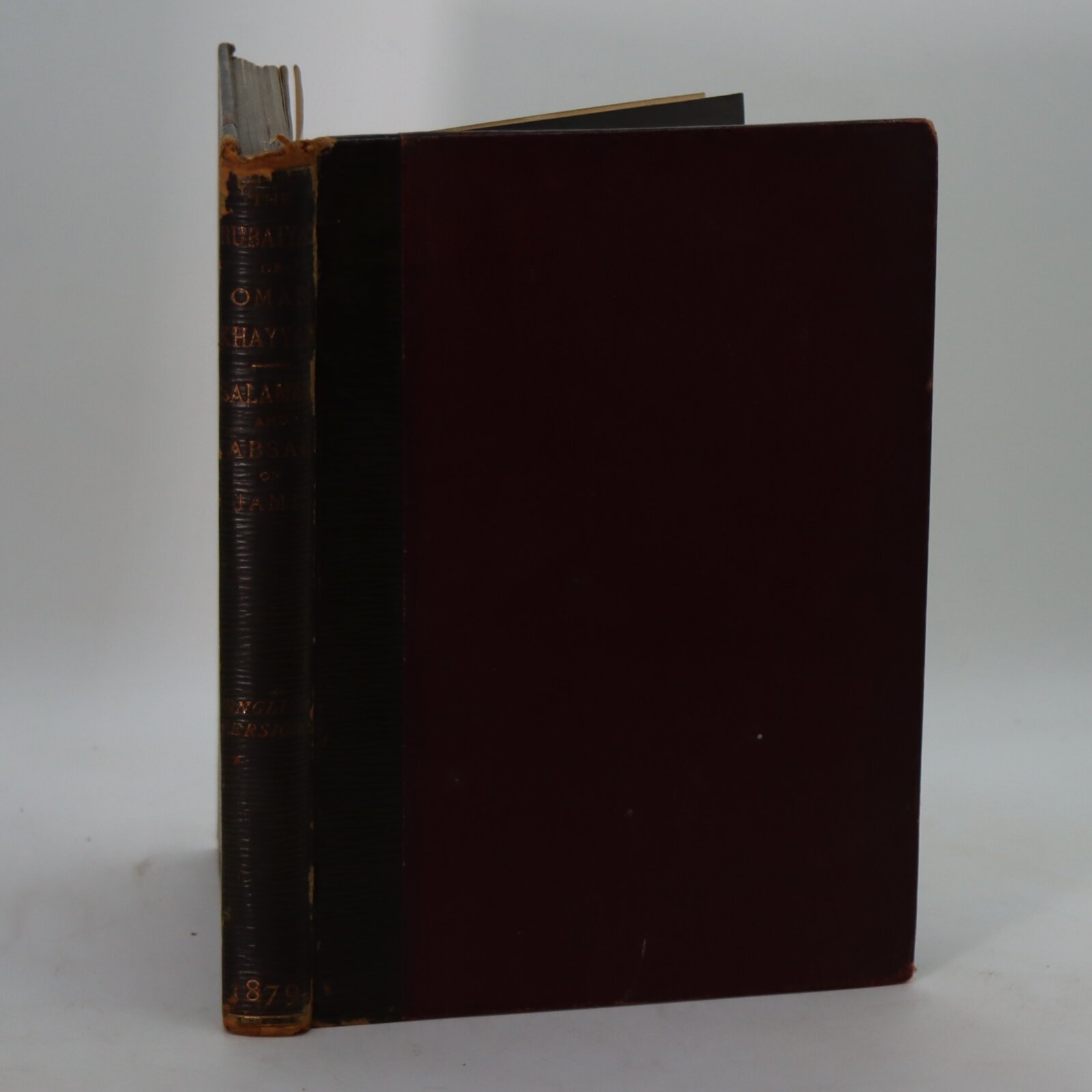
Maroon cloth boards. Dark green leather spine with gilt title on the spine.
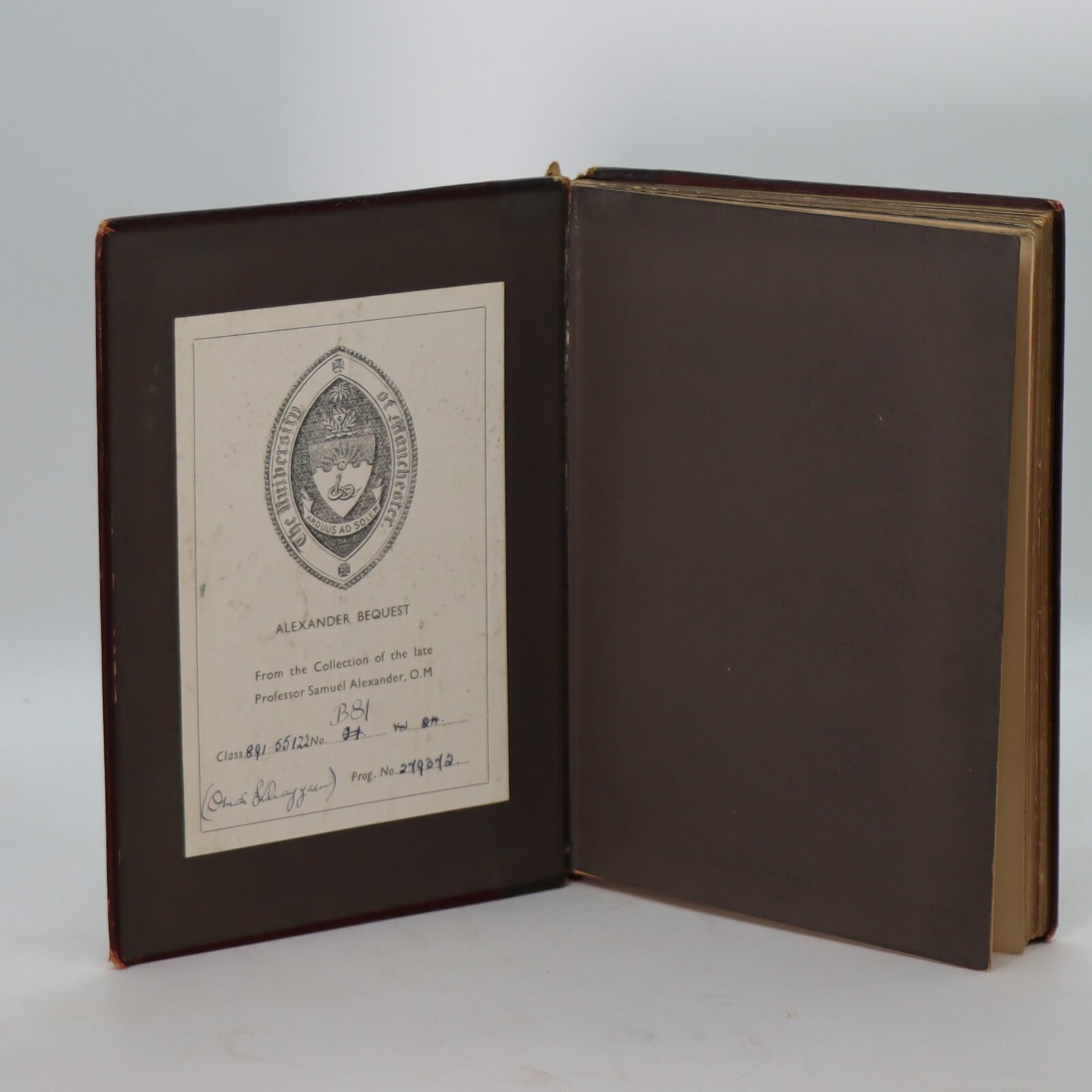
F.B.A. provides an in-depth photographic presentation of this item to stimulate your feel and touch. More traditional book descriptions are immediately available.
A clean well bound edition
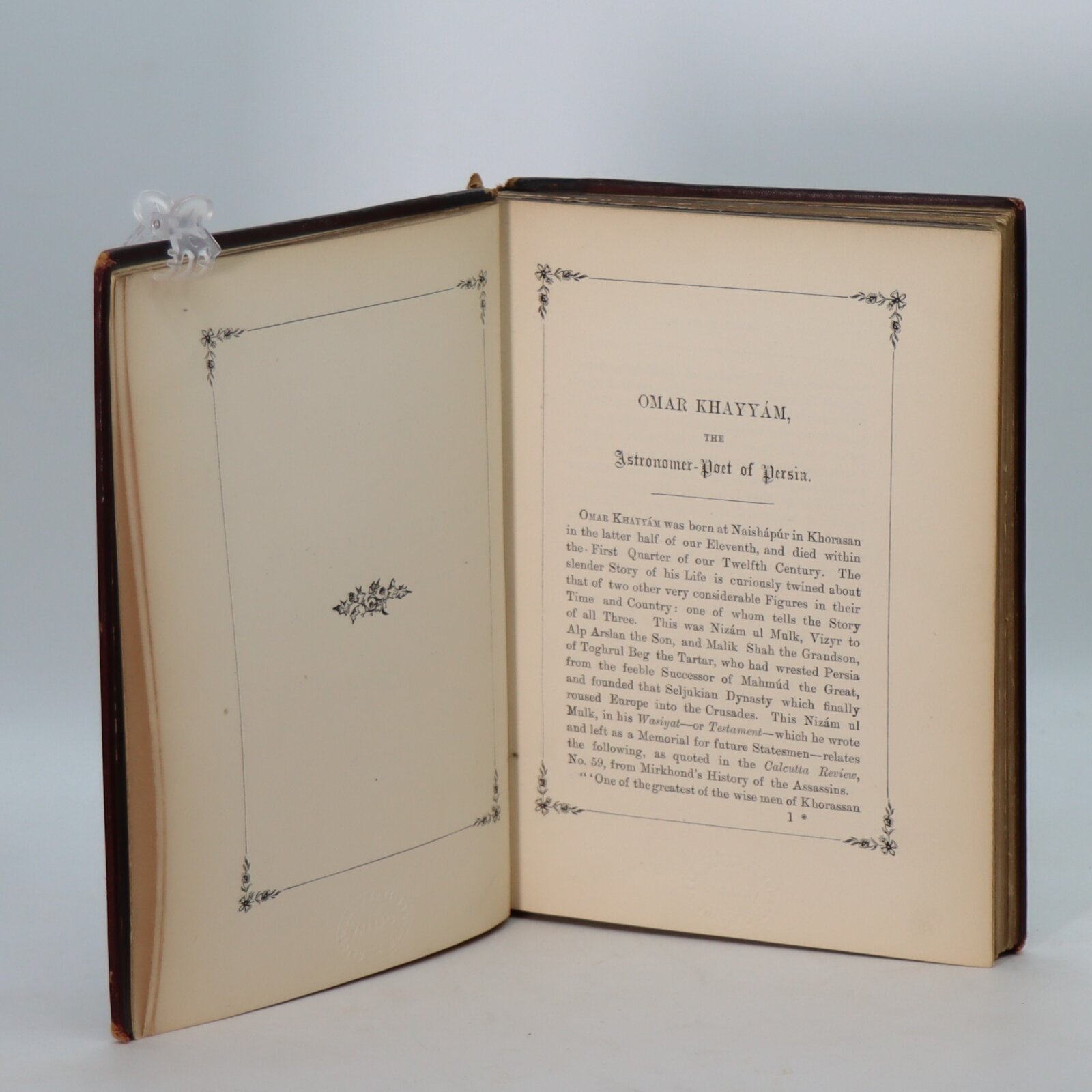
Rubáiyát of Omar Khayyám is the title that Edward FitzGerald gave to his 1859 translation from Persian to English of a selection of quatrains attributed to Omar Khayyam (1048–1131), dubbed “the Astronomer-Poet of Persia”.
Although commercially unsuccessful at first, FitzGerald’s work was popularised from 1861 onward by Whitley Stokes, and the work came to be greatly admired by the Pre-Raphaelites in England. FitzGerald had a third edition printed in 1872, which increased interest in the work in the United States. By the 1880s, the book was extremely popular throughout the English-speaking world, to the extent that numerous “Omar Khayyam clubs” were formed and there was a “fin de siècle cult of the Rubaiyat”.
FitzGerald’s work has been published in several hundred editions and has inspired similar translation efforts in English, Hindi and in many other languages.
Omar Khayyam 18 May 1048 – 4 December 1131) was a Persian polymath, mathematician, astronomer, historian, philosopher, and poet. He was born in Nishapur, the initial capital of the Seljuk Empire. As a scholar, he was contemporary with the rule of the Seljuk dynasty around the time of the First Crusade.
As a mathematician, he is most notable for his work on the classification and solution of cubic equations, where he provided geometric solutions by the intersection of conics. Khayyam also contributed to the understanding of the parallel axiom. As an astronomer, he designed the Jalali calendar, a solar calendar with a very precise 33-year intercalation cycle that provided the basis for the Persian calendar that is still in use after nearly a millennium. In the 1000s in Persia, Khayyam announced in 1079, that the length of the year was measured as 365.24219858156 days. Given that the length of the year is changing in the sixth decimal place over a person’s lifetime, this is outstandingly accurate. For comparison the length of the year at the end of the 19th century was 365.242196 days, while today it is 365.242190 days.
There is a tradition of attributing poetry to Omar Khayyam, written in the form of quatrains . This poetry became widely known to the English-reading world in a translation by Edward FitzGerald (Rubaiyat of Omar Khayyam, 1859), which enjoyed great success in the Orientalism of the fin de siècle.
Edward FitzGerald or Fitzgerald] (31 March 1809 – 14 June 1883) was an English poet and writer. His most famous poem is the first and best known English translation of The Rubaiyat of Omar Khayyam, which has kept its reputation and popularity since the 1860s.
The Pre-Raphaelite Brotherhood (later known as the Pre-Raphaelites) was a group of English painters, poets, and art critics, founded in 1848 by William Holman Hunt, John Everett Millais, Dante Gabriel Rossetti, William Michael Rossetti, James Collinson, Frederic George Stephens and Thomas Woolner who formed a seven-member “Brotherhood” modelled in part on the Nazarene movement. The Brotherhood was only ever a loose association and their principles were shared by other artists of the time, including Ford Madox Brown, Arthur Hughes and Marie Spartali Stillman. Later followers of the principles of the Brotherhood included Edward Burne-Jones, William Morris and John William Waterhouse.
The group sought a return to the abundant detail, intense colours and complex compositions of Quattrocento Italian art. They rejected what they regarded as the mechanistic approach first adopted by Mannerist artists who succeeded Raphael and Michelangelo. The Brotherhood believed the Classical poses and elegant compositions of Raphael in particular had been a corrupting influence on the academic teaching of art, hence the name “Pre-Raphaelite”. In particular, the group objected to the influence of Sir Joshua Reynolds, founder of the English Royal Academy of Arts, whom they called “Sir Sloshua”. To the Pre-Raphaelites, according to William Michael Rossetti, “sloshy” meant “anything lax or scamped in the process of painting … and hence … any thing or person of a commonplace or conventional kind”. The group associated their work with John Ruskin, an English critic whose influences were driven by his religious background. Christian themes were abundant.
The group continued to accept the concepts of history painting and mimesis, imitation of nature, as central to the purpose of art. The Pre-Raphaelites defined themselves as a reform movement, created a distinct name for their form of art, and published a periodical, The Germ, to promote their ideas. The group’s debates were recorded in the Pre-Raphaelite Journal. The Brotherhood separated after almost five years.
Want to know more about this item?
We are happy to answer any questions you may have about this item. In addition, it is also possible to request more photographs if there is something specific you want illustrated.
Ask a question
Related products



Share this Page with a friend
