
Robert Louis Stevenson. by Lord Guthrie.
By Lord Guthrie
Printed: 1924
Publisher: W Green & Son. Edinburgh
| Dimensions | 17 × 26 × 2 cm |
|---|---|
| Language |
Language: English
Size (cminches): 17 x 26 x 2
Condition: Good (See explanation of ratings)
£68.00
Buy Now
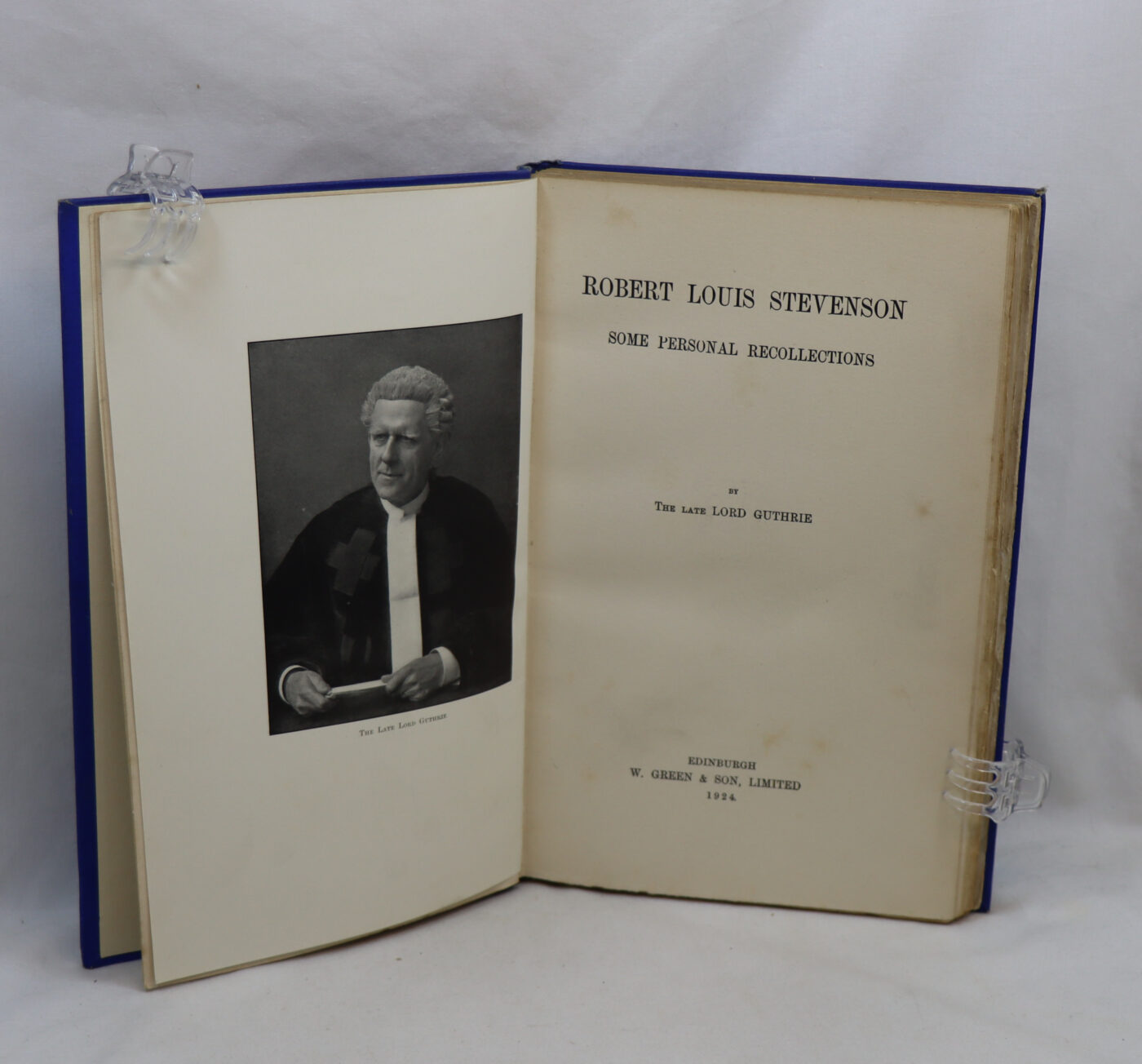
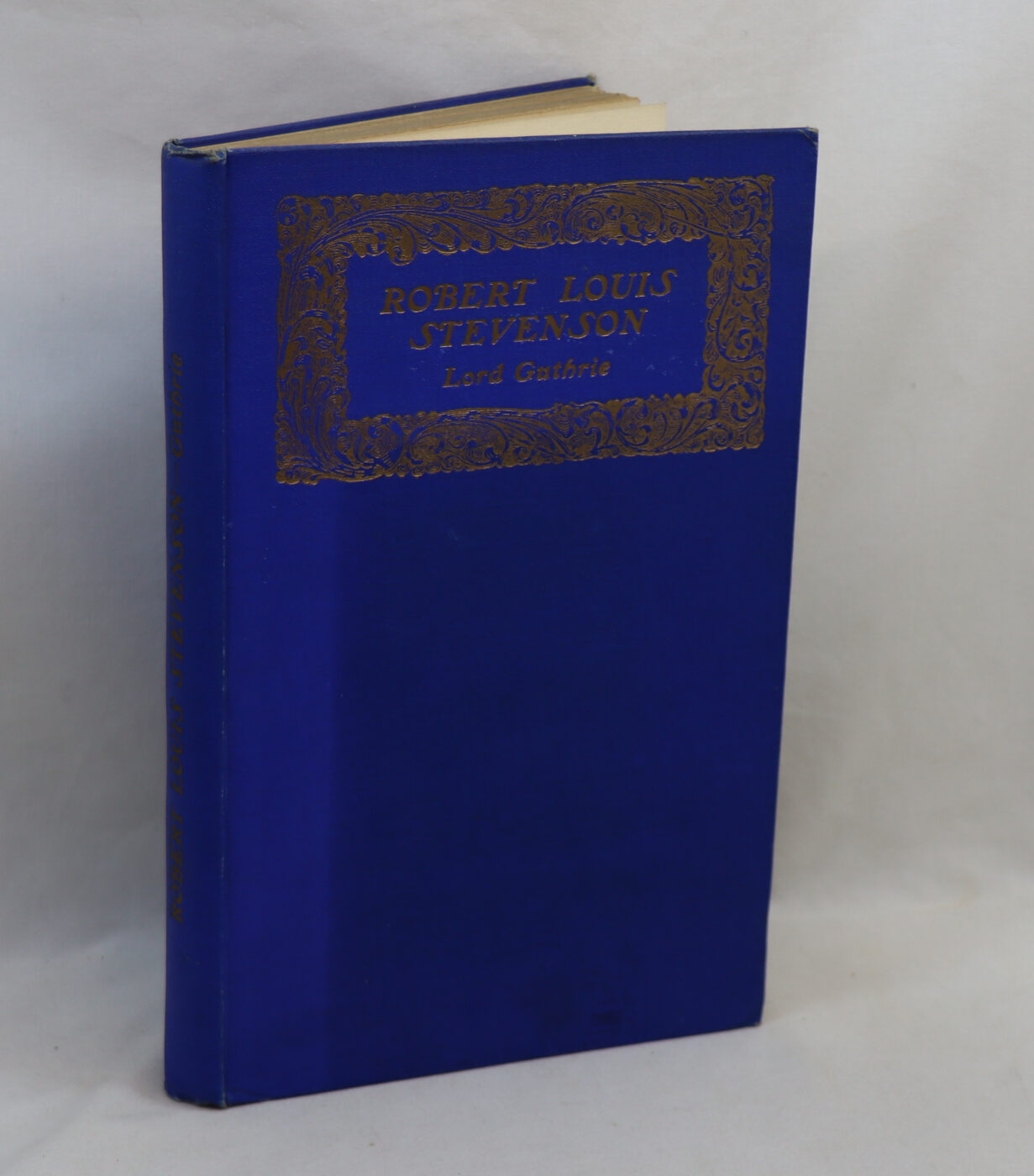
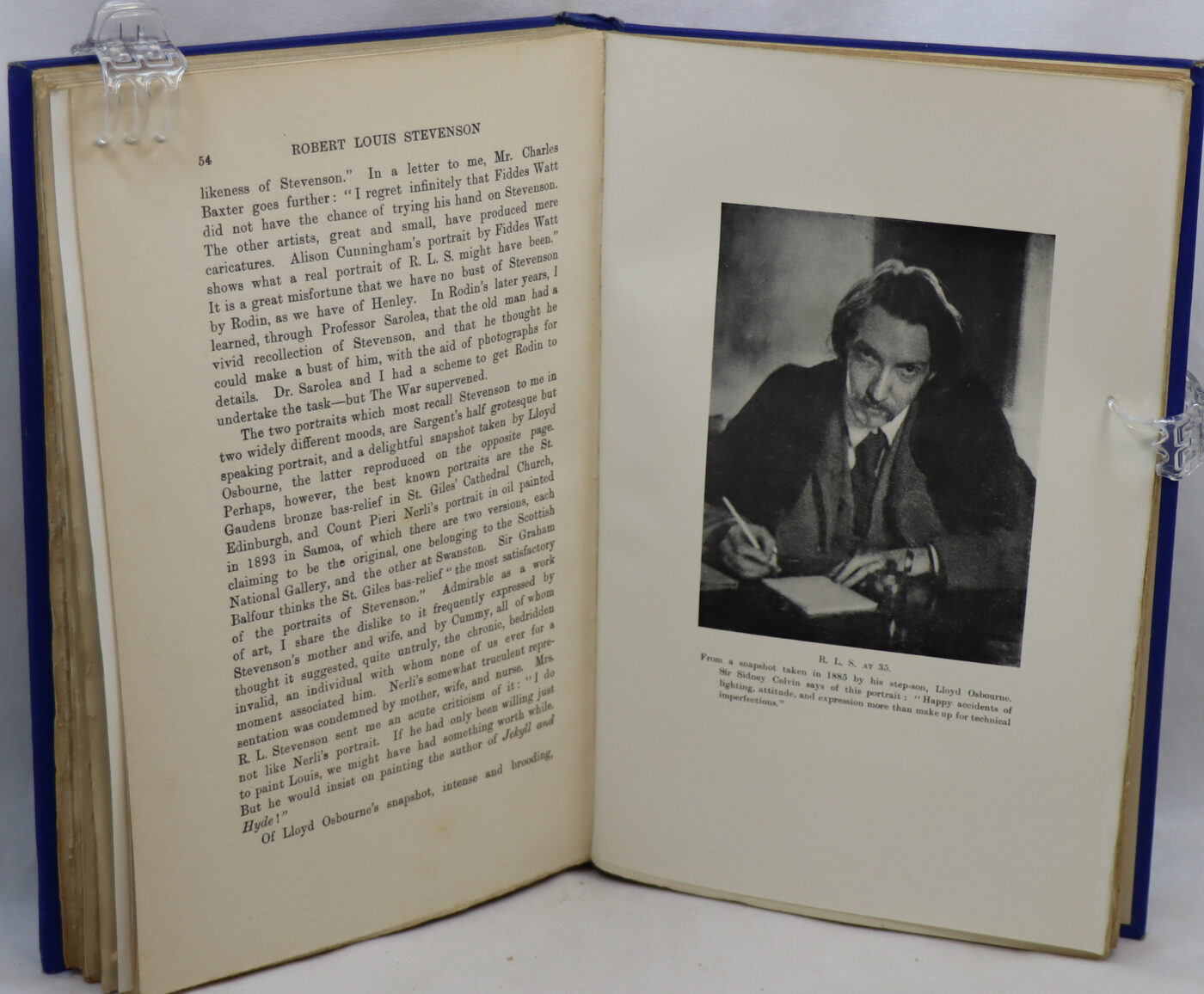
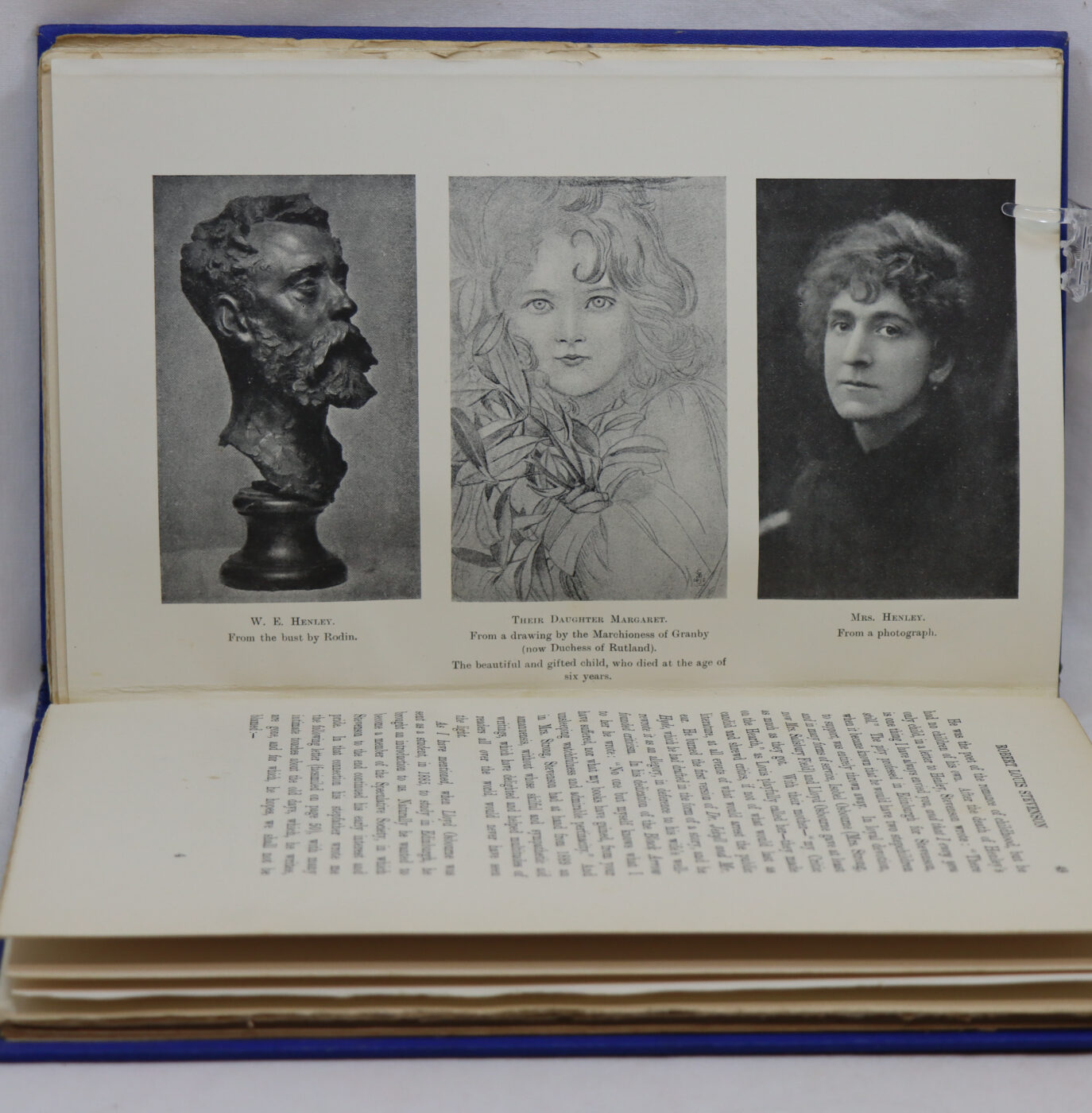

Item information
Description
Navy cloth binding with gilt title on the spine and front board.
We provide an in-depth photographic presentation of this item to stimulate your feeling and touch. More traditional book descriptions are immediately available
Note: This book carries a £5.00 discount to those that subscribe to the F.B.A. mailing list
An excellent appreciation of Robert Louis Stevenson. Based upon an original limited edition work, nevertheless this is a quality rendition.
Robert Louis Stevenson (born Robert Lewis Balfour Stevenson; 13 November 1850 – 3 December 1894) was a Scottish novelist, essayist, poet and travel writer. He is best known for the novels Treasure Island (1883), Strange Case of Dr Jekyll and Mr Hyde (1886), and Kidnapped (1886) and for the poetry collection A Child’s Garden of Verses (1885).
Born and educated in Edinburgh, Stevenson suffered from serious bronchial trouble for much of his life but managed to write prolifically and travel widely despite his poor health. As a young man, he mixed in London literary circles, receiving encouragement from Sidney Colvin, Andrew Lang, Edmund Gosse, Leslie Stephen and W. E. Henley, the last of whom may have provided the model for Long John Silver in Treasure Island. In 1890 he settled in Samoa, where, alarmed at increasing European and American influence in the South Sea islands, his writing turned from romance and adventure fiction toward a darker realism. He died of a stroke in his island home in 1894 at age 44.
A celebrity in his lifetime, Stevenson’s critical reputation has fluctuated since his death, although today his works are held in general acclaim. In 2018 he was ranked just behind Charles Dickens as the 26th-most-translated author in the world.
Charles John Guthrie, Lord Guthrie FRSE FRSGS LLD (4 April 1849 – 28 April 1920) was a Scottish judge and lawyer. Guthrie was born at 2 Lauriston Lane in Edinburgh, the son of Rev Thomas Guthrie, a major figure in Scottish church history. By 1860 the family had moved to 1 Salisbury Road, a large villa in south Edinburgh. He was educated at Edinburgh Academy, and then studied Law at Edinburgh University, graduating around 1871. In 1875, he was admitted to the Faculty of Advocates. From 1881 to 1900, he was legal adviser to the Church of Scotland, and in 1897, became a Q.C. From 1900 to 1907 he served as Sheriff of Ross and Cromarty. In 1907, he was appointed a Senator of the College of Justice. Lord Guthrie was a member of the Royal Commissions on Historical Monuments in Scotland (1908) and on Divorce and Matrimonial Causes (1909), and was Chairman of the Houseletting Commission (1906–07). In 1909, he presided over the trial of Oscar Slater. Guthrie made prejudicial and pejorative comments during his summing up, leading to a miscarriage of justice. Slater was released and pardoned 20 years later.
When he was young, Guthrie had been a friend of Robert Louis Stevenson. In 1914 he published an appreciation of “Cummy” (Stevenson’s Nurse), and “Robert Louis Stevenson: Some Personal Recollections” (Edinburgh: W. Green, 1920). His other works include John Knox and his House (1898), and an edition of Knox’s History of the Reformation in Scotland (1898), besides contributions to the memoir of his father, Thomas Guthrie (1875). From 1910 to 1919, he was President of the Boys’ Brigade of Great Britain and Ireland, and was a member of various antiquarian societies. In 1916 he was elected a Fellow of the Royal Society of Edinburgh. His proposers were John Horne, Sir William Turner, Sir John Macdonald, Lord Kingsburgh, and John George Bartholomew. Lord Guthrie died at his home, 13 Royal Circus in Edinburgh, on 28 April 1920. He is buried in the north-west corner of the north section of Dean Cemetery.
NOTE: This is an original book from the library gathered by the famous Cambridge Don, computer scientist, food and wine connoisseur, Jack Arnold LANG. Note: Jack founded the Michelin Guide ‘Midsummer House’- Cambridge’s paramount restaurant. This dining experience is hidden amongst the grassy pastures and grazing cattle of Midsummer Common and perched on the banks of the River Cam.
In 2008, Jack was one of the co-founders of the Raspberry Pi Foundation, alongside other members of the Department, and acted as the Foundation’s Chair. The project’s original goals were modest: to build and distribute low-cost computers for prospective applicants to our Computer Science degree. Initially the project was a “success disaster”, as Jack would say, as demand far outstripped the low-scale manufacturing plans. Ultimately the Raspberry Pi became the UK’s most successful computer with more than 60 million sold to date. Jack was drawn to the educational possibilities of the Raspberry Pi, its potential uses in emerging economies and the way it could support self-directed learning.
Want to know more about this item?
We are happy to answer any questions you may have about this item. In addition, it is also possible to request more photographs if there is something specific you want illustrated.
Ask a question
Related products
Share this Page with a friend
