
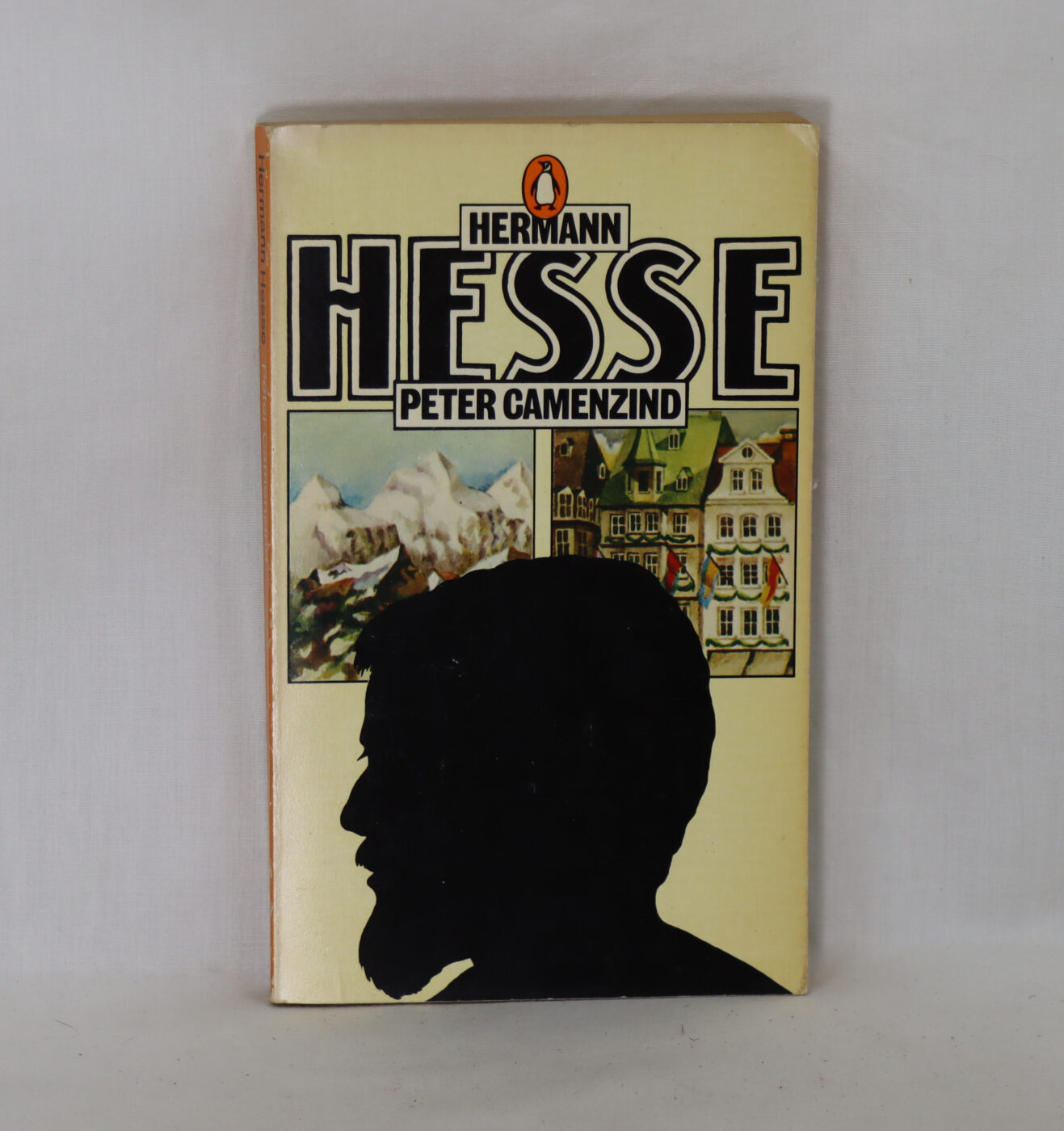
Peter Camenzind.
By Hermann Hesse
ISBN: 9780312422639
Printed: 1974
Publisher: Penquin Books. London
| Dimensions | 11 × 18 × 1 cm |
|---|---|
| Language |
Language: English
Size (cminches): 11 x 18 x 1
Condition: Fair (See explanation of ratings)
£7.00
Buy Now
Item information
Description
Paperback. Orange cover with black title.
We provide an in-depth photographic presentation of this item to stimulate your feeling and touch. More traditional book descriptions are immediately available
A FROST PAPERBACK is a loved book which a member of the Frost family has checked for condition, cleanliness, completeness and readability. When the buyer collects their book, the delivery charge of £3.00 is not made
Peter Camenzind, a young man from a Swiss mountain village, leaves his home and eagerly takes to the road in search of new experience. Traveling through Italy and France, Camenzind is increasingly disillusioned by the suffering he discovers around him; after failed romances and a tragic friendship, his idealism fades into crushing hopelessness. He finds peace again only when he cares for Boppi, an invalid who renews Camenzind’s love for humanity and inspires him once again to find joy in the smallest details of every life.
Review: This is one of Hesse’s earlier works. It was first published in 1904, and was instrumental in helping him to become a popular writer in Germany. The novella relates the life story of the lead character, and details his personal growth as he becomes a man and seeks to come to terms with the world. The novella clearly has considerable autobiographical input, and contains many telling insights. The ‘Steppenwolf’ personality is already in evidence even though the novel with that title would not be written until more than twenty years later.
Hermann Hesse (1877-1962) was a German poet and novelist. He received the Nobel Prize in Literature in 1962. He was the author of numerous works including Siddhartha, Steppenwolf, and Demian.
Hermann later became a citizen of Switzerland. As a Western man profoundly affected by the mysticism of Eastern thought, he wrote many novels, stories, and essays that bear a vital spiritual force that has captured the imagination and loyalty of many generations of readers. In 1946, he won the Nobel Prize for Literature for The Glass Bead Game.
Want to know more about this item?
We are happy to answer any questions you may have about this item. In addition, it is also possible to request more photographs if there is something specific you want illustrated.
Ask a question
Related products

Share this Page with a friend
