
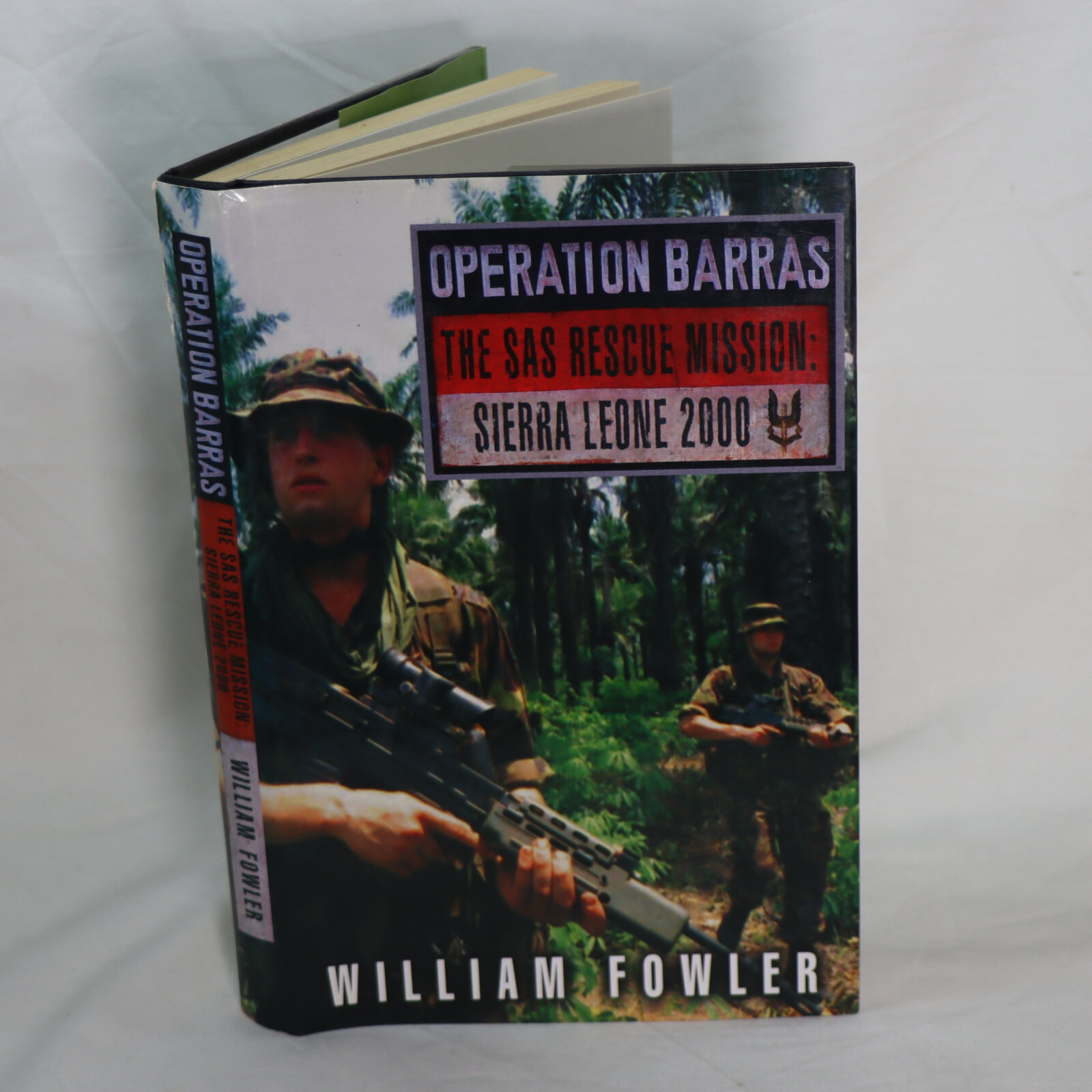
Operation Barras. The SAS Rescue Mission.
By William Fowler
ISBN: 9781780225685
Printed: 2004
Publisher: BCA. London
| Dimensions | 17 × 24 × 3 cm |
|---|---|
| Language |
Language: English
Size (cminches): 17 x 24 x 3
Condition: Fine (See explanation of ratings)
£21.00
Buy Now
Your items

Item information
Description
In the original dustsheet. Black cloth binding with gilt title on the spine.
-
F.B.A. provides an in-depth photographic presentation of this item to stimulate your feeling and touch. More traditional book descriptions are immediately available.
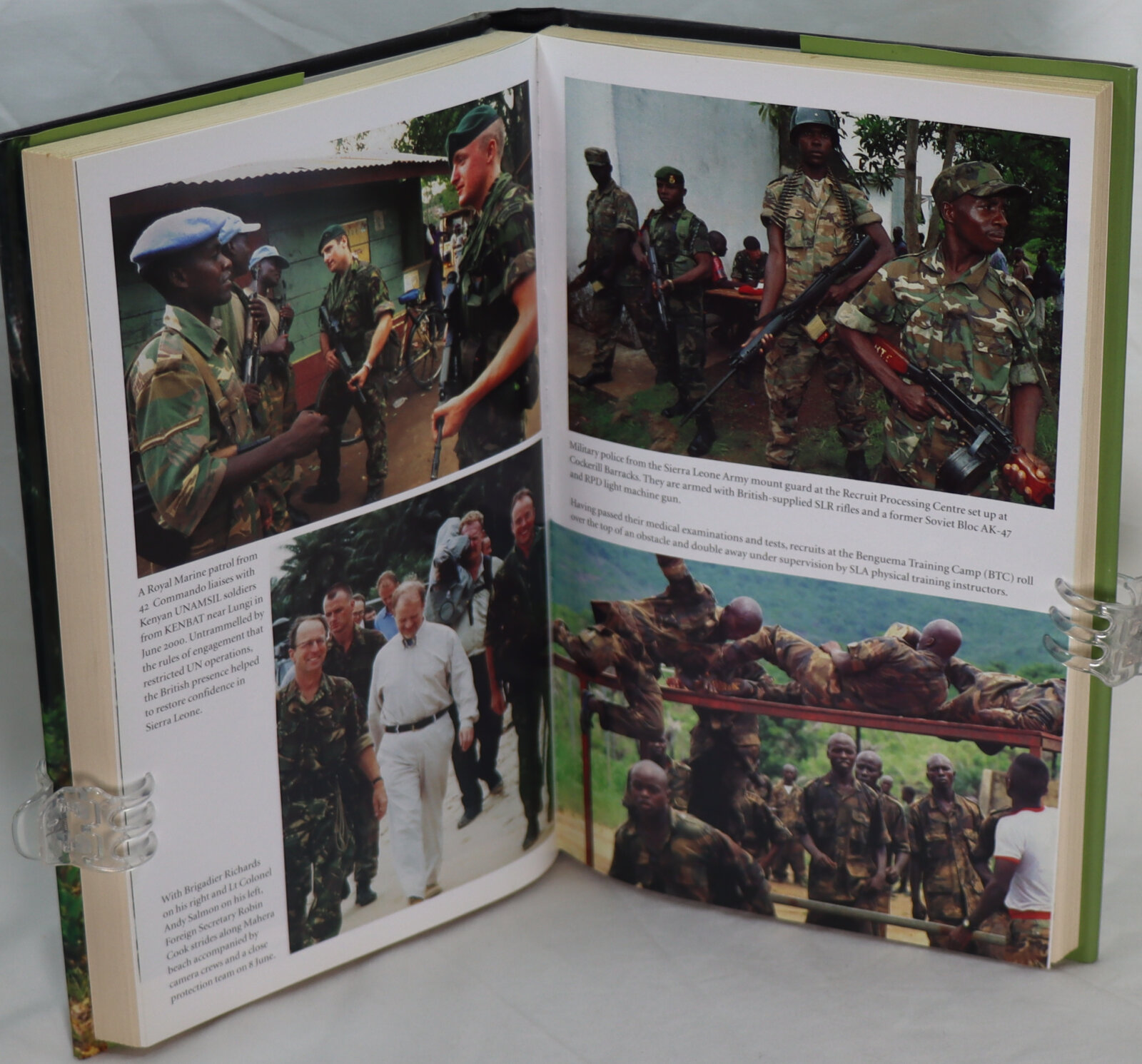
As one SAS veteran put it, ‘this was not a clinical, black balaclava, Princes’ Gate-type operation: it was a very grubby, green operation with lots of potential for things to go wrong’… The British Army has earned a worldwide reputation for its skill at ‘peacemaking’, intervening in the Balkans and the Middle East to stop civil wars and end communal violence. It does this so well that the horrific risks involved are only really understood by the soldiers themselves, on patrol in strange lands riven by ancient hatreds. In September 2000 the dangers were suddenly highlighted by the capture of eleven British soldiers by a notorious militia gang in Sierra Leone. The so-called ‘West Side Boys’ had subjected their part of the country to a long reign of terror, murdering, kidnapping and mutilating anyone who stood in their way. Now British soldiers were at their mercy. Surrounded and hopelessly outnumbered, any resistance would have seen them all killed; yet their hopes of a quick exchange soon faded. They were assaulted and subjected to mock executions. Negotiations with the ‘Revolutionary United Front’ leaders and the ‘West Side Boys’ proved futile: although some of the prisoners were released, the gang’s demands grew ridiculous and the danger to the rest of the hostages increased. Prime Minister Tony Blair ordered the armed forces to get the men back. The SAS and elements of the Parachute Regiment were rushed to West Africa and a naval squadron assembled offshore. The stage was set for the biggest British military operation on the continent for a generation – and their most daring rescue mission ever.
Review: ‘In Operation Barras William Fowler describes the historic setting for British involvement in Sierra Leone that led up to the rescue mission. The build up to the airborne assault by the SAS and Paras on September 10 is covered in great detail and you are pitched into the action. It is an insider’s book that will appeal to soldiers and anyone with an interest in the development of post colonial Africa.’ (EYE SPY)
The Author – Educated at Clifton College and Trinity Hall, Cambridge, William Fowler was land forces editor of DEFENCE magazine and a contributing editor to JANE’S INFORMATION GROUP. A long term territorial soldier, he served with British forces in the Gulf War and graduated from the French Army Reserve Staff Officers course at the Ecole Militaire in Paris. He conducts regular battlefield tours and broadcasts on radio and television. He is married and lives in Hampshire. Educated at Cambridge, William Fowler served as an officer in the Territorial Army and saw active service in the Gulf War. He is the author of numerous books and articles and defence, military technology and current affairs and contributes to a wide variety of publications. He has reported from Northern Ireland, the Middle East and SE Asia.
Want to know more about this item?
We are happy to answer any questions you may have about this item. In addition, it is also possible to request more photographs if there is something specific you want illustrated.
Ask a question
Related products

Share this Page with a friend
