
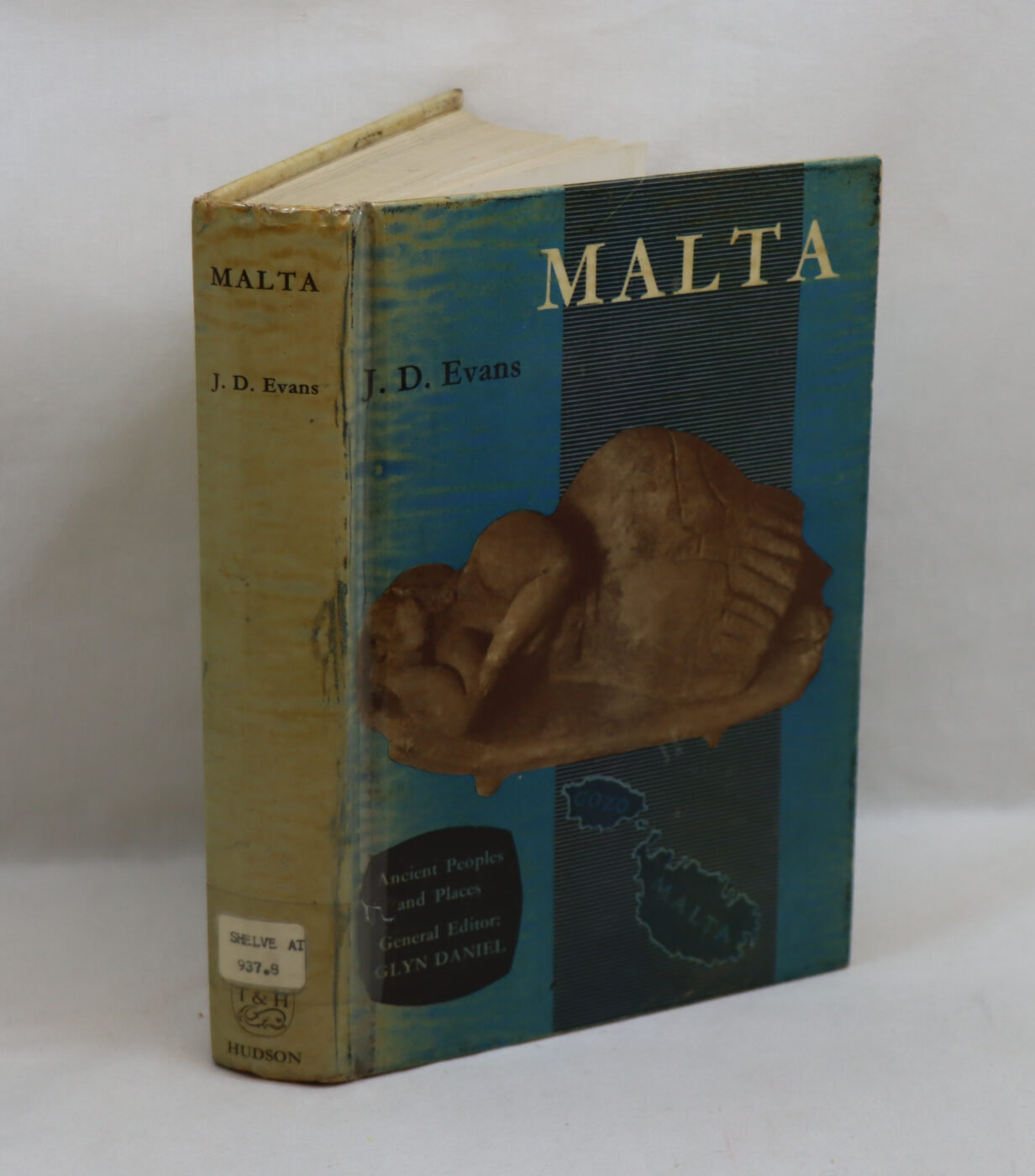
Malta.
By J D Evans
Printed: 1959
Publisher: Thames & Hudson. London
| Dimensions | 16 × 21 × 3 cm |
|---|---|
| Language |
Language: English
Size (cminches): 16 x 21 x 3
Condition: Good (See explanation of ratings)
£33.00
Buy Now
Your items

Item information
Description
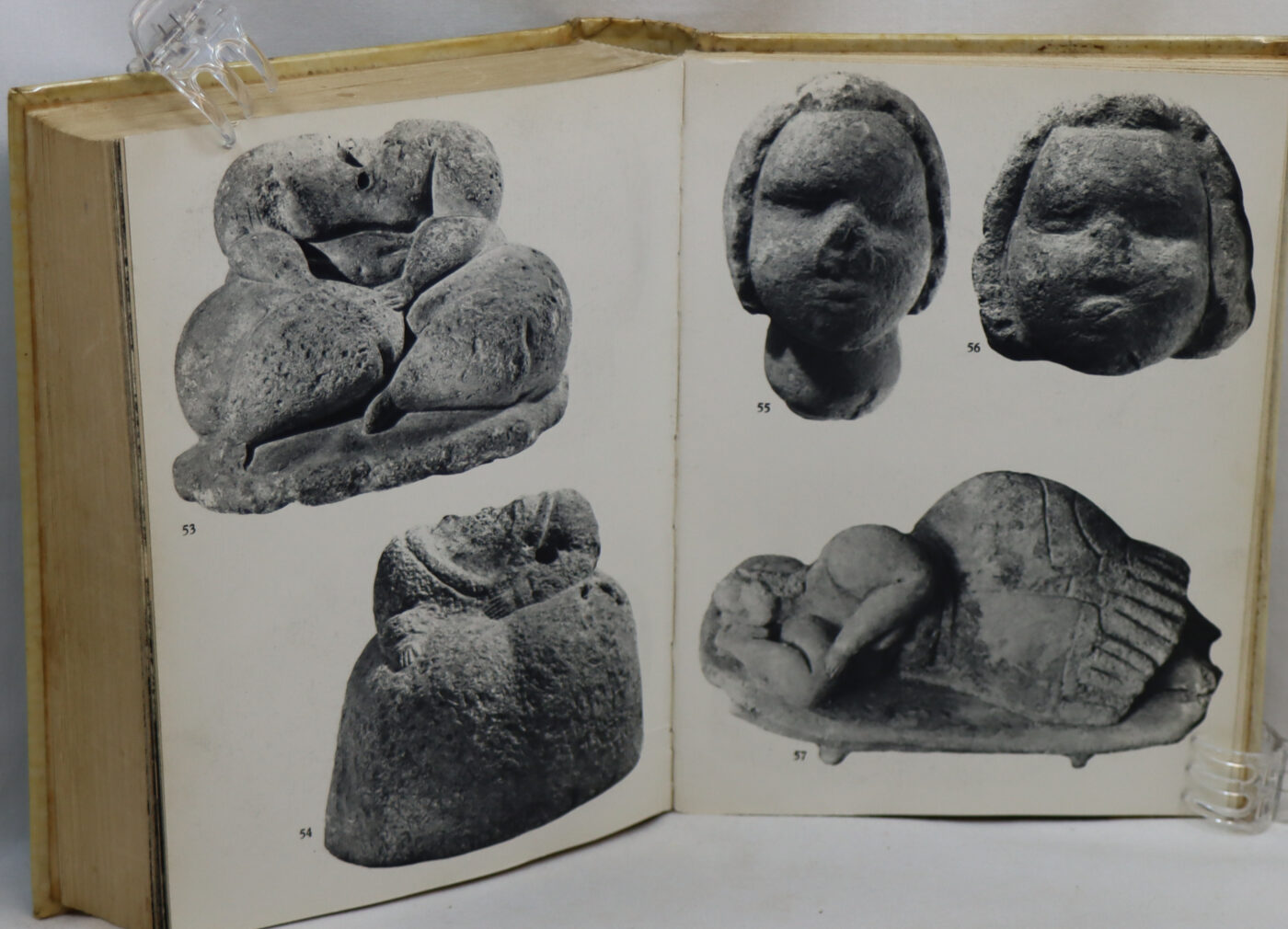
Blue hardboard binding with white title and Malta sculpture on the front board. Ex library.
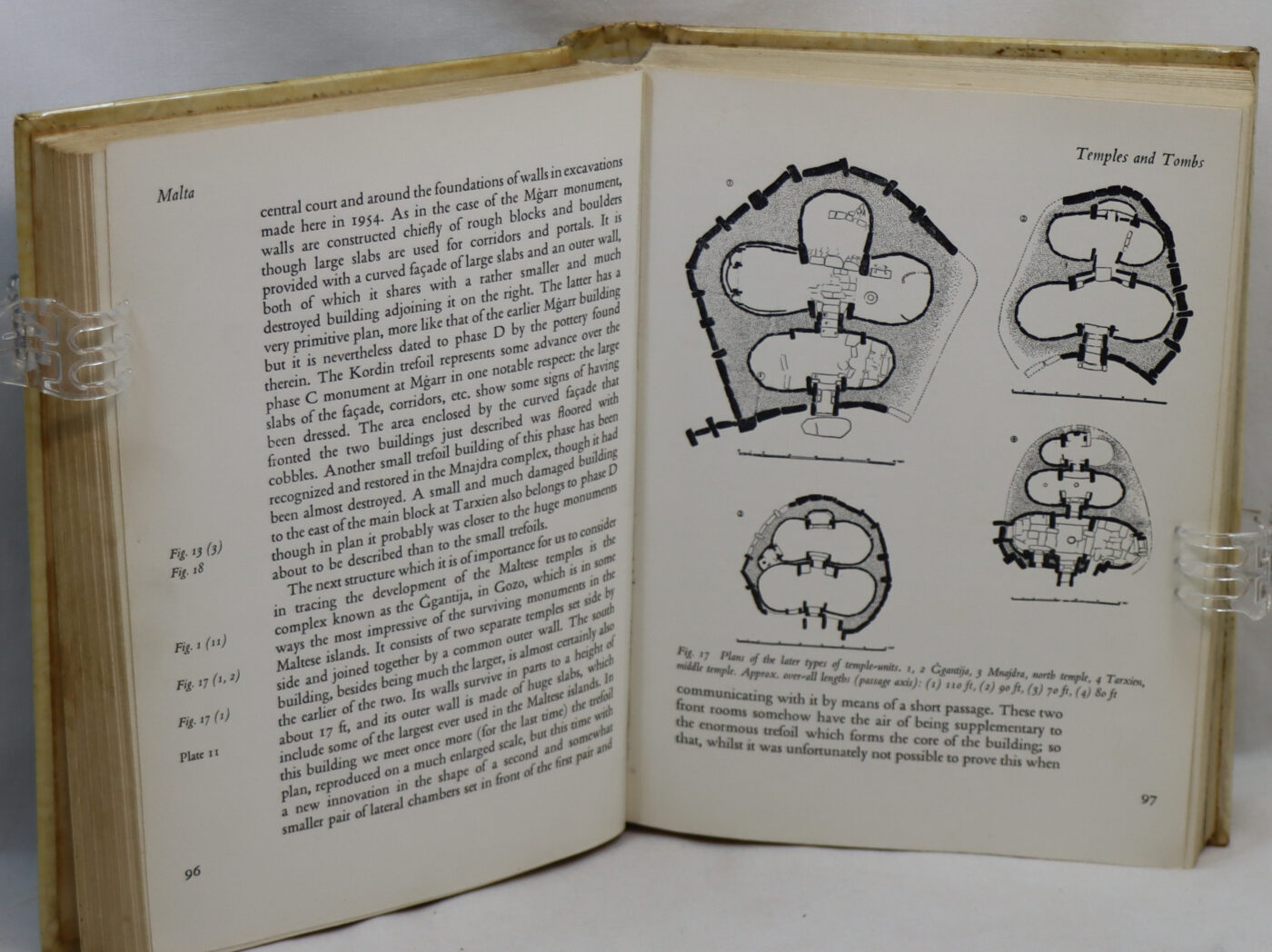
We provide an in-depth photographic presentation of this item to stimulate your feeling and touch. More traditional book descriptions are immediately available
- Note: This book carries a £5.00 discount to those that subscribe to the F.B.A. mailing list
For conditions, please view our photographs. A nice clean rare original book from the library gathered by the famous Cambridge Don, computer scientist, food and wine connoisseur, Jack Arnold LANG.
A true rare first edition.
Malta, officially the Republic of Malta, is an island country in Southern Europe located in the Mediterranean Sea, between Sicily and North Africa. It consists of an archipelago 80 km (50 mi) south of Italy, 284 km (176 mi) east of Tunisia, and 333 km (207 mi) north of Libya. The two official languages are Maltese and English. The country’s capital is Valletta, which is the smallest capital city in the European Union (EU) by both area and population.
With a population of about 542,000 spread over an area of 316 km2 (122 sq mi), Malta is the world’s tenth-smallest country by area and the ninth-most densely populated. Various sources consider the country to consist of a single urban region, for which reason it is often described as a city-state.
Malta has been inhabited since at least 6500 BC, during the Mesolithic. Its location in the centre of the Mediterranean has historically given it great geostrategic importance, with a succession of powers having ruled the islands and shaped its culture and society. These include the Phoenicians, Carthaginians, Greeks, and Romans in antiquity; the Arabs, Normans, and Aragonese during the Middle Ages; and the Knights Hospitaller, French, and British in the modern era. Malta came under British rule in the early 19th century and served as the headquarters for the British Mediterranean Fleet. It was besieged by the Axis powers during World War II and was an important Allied base for North Africa and the Mediterranean. Malta achieved independence in 1964, and established its current parliamentary republic in 1974. It has been a member state of the Commonwealth of Nations and the United Nations since independence; it joined the European Union in 2004 and the eurozone monetary union in 2008.
Malta’s long history of foreign rule and its proximity to both Europe and North Africa have influenced its art, music, cuisine, and architecture. Malta has close historical and cultural ties to Italy and especially Sicily; and while Maltese and English are its official languages, between 62 and 66 percent of Maltese people speak or have significant knowledge of the Italian language, which had official status from 1530 to 1934. Malta was an early centre of Christianity, and Catholicism is the state religion, although the country’s constitution guarantees freedom of conscience and religious worship.
Malta is a developed country with an advanced, high-income economy. It is heavily reliant on tourism, attracting both travellers and a growing expatriate community with its warm climate, numerous recreational areas, and architectural and historical monuments, including three UNESCO World Heritage Sites: Ħal Saflieni Hypogeum, Valletta, and seven megalithic temples, which are some of the oldest free-standing structures in the world.
Condition notes
Ex library
Want to know more about this item?
We are happy to answer any questions you may have about this item. In addition, it is also possible to request more photographs if there is something specific you want illustrated.
Ask a question
Share this Page with a friend
