
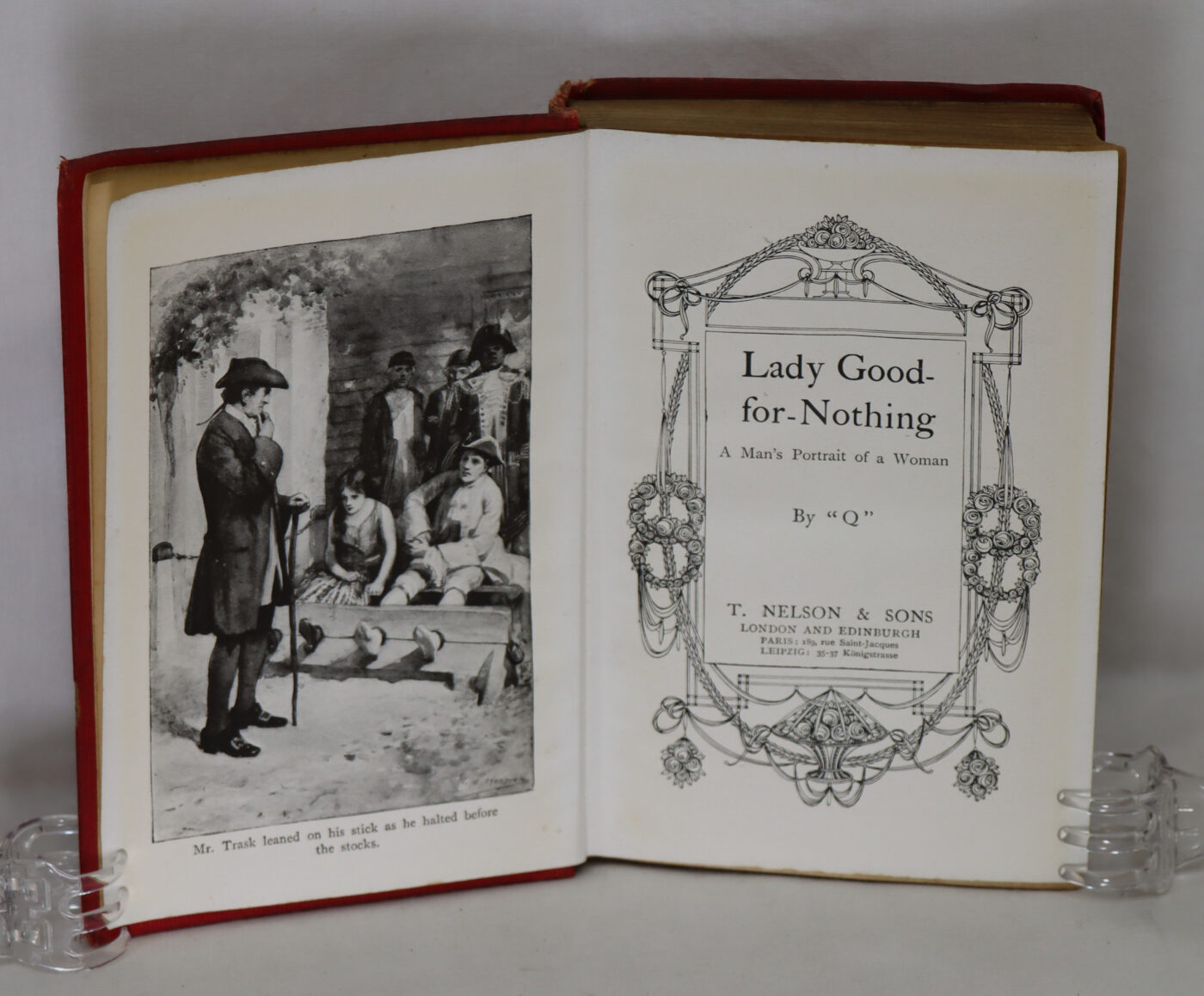
Lady Good-for-Nothing.
By "Q"
Printed: Circa 1910
Publisher: T Nelson & Sons. London
| Dimensions | 11 × 16 × 2 cm |
|---|---|
| Language |
Language: English
Size (cminches): 11 x 16 x 2
Condition: Fair (See explanation of ratings)
£32.00
Buy Now

Item information
Description
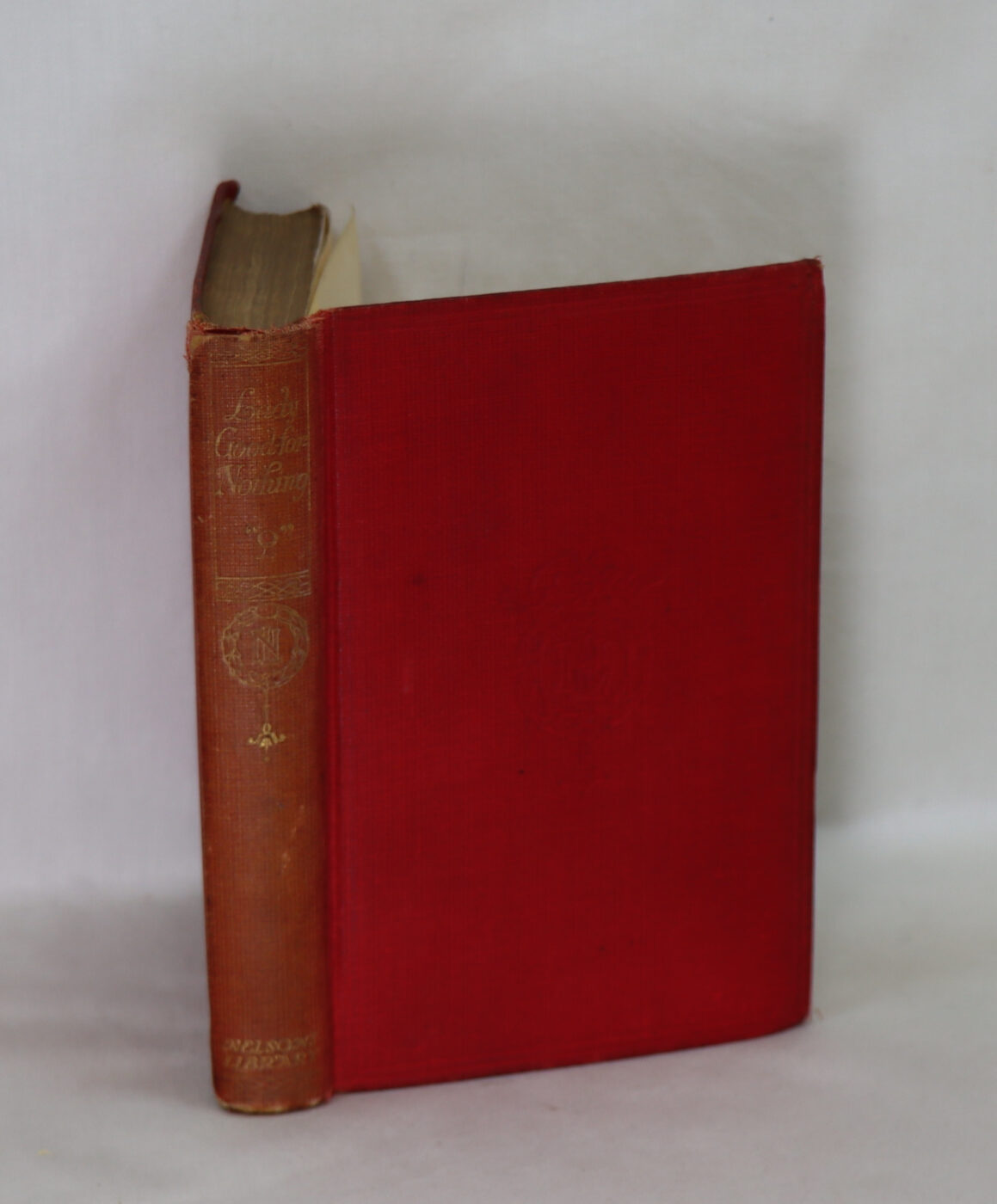
Red cloth binding with gilt title on the spine.
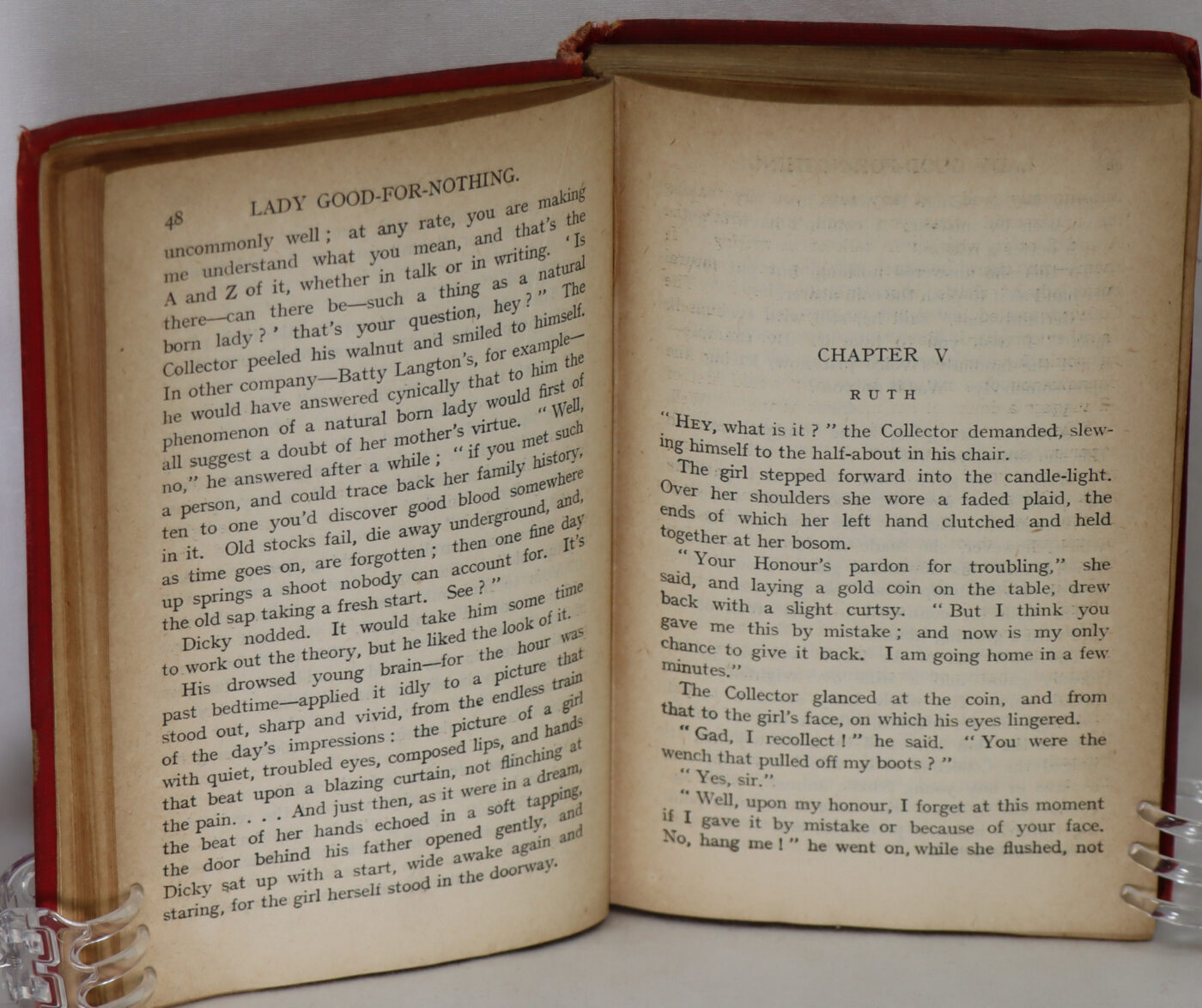
We provide an in-depth photographic presentation of this item to stimulate your feeling and touch. More traditional book descriptions are immediately available
- Note: This book carries a £5.00 discount to those that subscribe to the F.B.A. mailing list
For conditions, please view our photographs. A nice clean original book from the library gathered by the famous Cambridge Don, computer scientist, food and wine connoisseur, Jack Arnold LANG. 1910 FIRST EDITION Binding is tight, corners lightly bumped. Clean, unmarked pages. This novel explores social hierarchy and morality. The plot follows the journey of Lady Barbara, who defies societal norms and faces the consequences of her actions. Quiller-Couch’s attention to detail and nuanced character development make this novel a captivating read. Victorian literature, narrative of the complexities of human nature and gender roles, human behavior and relationships, making it a timeless and compelling piece of literature.
Sir Arthur Thomas Quiller-Couch (1863 – 1944) was a Cornish writer who published using the pseudonym Q. Although a prolific novelist, he is remembered mainly for the monumental publication The Oxford Book Of English Verse 1250-1900 (later extended to 1918) and for his literary criticism. He influenced many who never met him, including American writer Helene Hanff, author of 84, Charing Cross Road and its sequel, Q’s Legacy. His Oxford Book of English Verse was a favorite of John Mortimer’s fictional character Horace Rumpole. He was appointed King Edward VII Professor of English Literature at the University of Cambridge in 1912, and retained the chair for the rest of his life. Simultaneously he was elected to a Fellowship of Jesus College, which he also held until his death. His inaugural lectures as the professor of English literature were published as the book On the Art of Writing. His rooms were on staircase C, First Court, and known as the ‘Q-bicle’. He supervised the beginnings of the English Faculty there — an academic diplomat in a fractious community. He is sometimes regarded as the epitome of the school of English literary criticism later modified by his pupil F. R. Leavis. Alistair Cooke was a notable student of Quiller-Couch and Nick Clarke’s semi-official biography of Cooke features Quiller-Couch prominently, noting that he was regarded by the Cambridge establishment as “rather eccentric” even by the university’s standards. Quiller-Couch was a noted literary critic, publishing editions of some of Shakespeare’s plays (in the New Shakespeare, published by Cambridge University Press, with Dover Wilson) and several critical works, including Studies in Literature (1918) and On the Art of Reading (1920). He edited a companion to his verse anthology: The Oxford Book of English Prose, which was published in 1923. He left his autobiography, Memories and Opinions, unfinished; it was nevertheless published in 1945.
Want to know more about this item?
We are happy to answer any questions you may have about this item. In addition, it is also possible to request more photographs if there is something specific you want illustrated.
Ask a question
Related products





Share this Page with a friend
