
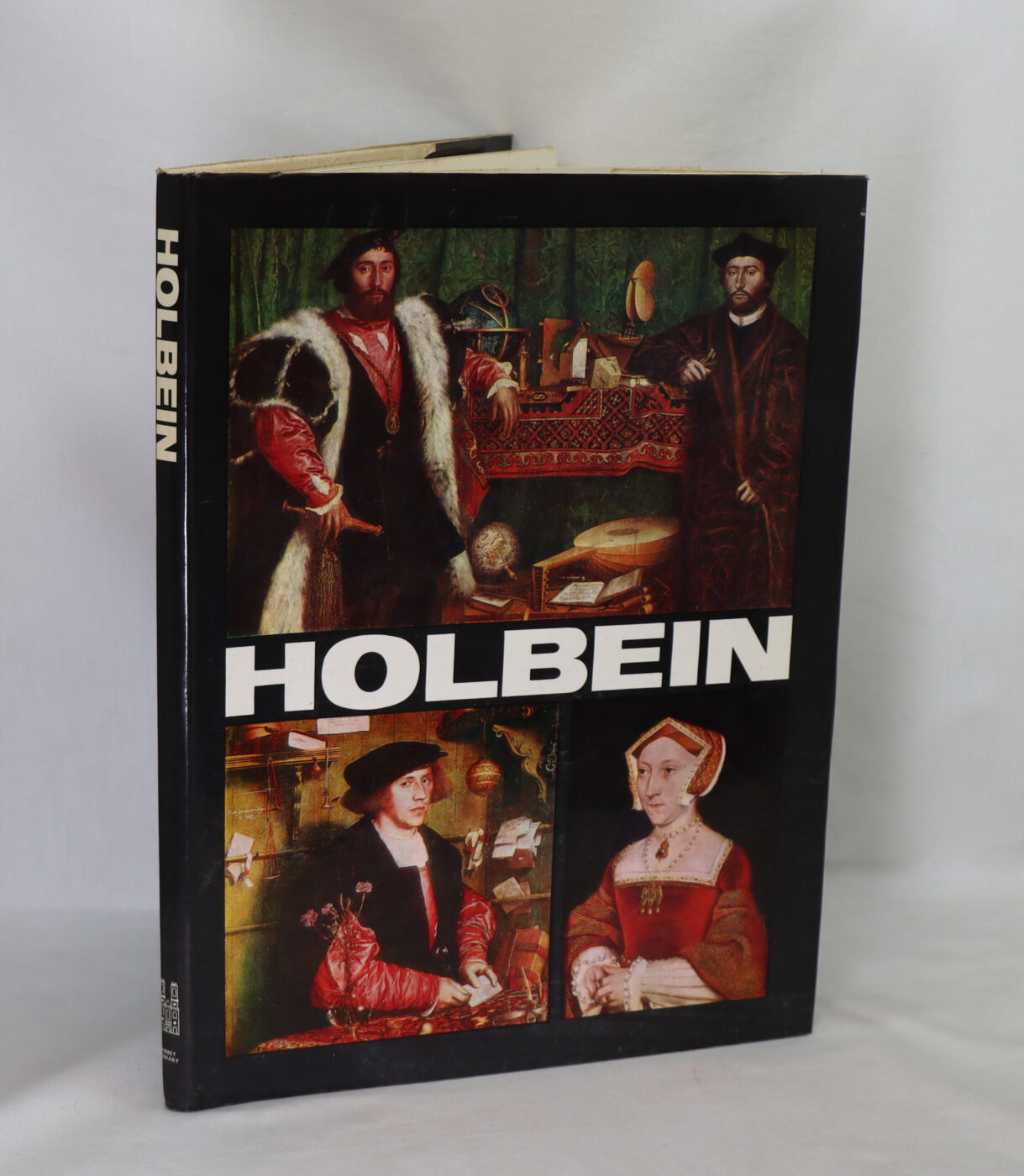
Holbein.
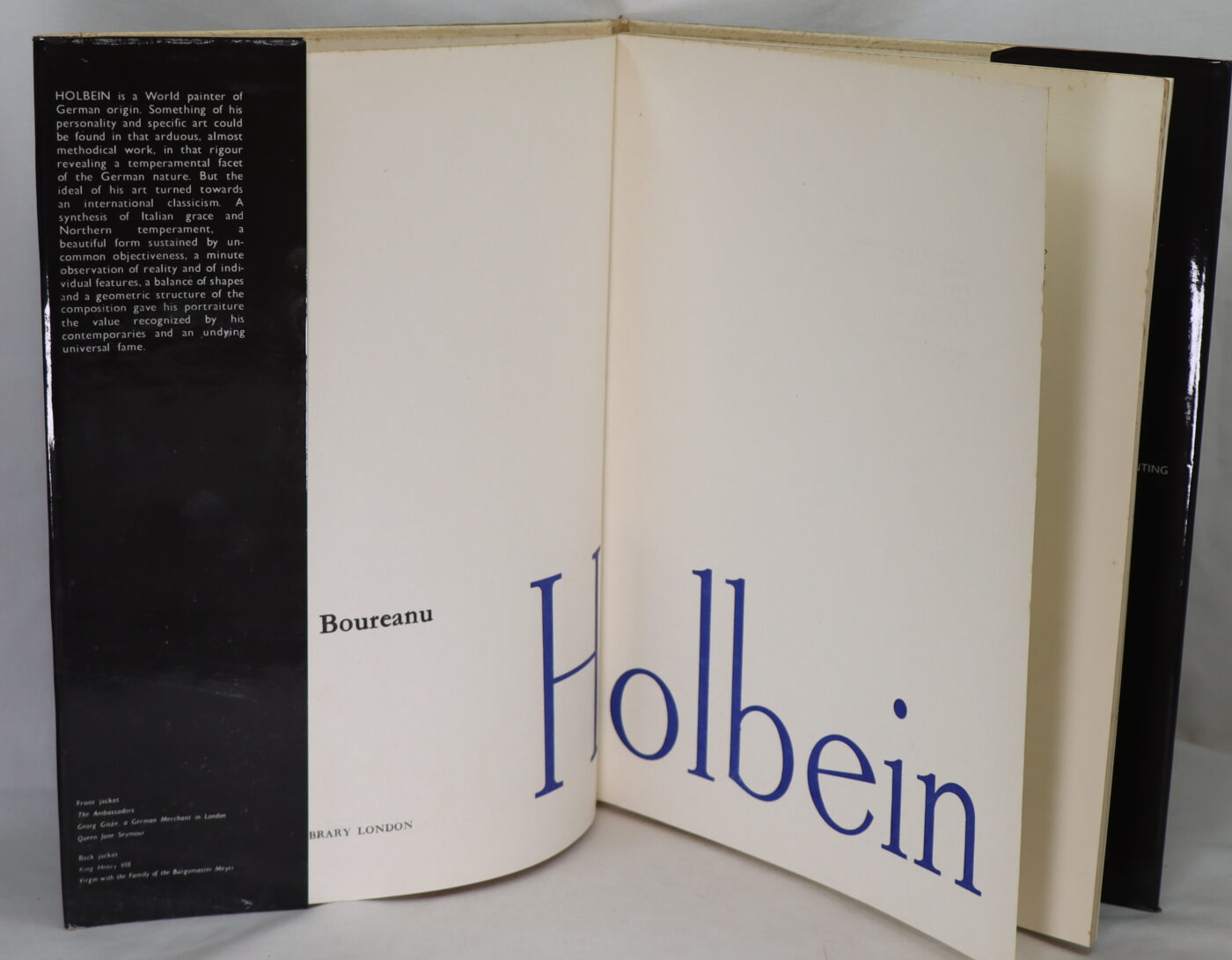
By Radu Boureanu
Printed: 1977
Publisher: Abbey Library. London
| Dimensions | 25 × 32 × 1 cm |
|---|---|
| Language |
Language: English
Size (cminches): 25 x 32 x 1
Condition: Good (See explanation of ratings)
£15.00
Buy Now
Your items

Item information
Description
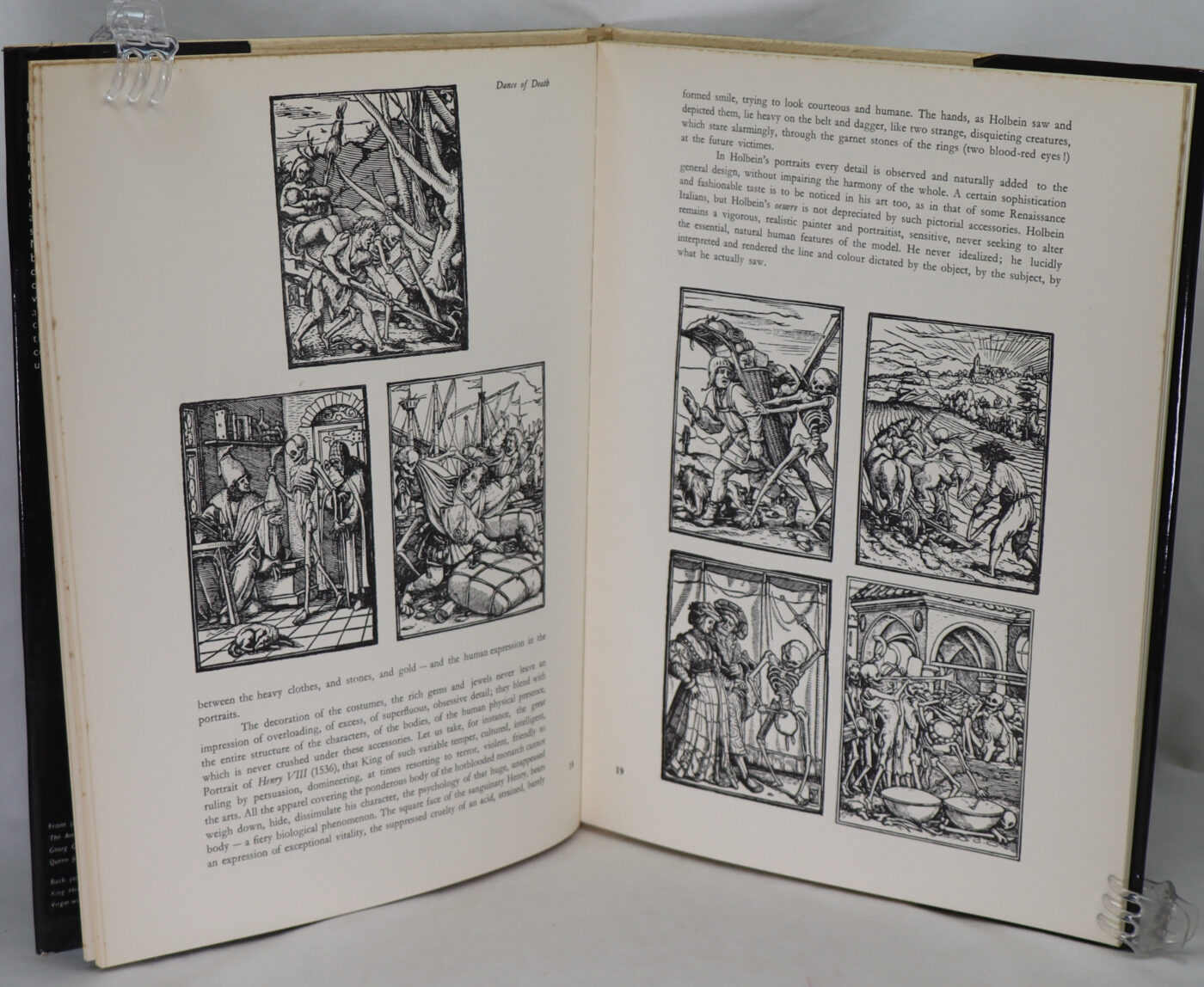
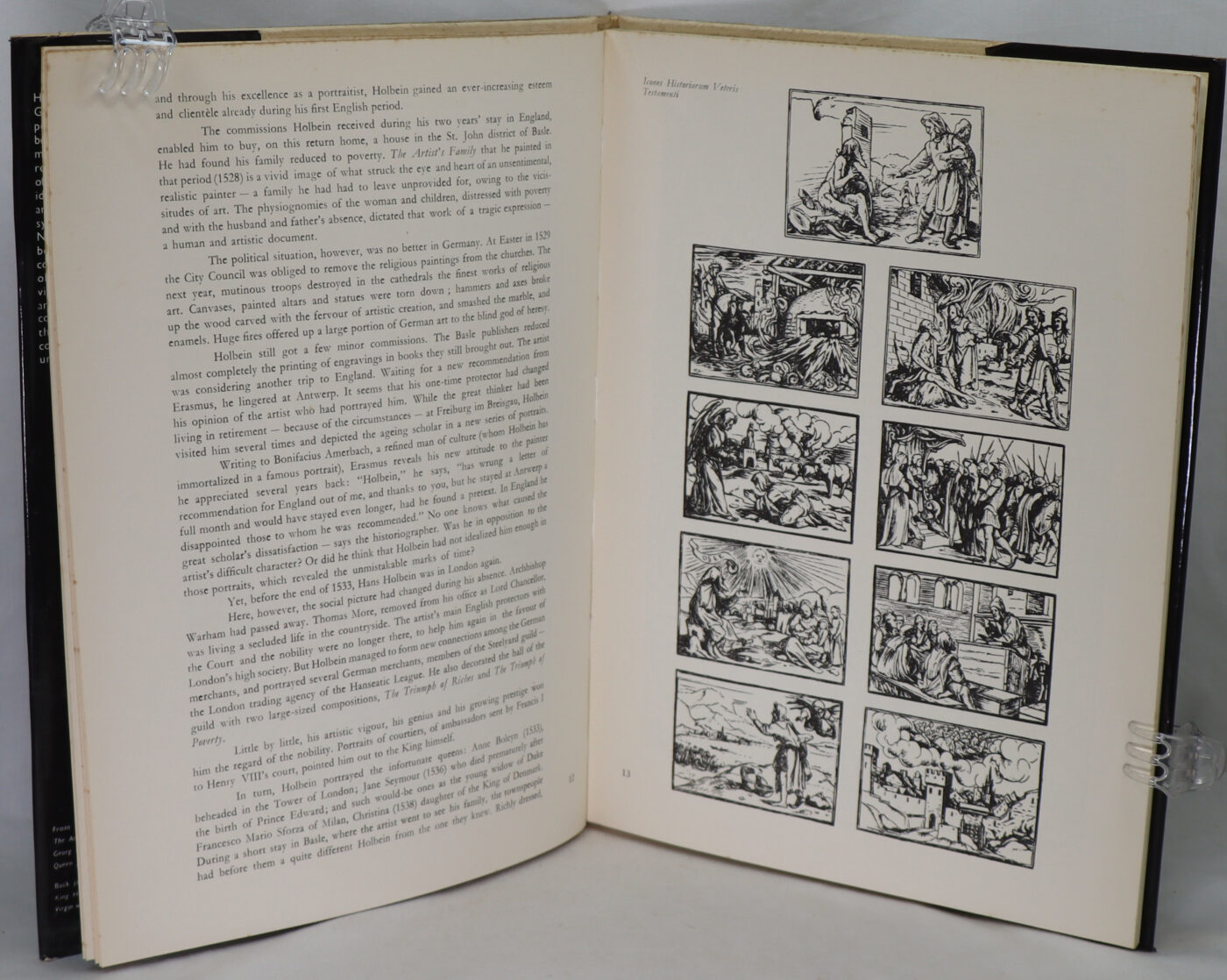
In the original dust cover. White cloth binding with black title on the spine.
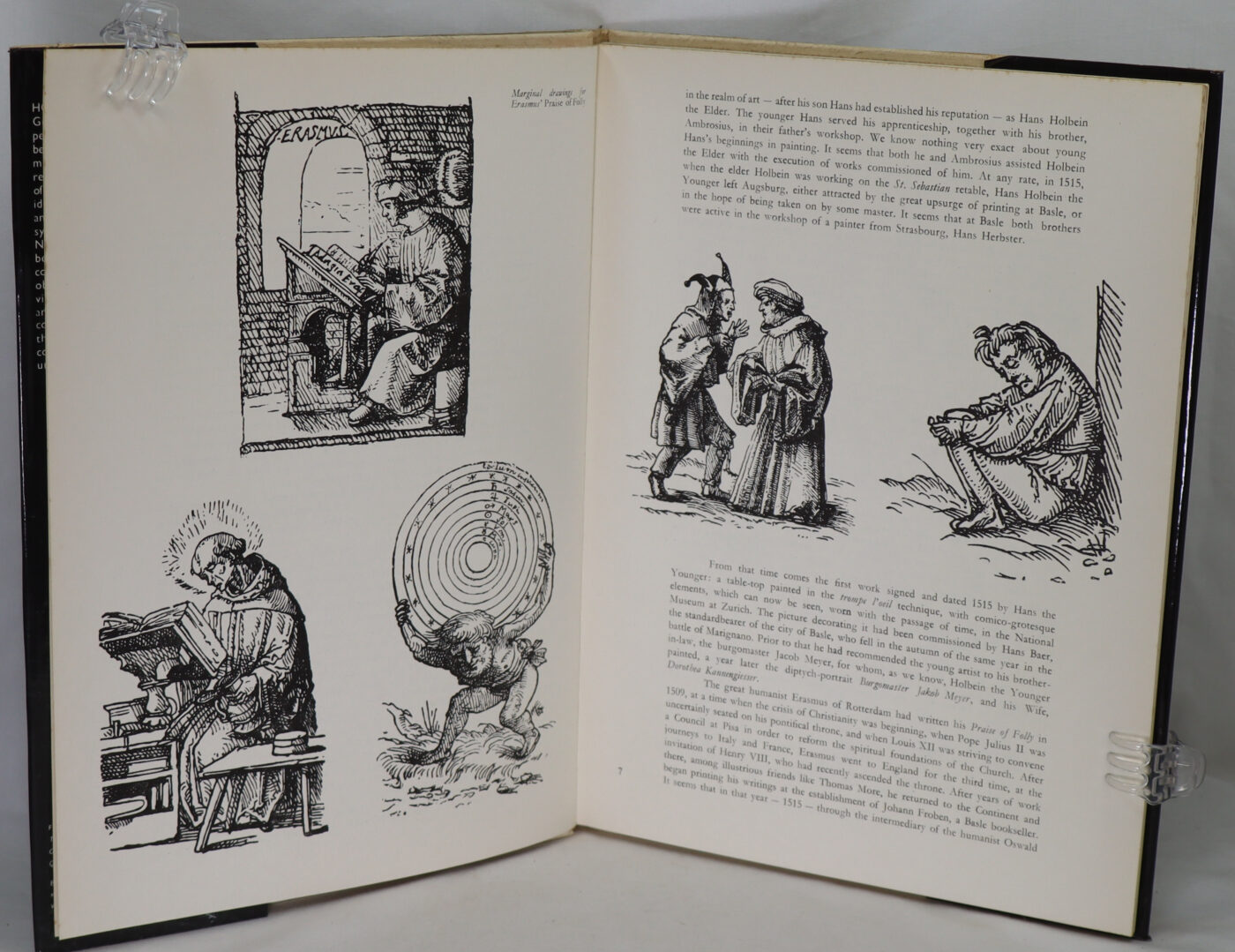
We provide an in-depth photographic presentation of this item to stimulate your feeling and touch. More traditional book descriptions are immediately available.
- Note: This book carries a £5.00 discount to those that subscribe to the F.B.A. mailing list
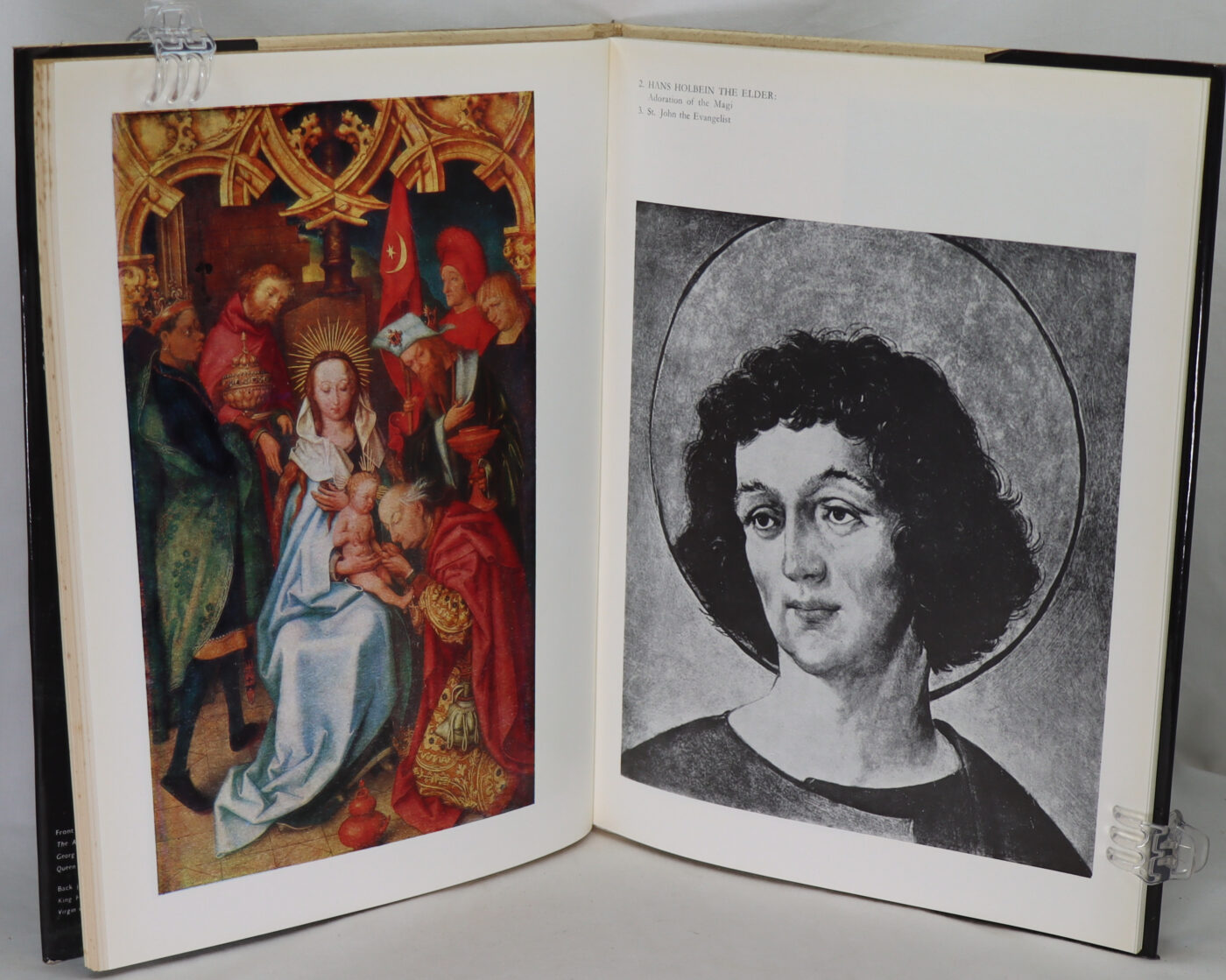
An excellent introduction to Holbein. Please view the photographs. All in all, a very interesting and informative book with many varied coloured pictures of some of his paintings.
Hans Holbein the Younger ( c. 1497 – between 7 October and 29 November 1543) was a German-Swiss painter and printmaker who worked in a Northern Renaissance style, and is considered one of the greatest portraitists of the 16th century. He also produced religious art, satire, and Reformation propaganda, and he made a significant contribution to the history of book design. He is called “the Younger” to distinguish him from his father Hans Holbein the Elder, an accomplished painter of the Late Gothic school.
Holbein was born in Augsburg but worked mainly in Basel as a young artist. At first, he painted murals and religious works, and designed stained glass windows and illustrations for books from the printer Johann Froben. He also painted an occasional portrait, making his international mark with portraits of humanist Desiderius Erasmus of Rotterdam. When the Reformation reached Basel, Holbein worked for reformist clients while continuing to serve traditional religious patrons. His Late Gothic style was enriched by artistic trends in Italy, France, and the Netherlands, as well as by Renaissance humanism. The result was a combined aesthetic uniquely his own.
Holbein travelled to England in 1526 in search of work with a recommendation from Erasmus. He was welcomed into the humanist circle of Thomas More, where he quickly built a high reputation. He returned to Basel for four years, then resumed his career in England in 1532 under the patronage of Anne Boleyn and Thomas Cromwell. By 1535, he was King’s Painter to Henry VIII. In this role, he produced portraits and festive decorations, as well as designs for jewellery, plate, and other precious objects. His portraits of the royal family and nobles are a record of the court in the years when Henry was asserting his supremacy over the Church of England.
Holbein’s art was prized from early in his career. French poet and reformer Nicholas Bourbon (the elder) dubbed him “the Apelles of our time”, a typical accolade at the time. Holbein has also been described as a great “one-off” in art history since he founded no school. Some of his work was lost after his death, but much was collected and he was recognized among the great portrait masters by the 19th century. Recent exhibitions have also highlighted his versatility. He created designs ranging from intricate jewellery to monumental frescoes.
Holbein’s art has sometimes been called realist, since he drew and painted with a rare precision. His portraits were renowned in their time for their likeness, and it is through his eyes that many famous figures of his day are pictured today, such as Erasmus and More. He was never content with outward appearance, however; he embedded layers of symbolism, allusion, and paradox in his art, to the lasting fascination of scholars. In the view of art historian Ellis Waterhouse, his portraiture “remains unsurpassed for sureness and economy of statement, penetration into character, and a combined richness and purity of style.”
Want to know more about this item?
We are happy to answer any questions you may have about this item. In addition, it is also possible to request more photographs if there is something specific you want illustrated.
Ask a question
Related products
Share this Page with a friend
