
Hadrian's Wall. 1989-1999.
By Paul Bidwell
ISBN: 9780192841018
Printed: 1999
Publisher: Society of Antiquities of Newcastle Upon Tyne.
Edition: 1st edition
| Dimensions | 16 × 22 × 2 cm |
|---|---|
| Language |
Language: English
Size (cminches): 16 x 22 x 2
Condition: Fine (See explanation of ratings)
£27.00
Buy Now
Your items

Item information
Description
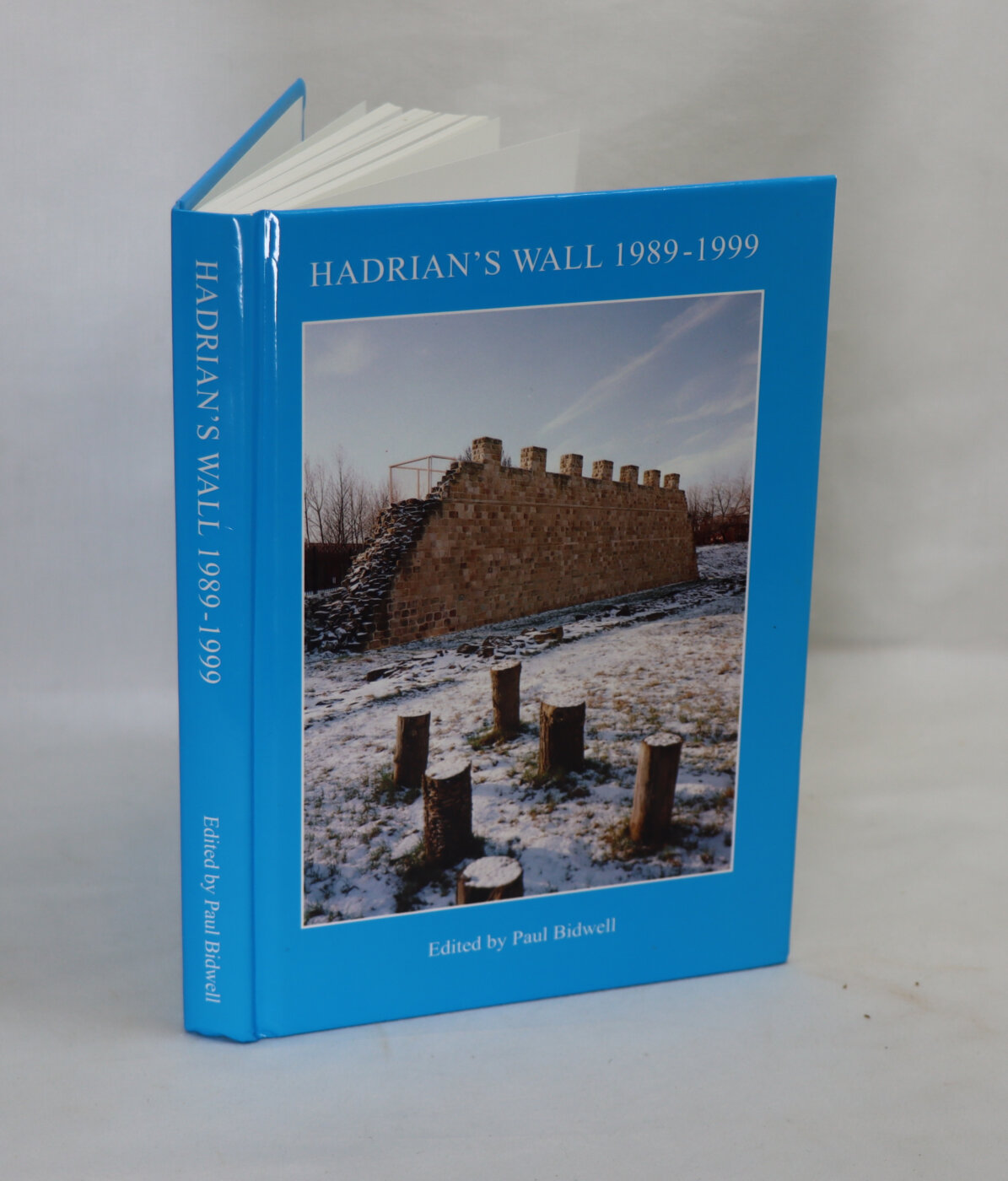
Blue board binding with white title part of the wall on the front board.
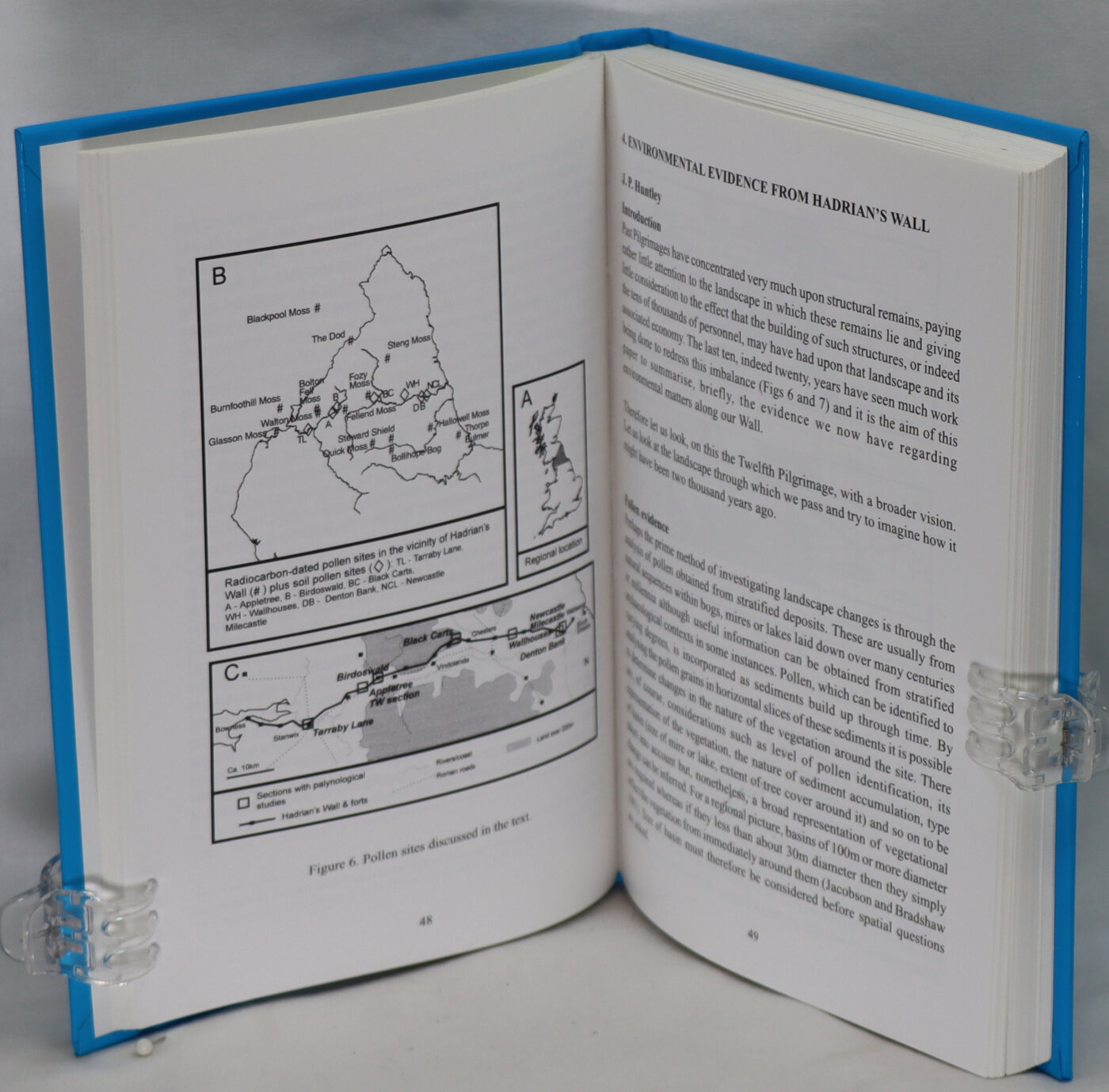
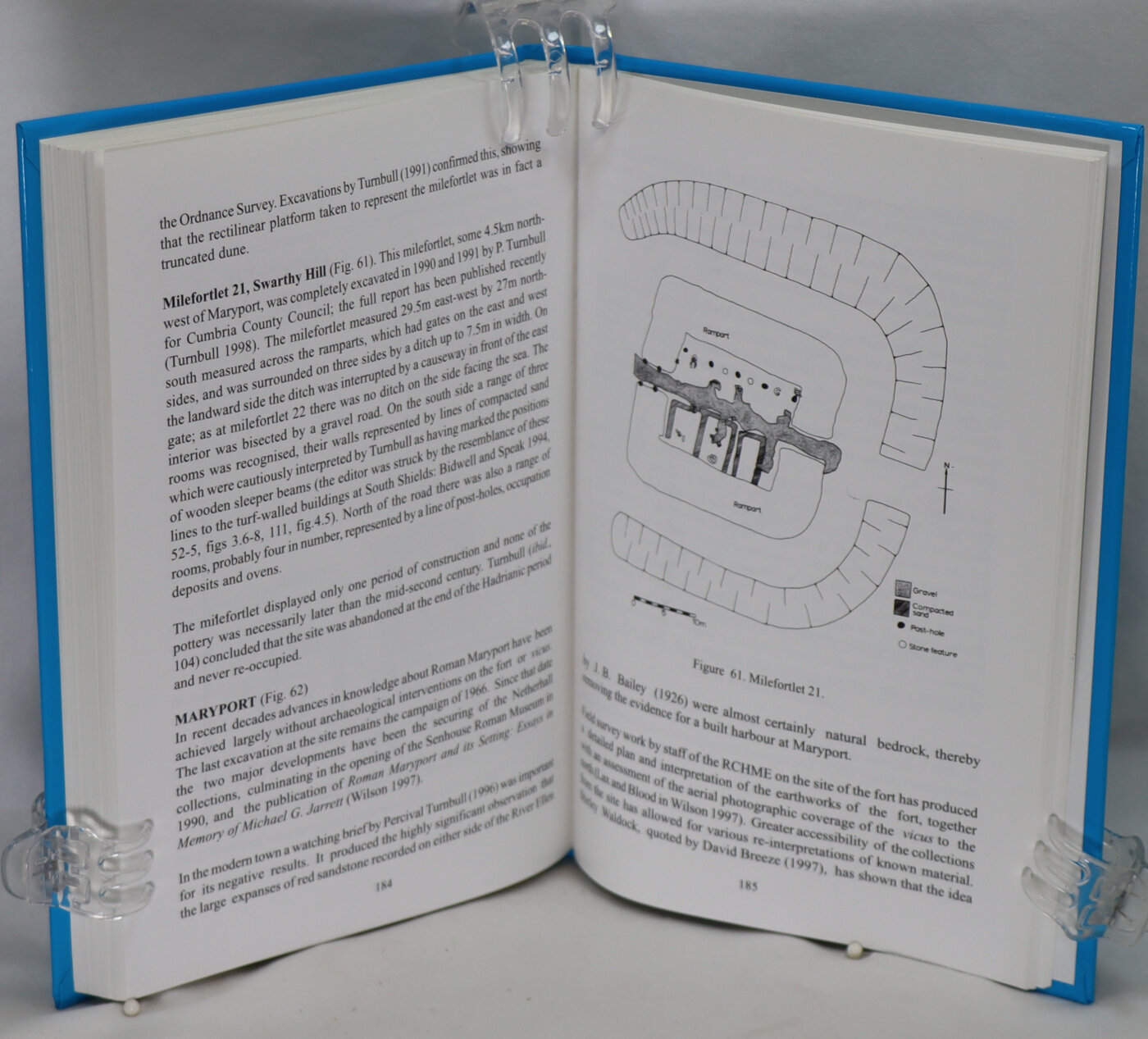
- We provide an in-depth photographic presentation of this item to stimulate your feeling and touch. More traditional book descriptions are immediately available
- Note: This book carries a £5.00 discount to those that subscribe to the F.B.A. mailing list
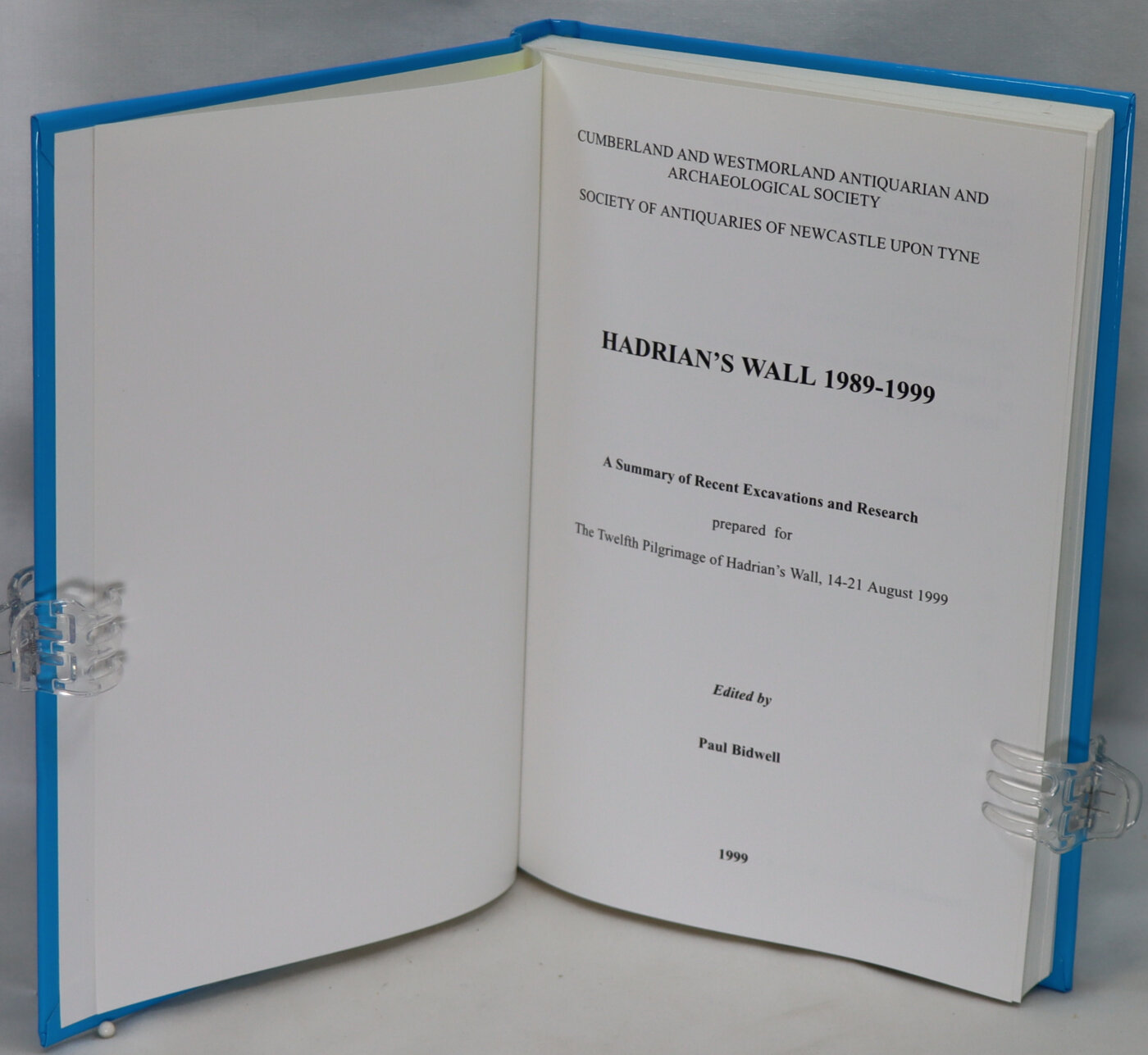
- A Summary of Excavation and Research Prepared for the Twelfth Pilgrimage of Hadrian’s Wall, 14-21 August 1999.
First Edition and as the photographs testify, is in great order.
Hadrian’s Wall (also known as the Roman Wall, Picts’ Wall, or Vallum Aelium in Latin) is a former defensive fortification of the Roman province of Britannia, begun in AD 122 in the reign of the Emperor Hadrian. Running from Wallsend on the River Tyne in the east to Bowness-on-Solway in the west of what is now northern England, it was a stone wall with large ditches in front and behind, stretching across the whole width of the island. Soldiers were garrisoned along the line of the wall in large forts, smaller milecastles, and intervening turrets. In addition to the wall’s defensive military role, its gates may have been customs posts.
Hadrian’s Wall Path generally runs close along the wall. Almost all the standing masonry of the wall was removed in early modern times and used for local roads and farmhouses. None of it stands to its original height, but modern work has exposed much of the footings, and some segments display a few courses of modern masonry reconstruction. Many of the excavated forts on or near the wall are open to the public, and various nearby museums present its history. The largest Roman archaeological feature in Britain, it runs a total of 73 miles (117.5 kilometres). Regarded as a British cultural icon, Hadrian’s Wall is one of Britain’s major ancient tourist attractions. It was designated a UNESCO World Heritage Site in 1987. The turf-built Antonine Wall of 142 in what is now central Scotland, which briefly superseded Hadrian’s Wall before being abandoned, was declared a World Heritage Site in 2008.
Hadrian’s Wall marked the boundary between Roman Britannia and unconquered Caledonia to the north. The wall lies entirely within England and has never formed the Anglo-Scottish border, though it is sometimes loosely or colloquially described as such.
Want to know more about this item?
We are happy to answer any questions you may have about this item. In addition, it is also possible to request more photographs if there is something specific you want illustrated.
Ask a question
Related products

Share this Page with a friend
