
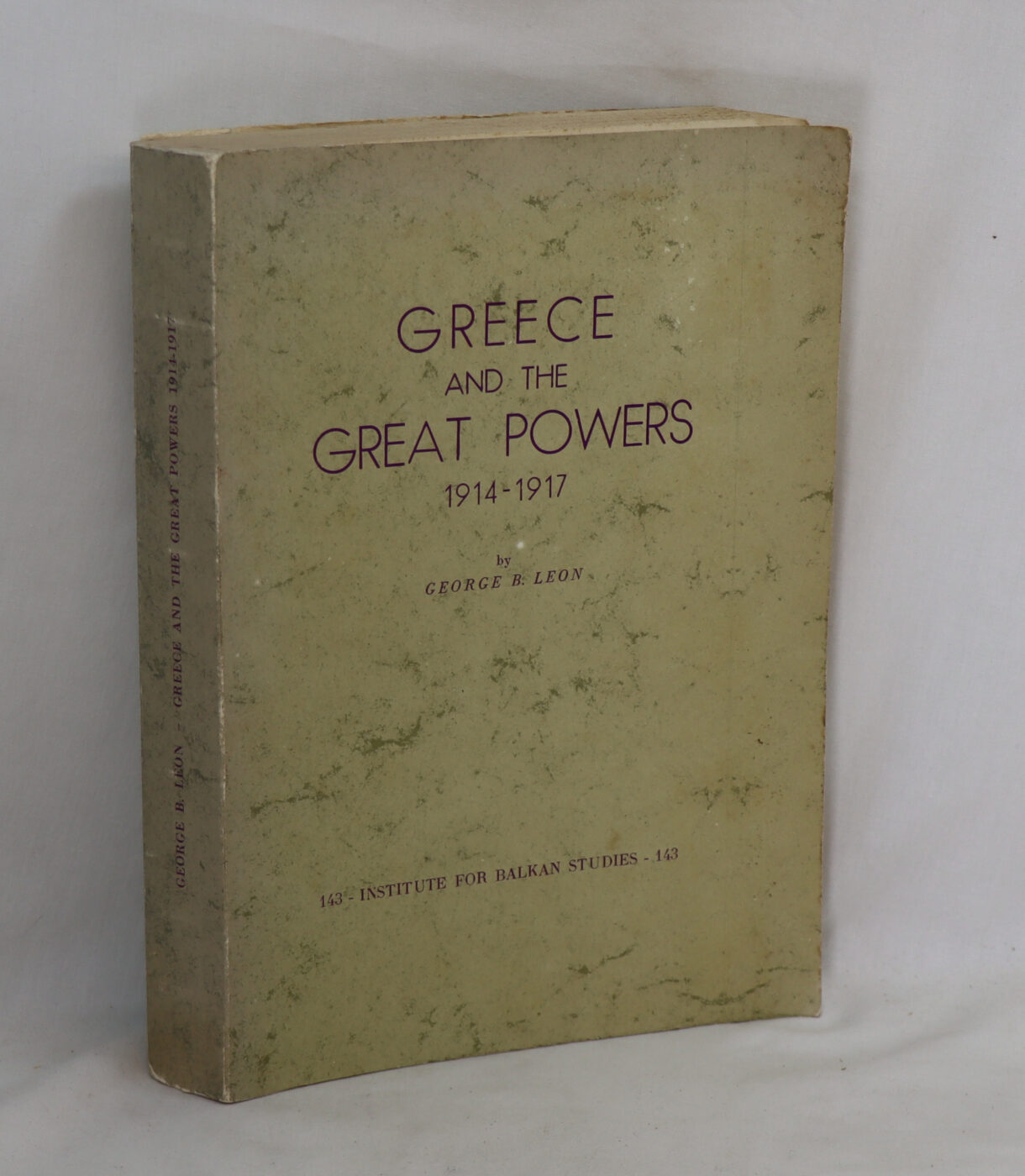
Greece and the Great Powers.1914 - 1917.
By George B Leon
Printed: 1974
Publisher: Institute for Balkian Studies. Thessaloniki.
| Dimensions | 17 × 24 × 3 cm |
|---|---|
| Language |
Language: English
Size (cminches): 17 x 24 x 3
Condition: Very good (See explanation of ratings)
£44.00
Buy Now
Your items

Item information
Description
Paperback. Cream cover with purple title.
We provide an in-depth photographic presentation of this item to stimulate your feeling and touch. More traditional book descriptions are immediately available.
- Note: This book carries a £5.00 discount to those that subscribe to the F.B.A. mailing list
Please view our photographs.“Greece and the Great Powers, 1914–1917” is a highly regarded historical text by George B. Leon (also known as George Leontaritis). Originally published in 1974 by the Institute for Balkan Studies in Thessaloniki, Greece, this 521-page hardcover monograph remains a foundational reference work for studying Balkan diplomacy during World War I.
Book Summary & Key Themes
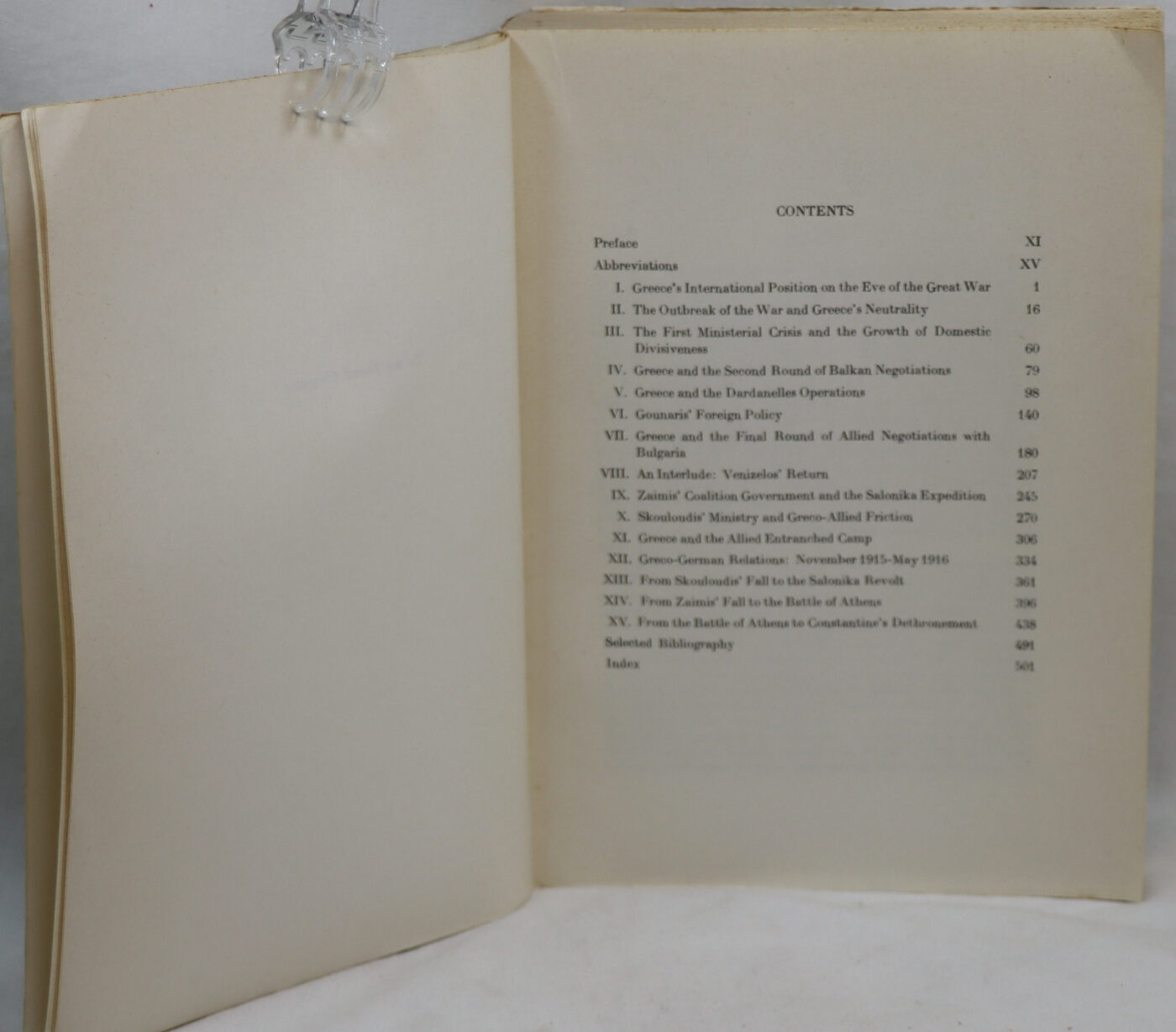
The book extensively analyzes the intricate diplomatic, military, and domestic challenges Greece faced from the outbreak of the Great War until its formal intervention. The core historical events covered in the text include:
- The National Schism (Ethnikos Dichasmos): The deep political divide between the royalist faction led by King Constantine I (who favored neutrality leaning toward the Central Powers) and the liberal faction under Prime Minister Eleftherios Venizelos (who strongly advocated joining the Allies).
- Great Power Intervention: How Great Britain, France, Germany, and Russia pressured the Greek state, leading to severe political crises, blockades, and a temporary split of the country into two separate governments.
- Regional Geopolitics: The shifting alliances and conflicts involving neighboring states like Serbia, Bulgaria, and the Ottoman Empire.
Core Bibliographic Details
- Author: George B. Leon (George Leontaritis)
- Publisher: Institute for Balkan Studies (IMXA, Volume #143), Thessaloniki.
- Publication Year: 1974
- Format: Hardcover, English language
- Page Count: xiv, 521 pages
- Approximate Dimensions: 6.8 x 9.6 x 1.2 inches (roughly 25 cm tall)
Because it was published right after the collapse of the Greek military junta in 1974, this book was among the first major objective studies allowed to explore the sensitive history of the Greek monarchy and the structural divisions caused by the First World War.
An out-of-print copy of “Greece and the Great Powers, 1914–1917” by George B. Leon in Very Good condition typically commands an estimated market value between £45 and £85 on the collectible book market.
Content Overview & Structural Framework
The monograph spans 521 pages and is organized into a detailed analytical breakdown of the diplomatic chess match that gripped Greece. Based on standard historical breakdowns of Leon’s work, the core progression of the content tracks the following trajectory:
- Background & the Balkan Catalyst
- The Post-Balkan Wars Reality: Examining Greece’s territorial expansions from 1912–1913 and how they complicated ties with Bulgaria and the Ottoman Empire.
- The Protective Powers Formula: Exploring the 19th-century historical precedent of Britain, France, and Russia acting as “protectors” of Greece, blurring the lines of true sovereignty.
- Outbreak of War & The Great Dilemma (1914–1915)
- The Royalist vs. Liberal Clash: Detailed documentation of the emerging National Schism. It highlights Eleftherios Venizelos’s strategic gamble on a victorious Entente against King Constantine I’s absolute insistence on neutrality.
- The Dardanelles Offers: Diplomatic records of the failed Entente negotiations offering Greece territorial gains in Asia Minor in exchange for military intervention.
- Sovereign Infringement & The Salonika Landing (1915–1916)
- The Violations of Neutrality: The controversial Allied landing at Thessaloniki (Salonika) to establish the Macedonian Front without explicit royal permission.
- The Secret Propaganda Wars: How British, French, and German intelligence networks funded rival press syndicates inside Athens to sway public opinion.
- The Separation of the State (1916–1917)
- The Provisional Government: The total breakdown of domestic order leading to Venizelos setting up a rival, pro-Allied government in Thessaloniki while the King retained Athens.
- The Allied Blockade: The enforcement of strict maritime embargoes by the French navy, resulting in famine conditions in southern Greece.
- Abdication and Forceful Intervention (Mid-1917)
- The Ousting of Constantine: The final diplomatic ultimatum delivered by the Allies forcing King Constantine I to abdicate in June 1917, allowing Venizelos to reunite the country and formally enter the Great War.
Want to know more about this item?
We are happy to answer any questions you may have about this item. In addition, it is also possible to request more photographs if there is something specific you want illustrated.
Ask a question
Related products




Share this Page with a friend
