
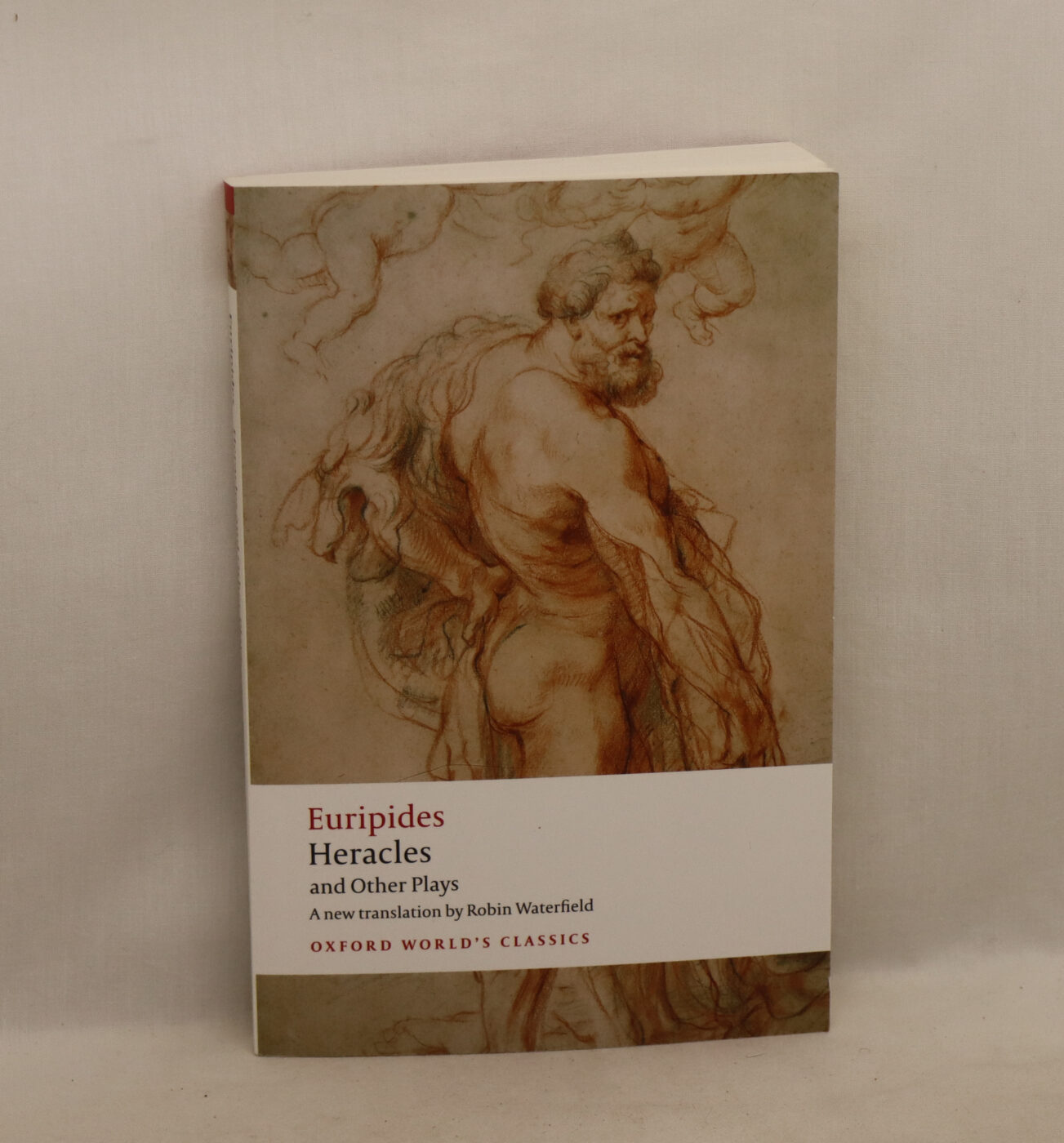
Euripides. Hercules and Other Plays.
By Robin Waterfield
ISBN: 9781585101481
Printed: 2008
Publisher: Oxford University Press.
| Dimensions | 13 × 19 × 1.5 cm |
|---|---|
| Language |
Language: English
Size (cminches): 13 x 19 x 1.5
Condition: As new (See explanation of ratings)
£8.00
Buy Now

Item information
Description
Paperback. White cover with black and red title and fish image.
We provide an in-depth photographic presentation of this item to stimulate your feeling and touch. More traditional book descriptions are immediately available
-
THIS FROST PAPERBACK is a NEW book which a member of the Frost family has checked for condition, cleanliness, completeness and readability. When the buyer collects their book from Frost’s shop, the delivery charge of £3.00 is deducted
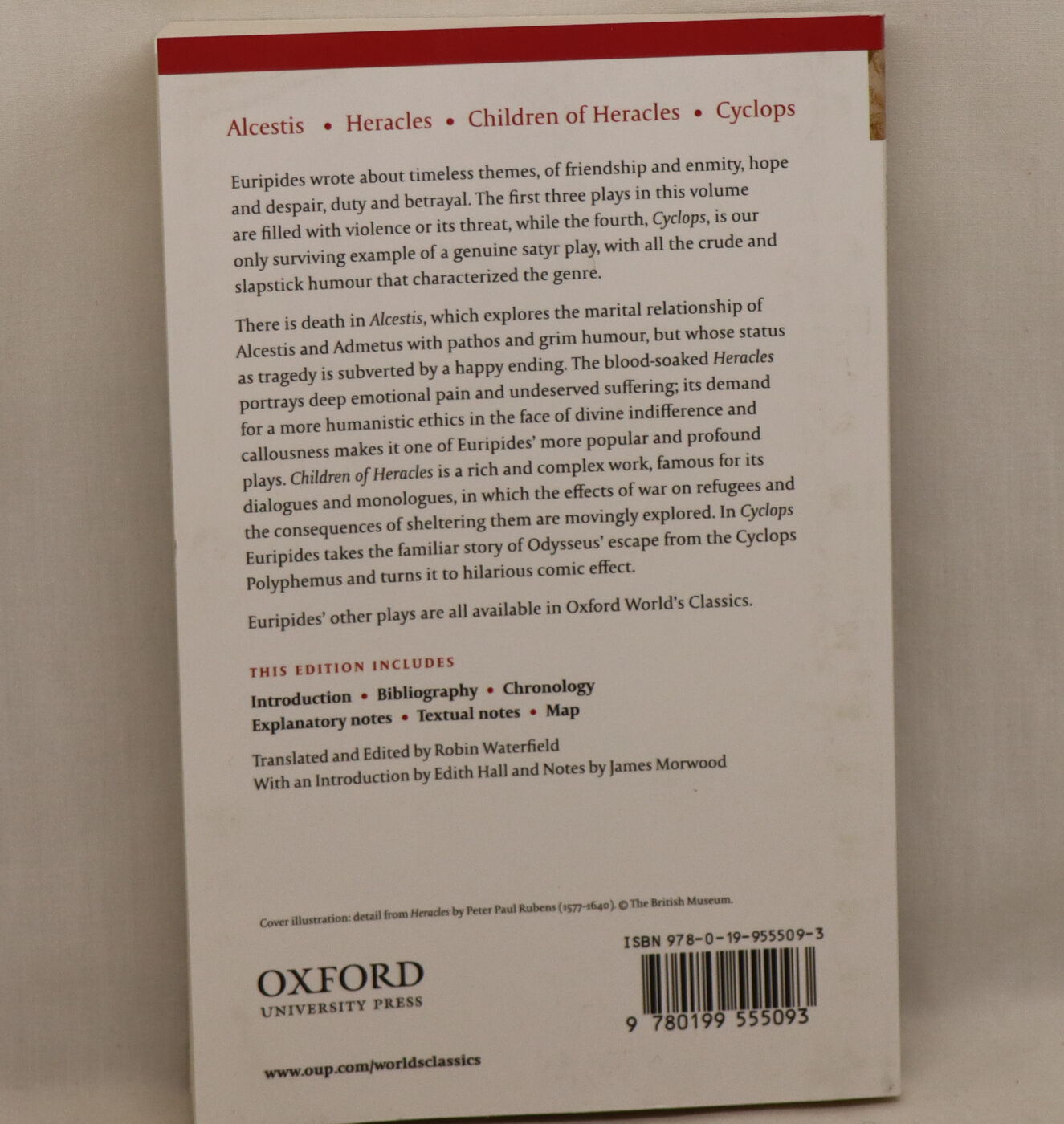
Alcestis * Heracles * Children of Heracles * Cyclops
Euripides wrote about timeless themes, of friendship and enmity, hope and despair, duty and betrayal. The first three plays in this volume are filled with violence or its threat, while the fourth, Cyclops, is our only surviving example of a genuine satyr play, with all the crude and slapstick humour that characterized the genre.
There is death in Alcestis, which explores the marital relationship of Alcestis and Admetus with pathos and grim humour, but whose status as tragedy is subverted by a happy ending. The blood-soaked Heracles portrays deep emotional pain and undeserved suffering; its demand for a more humanistic ethics in the face of divine indifference and callousness makes it one of Euripides’ more popular and profound plays. Children of Heracles is a rich and complex work, famous for its dialogues and monologues, in which the effects of war on refugees and the consequences of sheltering them are movingly explored. In Cyclops Euripides takes the familiar story of Odysseus’ escape from the Cyclops Polyphemus and turns it to hilarious comic effect.
Euripides’ other plays are all available in Oxford World’s Classics.
ABOUT THE SERIES: For over 100 years Oxford World’s Classics has made available the widest range of literature from around the globe. Each affordable volume reflects Oxford’s commitment to scholarship, providing the most accurate text plus a wealth of other valuable features, including expert introductions by leading authorities, helpful notes to clarify the text, up-to-date bibliographies for further study, and much more.
Review: Robin Waterfield writes in a clear, accessible, contemporary manner. Some people like slightly archaic sounding translations to match the archaism of the original. My point of view, shared by many others, is that readers/listeners of the original Greek were listening to contemporary, though somewhat literary Greek. Therefore, a translation shouldn’t sound archaic, but contemporary. Socrates, in Plato’s writings, shouldn’t sound like a nineteenth century English gentleman. He was talking to his contemporaries in the vernacular. If you share my preferences, you should buy this translation and if not, not. Also, the notes in these Oxford translations are copious and excellent. They can be easily ignored as they are end notes. But I found them very useful for understanding references. Writers of tragedies varied their language in the interests of avoiding repetition so they will say ‘those who live by the Eurotas’ rather than saying ‘Spartans’ or Lacedaemanians yet again – and if you don’t know all the names of Ancient Greek rivers you won’t know what he is talking about!
Robin Waterfield has translated numerous classical texts for OWC, including Plato’s Republic, Herodotus’ Histories and Plutarch’s Greek Lives and Roman Lives
Edith Hall is co-director of the Archive of Performances of Greek and Roman Drama at the University of Oxford. She has published widely on ancient Greek drama and society, reviews and appears on radio and television. She has written introductions to the other four volumes of Euripides’ plays in OWC.
James Morwood has translated three volumes of Euripides’ plays for OWC and is the author of The Plays of Euripides and A Dictionary of Latin Words and Phrases.
Want to know more about this item?
We are happy to answer any questions you may have about this item. In addition, it is also possible to request more photographs if there is something specific you want illustrated.
Ask a question
Related products
Share this Page with a friend
