
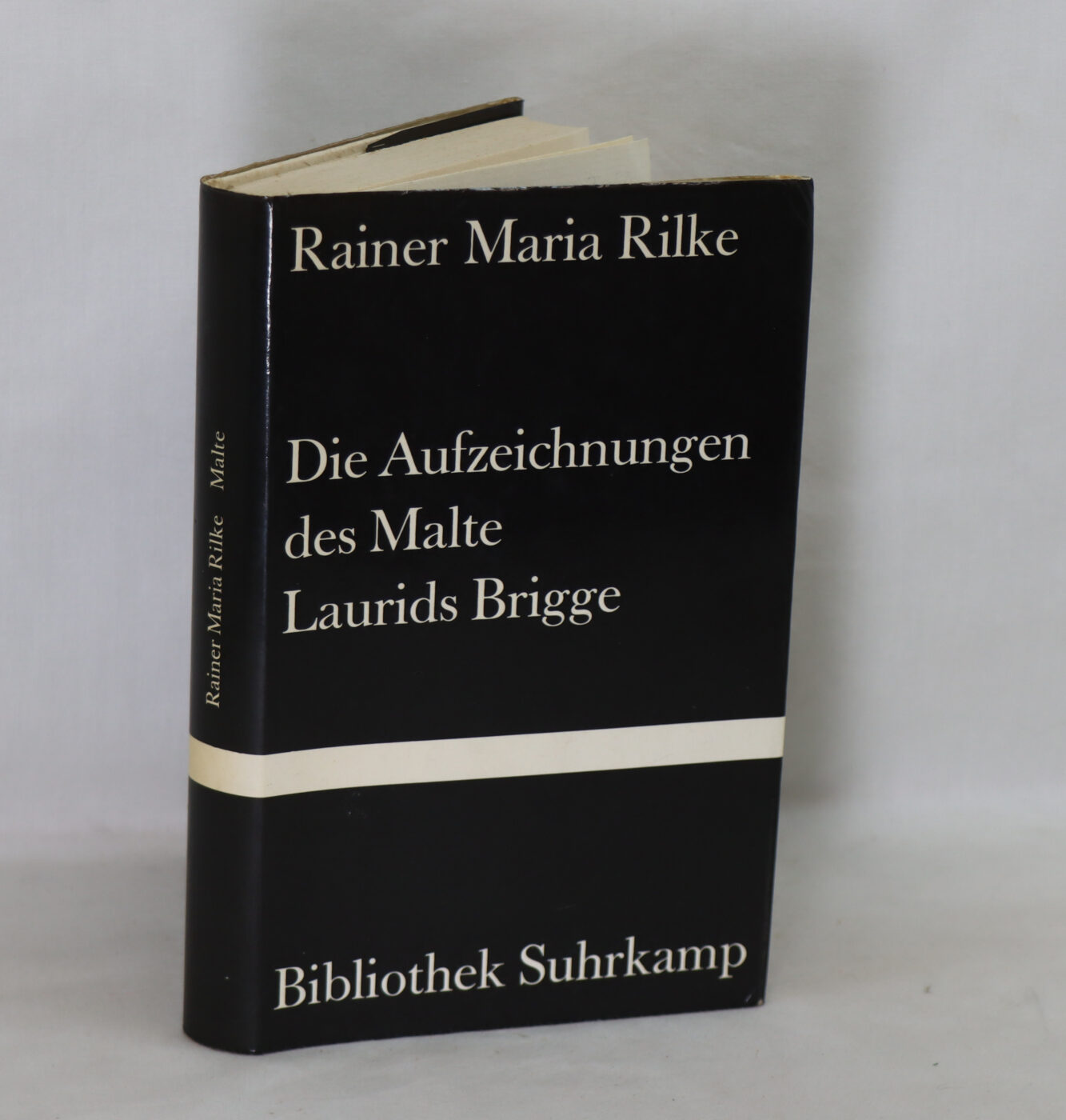
Die Aufzeichnungen des Malte Laurids Brigge.
By Rainer Maria Rilke
ISBN: 9781564787064
Printed: 1980
Publisher: SuhrKamp Verlag
| Dimensions | 12 × 18 × 2 cm |
|---|---|
| Language |
Language: German
Size (cminches): 12 x 18 x 2
Condition: Very good (See explanation of ratings)
£28.00
Buy Now

Item information
Description
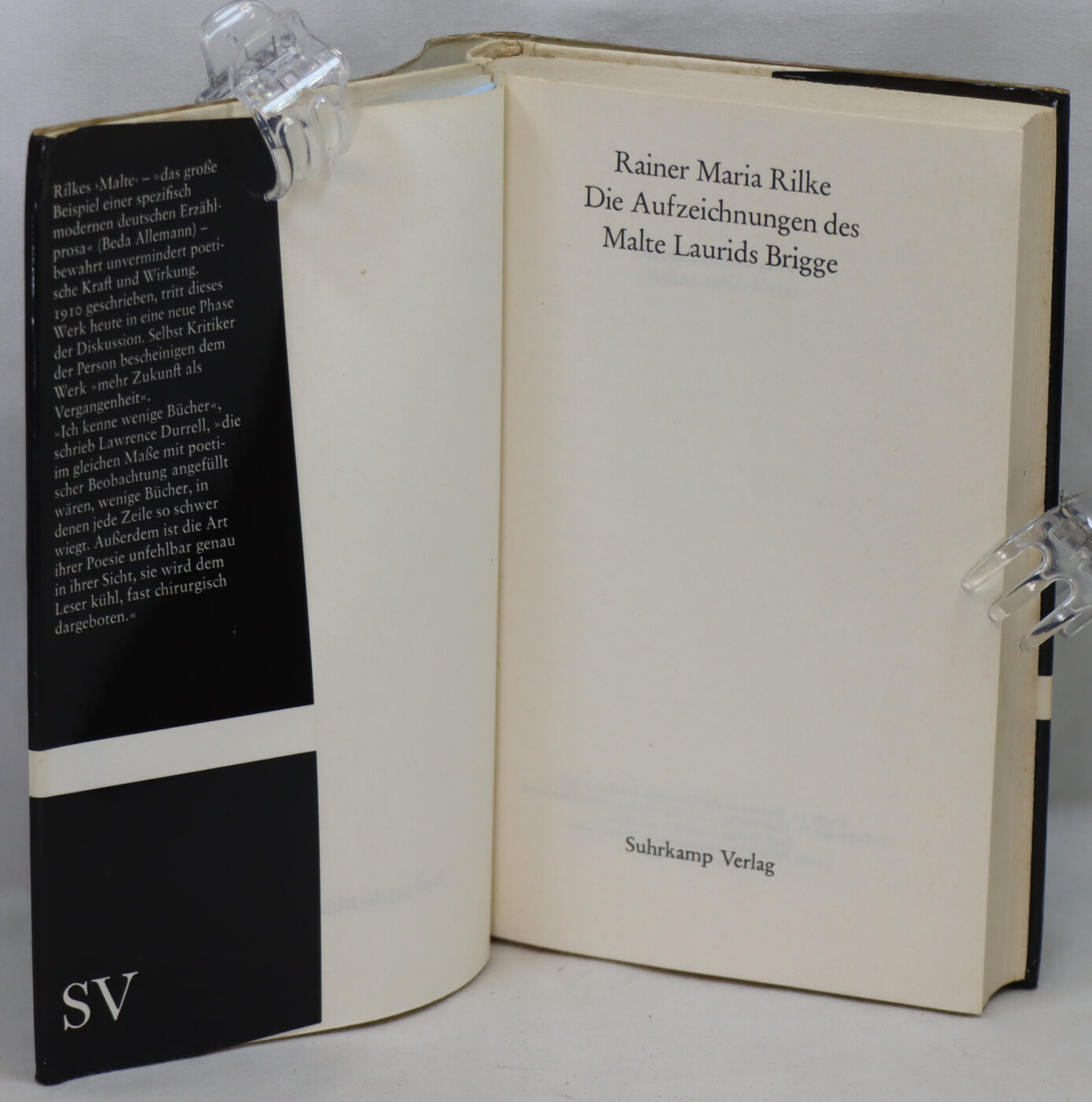
In the original dust jacket. Black board binding with white title on the spine
We provide an in-depth photographic presentation of this item to stimulate your feeling and touch. More traditional book descriptions are immediately available
Note: This book carries a £5.00 discount to those that subscribe to the F.B.A. mailing list
For conditions, please view our photographs. A ground-breaking masterpiece of early European modernism originally published in 1910, The Notebooks of Malte Laurids Brigge unspools the vivid reflections of the titular young Danish nobleman and poet. From his Paris garret, Brigge records his encounters with the city and its outcasts, muses on his family history and lays bare his earliest experiences of fear, tenderness and desolation. With a poet’s feel for language and a keen instinct for storytelling, Rainer Maria Rilke forges a dazzlingly fractured coming-of-age narrative, kaleidoscopic in its alternation of vivid present encounters and equally alive memories of childhood. Strikingly contemporary, The Notebooks of Malte Laurids Brigge reveals a writer metabolising his own experiences to yield still-essential questions about fiction and reality, empathy and psychosis, and-above all-life, love and death. In a fascinating introduction, award-winning translator Edward Snow explores the overlaps between Rilke’s experiences and those of his protagonist, and shows with granular attention the novel’s capacity for nuance and sympathy. Snow’s exquisite translation captures as never before the astonishing cadences and musical clarity of the poet’s prose. It reveals The Notebooks of Malte Laurids Brigge as an urgent contemporary achievement, more than one hundred years after it was written.
René Karl Wilhelm Johann Josef Maria Rilke (4 December 1875 – 29 December 1926), known as Rainer Maria Rilke, was an Austrian poet and novelist. Acclaimed as an idiosyncratic and expressive poet, he is widely recognized as a significant writer in the German language. His work is viewed by critics and scholars as possessing undertones of mysticism, exploring themes of subjective experience and disbelief. His writings include one novel, several collections of poetry, several volumes of correspondence and a few early novellas.
Rilke travelled extensively throughout Europe, finally settling in Switzerland, which provided the inspiration for many of his poems. While Rilke is best known for his contributions to German literature, he also wrote in French. Among English-language readers, his best-known works include two poetry collections: Duino Elegies (Duineser Elegien) and Sonnets to Orpheus (Die Sonette an Orpheus), a semi-autobiographical novel The Notebooks of Malte Laurids Brigge (Die Aufzeichnungen des Malte Laurids Brigge), and a collection of ten letters published posthumously Letters to a Young Poet (Briefe an einen jungen Dichter). In the later 20th century, his work found new audiences in citations by self-help authors and frequent quotations in television shows, books and motion pictures.
Want to know more about this item?
We are happy to answer any questions you may have about this item. In addition, it is also possible to request more photographs if there is something specific you want illustrated.
Ask a question
Related products
Share this Page with a friend
