
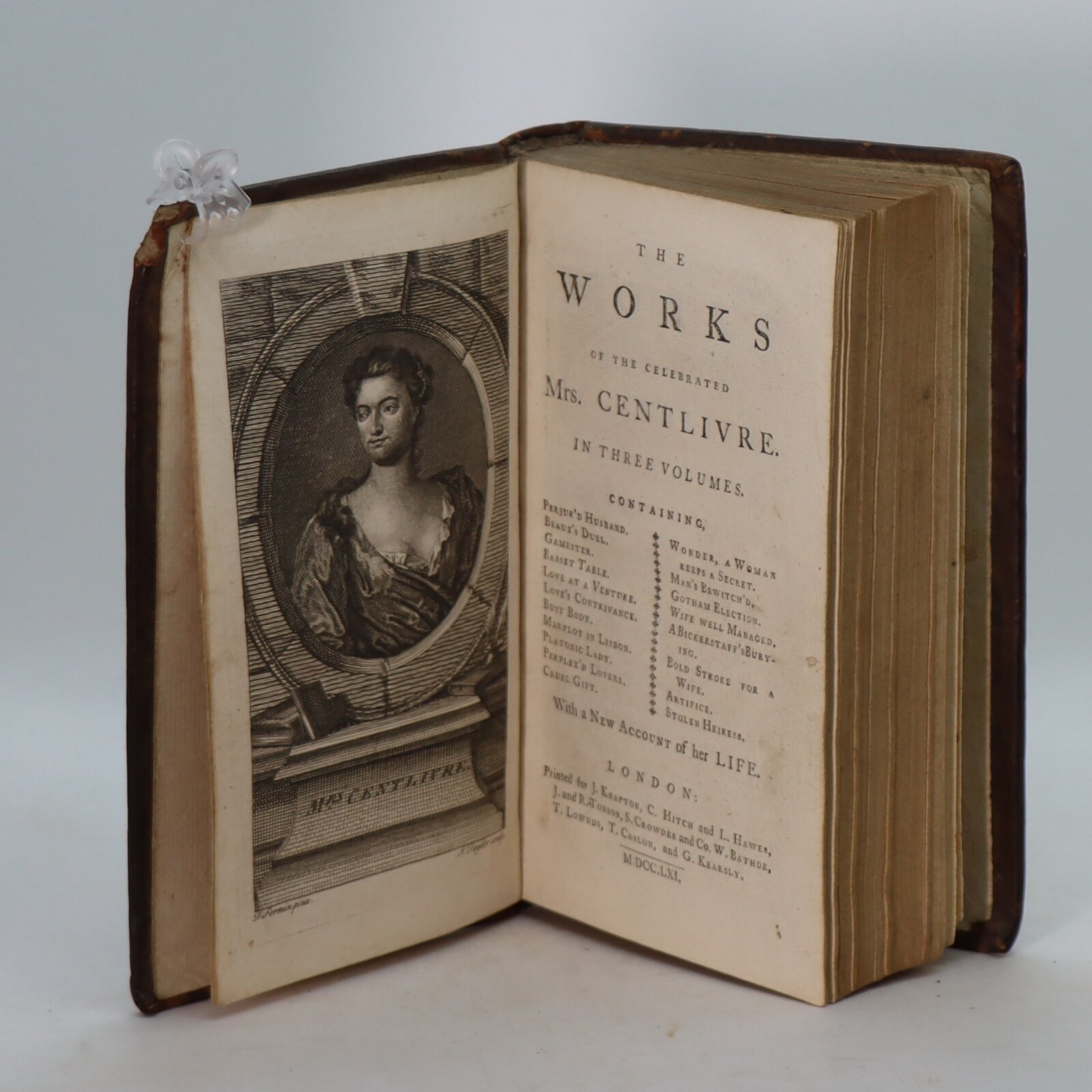
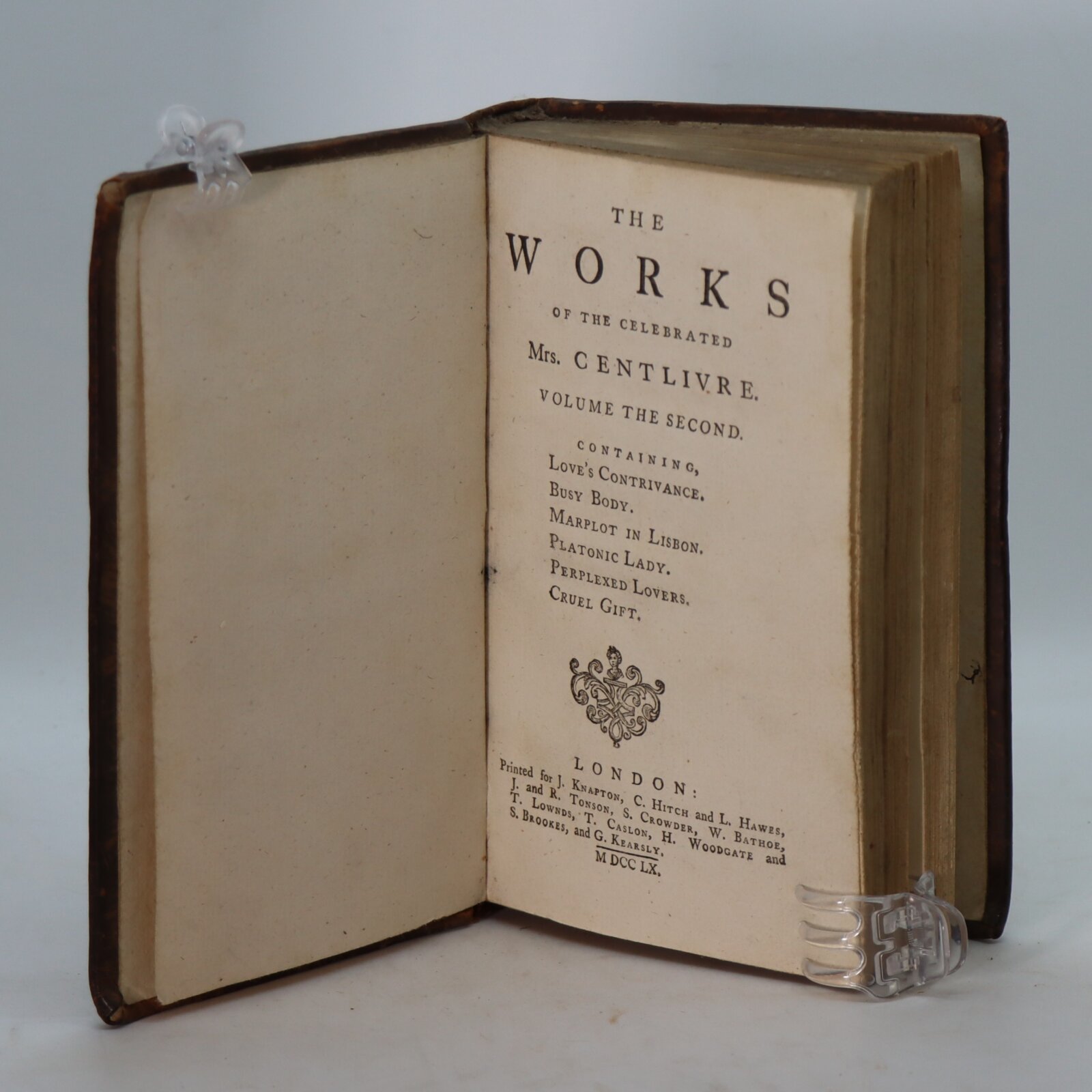
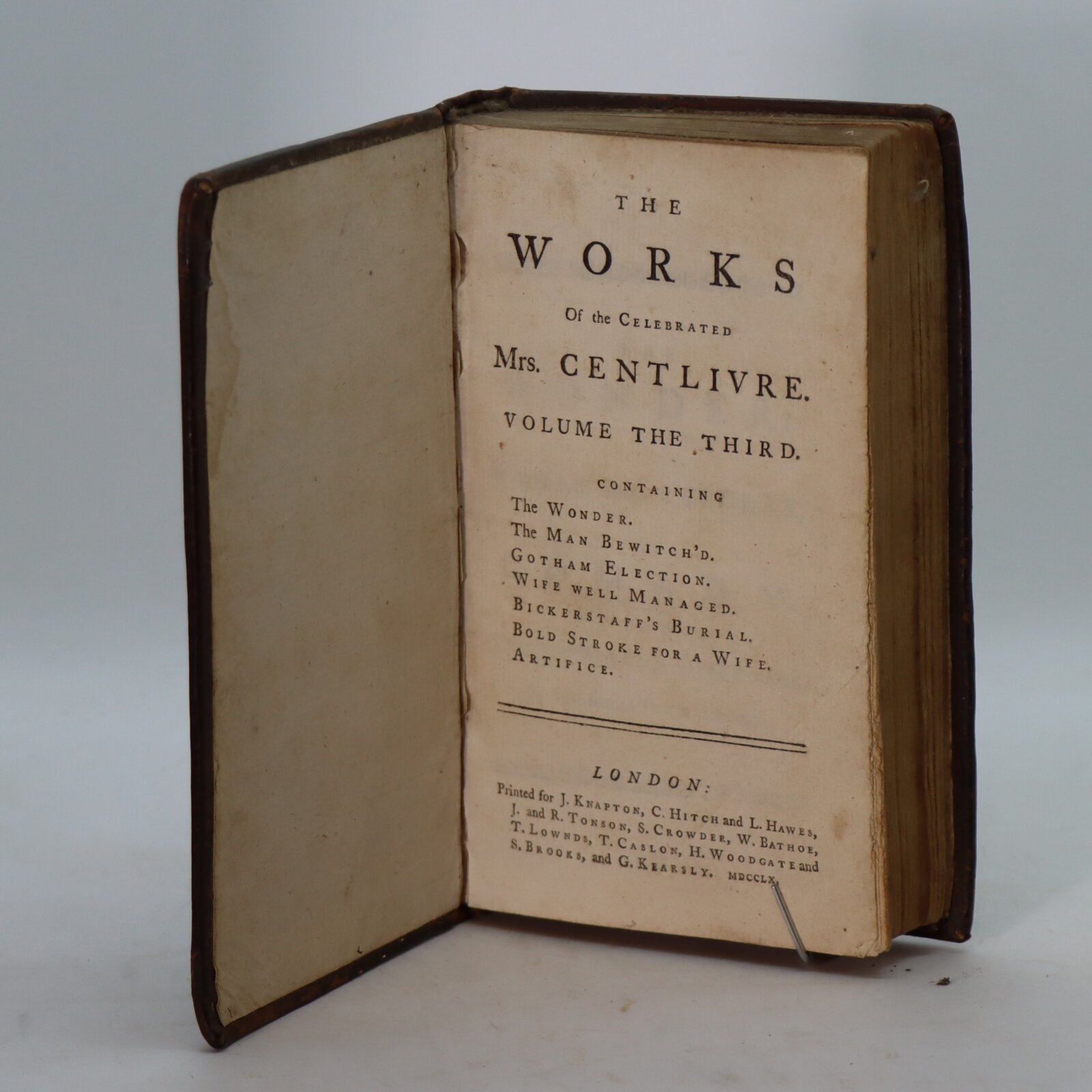
Centlivre's Works. Volumes 1, 2 & 3.
By Mrs Centlivre
Printed: 1761
Publisher: J Knapton. London
| Dimensions | 12 × 18 × 4 cm |
|---|---|
| Language |
Language: English
Size (cminches): 12 x 18 x 4
Condition: Fine (See explanation of ratings)
THIS ITEM WILL BE AVAILABLE SOON
SORRY, THIS ITEM HAS SOLD
Item information
Description
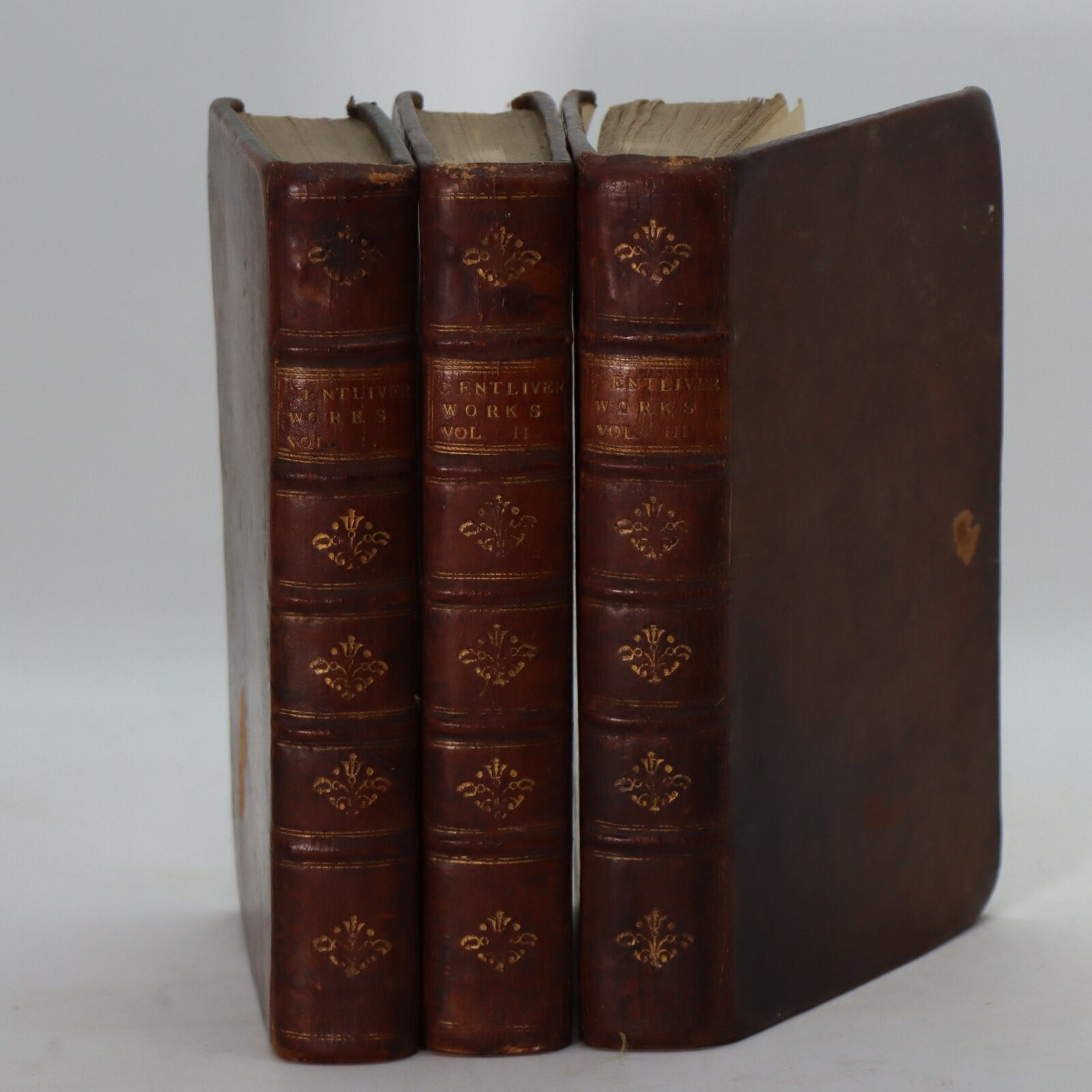
Brown leather binding with raised and gilt banding, tan title plate and gilt lettering and design on the spine (Cenlivre is spelt as Centliver). Dimensions are for one volume.
F.B.A. provides an in-depth photographic presentation of this item to stimulate your feel and touch. More traditional book descriptions are immediately available.
A book with a pedigree!
Susanna Centlivre (c. 1669 (baptised) – 1 December 1723), born Susanna Freeman and also known professionally as Susanna Carroll, was an English poet, actress, and “the most successful female playwright of the eighteenth century”.Centlivre’s “pieces continued to be acted after the theatre managers had forgotten most of her contemporaries.” During a long career at the Theatre Royal, Drury Lane, she became known as the second woman of the English stage, after Aphra Behn.
Aphra Behn 14 December 1640] – 16 April 1689) was an English playwright, poet, prose writer and translator from the Restoration era. As one of the first English women to earn her living by her writing, she broke cultural barriers and served as a literary role model for later generations of women authors. Rising from obscurity, she came to the notice of Charles II, who employed her as a spy in Antwerp. Upon her return to London and a probable brief stay in debtors’ prison, she began writing for the stage. She belonged to a coterie of poets and famous libertines such as John Wilmot, Lord Rochester. Behn wrote under the pastoral pseudonym Astrea. During the turbulent political times of the Exclusion Crisis, she wrote an epilogue and prologue that brought her into legal trouble; she thereafter devoted most of her writing to prose genres and translations. A staunch supporter of the Stuart line, she declined an invitation from Bishop Burnet to write a welcoming poem to the new king William III. She died shortly after.
She is remembered in Virginia Woolf’s A Room of One’s Own: “All women together ought to let flowers fall upon the tomb of Aphra Behn which is, most scandalously but rather appropriately, in Westminster Abbey, for it was she who earned them the right to speak their minds.” Her grave is not included in the Poets’ Corner but lies in the East Cloister near the steps to the church.
Her best-known works are Oroonoko: or, the Royal Slave, sometimes described as an early novel, and the play The Rover.
Want to know more about this item?
We are happy to answer any questions you may have about this item. In addition, it is also possible to request more photographs if there is something specific you want illustrated.
Ask a question
Related products



Share this Page with a friend
