
Buddhism. Edward Gonze.
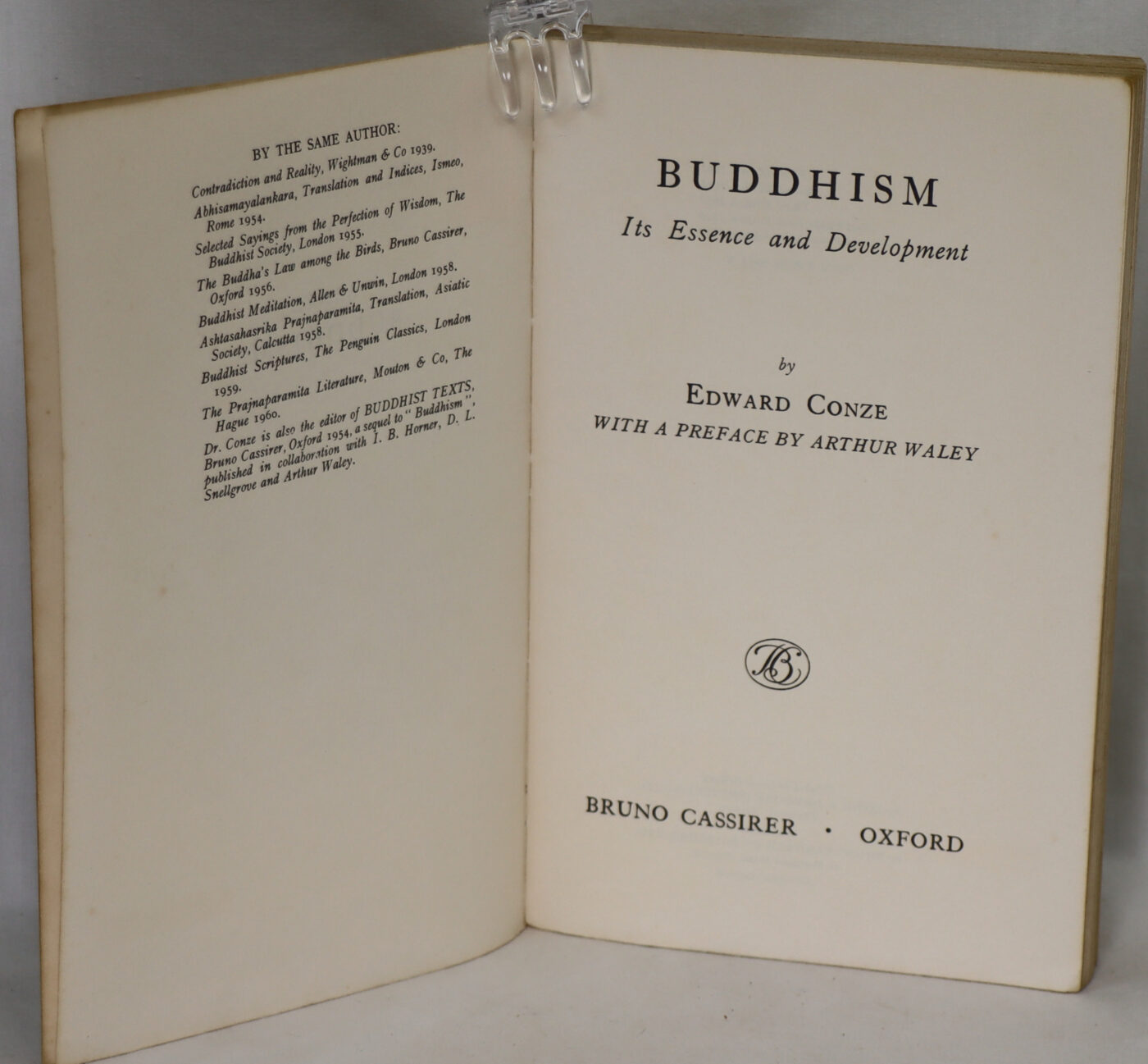
By Edward Conze
ISBN: 9780486427164
Printed: 1974
Publisher: Bruno Cassirer. Oxford
| Dimensions | 14 × 21 × 2 cm |
|---|---|
| Language |
Language: English
Size (cminches): 14 x 21 x 2
Condition: Good (See explanation of ratings)
£8.00
Buy Now
Your items
Item information
Description
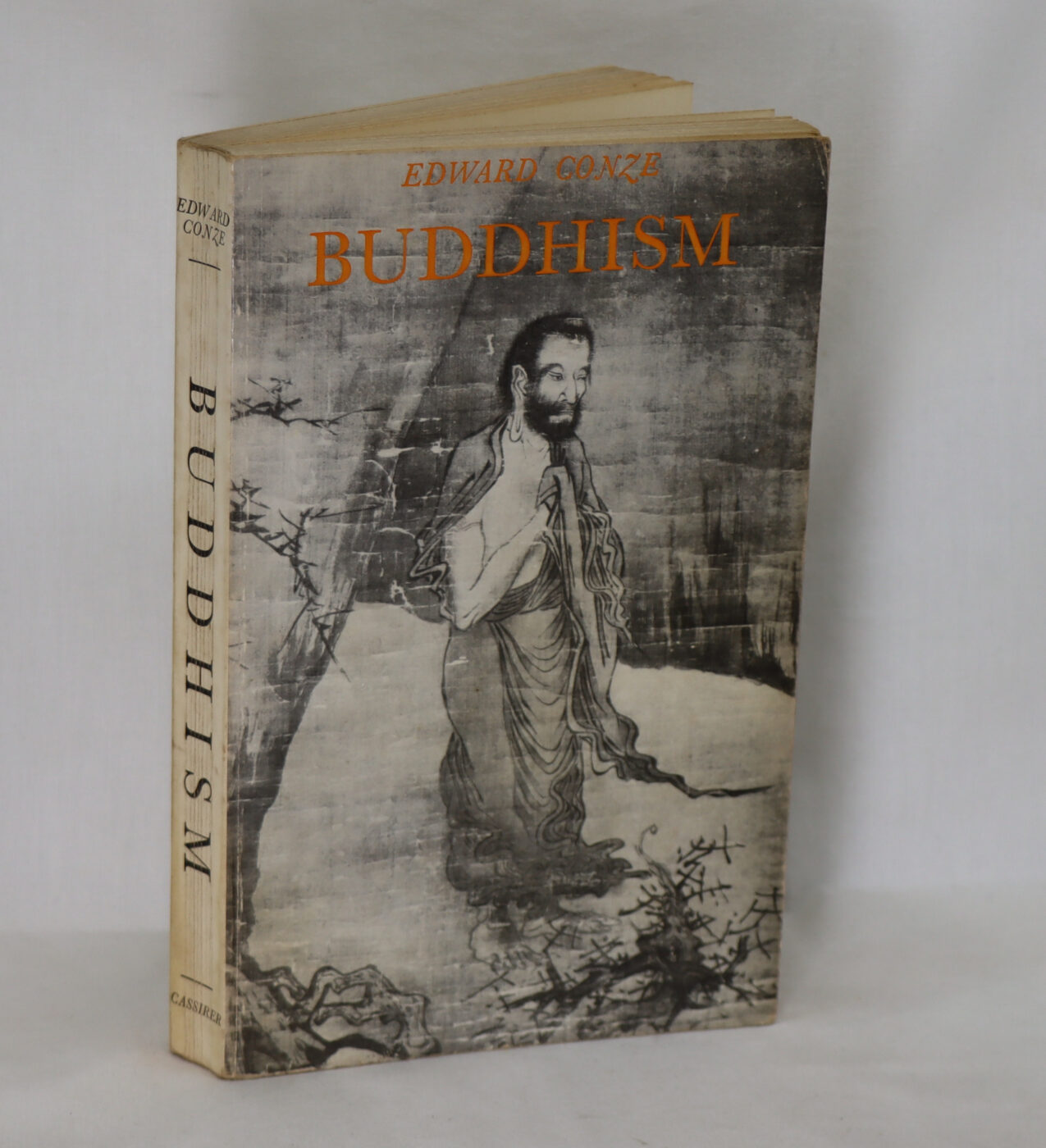
Paperback. Orange and black title with image on the cream cover.
We provide an in-depth photographic presentation of this item to stimulate your feeling and touch. More traditional book descriptions are immediately available
-
This used book has a £3 discount when collected from our shop
-
One of the best books on Buddhism
-
Condition, please view the photographs, Buddhism: Its Essence and Development by Edward Conze is a profound exploration of the core principles and historical evolution of Buddhist thought. The book’s inception dates back to 1941, when Conze, residing in Godshill, Hampshire, delved into the practice of Buddhist meditation in the modern era. The initial chapters are based on lectures Conze delivered at St. Peter’s Hall, Oxford, which retains some oral characteristics. In the Book, Conze characterizes Buddhism as an Eastern form of spirituality, aligning it with mystical teachings globally. He underscores that the essence of Buddhism revolves around wisdom that helps transcend worldly existence and attain immortality. Conze critiques the modern Western focus on material and social issues, which he believes has sidelined spiritual pursuits. Conze asserts that Western spirituality has often drawn from Eastern philosophies, particularly during times of renewal. He emphasizes that much of European spiritual thought, from Pythagoras and Parmenides to contemporary times, has been influenced by Oriental elements. The distinction between Eastern and Western spirituality is marked by the latter’s emphasis on sensory experience and social order, whereas Eastern traditions often negate the will to live in favor of spiritual growth. Buddhism, Conze explains, stands out from other wisdom traditions due to its unique methods and cultural contexts. He highlights the significant role of meditation in Buddhist practice, noting that it offers a comprehensive path to salvation. Conze believes that understanding Buddhism requires distinguishing its essential teachings from the cultural and social frameworks within which it developed. This approach provides a deeper appreciation of Buddhism’s enduring impact on both Eastern and Western spiritual landscapes.
Want to know more about this item?
We are happy to answer any questions you may have about this item. In addition, it is also possible to request more photographs if there is something specific you want illustrated.
Ask a question
Related products







Share this Page with a friend
